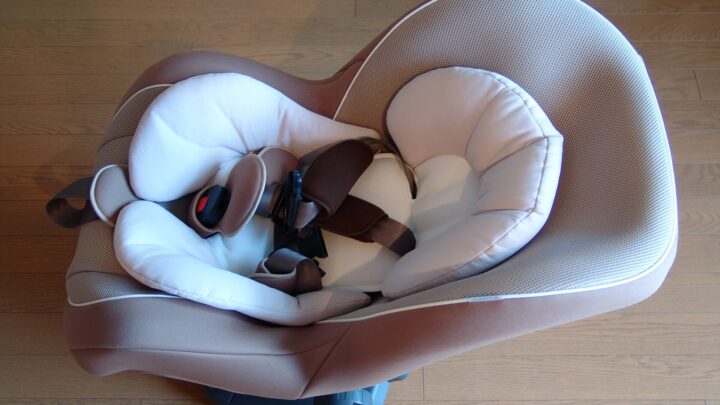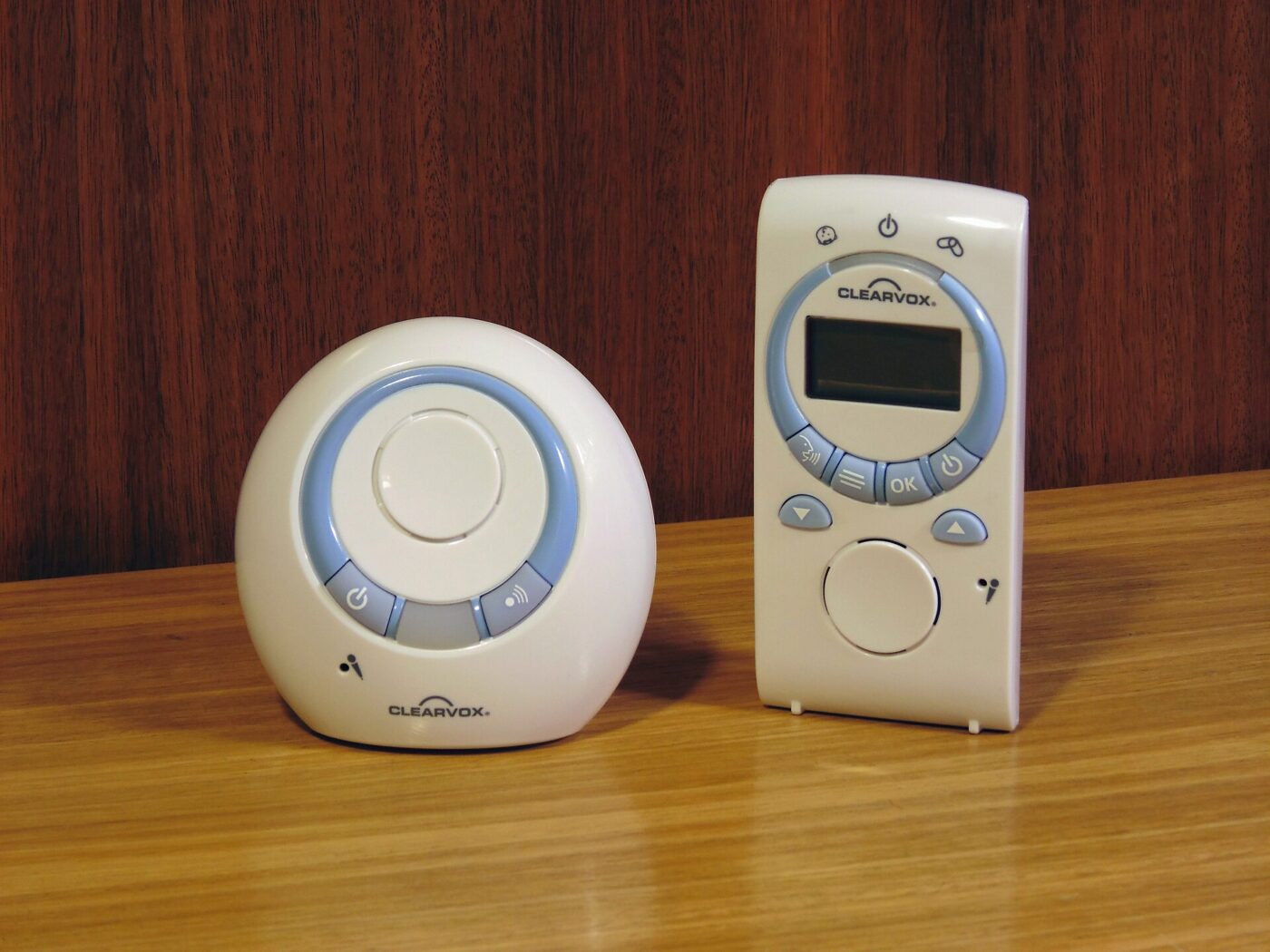
Something changed in how people type this query. Amazon’s autocomplete for baby monitor on October 12, 2026 put baby monitor no wifi sixth and baby monitor audio only eighth, ahead of several brand names. Google Trends rising related queries for the same seed and date are led by the same kind of word: portable baby monitor at plus 600 percent, wireless baby monitor at plus 500 percent.
We have not tested any monitor. This lines up three public records against that shopping behavior: the FCC radio rules that define what a non-Wi-Fi monitor is, the CPSC recall notices for baby monitors, and the federal cybersecurity label for connected products.
Trend Signal
62/100 Steady momentum
- Emerging
- Rising
- Mainstream
- Peaking
- Cooling
Buyers are qualifying monitors by connectivity while every recall since 2023 is about heat
Amazon’s autocomplete for baby monitor returned baby monitor no wifi and baby monitor audio only on October 12, 2026, while the three CPSC baby monitor recalls since 2023 were all for overheating display units or batteries rather than network problems. The deaths in the longer record are cord strangulations, not breaches.
Our editorial reading of the cited data, not a forecast. How it is scored
By the numbers
- 81,800Monitors recalled February 26, 2026 after eleven reports of the display unit overheatingCPSC
- 1920-1930MHz band that US unlicensed personal communications devices must stay insideeCFR
- nearly 700Camera feeds posted online in the FTC case over cameras marketed for baby monitoringFederal Trade Commission
- Aug 29, 2024Effective date of the FCC voluntary cybersecurity labeling rule for consumer IoT productsFederal Register
Why no wifi became a shopping qualifier
For most of the past decade the direction of travel here was one way: add an app, add a cloud account, add remote viewing. The autocomplete data runs against that.
There is an older record that explains part of the pull. On September 4, 2013 the Federal Trade Commission announced a settlement with TRENDnet over its SecurView cameras, which the agency said the company marketed for purposes ranging from home security to baby monitoring while describing them as secure. The FTC said the cameras had faulty software that left them open to viewing, and in some cases listening, by anyone with the camera’s internet address, and that login credentials went over the internet in clear text. After a hacker exploited the flaw in January 2012, links to the live feeds of nearly 700 cameras were posted online.
The query is about connectivity, and the oldest public record in this category is about connectivity too.
What a non-Wi-Fi monitor is in FCC terms
No Wi-Fi does not mean no radio. The devices usually sold as digital non-Wi-Fi monitors, including DECT 6.0 units, fall under 47 CFR part 15 subpart D, the rules for unlicensed personal communications service devices in the 1920 to 1930 MHz band. Subpart D defines them as intentional radiators in that band, requires digital modulation only under section 15.319(b), and under section 15.323 requires operation to stay inside the band with an emission bandwidth below 2.5 MHz.
The consequence for a shopper is narrow: a monitor built this way pairs a camera or microphone to a handheld parent unit over a short-range radio link, with no router and no account in the path. Remote viewing from outside the home requires an internet path, so a parent-unit-only design gives that up by construction. Neither arrangement is safer than the other in any sense a federal record supports; they fail differently.
What the recall record names: heat now, cords before
We ran a title search of the CPSC recall service for baby monitors on October 12, 2026. It returns eleven notices, three of them since the start of 2023, and all three are electrical. The largest is notice 26-307 of February 26, 2026: about 81,800 Babysense Max View monitors, manufactured by Hisense and sold from January 2023 through December 2025, recalled because the display or parent unit can overheat or spark when charging after eleven reports involving the display unit, with no injuries reported.
The second, notice 23-250 of August 3, 2023, covered about 12,850 Philips Avent monitors whose parent-unit lithium-ion batteries could overheat while charging; CPSC records 23 reports in Europe including seven minor injuries, and none in the United States. The third maps onto a rising query: notice 23-770 of June 22, 2023 recalled about 17,100 Zooby video monitors for cars because the battery could malfunction, overheat and burst, after three reports of fires. Anyone searching baby monitor for car is searching a category whose only CPSC notice is a fire recall. Adding the three gives about 111,750 units, which is our arithmetic rather than an agency total.
Going back further changes the picture, and this is the part of the record a shopper should not skip. Notice 11-127 of February 11, 2011 covered about 1.7 million Summer Infant video monitors with electrical cords after two reported strangulation deaths, a 10-month-old in Washington, D.C., in March 2010 and a six-month-old in Conway, South Carolina, in November 2010. Notice 14-028 of November 21, 2013 provided cord covers for 600,000 Angelcare movement and sound monitors in the United States, plus 182,173 in Canada, after two deaths in which the cord running from the sensor pad under the crib mattress was pulled into the crib.
| Date | Notice | Product | Units | What CPSC said failed |
|---|---|---|---|---|
| Feb 26, 2026 | 26-307 | Babysense Max View parent unit | About 81,800 | Display unit can overheat or spark when charging; eleven reports |
| Aug 3, 2023 | 23-250 | Philips Avent SCD630 and SCD843 | About 12,850 | Parent-unit lithium-ion battery overheats when charging; 23 reports in Europe |
| Jun 22, 2023 | 23-770 | Zooby video monitor for cars | About 17,100 | Battery can malfunction, overheat and burst; three fires |
Across the three recent notices the common part is a rechargeable parent unit; across the fatal ones it is a cord.
What the FCC label adds, and what it leaves out
There is now a federal cybersecurity mark for connected products, and it has limits. The FCC rule establishing it was published in the Federal Register on July 30, 2024 and took effect on August 29, 2024. The Commission describes it as a voluntary cybersecurity labeling program for wireless consumer Internet of Things products, giving consumers an FCC IoT Label with the U.S. Cyber Trust Mark and a QR code linked to a dynamic, publicly available registry of cybersecurity information.
Three features matter here. It is voluntary, so the absence of the mark on a monitor says nothing about that monitor. The order groups eligible products into classes, and the smart home class it describes includes cameras alongside thermostats, lights and locks. And the Commission excluded from the program communications equipment on the Covered List it maintains under the Secure and Trusted Communications Networks Act, devices produced by an entity named on that list, and products from companies named on certain other federal lists that reflect a national security review.
Choosing between a parent unit and an app
Put the two records side by side and the trade is clear. A non-Wi-Fi monitor has no internet path, which removes the exposure the FTC described in 2013, and gives up remote viewing. A Wi-Fi monitor keeps remote viewing, can carry the voluntary FCC label, and depends on a vendor account staying maintained. Both ship a rechargeable handheld or a powered camera, so both carry the hardware risk CPSC keeps citing.
Mounting is the quiet third factor, and it is where the fatal record lands. Baby monitor stand was the ninth autocomplete completion for this seed, which suggests a lot of buyers are solving placement after purchase rather than before. In the 2011 notice CPSC said caregivers should never place these and other corded cameras within three feet of a crib, wall mounts included. Our write-up on material claims in baby gear covers the rest of a nursery product page.
What to watch next
- Whether any baby monitor turns up in the FCC IoT label registry, whose smart home class includes cameras
- Whether CPSC notices keep citing parent-unit charging and batteries rather than optics or software
Where to start
Paid links: we earn a commission if you buy through the buttons below, at no extra cost to you. As an Amazon Associate I earn from qualifying purchases.
Monitor shapes and what each one does and does not need
| Product type | Good fit for | Where to look |
|---|---|---|
| Audio-only baby monitor | Fits a no-account setup | See listings on AmazonOpens Amazon search results, not one listing: check the model on the product page. |
| Video monitor with a parent unit and no app | Fits a parent unit without the internet | See listings on AmazonOpens Amazon search results, not one listing: check the model on the product page. |
| Baby monitor floor stand or wall mount | Fits a placement problem | See listings on AmazonOpens Amazon search results, not one listing: check the model on the product page. |
Product types that fit the trend described above, not tested models. Check the exact listing before you buy. How we pick them.
Audio-only baby monitor
Where to look: Amazon
The simplest shape in the category, and the one the eighth autocomplete completion is asking for. The component to read about is the parent unit battery.
- No router or account in the path
- Fewest parts to fail
- No video at all
- Still ships a rechargeable handheld
Video monitor with a parent unit and no app
Where to look: Amazon
A short-range radio link to a handheld screen. Units in this family typically operate under 47 CFR part 15 subpart D, in the 1920 to 1930 MHz band.
- Video with no internet path
- Nothing to reach from outside the house
- No remote viewing by design
- Cannot carry the FCC label if it has no wireless IoT function
More: Baby and Parenting trends and how the Trend Signal is scored.
Sources
- Babysense Max View Baby Monitors Recalled, notice 26-307 — U.S. Consumer Product Safety Commission
- Philips Avent Digital Video Baby Monitors Recalled, notice 23-250 — U.S. Consumer Product Safety Commission
- Infanttech Recalls Zooby Video Baby Monitors for Cars, notice 23-770 — U.S. Consumer Product Safety Commission
- Summer Infant video baby monitors with cords, notice 11-127 — CPSC
- Angelcare movement and sound baby monitors, notice 14-028 — CPSC
- 47 CFR part 15 subpart D, Unlicensed Personal Communications Service Devices — eCFR
- Cybersecurity Labeling for Internet of Things, final rule — Federal Register
- Marketer of Internet-Connected Home Security Video Cameras Settles FTC Charges — Federal Trade Commission
Questions readers ask
Does a no wifi baby monitor use no radio at all?
No. Digital non-Wi-Fi monitors in the United States generally operate as unlicensed devices under 47 CFR part 15. Subpart D covers unlicensed personal communications service devices in the 1920 to 1930 MHz band, requires digital modulation only, and limits emission bandwidth to less than 2.5 MHz.
What has CPSC recalled baby monitors for?
Heat, in the three notices since 2023: about 81,800 monitors whose display unit could overheat or spark when charging, about 12,850 with a parent-unit battery that could overheat, and about 17,100 car monitors whose battery could overheat and burst, about 111,750 units by our own addition. Earlier notices are about cords: about 1.7 million Summer Infant monitors in 2011 and 600,000 Angelcare monitors in the United States in 2013, both after two reported strangulation deaths.
Is the FCC Cyber Trust Mark mandatory on baby monitors?
No. The FCC rule published on July 30, 2024 and effective August 29, 2024 establishes a voluntary cybersecurity labeling program for wireless consumer IoT products, and the Commission excluded equipment on its Covered List from the program.
Has a camera marketed for baby monitoring ever been exposed online?
Yes, in a documented federal case. The FTC announced on September 4, 2013 that TRENDnet settled charges over SecurView cameras marketed for uses from home security to baby monitoring; after a January 2012 exploit, links to the live feeds of nearly 700 cameras were posted online.