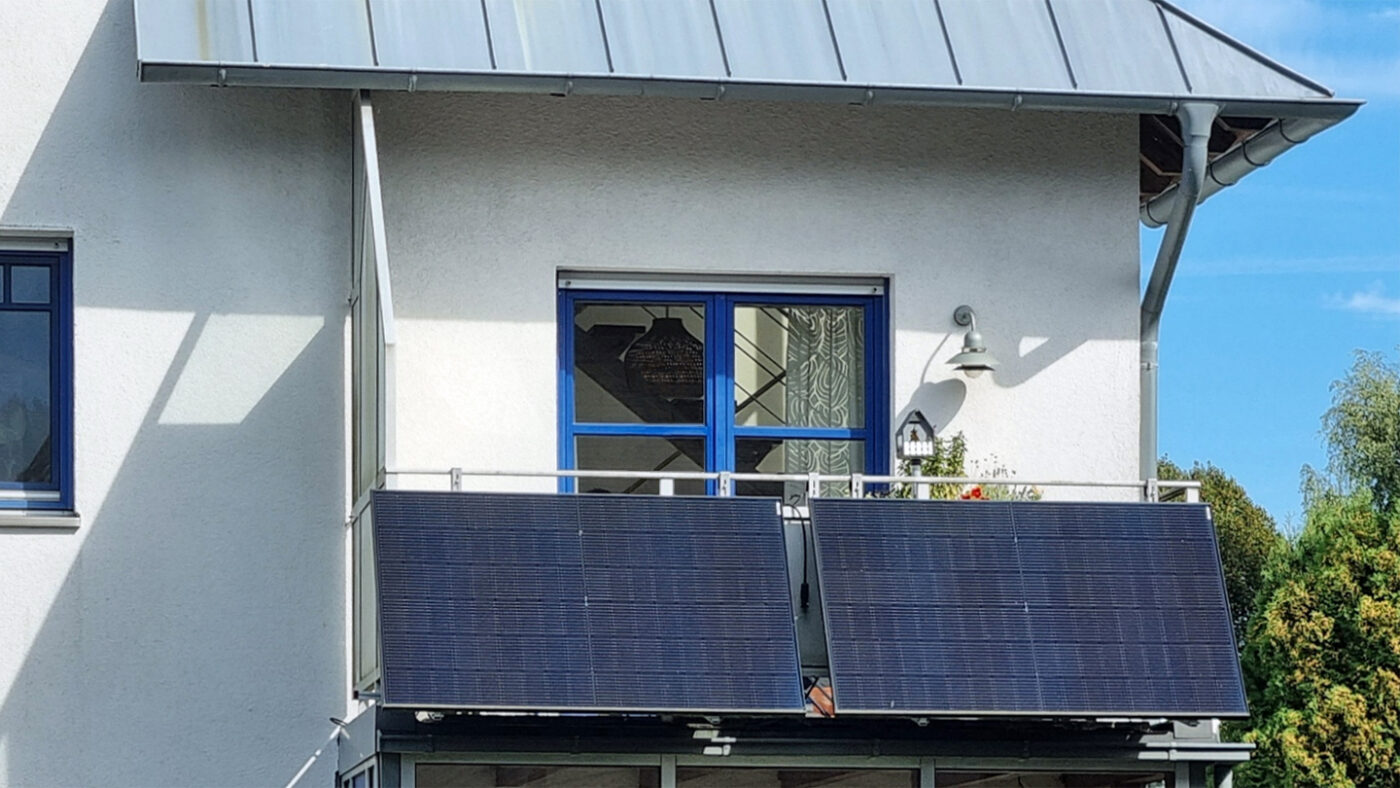
Until 2025, plugging a solar panel into a wall outlet in the United States meant working around your utility’s interconnection rules. That year Utah carved out an exception, passing HB 340 with unanimous, bipartisan votes and capping so-called portable solar at 1,200 watts, according to Grist. By July 2026, Electrek counted eight states with signed laws: Utah, Maine, Virginia, Maryland, Colorado, Connecticut, Vermont and New Hampshire.
New Jersey followed on September 1, 2026, when Gov. Sherrill signed the Garden State Balcony Solar Act, and California’s SB 868 cleared both legislative houses in August 2026. The laws are moving faster than the hardware: the first products certified to UL 3700, the safety standard written for these systems, only appeared in July 2026.
Trend Signal
62/100 Steady momentum
- Emerging
- Rising
- Mainstream
- Peaking
- Cooling
Laws are spreading faster than certified hardware
Electrek counted eight states with signed plug-in solar laws as of July 2026 and nearly 30 that had introduced bills; New Jersey signed on September 1, 2026, while the first UL 3700 certifications only arrived in July 2026.
Our editorial reading of the cited data, not a forecast. How it is scored
By the numbers
- 8States with signed plug-in solar laws as of July 2026, per Electrek’s countElectrek
- 1,200 WOutput cap in New Jersey’s Garden State Balcony Solar Act, signed Sept. 1, 2026State of New Jersey
- Jan. 2026Launch of UL Solutions’ UL 3700 testing and certification program for plug-in solarUL Solutions
- 18.34¢Average U.S. residential electricity price per kWh, June 2026 (17.47 cents in June 2025)U.S. EIA
From one state to at least nine
Utah’s law set the template. Grist reported that HB 340 passed with unanimous support and caps a system’s output at 1,200 watts. UL Solutions summarized the effect plainly: Utah allows plug-in systems of up to 1.2 kW “without seeking utility approval.” In April 2026, Grist reported, citing the advocacy group Bright Saver, that 30 more states plus the District of Columbia had drafted similar bills, and Maine’s governor signed one that month.
Spring and summer of 2026 did most of the work. Electrek’s July 20, 2026 tally listed eight states with signed laws and said nearly 30 had introduced plug-in solar legislation in total. New Jersey signed its bill, S2368/A4836, on September 1, 2026. In California, SB 868, introduced by Senator Scott Wiener, passed both houses in August 2026 and was presented to the governor on August 31, according to the Legislature’s bill status page; pv magazine USA reported that, if signed, it would take effect on January 1 of the following year.
Germany shows what happens when the rules loosen. Clean Energy Wire reported that about 300,000 balcony power plants were registered there in 2023 alone, out of 1.6 million new generating systems of all kinds. Germany’s simplified rules cover plug-in devices with up to 800 VA of inverter output and 2,000 watts of module power, according to the Bundesnetzagentur, the federal network regulator.
Most states still have no plug-in solar law, so the first check is your own state’s status, not the kit.
What the laws actually allow
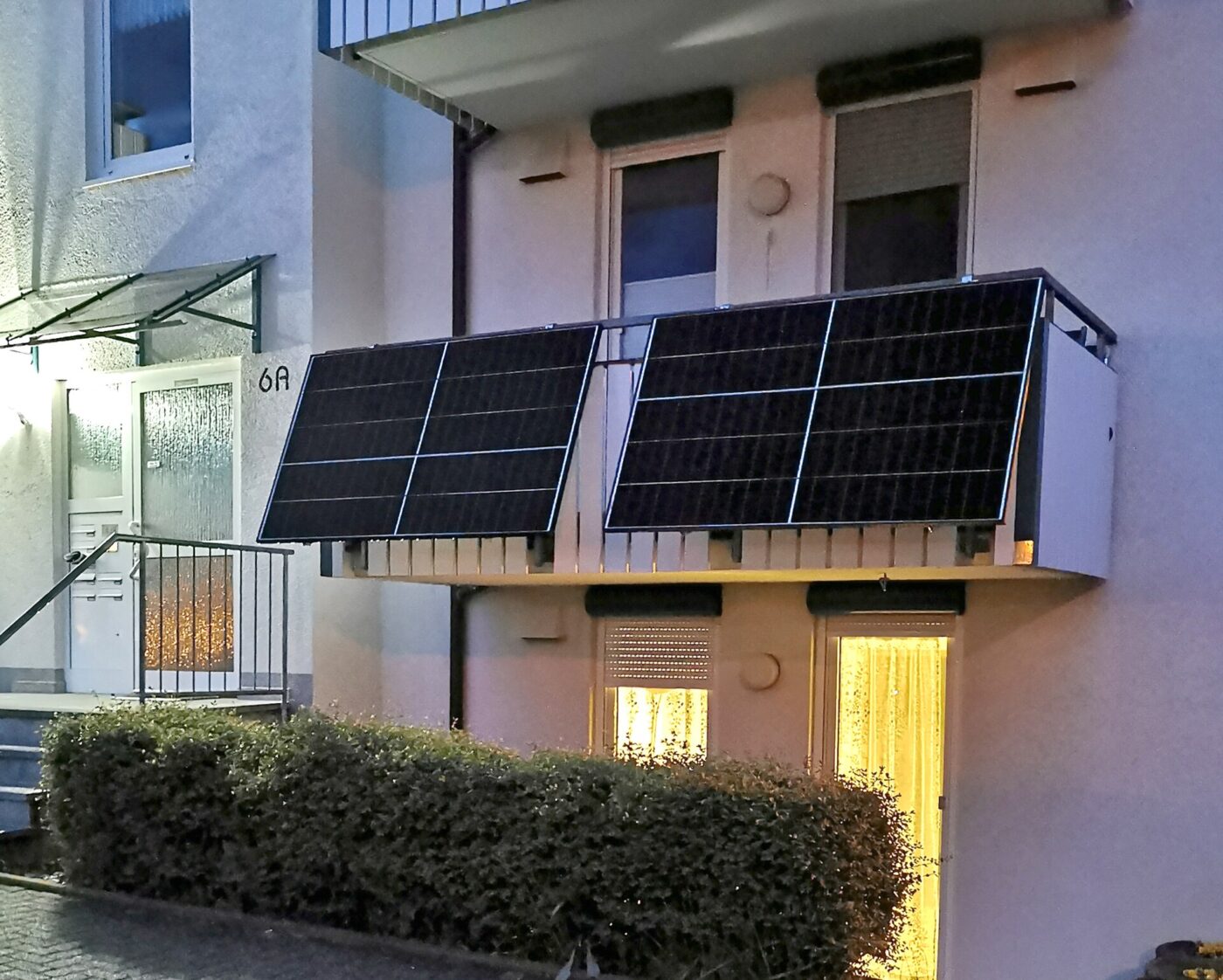
The state laws share a core: one system of up to 1,200 watts that plugs into a standard outlet and skips the interconnection agreement a rooftop array would need. New Jersey’s version, as described by the governor’s office, exempts qualifying devices from utility interconnection and metering requirements, stops landlords and homeowner associations from broadly prohibiting them, and bars towns from banning them or requiring permits.
The details differ in ways that matter to renters. A client alert from the New Jersey law firm Capehart Scatchard notes that associations there may still set “reasonable restrictions” on size and placement, that tenants must give 14 days’ written notice, and that the law takes effect on March 1, six months after the September 2026 signing. California’s SB 868 requires systems to be certified by Underwriters Laboratories or an equivalent nationally recognized testing laboratory, according to pv magazine USA.
| Jurisdiction | Status | Output cap | Rule worth knowing |
|---|---|---|---|
| Utah | HB 340 passed in 2025 | 1,200 W | No utility approval needed, per UL Solutions |
| New Jersey | Signed Sept. 1, 2026 | 1,200 W | No utility fee, charge or prior approval; tenants give 14 days’ notice |
| California | SB 868 passed Legislature, Aug. 2026 | 1,200 W | UL or equivalent lab certification required |
| Germany (comparison) | In force | 800 VA inverter | Each device registered with the regulator |
Certification arrived after the laws
Until 2026 there was no U.S. safety standard written for plug-in solar. UL Solutions launched a testing and certification program on January 8, 2026, built on UL 3700, its “Outline of Investigation for Interactive Plug-In Photovoltaic Equipment and Systems.” The standard calls for features that guard against contact with live parts, promote safe installation, protect against overloads and stop current from flowing the wrong way.
Products lagged. Grist reported in April 2026 that no plug-in system had yet been certified by UL. That changed in July: Electrek reported that Hoymiles’ HiFlow Pro was the first U.S. microinverter certified to UL 3700, and APsystems announced on July 15, 2026 that its EZ1 microinverter is CSA-certified to UL 3700.
Utilities remain wary. Rocky Mountain Power told Grist it was concerned that some products entering the market “may not meet the requirements of the bill, potentially creating electrical hazards for utility workers.” Both July certifications cover microinverters, the component that turns panel output into household current, so a listing that cites UL 3700 should say which part carries the mark.
What a kit costs and what it can return
Kits are not cheap per watt. In April 2026, Grist found EcoFlow’s own website pricing the company’s plug-in inverter at about $300 and a system that includes a battery at $1,200, with compatible panels at $250 to $1,000 depending on array size.
The ceiling on savings is modest. Hoymiles rates one 360-watt HiFlow Pro at up to 721 kWh of production a year, and four units running in parallel, capped at the 1,200-watt legal maximum, at up to 2,403 kWh, per Electrek. At the U.S. average residential price of 18.34 cents per kWh that EIA reported for June 2026, that best case is worth about $441 a year for a full setup and about $132 for a single unit, by our calculation. A shaded or north-facing balcony will produce less than the manufacturer figure.
New Jersey’s signing announcement quoted an advocate who said plug-in solar “can save a family hundreds of dollars a year”; the manufacturer ceiling above suggests that is the upper end, not the typical case.
Who should buy now and who should wait
Renters and condo owners in states with signed laws are the clearest fit, because those laws were written for people who cannot put panels on a roof. Read your state’s rules on notice, placement and certification first; New Jersey’s law, for example, does not start until March 1, six months after it was signed.
Everyone else has reasons to wait. In states without a law, the utility exemptions described here do not apply. Buyers in states that require certification may also want complete kits that carry UL 3700 or an equivalent mark, rather than a certified inverter paired with uncertified parts.
The law and the listing both have to line up: a 1,200-watt limit, a certified inverter and a state that says yes.
What to watch next
- Whether California’s governor signs SB 868, which passed the Legislature in August 2026
- The first complete plug-in kits, not just microinverters, certified to UL 3700 by UL, CSA or another national lab
- New Jersey’s start date of March 1, six months after signing, and any utility registration forms other states adopt
Where to start
Paid links: we earn a commission if you buy through the buttons below, at no extra cost to you. As an Amazon Associate I earn from qualifying purchases.
Plug-in solar gear compared on what to check
| Product type | Good fit for | Where to look |
|---|---|---|
| Plug-in solar kit with microinverter | Fits renters starting from zero | See listings on AmazonOpens Amazon search results, not one listing: check the model on the product page. |
| Bifacial balcony solar panel | Fits balconies with strong sun | See listings on AmazonOpens Amazon search results, not one listing: check the model on the product page. |
| Adjustable balcony railing solar mount | Fits railing installs | See listings on AmazonOpens Amazon search results, not one listing: check the model on the product page. |
Product types that fit the trend described above, not tested models. Check the exact listing before you buy. How we pick them.
Plug-in solar kit with microinverter
Where to look: Amazon
The all-in-one route. Match the kit’s AC rating to your state’s cap and look for UL 3700 on the listing itself, not just UL marks on individual parts.
- Plugs into a standard outlet
- Panel and inverter ship together
- Few kits carry UL 3700 yet
- Output limited to 1,200 W by state laws
Bifacial balcony solar panel
Where to look: Amazon
For buyers assembling their own setup. Confirm the panel’s voltage and current fit the microinverter’s input range before ordering.
- Collects light on both faces
- Pairs with a separate microinverter
- Heavier than it looks
- Needs a compatible inverter
Adjustable balcony railing solar mount
Where to look: Amazon
The mount decides whether a panel is safe on a balcony. Check the clamp range and any landlord or association placement rules.
- Sets a fixed tilt angle
- Keeps the panel off the floor
- Railing size limits fit
- Wind load is your problem
More: Energy and Sustainability trends and how the Trend Signal is scored.
Sources
- How deep-red Utah helped launch a portable plug-in solar movement — Grist
- UL Solutions Debuts Testing and Certification Framework for Safer Plug-In Solar Across the United States — UL Solutions
- The US’s first UL 3700 balcony solar microinverter is here — Electrek
- Governor Sherrill Signs Legislation Giving New Jerseyans Cleaner, More Affordable Energy at Their Fingertips — State of New Jersey
- California plug-in solar bill SB 868 earns approval of both legislative houses, nears governor’s desk — pv magazine USA
- SB-868 Electricity: portable solar generation devices, bill status — California Legislative Information
- New Jersey Becomes the 10th State to Legalize and Regulate Portable Solar Generation Devices — Capehart Scatchard
- EZ1. Proven. Portable Solar. UL 3700. — APsystems USA
- Balkon-Solaranlagen (plug-in solar devices) — Bundesnetzagentur
- Germany simplifies registration of balcony photovoltaic units — Clean Energy Wire
- Electric Power Monthly, Table 5.6.A — U.S. Energy Information Administration
Questions readers ask
Is balcony solar legal in my state?
Electrek’s July 2026 count plus New Jersey’s September 1, 2026 signing puts the total at nine or more: Utah, Maine, Virginia, Maryland, Colorado, Connecticut, Vermont, New Hampshire and New Jersey. California’s SB 868 passed the Legislature in August 2026. Elsewhere, the utility exemptions in these laws do not apply.
How many watts can a plug-in solar system produce?
The state laws cap one system at 1,200 watts, the figure in Utah’s HB 340, New Jersey’s law and California’s SB 868.
What is UL 3700?
UL 3700 is the first U.S. safety standard written for plug-in solar. UL Solutions launched testing and certification to it on January 8, 2026, and the first certified microinverters, from Hoymiles and APsystems, were announced in July 2026.
How much money can a balcony solar kit save?
Hoymiles rates a four-unit, 1,200-watt setup at up to 2,403 kWh a year. At EIA’s June 2026 average residential price of 18.34 cents per kWh, that ceiling is worth about $441 a year by our calculation; most real installations will produce less.