Amazon finishes “mini split 120v” with “plug in to wall outlet,” “12000 btu,” “9000 btu” and “pre charged.” We pulled those completions on October 1, 2026. The question underneath them is the same: can a heat pump be added to one room without paying an electrician to run a new 240-volt circuit?
We have installed and tested nothing. Everything below comes from manufacturer specification pages we opened on October 1, 2026, from 10 CFR 430.32 and from the ENERGY STAR criteria. We chose the examples by one rule: a maker publishing voltage, current draw, breaker size, rated capacity and heating ratings for more than one climate region on the same public page.
Trend Signal
72/100 Strong momentum
- Emerging
- Rising
- Mainstream
- Peaking
- Cooling
The 120-volt option exists only at the small end of the range
On the wall-mounted comparison page one maker published and we read on October 1, 2026, 115-volt models are offered at 9,000 and 12,000 Btu/h only, while the series rated to the lowest heating temperature, down to -22°F, is 230-volt only.
Our editorial reading of the cited data, not a forecast. How it is scored
By the numbers
- 12,000 BTULargest 115V capacity in the wall-mounted series on the maker comparison pagePioneer
- 8.5 ACurrent draw at full cooling output on that 12,000 Btu/h 115V modelPioneer
- 10.0 / 8.6HSPF2 the maker publishes for Region IV and Region V on that same 115V modelPioneer
- 14.3 SEER2Federal cooling minimum for split-system heat pumps made on or after Jan. 1, 2023eCFR 10 CFR 430.32
What 120 volts buys you, by the spec sheet
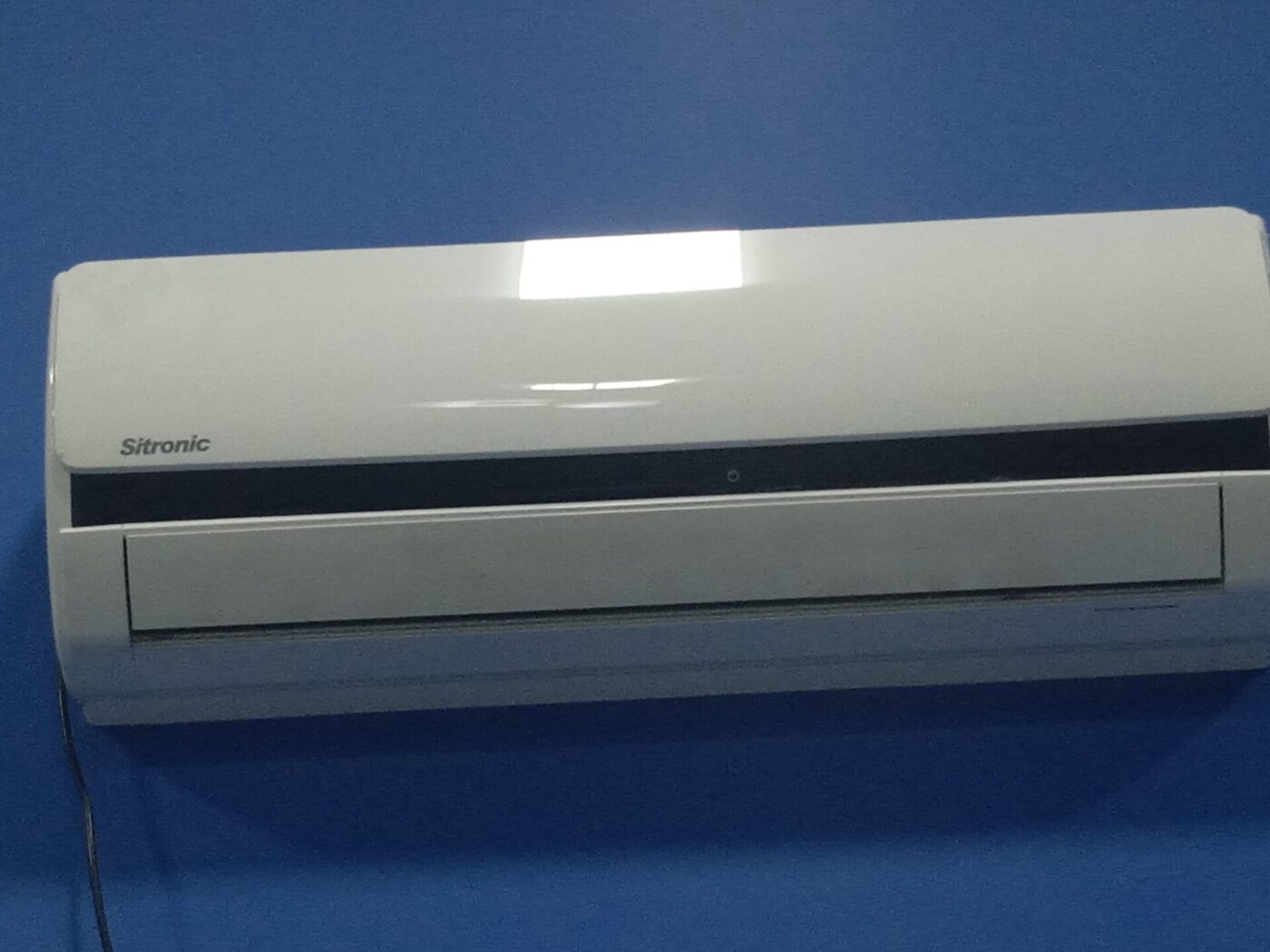
Start with the ceiling, because the search results hide it. On the wall-mounted comparison page one maker publishes for its current A2L line-up, 115V is offered on the 12,000 Btu/h model only in the entry series and on the 9,000 and 12,000 Btu/h models in the two mid series, while the top series is 230V only. Every model above 12,000 Btu/h on that page is 208 to 230 volts.
The product pages show what that means in room terms. Recommended room sizes run 250 to 350 square feet for the 9,000 Btu/h 115-volt model, 350 to 500 for the 12,000 Btu/h 115-volt model, 500 to 750 for the 18,000 Btu/h model and 750 to 1,000 for the 23,000 Btu/h model. A 120-volt system is a one-room machine by design.
One detail worth carrying to any listing: the model that series calls 24,000 BTU has a rated cooling capacity of 23,000 Btu/h on its own specification page. Capacity classes are marketing names, and the rated figure is a different line further down.
| Rated cooling | Power supply | Maker recommended room size | Rated heating | HSPF2 Region IV / V |
|---|---|---|---|---|
| 9,000 Btu/h | 110 to 120V | 250 to 350 sq ft | 10,000 Btu/h | 9.5 / 8.1 |
| 12,000 Btu/h | 110 to 120V | 350 to 500 sq ft | 12,400 Btu/h | 10.0 / 8.6 |
| 18,000 Btu/h | 208 to 230V | 500 to 750 sq ft | 19,000 Btu/h | 10.0 / 8.2 |
| 23,000 Btu/h | 208 to 230V | 750 to 1,000 sq ft | 25,000 Btu/h | 9.5 / 8.2 |
If the room is bigger than about 500 square feet, the 120-volt question answers itself.
Plug-in does not mean any outlet
The 12,000 Btu/h 115-volt model we read publishes its electrical demand plainly: 8.5 amps in cooling and 8.4 amps in heating when delivering full output. That is a continuous load on a circuit that in most homes also carries lamps, a television and whatever else is in the room.
The same page is specific about the circuit in two different ways. The outdoor unit specification block lists a 25-amp single-pole breaker; the question-and-answer section further down says a single-pole 20-amp breaker with 12 AWG wire works. Both describe a dedicated circuit, but not the same one. The installation manual governs, and a page that disagrees with itself is a page to read twice.
We are not going to tell any reader what they may wire. What we will say is that the saving a 120-volt unit advertises is the saving on a new 240-volt run, and that saving evaporates if the room still needs a dedicated circuit pulled to it. Price that question before the capacity question.
The 120-volt wave is bigger than mini splits
This is not an isolated product quirk. Appliance makers have spent several years moving things that used to demand 240 volts onto ordinary household circuits, because the circuit is the expensive part of an electrification project in an older house. We looked at the water heating version of it in the 120-volt heat pump water heater guide, and at the cooking version, where a battery buffers the surge, in the battery induction range explainer.
The logic is identical in all three. Shrink the peak draw until it fits a standard circuit, accept a lower maximum output, and let a variable-speed compressor or a battery smooth the difference. For a mini split that trade shows up as the capacity ceiling in the table above: you can have house voltage or you can have a big room, and in the line-up we read you cannot have both.
What it does not change is the rest of the purchase. The federal floor at 10 CFR 430.32(c)(5) is the same 14.3 SEER2 and 7.5 HSPF2 whatever the voltage, the refrigerant question covered in the R-410A phase-out explainer is the same, and the equipment cost picture in heat pump prices in 2026 is the same.
The 120-volt version of anything is a deal about peak draw, paid for in maximum output.
Where the voltage choice costs you in winter
The comparison page we read publishes an outdoor temperature limit for heating against each series: +5°F for the entry series, -4°F for the next, -13°F for the third and -22°F for the top one. The top series, the one rated to -22°F and listed as cold climate certified across all of its models, is 230 volts only.
That is the real cost of the voltage decision for anyone with a cold winter. A 115-volt unit is available in the -13°F series, and the 12,000 Btu/h 115-volt model publishes a coefficient of performance of 3.81 at 47°F and 2.1 at 5°F. ENERGY STAR’s cold climate tier asks for at least 1.75 at 5°F, so that figure clears the bar, but the series rated furthest below zero is simply not sold at house voltage in this line-up.
Check the other half of the cold climate test too. ENERGY STAR requires heating capacity at 5°F of at least 70 percent of capacity at 47°F, which is a published pair of numbers rather than a seasonal average, and it is the pair that tells you whether the unit will still be carrying the room on the coldest morning of the year.
What to check on a 120-volt listing
The listing title is the least reliable thing on the page. Every figure that decides whether this works sits on the maker’s specification sheet, free to read before anything ships.
One more check: run the brand and model through the CPSC recall database. Our search on October 1, 2026 returned two notices in the whole database naming ductless equipment, but a recall notice is the only public record of what a given model was found to do.
- The power supply line, which should read 110 to 120 volts rather than a range that includes 208
- The current draw at full output in both cooling and heating, not just the nameplate wattage
- The breaker the maker specifies, and whether the page contradicts itself about it
- Rated cooling capacity, which may be lower than the capacity class in the product name
- HSPF2 for your region if the maker publishes a second column, since the certified figure is Region IV
- The outdoor temperature limit in heating, and the capacity at 5 degrees F if it is published
Voltage, current draw and breaker size are three separate lines. A listing that gives only one of them is not enough to buy from.
What to watch next
- Whether makers extend 115-volt options above 12,000 Btu/h, which would change the one-room ceiling this category currently has
- ENERGY STAR cold climate listings for 115-volt models, since the coldest-rated series we found is 230-volt only
- Manufacturer specification pages that start publishing capacity at 5 degrees F alongside HSPF2, which is the figure cold-climate buyers need
Where to start
Paid links: we earn a commission if you buy through the buttons below, at no extra cost to you. As an Amazon Associate I earn from qualifying purchases.
House-voltage mini split gear compared on what to check
| Product type | Good fit for | Where to look |
|---|---|---|
| 115V ductless mini split heat pump | Fits one room on house voltage | See listings on AmazonOpens Amazon search results, not one listing: check the model on the product page. |
| Mini split line set cover kit | Fits a tidy exterior run | See listings on AmazonOpens Amazon search results, not one listing: check the model on the product page. |
| Mini split condenser pad | Fits a ground-level outdoor unit | See listings on AmazonOpens Amazon search results, not one listing: check the model on the product page. |
Product types that fit the trend described above, not tested models. Check the exact listing before you buy. How we pick them.
115V ductless mini split heat pump
Where to look: Amazon
In the line-up we read, 115 volts is offered at 9,000 and 12,000 Btu/h, for rooms up to about 500 square feet. Compare the current draw and breaker line, not the capacity class.
- No new 240-volt run needed
- Full spec sheets are published
- Capacity stops around 12,000 Btu/h
- Still wants a dedicated circuit
Mini split line set cover kit
Where to look: Amazon
The cover has to swallow refrigerant lines, condensate hose and cable together. Measure the bundle rather than the pipe, and check the corner pieces are in the kit.
- Protects the line set from sun
- Sold in matched sections
- Width must fit the whole bundle
- Adds another set of fixings
Mini split condenser pad
Where to look: Amazon
Outdoor unit weights and base dimensions are on every spec page we read. Match the pad to those, and in snow think about height before footprint.
- Keeps the unit level
- Lifts it clear of standing water
- Needs a flat base under it
- Does not help with snow depth
More: Energy and Sustainability trends and how the Trend Signal is scored.
Sources
- Wall-mounted mini split comparison — Pioneer
- Quantum Ultra 12,000 BTU 115V spec page — Pioneer
- Quantum Ultra 9,000 BTU spec page — Pioneer
- Quantum Ultra 18,000 BTU spec page — Pioneer
- Quantum Ultra 24,000 BTU spec page — Pioneer
- 10 CFR 430.32 conservation standards — eCFR
- Heat pump key product criteria — ENERGY STAR
- Lennox recalls ductless heat pumps — CPSC
Questions readers ask
Can a mini split plug into a normal wall outlet?
The page we read for a 12,000 Btu/h 115-volt system lists a 25-amp single-pole breaker in its specification block and a 20-amp single-pole breaker with 12 AWG wire in its own question-and-answer section, and publishes a draw of 8.5 amps cooling and 8.4 amps heating at full output. The installation manual governs, and electrical work is outside what we advise on.
What is the biggest 120V mini split available?
On the wall-mounted comparison page we read on October 1, 2026, 115-volt models are offered at 9,000 and 12,000 Btu/h. Every model above 12,000 Btu/h in that line-up is specified at 208 to 230 volts.
Does a 120V mini split heat as well as a 240V one?
Not across the whole range. The 12,000 Btu/h 115-volt model we read publishes a coefficient of performance of 3.81 at 47 degrees F and 2.1 at 5 degrees F, and sits in a series rated to -13 degrees F. The series rated to -22 degrees F on the same comparison page is 230 volts only.
Do 120V mini splits meet the federal efficiency standard?
The standard does not depend on voltage. 10 CFR 430.32(c)(5) requires split-system heat pumps manufactured on or after January 1, 2023 to reach at least 14.3 SEER2 and 7.5 HSPF2, and the 115-volt models we read publish figures well above that.