Heat pumps kept gaining ground in 2026 even as two things that made them easier to afford went the wrong way. Equipment prices at the factory gate kept rising, and the federal tax credit that knocked up to $2,000 off a heat pump installation expired at the end of 2025.
The shipment data say buyers did not walk away. Through July 2026, U.S. manufacturers shipped about 2.57 million air-source heat pumps, up 5.8% from the same period of 2025, while gas furnace shipments fell 5.1%, according to the Air-Conditioning, Heating, and Refrigeration Institute (AHRI). Below: how the prices, the lost credit and the refrigerant rules add up for a replacement decision.
Trend Signal
64/100 Steady momentum
- Emerging
- Rising
- Mainstream
- Peaking
- Cooling
Shipments up, prices up, subsidy gone
AHRI reports U.S. air-source heat pump shipments rose 5.8% in January through July 2026 while gas furnace shipments fell 5.1%, even as the BLS producer price index for HVAC equipment makers rose 3.9% in the year to August 2026 (preliminary data).
Our editorial reading of the cited data, not a forecast. How it is scored
By the numbers
- 2.57MU.S. air-source heat pump shipments, Jan.–July 2026, up 5.8% from 2025AHRI
- 5.1%Change in U.S. gas furnace shipments, Jan.–July 2026 vs. the same months of 2025AHRI
- +3.9%BLS producer price index for HVAC equipment makers, Aug. 2025 to Aug. 2026 (prelim.)U.S. BLS
- $2,000Annual cap on the 30% federal 25C credit for heat pumps, which ended with 2025IRS
Shipments say demand is holding
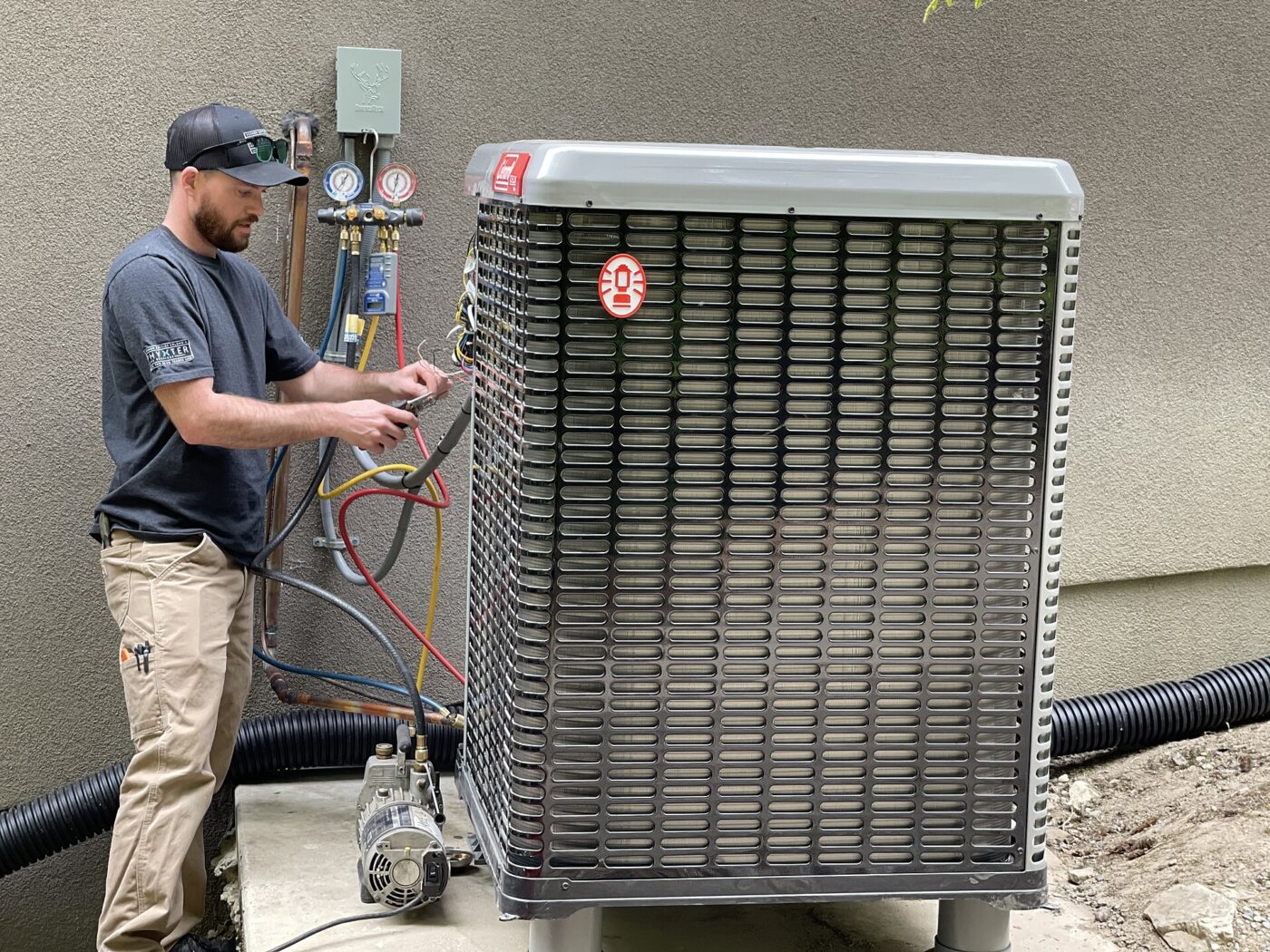
AHRI’s July 2026 release, published September 11, 2026, put year-to-date air-source heat pump shipments at 2,570,228 units, up from 2,428,800 in the first seven months of 2025 and 2,427,374 in the same stretch of 2024. July alone was strong: 413,679 heat pumps shipped, up 17.6% from July 2025.
Gas furnaces moved the other way, with year-to-date shipments down 5.1% to 1,818,744 units. Some caution is warranted: furnace demand leans toward the fall and winter, and heat pumps also sell as air conditioners, so the seven-month gap of about 750,000 units (our calculation) overstates any full-year lead. AHRI says its member companies account for more than 90% of the residential and commercial HVAC and water heating equipment made and sold in North America.
Not every manufacturer sees the same demand. Lennox said revenue in its Home Comfort Solutions segment declined 7% year over year in the second quarter of 2026, “primarily reflecting lower sales volumes,” and its chief executive cited “continued softness in the residential end market.”
What equipment costs at the factory gate
The Bureau of Labor Statistics tracks what manufacturers charge through its producer price index. The index for air-conditioning, refrigeration and forced-air heating equipment makers rose from 301.861 in August 2024 to 312.596 in August 2025 and a preliminary 324.820 in August 2026: gains of 3.6% and then 3.9%, by our calculation.
A narrower BLS product index, for self-contained, mechanically refrigerated heat-transfer equipment, rose faster by the same calculation: 4.5% in the year to August 2025 and 4.6% in the year to August 2026, or about 9% over two years. Lennox described the same pressure from the seller’s side: it said “pricing actions implemented in response to inflationary and tariff pressures” largely offset the margin hit from lower volumes in its home comfort segment in the second quarter of 2026, and earlier-than-expected tariff refunds also helped.
| BLS producer price index | Aug. 2024 | Aug. 2025 | Aug. 2026 (prelim.) | 2-year change |
|---|---|---|---|---|
| HVAC and forced-air heating equipment makers | 301.9 | 312.6 | 324.8 | +7.6% |
| Self-contained refrigerated heat-transfer equipment | 255.5 | 267.1 | 279.3 | +9.3% |
Expect equipment quotes a few percent above 2025 levels; the producer data show no sign of prices falling.
The credit that ended with 2025
The Energy Efficient Home Improvement Credit, known as 25C, paid 30% of qualified costs, with heat pumps eligible for up to $2,000 a year within a $3,200 annual total, according to the IRS. The agency says the credit applies to qualifying property placed in service on or after January 1, 2023, and before December 31, 2025, and for 2025 installs it also required a Qualified Manufacturer Identification Number for each item.
The loss is simple arithmetic. Because 30% of $6,667 is $2,000, any heat pump project at or above that cost lost the full $2,000; a $5,000 project lost $1,500. With producer prices also up, a 2026 buyer pays more out of pocket for the same job than a 2025 buyer did.
The related Residential Clean Energy Credit, 25D, which covered home batteries of at least 3 kWh among other clean energy property, is also unavailable for property placed in service after December 31, 2025, the IRS says.
The refrigerant switch is mostly done

Since January 1, 2025, EPA rules have limited new residential and light commercial air-conditioning and heat pump systems to refrigerants with a global warming potential (GWP) of 700 or less. Manufacturers had to redesign split systems around lower-GWP refrigerants to keep selling them.
An EPA rule issued May 26, 2026 relaxed the tail end of that transition. EPA’s sector table now lists “no installation compliance date” for systems in which all specified components were manufactured or imported before January 1, 2025, so older-refrigerant equipment built before that date can still be installed. The rules leave repair alone: EPA does not restrict the components needed to service existing systems.
For buyers, that means two kinds of equipment can appear on 2026 quotes. Ask the installer which refrigerant a system uses and when the outdoor unit was built, and compare the two on efficiency ratings and warranty terms rather than price alone.
Running costs and who should buy now
Operating costs rose on both sides of the heat pump versus furnace comparison. By our calculation from BLS index values, the consumer price index for electricity rose about 3.8% from August 2025 to August 2026, and the index for piped utility gas rose about 4.4%. The average U.S. electricity price BLS tracks reached 19.6 cents per kWh in August 2026, up from 19.0 cents in August 2025.
If your furnace or central air conditioner is failing, the data argue against waiting: the IRS lists no 25C credit for equipment placed in service after 2025, and producer prices have risen for two straight years. If your system still works, nothing forces a decision, and AHRI’s fall and winter releases will show whether heat pump gains hold through the heating season.
Smaller paths sidestep part of the installed-price problem. Ductless mini-splits sold with pre-charged line sets and window units that heat as well as cool are the entry points most shoppers can buy off the shelf. Window heat pumps are not a fringe product: a New York public-housing program that began as a 2021 design challenge later raised its window heat pump order to 30,000 units, Canary Media reported in December 2025.
What to watch next
- AHRI’s monthly releases for August through December 2026, which cover the months when furnace shipments usually pick up
- The monthly BLS producer price index for HVAC equipment makers, for signs that the roughly 4% annual climb is slowing
- Whether installers keep quoting pre-2025, older-refrigerant equipment after EPA’s May 26, 2026 rule
Where to start
Paid links: we earn a commission if you buy through the buttons below, at no extra cost to you. As an Amazon Associate I earn from qualifying purchases.
Heat pump entry points compared
| Product type | Good fit for | Where to look |
|---|---|---|
| DIY ductless mini-split heat pump | Fits single rooms and additions | See listings on AmazonOpens Amazon search results, not one listing: check the model on the product page. |
| Window heat pump (heats and cools) | Fits renters and apartments | See listings on AmazonOpens Amazon search results, not one listing: check the model on the product page. |
| Heat-pump-compatible smart thermostat | Fits homes with an existing heat pump | See listings on AmazonOpens Amazon search results, not one listing: check the model on the product page. |
Product types that fit the trend described above, not tested models. Check the exact listing before you buy. How we pick them.
DIY ductless mini-split heat pump
Where to look: Amazon
A way to add efficient heating and cooling to one room or addition without a whole-house install. Check the rated heating output at low outdoor temperatures and whether your area requires a licensed electrician for the circuit.
- No ductwork needed
- Pre-charged lines limit refrigerant handling
- Wall and electrical work still needed
- Cold-weather output varies by model
Window heat pump (heats and cools)
Where to look: Amazon
The lowest-commitment way to try heat pump heating. Compare heating BTU with the room size and check the lowest outdoor temperature the listing says it can heat at.
- No permanent installation
- Heats and cools one room
- Takes up part of a window
- Heating output drops in deep cold
Heat-pump-compatible smart thermostat
Where to look: Amazon
For homes that already have a heat pump. The payoff is limiting expensive auxiliary heat, so confirm the thermostat supports your system’s reversing valve and aux wiring.
- Controls when backup heat runs
- Schedules around your routine
- Wiring must match your system
- Some need a common wire
More: Energy and Sustainability trends and how the Trend Signal is scored.
Sources
- AHRI Releases July 2026 U.S. Heating and Cooling Equipment Shipment Data — AHRI
- PPI: Air-conditioning, refrigeration, and forced air heating equipment mfg — U.S. Bureau of Labor Statistics
- PPI: Heat transfer equipment, mechanically refrigerated, self-contained — U.S. Bureau of Labor Statistics
- CPI: Electricity in U.S. city average — U.S. Bureau of Labor Statistics
- CPI: Utility (piped) gas service in U.S. city average — U.S. Bureau of Labor Statistics
- Average price: Electricity per kWh in U.S. city average — U.S. Bureau of Labor Statistics
- Energy Efficient Home Improvement Credit — IRS
- Residential Clean Energy Credit — IRS
- Technology Transitions HFC Restrictions by Sector — U.S. EPA
- Technology Transitions final rule fact sheet — U.S. EPA
- Lennox second-quarter 2026 results, Exhibit 99.1 — Lennox International via SEC EDGAR
- California plug-in heat pumps and induction stoves — Canary Media
Questions readers ask
Are heat pumps more expensive in 2026?
Equipment costs are higher. By our calculation, the BLS producer price index for HVAC equipment makers rose 3.9% from August 2025 to August 2026 (preliminary), after a 3.6% rise the year before, and the 30% federal 25C credit no longer applies to equipment placed in service after 2025.
Is there still a federal tax credit for heat pumps?
Not under 25C. The IRS says the Energy Efficient Home Improvement Credit applies to qualifying property placed in service before December 31, 2025. It paid 30% of qualified costs, up to $2,000 a year for heat pumps. State and utility programs are separate.
Are heat pumps outselling gas furnaces?
Through July 2026, yes: AHRI counted 2,570,228 air-source heat pump shipments versus 1,818,744 gas furnaces. Furnace demand leans toward the colder months, so the full-year gap is likely to be smaller.
Can installers still put in older-refrigerant heat pumps?
In one case, yes. After a May 26, 2026 EPA rule, there is no installation compliance date for residential systems whose specified components were all manufactured or imported before January 1, 2025. Other new systems must use refrigerants with a GWP of 700 or less.