Amazon completes “window heat pump” with “120v,” “air conditioner inverter,” “u shape” and “12000 btu,” and “portable heat pump” with “air conditioner dual hose.” We pulled those on October 1, 2026. Both are the same question from somebody who cannot drill through an exterior wall: can one box heat and cool one room without an installer?
We have installed and tested nothing. The comparison is built from 10 CFR 430.32, a DOE final rule read through GovInfo, the EPA definitions at 40 CFR 82.152, the ENERGY STAR criteria pages and our own count of the CPSC recall database on October 1, 2026. We name only categories and notices we could open and read in full.
Trend Signal
69/100 Strong momentum
- Emerging
- Rising
- Mainstream
- Peaking
- Cooling
The federal floor for reverse-cycle room units rose sharply in May 2026
For reverse-cycle room air conditioners with louvered sides under 20,000 Btu/h, 10 CFR 430.32(b) required 9.8 CEER until May 26, 2026 and 14.4 for units made from that date. DOE notes that CEER reflects cooling and low-power modes, not heating.
Our editorial reading of the cited data, not a forecast. How it is scored
By the numbers
- 14.4 CEERFederal minimum for reverse-cycle louvered room units under 20,000 Btu/h from May 26, 2026eCFR 10 CFR 430.32
- 9.8 CEERThe minimum for that same class that applied until May 26, 2026eCFR 10 CFR 430.32
- 13.2 CEERENERGY STAR level for that class on the criteria page we read Oct. 1, 2026ENERGY STAR
- 1.8MUS units in the six CPSC room and portable AC recall notices dated since Jan. 1, 2020CPSC
Two products, two bodies of federal rules
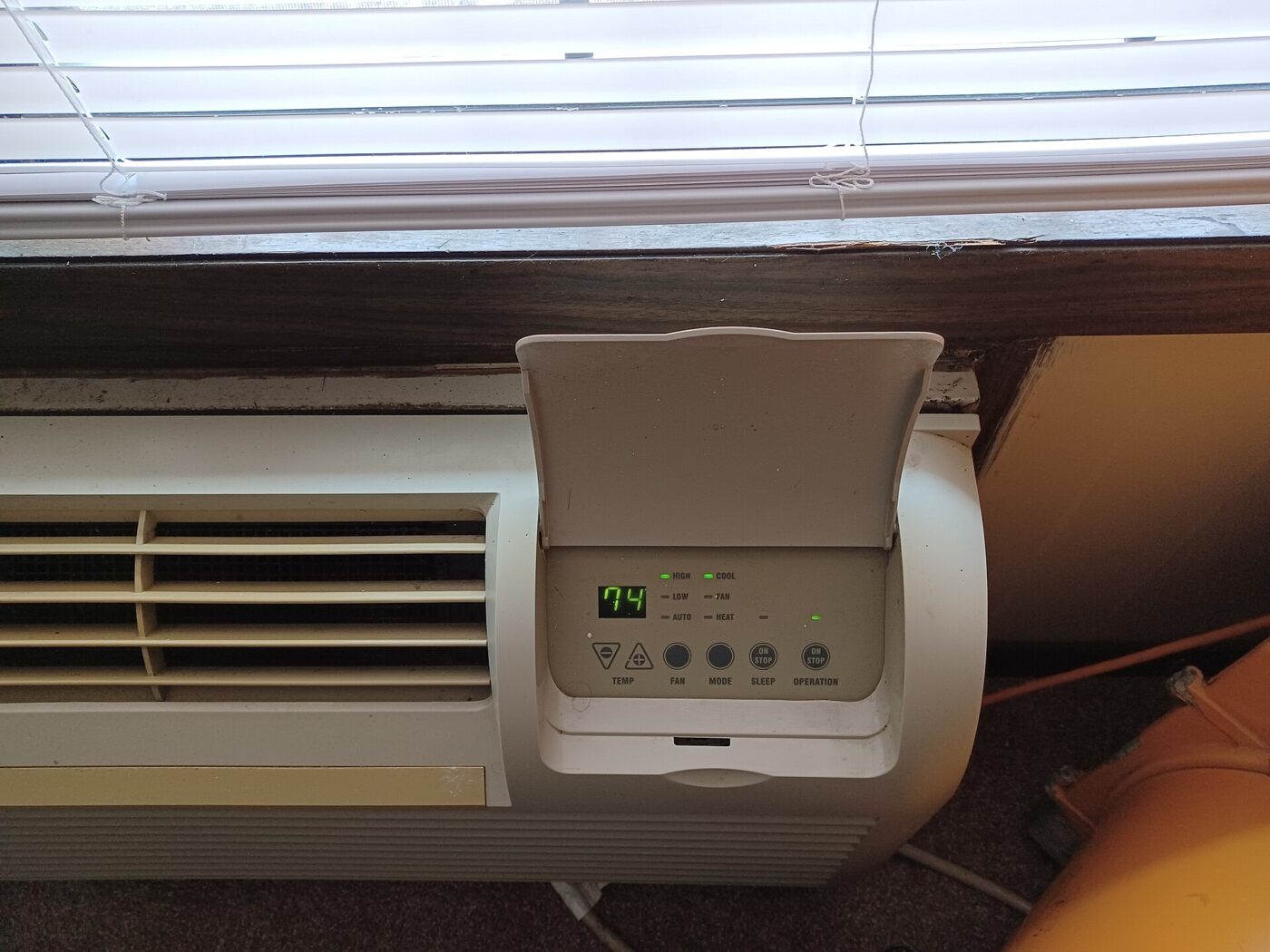
The split starts in the regulation. A window, through-the-wall or portable unit is a room air conditioner under 10 CFR 430.32(b), rated on a combined energy efficiency ratio. A ductless mini split is a central heat pump under 430.32(c), rated on SEER2 and HSPF2. Two tables, two metrics, no conversion.
EPA sorts them the same way, and this is the difference buyers feel. 40 CFR 82.152 defines a small appliance as one fully manufactured, charged and hermetically sealed in a factory with five pounds or less of refrigerant, naming window air conditioners, portable air conditioners and packaged terminal air heat pumps as examples. A split system with a field-connected line set is not in that class.
That carries consequences. 40 CFR 82.156(a) requires technicians to evacuate refrigerant with certified recovery equipment before opening appliances other than small appliances, and 40 CFR 82.161(a)(1)(vii) says persons disposing of small appliances need not be certified. Recovery with certified equipment is still required under 40 CFR 82.156(b) when a small appliance is opened, so the exemption is narrower than it sounds.
A sealed room unit avoids the field refrigerant work, not the refrigerant rules.
The number on a window heat pump measures cooling only
This is the most useful thing a shopper can know about the category, and DOE says it in its own words. In the room air conditioner standards final rule published May 26, 2023 at 88 FR 34298, the agency writes that the test procedure at appendix F does not account for the energy consumption during heating operation, and that CEER therefore reflects efficiency during cooling mode and other low power modes.
So a reverse-cycle window unit carries a federal efficiency number that says nothing about how efficiently it heats. There is no federal heating rating for a room air conditioner the way there is an HSPF2 for a mini split, and DOE said adding one would need a test procedure amendment outside the scope of that rulemaking.
That absence is the strongest argument for a mini split wherever heating is the main job, because a mini split’s heating performance is measured and published, as in heat pump prices in 2026. It also makes a plug-in heater the fairer comparison; running cost for that is in the space heater cost piece.
The federal floor for reverse-cycle room units moved in May 2026

10 CFR 430.32(b) holds two tables. The first remained in effect from June 1, 2014 until May 26, 2026 and required a combined energy efficiency ratio of 9.8 for reverse-cycle units with louvered sides under 20,000 Btu/h. The second applies to products manufactured starting May 26, 2026 and requires 14.4 for the same class.
Both tables use the same metric, so this is a change in stringency, not measurement, and DOE’s analysis in 88 FR 34298 shows the baseline for that class at 9.8 CEER and the adopted level at 14.4. Two other reverse-cycle classes moved from 9.3 to 13.7.
One wrinkle is worth knowing before shopping on the label. The ENERGY STAR room air conditioner pages we read on October 1, 2026 list 13.2 CEER for reverse-cycle louvered units under 20,000 Btu/h, against a current specification effective date of October 30, 2023. As published on the day we read them, those thresholds sit below the federal minimum now in force for newly made units in the same class. Check the CEER figure rather than the badge.
| Reverse-cycle room air conditioner class | Until May 26, 2026 | From May 26, 2026 |
|---|---|---|
| Louvered sides, under 20,000 Btu/h | 9.8 CEER | 14.4 CEER |
| Without louvered sides, under 14,000 Btu/h | 9.3 CEER | 13.7 CEER |
| Louvered sides, 20,000 Btu/h or more | 9.3 CEER | 13.7 CEER |
| Without louvered sides, 14,000 Btu/h or more | 8.7 CEER | 12.8 CEER |
A unit made before the cut-over can still be on a shelf. The manufacture date decides which table applied.
The recall records on the two sides look nothing alike
We queried the CPSC recall database on October 1, 2026 for the product names heat pump, ductless and air conditioner. The searches returned 33 unique notices, 10 dated on or after January 1, 2020. Of those ten, six cover room, through-the-wall or portable units and account for roughly 1.8 million US units; three cover split or packaged systems and about 70,000.
The room-unit side is heavier in both count and volume. Midea recalled about 1.7 million U and U+ window air conditioners in June 2025 because pooled water can fail to drain and lead to mold growth. Royal Sovereign recalled about 33,570 portable air conditioners in December 2021 over a drain motor that can ignite the plastic enclosure, a notice reporting one death. Daikin recalled about 62,100 Amana packaged terminal units in August 2023, about 13,514 window and through-the-wall units in June 2026 and about 4,633 more in September 2026.
One detail is a buying lesson by itself. The June 2026 Amana notice describes a heating element that can remain energized during a ground fault despite being switched off. A heating element is electric resistance heat, not a heat pump, and plenty of room units sold as heating and cooling warm the room with a coil. These counts are notices, not failure rates, and room units outsell split systems by far.
Which one each kind of buyer should pick
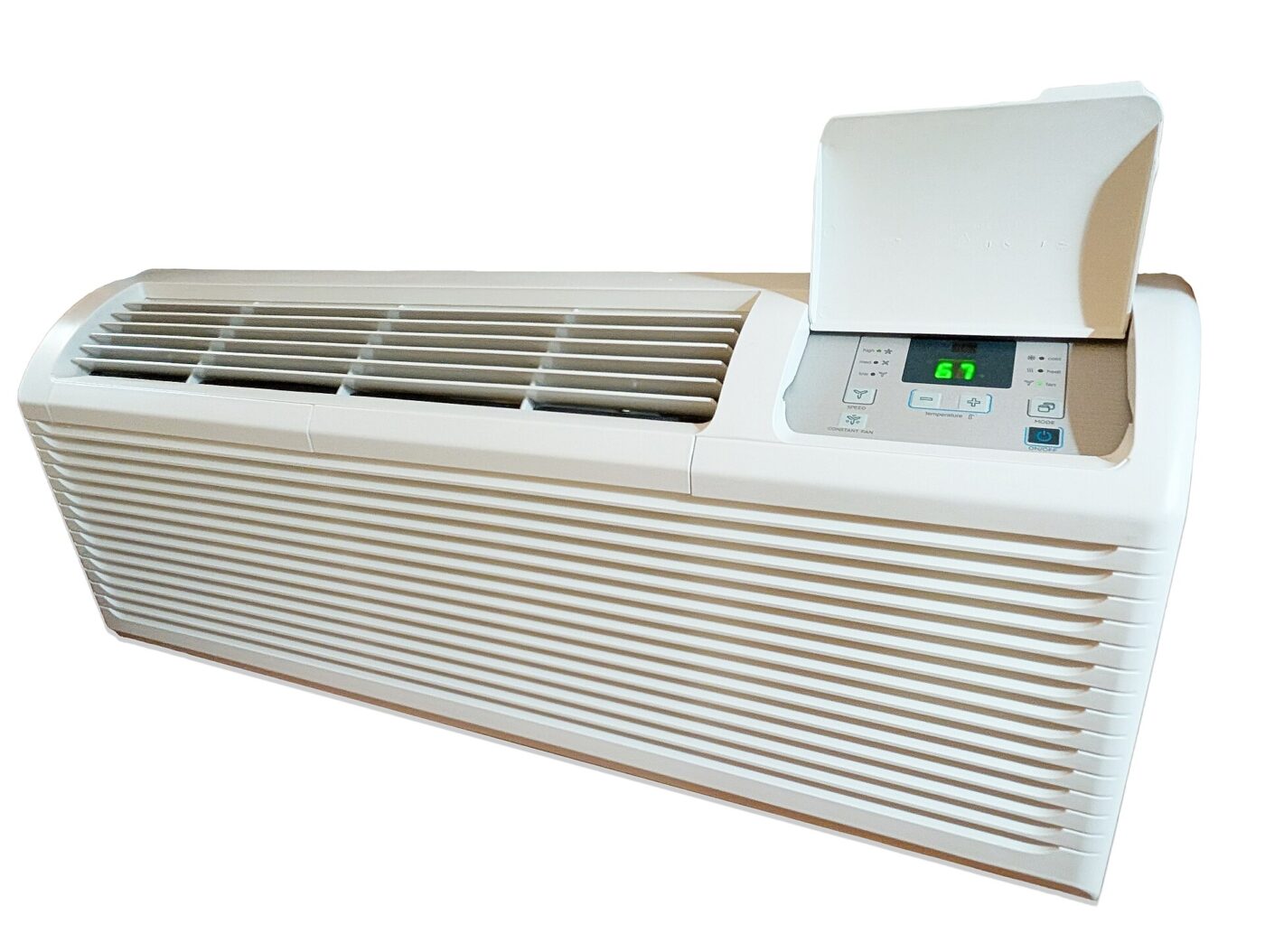
A window or portable heat pump suits a renter, one room, anyone who cannot change a wall permanently. It arrives sealed, needs no field refrigerant work and leaves with you. The cost is the one named above: no federal heating rating, lower efficiency, and a recall record concentrated here. Pair it with sealing around the opening, as in the window sill draft stopper guide.
A mini split suits an owner keeping the room conditioned for years, especially where heating is the main season. Its heating performance is measured and published, it is quieter indoors, and it does not block a window. The cost is permanence and an installation that touches a refrigerant circuit.
If heat is the whole job and cooling is incidental, neither is necessarily the answer. A plug-in heater does one thing, with the safety rules in our indoor use safety piece and the control question in the thermostat guide. That is a worse machine and a cheaper decision, and for a spare room used twice a week it is often right.
Renting, one room, nothing permanent: a room unit. Owning, heating-led: ductless.
What to watch next
- Whether ENERGY STAR revises its room air conditioner criteria above the May 2026 federal minimums
- Any DOE test procedure amendment adding a heating metric for room air conditioners, which the agency called out of scope in 2023
- CPSC for new room and through-the-wall notices; our count on October 1, 2026 was six since January 2020
Where to start
Paid links: we earn a commission if you buy through the buttons below, at no extra cost to you. As an Amazon Associate I earn from qualifying purchases.
One-room heating and cooling options compared
| Product type | Good fit for | Where to look |
|---|---|---|
| 120V window heat pump air conditioner | Fits a window opening | See listings on AmazonOpens Amazon search results, not one listing: check the model on the product page. |
| Dual-hose portable heat pump air conditioner | Fits a room with no usable window | See listings on AmazonOpens Amazon search results, not one listing: check the model on the product page. |
| Window AC insulating side panel kit | Fits sealing the gap around a unit | See listings on AmazonOpens Amazon search results, not one listing: check the model on the product page. |
Product types that fit the trend described above, not tested models. Check the exact listing before you buy. How we pick them.
120V window heat pump air conditioner
Where to look: Amazon
The federal minimum for reverse-cycle louvered units under 20,000 Btu/h rose to 14.4 CEER for units made from May 26, 2026. Look for wording that says heat pump rather than heating element.
- Sealed at the factory, no line set
- Leaves with a tenant
- CEER rates cooling only
- Blocks the window it sits in
Dual-hose portable heat pump air conditioner
Where to look: Amazon
Portable units still need an exhaust path, and dual hoses exist because a single hose pulls replacement air from the rest of the house. Check the heating mode minimum outdoor temperature, which many listings omit.
- Moves between rooms
- Dual hose avoids drawing room air out
- Hoses and a vent kit are still needed
- Portable units carry a heavier recall record
Window AC insulating side panel kit
Where to look: Amazon
The foam concertinas supplied with most window units are the weakest part of the installation. A rigid panel cut to the opening closes the biggest air path around the unit.
- Replaces thin factory accordion panels
- Cheap relative to the unit
- Must be cut to the opening
- Does not fix a sagging sash
More: Energy and Sustainability trends and how the Trend Signal is scored.
Sources
- 10 CFR 430.32 conservation standards — eCFR
- 88 FR 34298 room air conditioner standards — GovInfo
- 40 CFR 82.152 definitions — eCFR
- 40 CFR 82.156 evacuation of refrigerant — eCFR
- Room air conditioner criteria — ENERGY STAR
- Room air conditioners — ENERGY STAR
- Midea recalls 1.7 million window units — CPSC
- Royal Sovereign recalls portable air conditioners — CPSC
- Daikin recalls Amana window and wall units — CPSC
- Friedrich recalls window air conditioners — CPSC
Questions readers ask
Is a window heat pump as efficient as a mini split?
They are not rated on the same scale, so the numbers do not compare. Room air conditioners are rated on CEER under 10 CFR 430.32(b); mini splits on SEER2 and HSPF2 under 430.32(c). DOE also states that the room air conditioner test procedure does not account for heating operation, so a window heat pump has no federal heating efficiency figure at all.
Did the rules for window heat pumps change in 2026?
Yes. 10 CFR 430.32(b) sets one table that applied until May 26, 2026 and a second for products manufactured from that date. For reverse-cycle units with louvered sides under 20,000 Btu/h, the minimum rose from 9.8 CEER to 14.4 CEER.
Does a window heat pump need an EPA certified technician?
EPA classes window units, portable units and packaged terminal air heat pumps as small appliances at 40 CFR 82.152, and 40 CFR 82.161(a)(1)(vii) says persons who dispose of small appliances need not be certified. Recovery with certified equipment is still required under 40 CFR 82.156(b) when a small appliance is opened or scrapped.
Do all window units with heat use a heat pump?
No. The June 2026 Amana recall describes a heating element that can remain energized during a ground fault, which is electric resistance heat rather than a heat pump. Listings do not always distinguish them, so look for heat pump or reverse cycle in the specifications.