We have not tested any of the heaters or brands named here. What this piece does is set the claims on the box against three things a shopper can check without owning anything: the scope and revision history of the standard those claims refer to, the CPSC staff report that bought 27 heaters and pulled them apart, and the recall database itself. Every model named appears in a federal notice or publishes a full specification we read on September 25, 2026.
The phrase to handle carefully is safety features. A tip-over switch, an overheat cutout and a cool-touch case are real engineering, and the record shows all three failing in shipped products. A recall notice is a record of which units were found to fail. It is not a list of which units are safe, and an absence from it is an absence of evidence rather than evidence of absence.
Trend Signal
71/100 Strong momentum
- Emerging
- Rising
- Mainstream
- Peaking
- Cooling
Buying interest is climbing while the recall count holds steady
CPSC staff counted 61 recalls of portable electric heaters between 1980 and 2022, covering more than 11 million units. Our own pull of the CPSC recall database on September 25, 2026 adds nine notices since January 1, 2020, covering about 1.47 million US units.
Our editorial reading of the cited data, not a forecast. How it is scored
By the numbers
- 61CPSC recalls of portable electric heaters, 1980 to 2022, over 11 million unitsCPSC staff
- 1.47MUS units in plug-in heater recalls since January 2020, our count from CPSC dataCPSC recalls
- 27,900US residential building heating fires, 2023 national estimateUS Fire Administration
- May 2025Last revision date of ANSI/UL 1278, 4th edition, per UL Standards and EngagementUL Standards
What UL 1278 actually covers
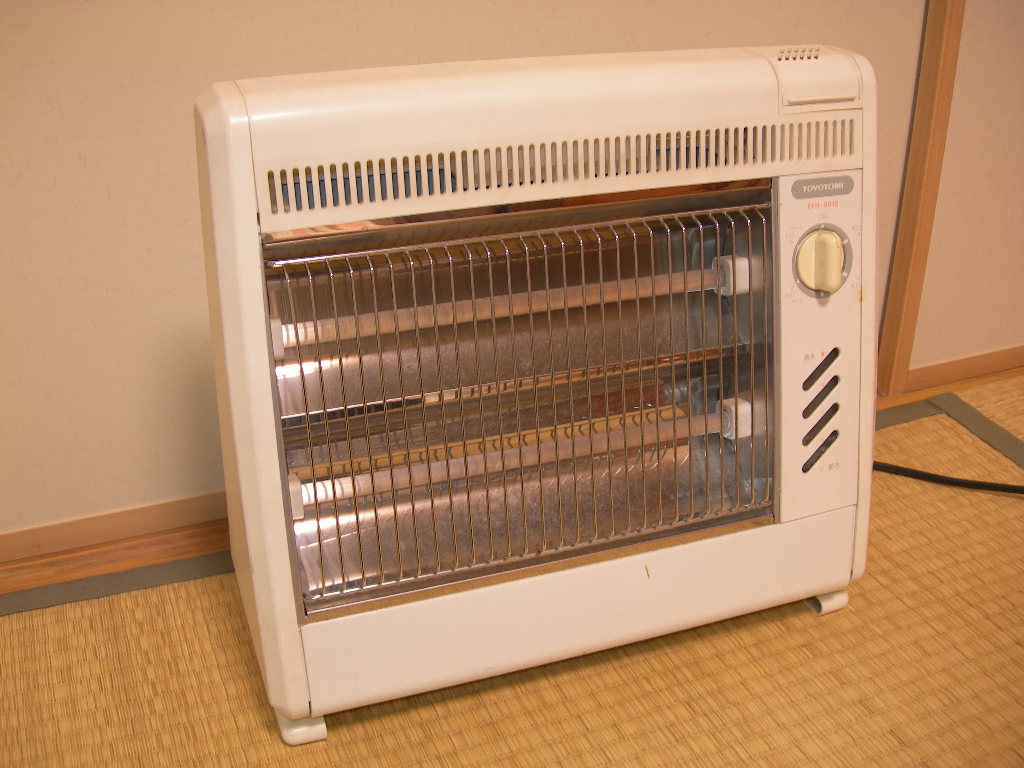
The standard behind almost every indoor plug-in heater sold in the United States is ANSI/UL 1278, Movable and Wall- or Ceiling-Hung Electric Room Heaters. UL Standards and Engagement lists the active document as the 4th edition, published March 21, 2014, ANSI approved May 27, 2025 and last revised May 29, 2025. Its scope covers movable and wall- or ceiling-hung electric room heating equipment rated 600 volts or less, and excludes fixed, baseboard, duct and central heating equipment.
The legal status deserves bluntness. CPSC’s voluntary standards page for electric heaters names UL 1278, 4th edition as the applicable standard and lists relevant rulemaking and regulations as not applicable. There is no federal performance rule for a plug-in room heater. The standard is voluntary, third-party certification to it is voluntary, and a heater can be imported and sold without either.
That is not the same as saying it does nothing. CPSC staff wrote to UL on March 7, 2022 after investigating heaters with thermally damaged plugs from several manufacturers, using x-rays and CT scans of the plug attachments, and reported inconsistent crimping, welding and soldering on the plug blade crimp connectors. The May 27, 2025 revision to UL 1278 was published under a summary of topics headed Portable Electric Heaters, then replaced two days later by a revision restoring omitted sections.
A listing mark means a lab checked the product against a voluntary standard. No federal rule sits behind it.
What the cutoffs are and are not required to do

In February 2023 CPSC engineering staff published an assessment built on 27 new portable electric heaters bought off the shelf. Twenty-five had a tip-over switch and two had none, and staff noted that UL 1278 requires one only on heaters that pose a fire risk when tipped onto a horizontal surface. All 25 shut off when tipped to 90 degrees in four directions, and every sample met the UL 1278 stability test of returning upright from a 10-degree tilt.
The nuance is in the angle. Staff reported that some tip-over switches did not meet the UL 1278 requirement to act before the heater passes its angle of critical balance, and spelled out why: a heater that has fallen but leans against a couch or bed may still be running. They also inverted the samples 180 degrees, a condition the standard does not test, after an incident report about a desk heater that kept operating while hanging from its cord. Twenty-four shut off and one did not.
Overheat protection is a story of variety rather than uniformity. Among the 27 samples, 11 had a manual-reset high-limit device only, eight an automatically resetting high limit, five both a one-shot thermal fuse and an auto-reset limit, and one a thermistor. The difference matters: an auto-reset limiter restores power once the heater cools, while a manual-reset device forces a person to come and look at it.
- Tip-over switch: required only where tipping creates a fire risk, and the activation angle is what varies.
- High-limit cutout: may reset itself or need a person, and CPSC found every combination in 27 samples.
- Cool-touch case: a claim about the enclosure, not about the air leaving the grille.
- Certification mark: verifiable in the lab directory, and CPSC could not verify ten of its 27 samples.
What we found in the recall database
CPSC staff counted 61 recalls of portable electric heaters between 1980 and 2022 covering more than 11 million units, broken out by decade: seven in the 1980s, seven in the 1990s, 20 in the 2000s, 24 in the 2010s and three in 2020 to 2022. Filtering the CPSC recall database by keyword on September 25, 2026 to plug-in electric room heaters, we count nine notices since January 1, 2020 covering about 1.47 million US units; a differently worded notice would fall outside our filter.
Read the failure column rather than the brand column. Two notices turn on the fan: one where it fails to start while the element keeps running, one where the blade leaves its motor shaft. Two are cord faults, one overheating at the plug and one where the cord partly pulls out of the enclosure. One is a sparking power switch, one is factory miswiring, and two are connected heaters behaving in ways their controls should have prevented. None of that sorts neatly by price or brand reputation.
One notice is worth singling out for anyone who reads shelf life as reassurance. Vornado recalled about 255,000 SRTH small room tower heaters on June 4, 2026 after 32 reports of overheating from fan displacement, including eight fires and one report of smoke inhalation. The recall covers units sold from August 2013 through May 2026. A product can be on sale for 13 years and then be recalled in full.
| Notice and date | Product | US units | Reported problem |
|---|---|---|---|
| 22-077, Feb 9, 2022 | Geek Heat personal heaters | About 3,000 | Power switch can spark |
| 22-723, Feb 10, 2022 | Shop LC personal heaters | About 4,500 | Can overheat |
| 22-168, Jun 16, 2022 | WarmWave and Hunter ceramic towers | About 580,000 | Cord and plug overheat in use |
| 23-148, Mar 9, 2023 | Vornado SRTH, JUL22 code | About 1,450 | Miswiring causes overheating |
| 24-298, Jul 11, 2024 | Atomi smart heaters | About 99,400 | Can turn on without user input |
| 25-036, Nov 7, 2024 | GoveeLife and Govee smart heaters | About 512,500 | Overheating; found not to comply with UL 1278 |
| 25-093, Jan 16, 2025 | Vornado VH2, JUL24 and AUG24 codes | About 7,780 | Cord can partly detach from enclosure |
| 25-179, Mar 13, 2025 | Konwin desktop heaters | About 6,050 | Fan fails to start; unit overheats |
| 26-532, Jun 4, 2026 | Vornado SRTH, all units | About 255,000 | Fan blade detaches; enclosure melts |
What the fire statistics say about indoor use
The US Fire Administration puts the 2023 national estimate for residential building heating fires at 27,900 fires, 115 deaths, 525 injuries and $488 million in dollar loss, and reports a 31% decline in those fires from 2014 to 2023. The direction of travel is good. The portable share of it is not.
In its topical report on portable heater fires covering 2017 to 2019, the same agency estimated an annual average of 1,100 portable heater fires in residential buildings causing 65 deaths, 150 injuries and $51 million in property loss. Portable heaters were 3% of residential heating fires and 41% of the fatal ones. The leading contributing factor was the heat source too close to combustibles, at 48%, and 34% of these fires started in a bedroom, where bedding was the leading item first ignited.
CPSC’s more current estimate, published January 23, 2026, is that portable heaters including electric space heaters are involved in an average of 1,600 fires a year resulting in 70 deaths and 150 injuries, for 2020 to 2022. The practical reading is that the hazard concentrates in placement and unattended running rather than exotic component failure, which is why three-foot clearance and the wall-outlet rule appear in every federal document on the subject.
Placement and clearance do more for indoor safety than any feature printed on the carton.
What to watch next
- New heater notices in the CPSC recall database through the heating season, at cpsc.gov/Recalls
- Whether UL 1278 gains an inverted-heater test and a stricter tip-over activation angle
- The next US Fire Administration heating fire estimates, which update the 2023 national figures
Where to start
Paid links: we earn a commission if you buy through the buttons below, at no extra cost to you. As an Amazon Associate I earn from qualifying purchases.
Indoor heater types compared on the features that show up in the record
| Product type | Good fit for | Where to look |
|---|---|---|
| Room heater with tip-over and overheat cutoffs | Fits a room with pets or children | See listings on AmazonOpens Amazon search results, not one listing: check the model on the product page. |
| Cool-touch cased ceramic heater | Fits a bedroom | See listings on AmazonOpens Amazon search results, not one listing: check the model on the product page. |
| Oil-filled radiator with no exposed element | Fits longer unattended running | See listings on AmazonOpens Amazon search results, not one listing: check the model on the product page. |
Product types that fit the trend described above, not tested models. Check the exact listing before you buy. How we pick them.
Room heater with tip-over and overheat cutoffs
Where to look: Amazon
The feature most often advertised and least often specified. CPSC found tip-over switches on 25 of 27 sampled heaters, with activation angles that varied enough to matter.
- Cutout acts on a tilt
- Common across price points
- Activation angle is rarely published
- Some models restart themselves
Cool-touch cased ceramic heater
Where to look: Amazon
Useful where someone may brush against the unit. It does nothing about clearance, the factor behind 48% of portable heater fires in the USFA data.
- Enclosure stays cooler to touch
- Usually light to move
- Fan noise is constant
- Grille output is still hot
Oil-filled radiator with no exposed element
Where to look: Amazon
Removes the fan failure mode that appears in two of the nine recalls we counted. This format instead shows oil leaks and scald hazards, so check the warranty.
- No exposed glowing element
- No fan to fail
- Slow to warm up
- Heavy to reposition
More: Energy and Sustainability trends and how the Trend Signal is scored.
Sources
- UL 1278, Electric Room Heaters — UL Standards and Engagement
- Voluntary Standards: Electric Heaters — CPSC
- Staff Assessment on Portable Electric Heaters, February 2023 — CPSC
- Recalls database — CPSC
- Vornado recalls SRTH tower heaters, June 4, 2026 — CPSC
- Residential building heating fire trends, 2014–2023 — U.S. Fire Administration
- Portable Heater Fires in Residential Buildings, 2017–2019 — U.S. Fire Administration
- Keep Warm and Safe This Winter, January 23, 2026 — CPSC
Questions readers ask
Is UL 1278 a legal requirement for space heaters sold in the US?
No. CPSC’s voluntary standards page for electric heaters names UL 1278, 4th edition as the applicable standard and lists relevant rulemaking and regulations as not applicable. Certification is voluntary, which is why CPSC staff found sampled heaters with no verifiable mark.
Does every indoor space heater have overheat protection?
All 27 models CPSC staff examined in February 2023 had some temperature-limiting control, but they differed: 11 had a manual-reset high limit only, eight an auto-reset limit, five a thermal fuse plus auto-reset limit and one a thermistor. Auto-reset devices restore power on their own once the unit cools.
How many space heaters have been recalled?
CPSC staff counted 61 recalls of portable electric heaters from 1980 to 2022 involving over 11 million units. Our count from the CPSC recall database on September 25, 2026 finds nine plug-in electric room heater notices since January 1, 2020, covering about 1.47 million US units.
Where do most portable heater fires start?
In bedrooms. The US Fire Administration reported that 34% of residential portable heater fires from 2017 to 2019 began in a bedroom, with bedding the leading item first ignited, and that a heat source too close to combustibles was the leading factor at 48%.