We have not tested a single one of these heaters and will not pretend otherwise. What follows compares what manufacturers publish about their own products with what the Consumer Product Safety Commission, the US Fire Administration and the UL standard for movable room heaters have put on the record. We picked the models named here on one rule: widely sold US products with a full specification on the maker’s own site, each checked by name against the CPSC recall database on September 25, 2026.
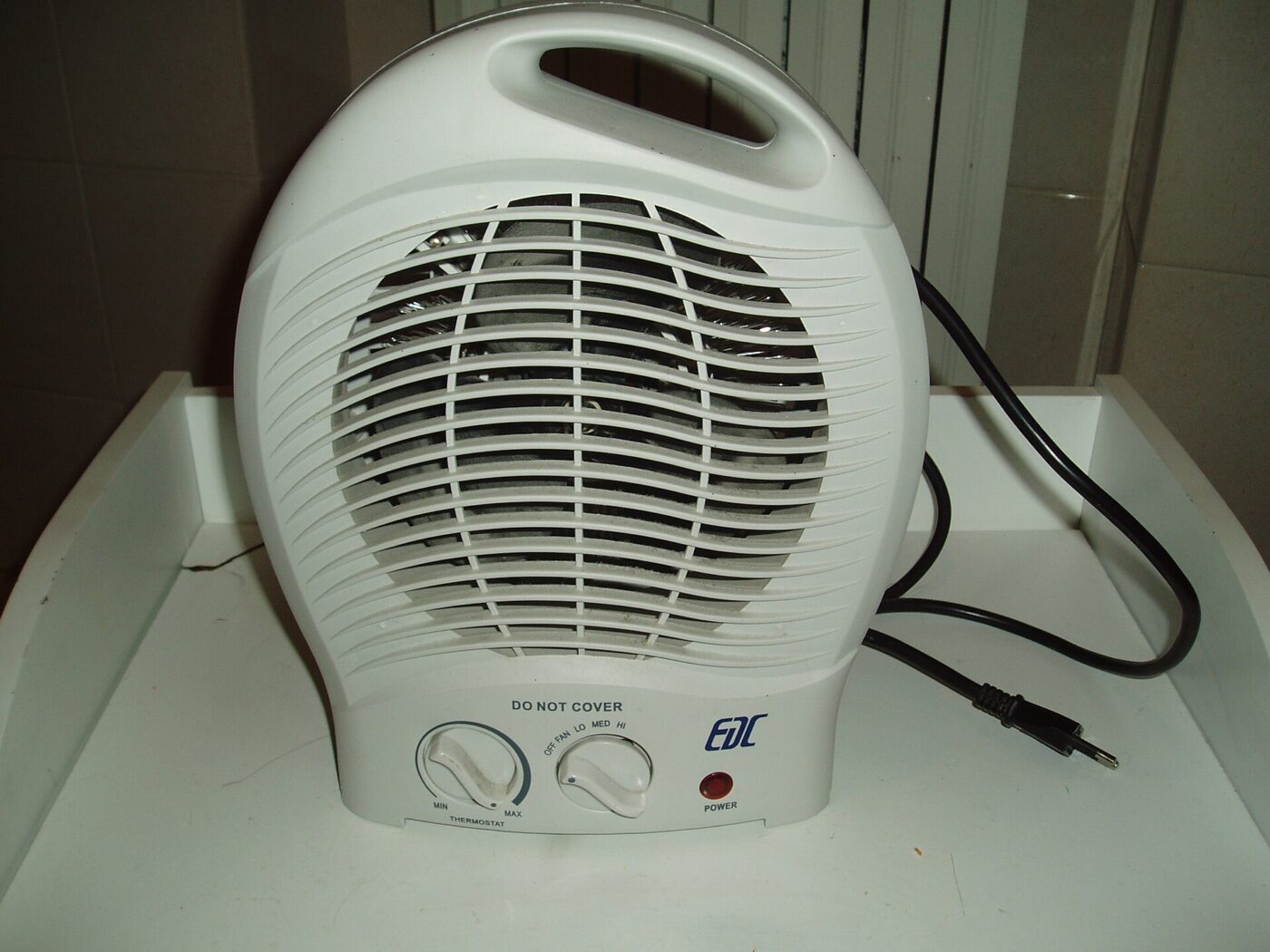
A heater under a desk is a different machine from the same heater in a living room. It sits within kicking distance of your feet, shares a footwell with a power strip and a laptop brick, and runs in a room where you are looking at a screen rather than at the heater. In a workplace it may run after you leave. Those facts, not the marketing, decide which wattage and which controls make sense.
Trend Signal
74/100 Strong momentum
- Emerging
- Rising
- Mainstream
- Peaking
- Cooling
Desk-sized heaters are the fastest-moving corner of a seasonal category
Our count from the CPSC recall database, pulled September 25, 2026, is nine recall notices for plug-in electric room heaters since January 1, 2020, covering about 1.47 million US units. Three of the nine were desk-sized or personal models.
Our editorial reading of the cited data, not a forecast. How it is scored
By the numbers
- 1,600Fires a year involving portable heaters, US, CPSC estimate for 2020 to 2022CPSC
- 25 of 27Heater models CPSC staff examined that had a tip-over switch, February 2023CPSC staff
- 41%Share of fatal US residential heating fires involving portable heaters, 2017 to 2019US Fire Administration
- 9 recallsPlug-in electric room heater recalls since January 2020, our count from CPSC dataCPSC recalls
What changes when the heater lives under a desk
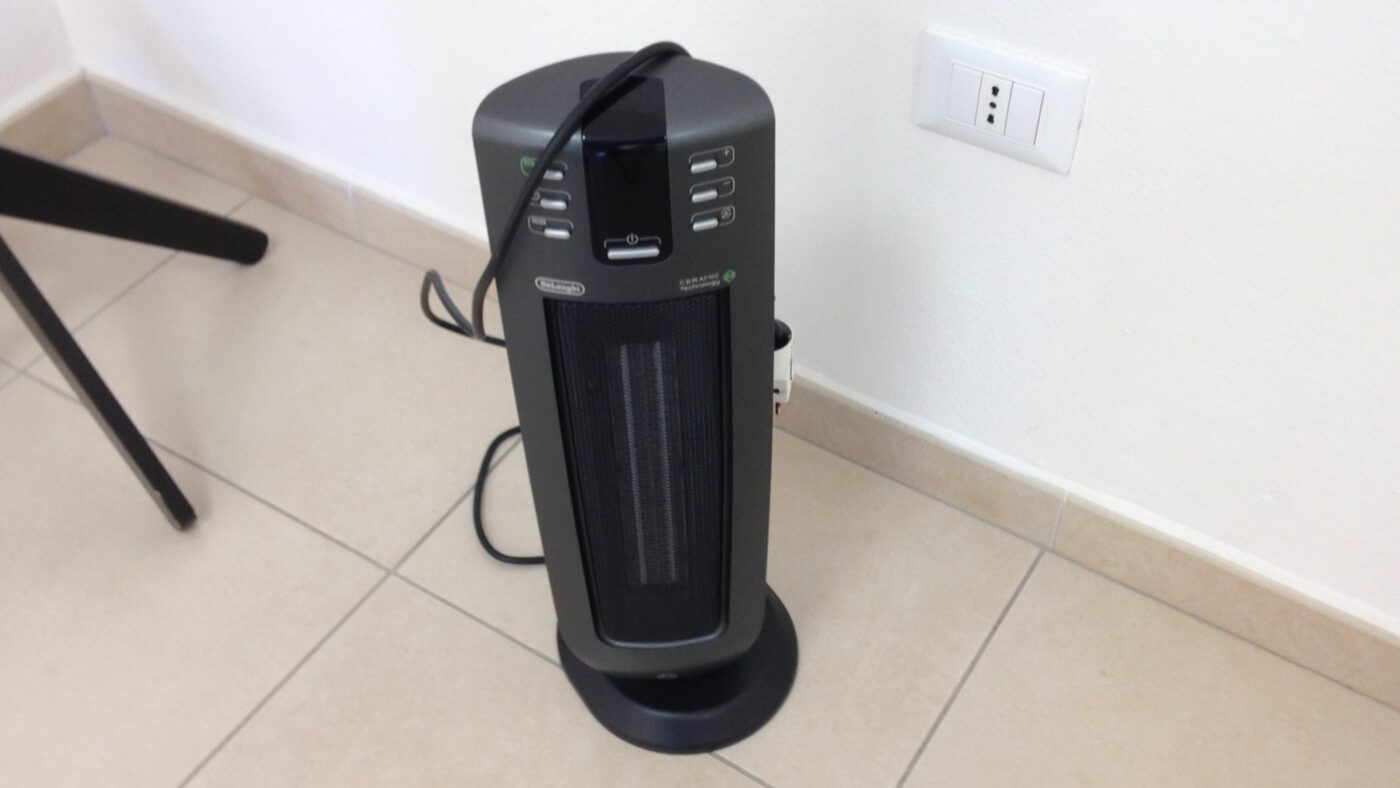
Start with current draw, because it decides what the heater may be plugged into. A 1,500-watt heater on a 120-volt outlet pulls 12.5 amps, our own arithmetic and the most useful number in this category. In its release of January 23, 2026, CPSC told consumers to plug electric space heaters directly into a wall outlet and never into an extension cord or power strip. A desk footwell is usually where every cord already runs through a strip.
That is not generic caution. In its February 2023 staff assessment, CPSC engineering staff screened 1,430 heater fire incidents from its own database covering January 2011 to February 2022 and reported that extension cords used with heaters were often attributed as the cause.
The second number is clearance. CPSC’s January 2026 guidance is three feet from drapes, furniture, bedding and other combustibles. ANSI/UL 1278 requires a caution marking visible from the front of the heater carrying that three-foot wording. CPSC staff found six of the 27 heaters they bought carried no three-foot marking at all, and eight carried no safety tag on the power cord.
If the only outlet you can reach is on a power strip, the honest answer is a smaller heater or a different outlet.
The failure modes that show up at desk height

CPSC staff added a test that does not exist in the standard, and the reason is worth repeating: an incident report described a desk heater still operating after it fell off a desk and hung from its cord. Staff turned the samples upside down. Twenty-four shut off. One did not, a tower model whose digital tip-over sensor acted at 90 degrees but not at 180. UL 1278 contains no performance test for an inverted heater.
The tip-over switch is less universal than the marketing implies. Staff recorded that UL 1278 requires one only on heaters that pose a fire risk when tipped onto a horizontal surface, and that two of the 27 had none. They also found some tip-over switches did not meet the UL 1278 requirement to act before the heater passes its angle of critical balance, which matters because a heater leaning against a bag may never reach 90 degrees.
Then there is what happens next. Sixteen samples re-energized on their own once staff stood them upright. Nine, all with digital controls, stayed off until a person reset them. In a bedroom you are there to see it. In an empty office, a heater that quietly restarts itself against a bag is the case the standard does not test.
What the recall record says about desk-sized models
We pulled the CPSC recall database on September 25, 2026 and filtered it to plug-in electric room heaters, excluding water, pool, spa and aquarium heaters, fuel-burning units and hard-wired wall or baseboard heaters. Since January 1, 2020 there are nine notices covering about 1.47 million units sold in the United States. That is our keyword filter, not an official tally, and a differently worded notice could escape it. Three involve the desk-sized end of the category, a striking share for such small products.
The older cautionary case is also a personal heater. Vornado recalled about 350,000 VH101 Personal Vortex units on April 4, 2018, then re-announced the recall on August 22, 2018 after a fire involving a recalled heater killed a 90-year-old man in Chanhassen, Minnesota in December 2017. The company had received 19 reports of the heaters catching fire.
A recall notice records which units were found to fail. It does not say which units are safe, and it is not a brand scorecard: firms that have sold heaters for decades appear more often because they have sold more for longer. Vornado’s own storefront still carried a recall banner for its SRTH tower heater when we read it on September 25, 2026, and the same company’s VH200 appears in no notice we found. Both are true at once.
| Notice and date | Product | US units | Reported problem |
|---|---|---|---|
| 22-077, Feb 9, 2022 | Geek Heat personal heaters | About 3,000 | Power switch can spark; three fire reports |
| 22-723, Feb 10, 2022 | Shop LC personal heaters | About 4,500 | Can overheat; two reports |
| 25-179, Mar 13, 2025 | Konwin desktop heaters | About 6,050 | Fan fails to start; unit overheats |
The published specs that actually separate these heaters
Once the safety record is on the table the spec sheet gets short. Wattage decides current draw and running cost. Control type decides whether the heater can be left to cycle. The listing mark decides whether a lab evaluated it against UL 1278 at all, and CPSC staff could verify certification markings for only 17 of their 27 samples in the certifying labs’ own directories. Ten had no marking or one they could not confirm.
The three models below are currently sold in the US and we read every figure on the maker’s own site on September 25, 2026. They bracket the wattage range rather than ranking anything. None appears in a CPSC recall notice under that model designation as of our pull date, which is a statement about the database and not a promise about the product.
| Model | Rated watts | Controls | Published warranty |
|---|---|---|---|
| Lasko MyHeat 101 | 200 | One heat setting, manual | 3 years |
| Lasko MyHeat Max CD09100 | 1,500 | Two settings, timer, thermostat | 3 years |
| Vornado VH200 | 1,500 / 750 | Thermostat knob, three settings | 5 years |
A 200-watt heater cannot warm a room, and at a desk that is the point of it.
What it costs to run, and when to skip it
The BLS average price for electricity in US cities was 19.6 cents per kilowatthour in August 2026. At that price a 1,500-watt heater costs about 29 cents an hour and a 200-watt personal heater about four cents, our arithmetic on the BLS figure. Over an eight-hour day that is roughly $2.35 against 31 cents. If you are warming a footwell rather than a room, the smaller unit is the correct tool, and it keeps you well under the current that makes cords dangerous.
Two situations argue against buying at all. If the cold is coming through a window or a door, a heater pays to replace air you are losing, and sealing is cheaper. If you are in a rented or shared office, check the building rules first, because many employers prohibit personal heaters and a banned heater ends up unplugged under a desk anyway.
If the space is a whole room rather than a seat, the question stops being which portable heater and starts being what fixed heating costs, which we cover in heat pump prices in 2026. More on the desk side sits in Work and Office trends.
What to watch next
- New plug-in heater notices in the CPSC recall database through the heating season, at cpsc.gov/Recalls
- Whether UL 1278 adds an inverted-heater test after the February 2023 CPSC staff recommendation
- The monthly BLS average price for electricity, which sets what any of these cost per hour
Where to start
Paid links: we earn a commission if you buy through the buttons below, at no extra cost to you. As an Amazon Associate I earn from qualifying purchases.
Desk heater types compared on the things that differ
| Product type | Good fit for | Where to look |
|---|---|---|
| Personal desk heater under 400 watts | Fits a footwell | See listings on AmazonOpens Amazon search results, not one listing: check the model on the product page. |
| Small ceramic heater with thermostat and timer | Fits a small closed office | See listings on AmazonOpens Amazon search results, not one listing: check the model on the product page. |
| Under-desk radiant foot warmer panel | Fits a desk with no floor space | See listings on AmazonOpens Amazon search results, not one listing: check the model on the product page. |
Product types that fit the trend described above, not tested models. Check the exact listing before you buy. How we pick them.
Personal desk heater under 400 watts
Where to look: Amazon
The wattage class that matches what a desk needs. Look for a verifiable listing mark and an overheat cutout, and read the rating label rather than the product title.
- Low current draw
- Cheap per hour to run
- Will not warm a room
- Often a single fixed setting
Small ceramic heater with thermostat and timer
Where to look: Amazon
The full-power option for a room with a door. At this wattage the outlet rule matters more than any feature on the box.
- Cycles instead of running flat out
- Timer limits unattended running
- Draws 12.5 amps at 1,500 watts
- Needs its own wall outlet
Under-desk radiant foot warmer panel
Where to look: Amazon
A panel removes the tip-over question by having nothing to tip. It also removes the fan, so it warms what it faces and nothing else.
- Nothing to kick over
- Very low wattage
- Heats by line of sight only
- Listing marks vary widely
More: Energy and Sustainability trends and how the Trend Signal is scored.
Sources
- Keep Warm and Safe This Winter, January 23, 2026 — CPSC
- Staff Assessment on Portable Electric Heaters, February 2023 — CPSC
- Portable Heater Fires in Residential Buildings, 2017–2019 — U.S. Fire Administration
- Recalls database — CPSC
- Vornado reannounces heater recall after a death, August 22, 2018 — CPSC
- Meijer recalls Konwin desktop heaters, March 13, 2025 — CPSC
- MyHeat personal ceramic heater, model 101 — Lasko
- MyHeat Max ceramic space heater, model CD09100 — Lasko
- VH200 Whole Room Space Heater specifications — Vornado
- Average price, electricity per kilowatt-hour, series APU000072610 — BLS
Questions readers ask
How many amps does an office space heater use?
A 1,500-watt heater on a 120-volt outlet draws 12.5 amps, our arithmetic from the rating. A 200-watt personal heater draws about 1.7 amps. CPSC advised on January 23, 2026 that electric space heaters be plugged directly into a wall outlet rather than an extension cord or power strip.
Do all space heaters have a tip-over switch?
No. CPSC staff reported in February 2023 that UL 1278 requires a tip-over switch only on heaters that pose a fire risk when tipped onto a horizontal surface. Of the 27 models they examined, 25 had one and two did not.
Does a listing mark mean a heater is safe?
It means a laboratory evaluated the product against a standard. CPSC staff could verify markings for only 17 of their 27 samples in the labs’ online directories. A mark is evidence, not a guarantee.
How much does a desk heater cost to run?
At the BLS US city average of 19.6 cents per kilowatthour in August 2026, a 1,500-watt heater costs about 29 cents an hour and a 200-watt heater about four cents, by our arithmetic.