We have not tested a heater, metered one, or run one in a room to see what happened. Everything below is arithmetic on two published federal price series, and we show the arithmetic so you can redo it with your own rate. Product types named here are categories rather than recommendations; the models mentioned by name appear because their makers publish the wattage figures the arithmetic needs, and each was checked against the CPSC recall database on September 25, 2026.
The calculation is the easiest in home energy and it is almost always presented wrong. A heater’s rated wattage divided by 1,000 gives kilowatts; kilowatts multiplied by your price per kilowatthour gives the cost of one hour at full output. The two places people go wrong are using a national average when their own state is double it, and assuming the heater runs flat out when a thermostat is holding it off for part of every hour.
Trend Signal
72/100 Strong momentum
- Emerging
- Rising
- Mainstream
- Peaking
- Cooling
The heater has not changed but the price of running it keeps climbing
The BLS average price of electricity for US cities rose from 13.6 cents per kilowatthour in January 2021 to 19.2 cents in January 2026 and 19.6 cents in August 2026, a 44% increase over that span by our arithmetic on the BLS series.
Our editorial reading of the cited data, not a forecast. How it is scored
By the numbers
- 18.31cUS average residential electricity price per kilowatthour, July 2026EIA
- 19.6cBLS average price of electricity per kilowatthour, US city average, August 2026BLS
- 17.30cUS average residential electricity price for the full year 2025EIA
- 18.20cEIA forecast for the US residential average across 2026, published September 9, 2026EIA
The arithmetic, in full
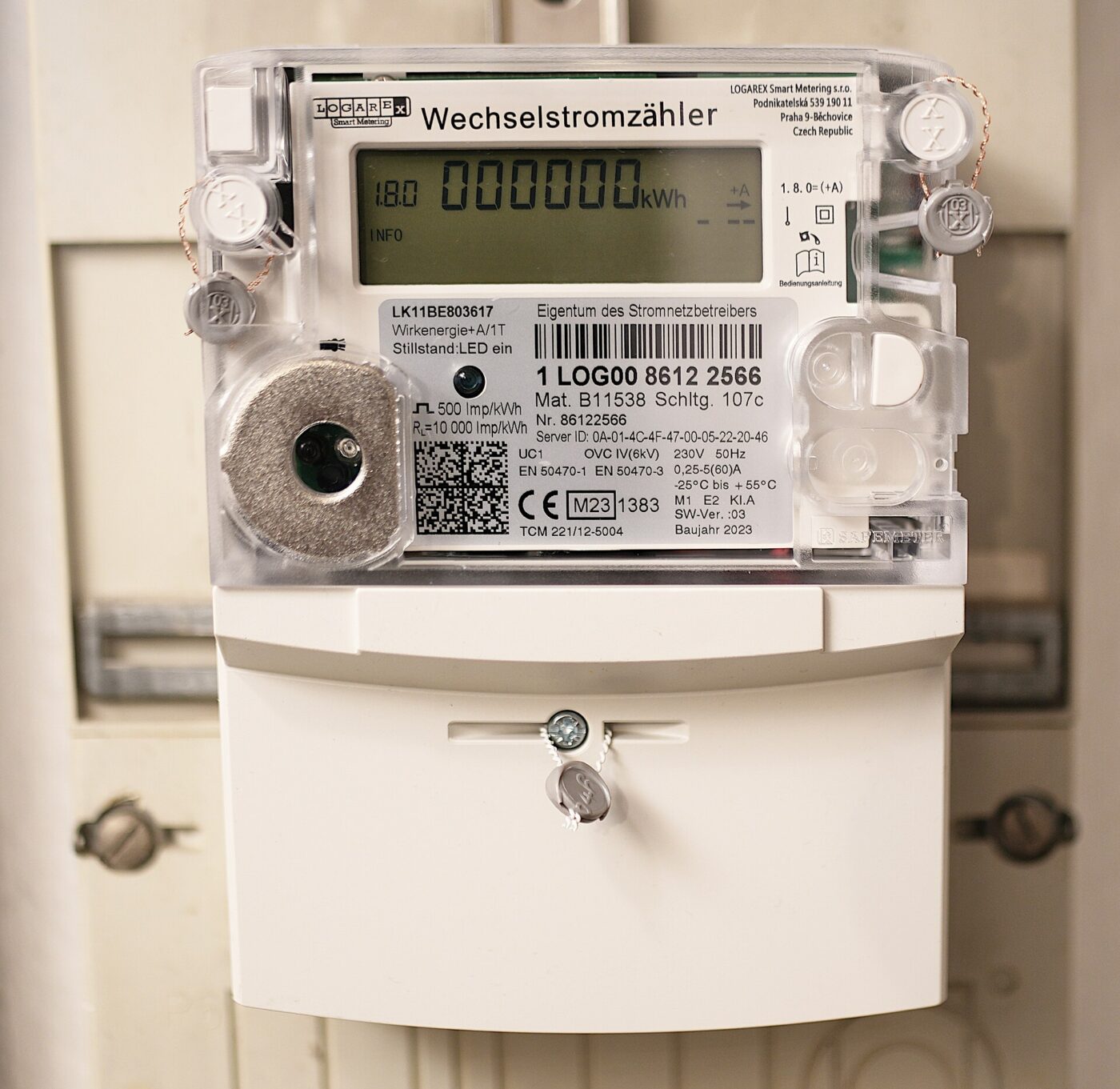
Take a 1,500-watt heater. Divide by 1,000 and you have 1.5 kilowatts. The Energy Information Administration published the average residential price of electricity for July 2026 at 18.31 cents per kilowatthour, in the Electric Power Monthly released on September 24, 2026. Multiply: 1.5 by 18.31 cents gives 27.5 cents for one hour of continuous running. Eight hours a day for 30 days is 360 kilowatthours, or $65.92 a month at the same price. All of that is our arithmetic on EIA’s published figure.
Now change the wattage rather than the price, because that is the lever you control at the point of purchase. A 750-watt low setting halves the figure to about 14 cents an hour. A 400-watt under-desk panel costs about seven cents. A 200-watt personal heater such as the Lasko MyHeat 101, published at 200 watts with a single heat setting, costs about four cents an hour. The spread between the smallest and the largest is a factor of seven, and no control feature can match it.
The correction most published figures omit is the duty cycle. A thermostat does not reduce the draw; it reduces the minutes the element is energized. If the heater is on for 40 minutes of every hour, multiply the hourly figure by two thirds. Treat every number in the table below as a ceiling for a heater running flat out, not as a bill.
| Rated watts | Per hour at 18.31 cents | Per 8-hour day | Per month at 8 hours a day |
|---|---|---|---|
| 1,500 W | 27.5 cents | $2.20 | $65.92 |
| 750 W | 13.7 cents | $1.10 | $32.96 |
| 400 W | 7.3 cents | 59 cents | $17.58 |
| 200 W | 3.7 cents | 29 cents | $8.79 |
Wattage is the only lever with a factor-of-seven range. Everything else is rounding.
Why your state matters more than your heater
The national average hides a spread that dwarfs any difference between heater models. In the same EIA table for July 2026, residential prices run from 12.72 cents per kilowatthour in Louisiana to 48.00 cents in Hawaii, with California at 33.61 cents, Maine at 32.41, Massachusetts at 30.49 and New York at 29.90. Nevada at 12.77 and Utah at 13.12 sit just behind Louisiana at the cheap end.
Put the same 1,500-watt heater through those numbers and the picture changes completely. In Louisiana it costs about 19 cents an hour and about $45.79 a month at eight hours a day. In California it costs about 50 cents an hour and $120.99 a month. In Hawaii it costs 72 cents an hour and $172.80 a month. That is our arithmetic on EIA’s state table, and it means a heater that is an obvious economy in one state is an expensive mistake in another.
It is also why the most useful purchase in this category is sometimes not a heater but a plug-in energy monitor. It reads what the heater actually drew rather than what the label says it might, and it captures the duty cycle every published cost-per-hour figure has to assume.
| State | Residential price, July 2026 | 1,500 W per hour | 1,500 W per month at 8 hours a day |
|---|---|---|---|
| Louisiana | 12.72 cents | 19.1 cents | $45.79 |
| US average | 18.31 cents | 27.5 cents | $65.92 |
| New York | 29.90 cents | 44.9 cents | $107.64 |
| California | 33.61 cents | 50.4 cents | $120.99 |
| Hawaii | 48.00 cents | 72.0 cents | $172.80 |
Where the price of a kilowatthour has gone
Any cost-per-hour figure written before 2024 is now wrong, and the size of the error is the point of this section. The Bureau of Labor Statistics tracks an average price of electricity per kilowatthour for US cities. In January 2021 it was 13.6 cents. In January 2023 it was 16.8 cents. In January 2026 it was 19.2 cents, and by August 2026 it reached 19.6 cents. From January 2021 to August 2026 that is a rise of about 44% by our arithmetic on the BLS series.
EIA’s residential series tells the same story with a different sample. Its annual averages run 13.15 cents for 2020, 16.00 cents for 2023, 16.48 cents for 2024 and 17.30 cents for 2025. The July 2026 figure of 18.31 cents is up from 17.45 cents in July 2025, a gain of about 4.9%. The two series differ because BLS samples urban consumers for the Consumer Price Index while EIA reports utility revenue across all residential customers, so pick whichever is closer to your own bill and stay consistent.
For the season ahead, EIA’s Short-Term Energy Outlook released on September 9, 2026 forecasts a US residential average of 18.20 cents per kilowatthour across 2026 as a whole, against the 17.30 cents recorded for 2025. That is EIA’s forecast, not ours. The practical consequence is that the same heater in the same room costs more to run through this heating season than it did through the one before.
| January of | BLS average price per kWh | 1,500 W heater, cost per hour |
|---|---|---|
| 2021 | 13.6 cents | 20.4 cents |
| 2022 | 14.7 cents | 22.1 cents |
| 2023 | 16.8 cents | 25.2 cents |
| 2024 | 17.3 cents | 26.0 cents |
| 2025 | 17.9 cents | 26.9 cents |
| 2026 | 19.2 cents | 28.8 cents |
When a space heater is the cheap option and when it is not
The case for a portable heater is arithmetic, not ideology. If it lets you turn the whole-house thermostat down several degrees and heat only the room you are in, the saving on the central system can exceed the 27 cents an hour the heater adds. If it runs in addition to normal central heating, it is a straight addition to the bill with no offset, and at 1,500 watts it is one of the largest plug loads in the house.
Two situations turn that against you quickly. The first is a cold room that is cold because it leaks: sealing a draught costs a fraction of a season of heating it. The second is using a portable heater as a permanent substitute for fixed heating, where the cost stacks up month after month and the comparison that matters is against installed equipment. Our look at heat pump prices in 2026 covers what that alternative costs to buy.
The last thing to say about running cost is that the cheapest hour is the one the heater spends switched off. CPSC’s January 23, 2026 guidance says to turn heaters off when sleeping, for a different reason, and it happens to be the same advice the meter gives. More on the wider category sits in Energy and Sustainability trends.
A portable heater pays only when it lets you heat less of the house, not when it heats the house twice.
What to watch next
- The monthly BLS average price of electricity, series APU000072610, which sets every figure here
- EIA Electric Power Monthly each month, for the state table that decides your own cost per hour
- The EIA Short-Term Energy Outlook, for the residential price path through the heating season
Where to start
Paid links: we earn a commission if you buy through the buttons below, at no extra cost to you. As an Amazon Associate I earn from qualifying purchases.
What to buy if the running cost is the point
| Product type | Good fit for | Where to look |
|---|---|---|
| Low-wattage personal heater | Lowest cost per hour | See listings on AmazonOpens Amazon search results, not one listing: check the model on the product page. |
| Heater with a true low-wattage setting | Lowest cost per degree held | See listings on AmazonOpens Amazon search results, not one listing: check the model on the product page. |
| Plug-in electricity usage monitor | Measures what you actually draw | See listings on AmazonOpens Amazon search results, not one listing: check the model on the product page. |
Product types that fit the trend described above, not tested models. Check the exact listing before you buy. How we pick them.
Low-wattage personal heater
Where to look: Amazon
At US average prices this class costs under a dollar a day at eight hours. It works only if what you need warmed is a seat rather than a space.
- Four to seven cents an hour
- Low current draw
- Warms a person, not a room
- Often one fixed setting
Heater with a true low-wattage setting
Where to look: Amazon
The specification to look for is the published minimum wattage. De’Longhi lists 700 watts as the floor on its TRD40615E; many heaters marketed with eco modes publish no minimum at all.
- Real step down in watts
- Cycles less at a set temperature
- Eco is defined differently by each maker
- Slower to warm a room
Plug-in electricity usage monitor
Where to look: Amazon
The only way to replace the assumption in every cost-per-hour table with a measurement. CPSC advises plugging heaters directly into a wall outlet, so use a monitor rated for the load.
- Captures the real duty cycle
- Works on any appliance afterwards
- One more thing between plug and outlet
- Accuracy varies by model
More: Energy and Sustainability trends and how the Trend Signal is scored.
Sources
- Electric Power Monthly, Table 5.6.A, average price by state, July 2026 — EIA
- Electric Power Monthly, Table 5.3, average price by sector — EIA
- Short-Term Energy Outlook, September 9, 2026 — EIA
- Average price, electricity per kilowatt-hour, series APU000072610 — BLS
- Keep Warm and Safe This Winter, January 23, 2026 — CPSC
- MyHeat personal ceramic heater, model 101 — Lasko
- TRD40615E Dragon 4 oil-filled radiator specifications — De’Longhi
Questions readers ask
How much does a 1,500-watt space heater cost per hour?
About 27.5 cents at the US average residential price of 18.31 cents per kilowatthour for July 2026, by our arithmetic: 1.5 kilowatts multiplied by 18.31 cents. In Louisiana at 12.72 cents it is about 19 cents an hour, and in Hawaii at 48.00 cents about 72 cents.
How do I work out my own cost per hour?
Divide the heater’s rated watts by 1,000 to get kilowatts, then multiply by the price per kilowatthour on your electricity bill. A 750-watt setting at 20 cents per kilowatthour is 0.75 multiplied by 20, or 15 cents an hour of continuous running.
Does a thermostat cut the cost per hour?
It cuts the cost per hour of use, not per hour of running. The element draws full rated wattage whenever it is energized, so a thermostat saves in proportion to the minutes it holds the heater off. Only a genuine low-wattage setting reduces the draw itself.
Has the cost of running a space heater gone up?
Yes. The BLS average price of electricity for US cities rose from 13.6 cents per kilowatthour in January 2021 to 19.6 cents in August 2026, about 44% by our arithmetic. EIA forecast on September 9, 2026 that the US residential average would come in at 18.20 cents across 2026, against 17.30 cents for 2025.