We have not tested any heater, and nothing here is a measurement dressed up as one. This is an explainer built from three checkable things: the physics of resistance heating, the specifications manufacturers publish for currently sold models, and what CPSC recall notices record about how each format has failed. Products are named because we read their specification on the maker’s own site on September 25, 2026, or because they appear by name in a federal notice.
The efficiency argument goes first, because it is the most common thing said about these three and it is not a real difference. Ceramic, infrared quartz and oil-filled radiators are all electric resistance heaters. Every watt drawn ends up as heat in the room. A 1,500-watt heater of any type consumes 1.5 kilowatthours in an hour of continuous running. There is no efficiency league table here, and a listing that implies one is selling something the physics does not support.
Trend Signal
63/100 Steady momentum
- Emerging
- Rising
- Mainstream
- Peaking
- Cooling
Three formats, one standard, and one identical bill per watt
All three types are electric resistance heaters covered by the same standard, ANSI/UL 1278, whose 4th edition was last revised on May 29, 2025. At equal wattage they consume identical electricity; what differs is where the heat goes and how each one fails.
Our editorial reading of the cited data, not a forecast. How it is scored
By the numbers
- 18 of 27Heaters CPSC staff sampled that were forced-air convection models, February 2023CPSC staff
- 202,000US oil-filled radiators recalled December 1, 2005 after 81 reports of leaking oilCPSC
- 34,000US Holmes oil-filled heaters recalled January 29, 2015 for spraying heated oilCPSC
- 255,000US Vornado SRTH tower heaters recalled June 4, 2026 after fan blades detachedCPSC
What each type does with the heat
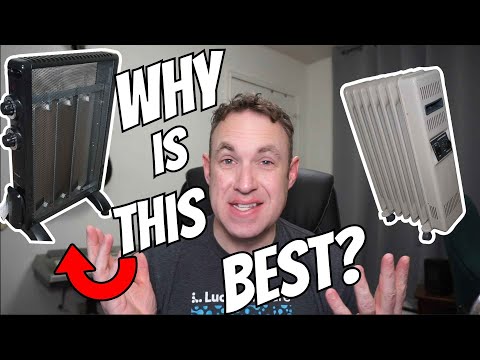
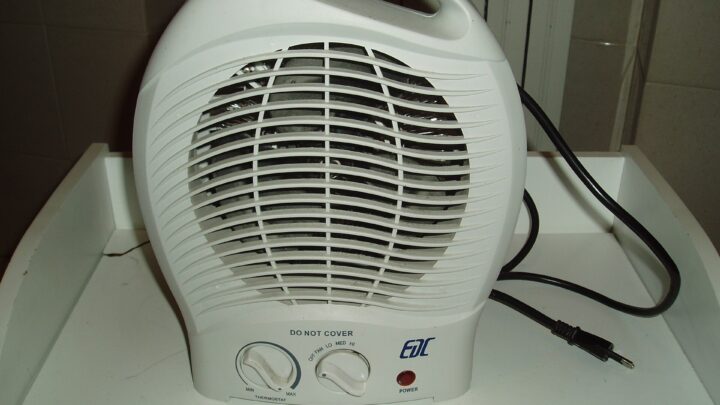
A ceramic heater passes current through a ceramic element, usually a positive temperature coefficient material whose resistance climbs as it heats, which makes it self-limiting. A fan then pushes room air across it. The result is warm air delivered quickly, spread by the fan and gone as soon as the fan stops. It heats the air first and you second.
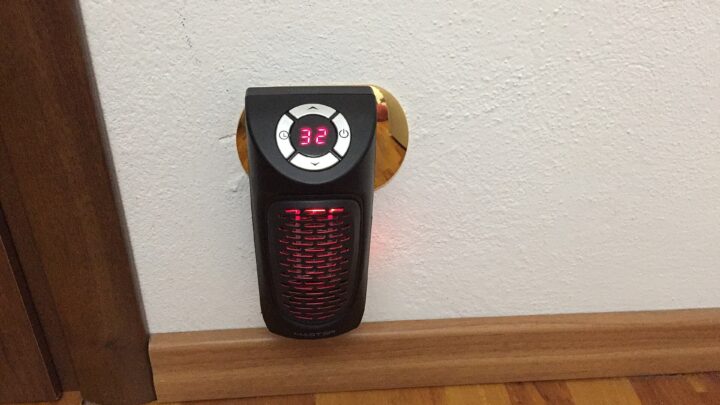
An infrared quartz heater runs current through a quartz tube and radiates in the infrared, heating surfaces and people in the line of sight rather than the air between. Many cabinet units sold as infrared are hybrids. Dr Infrared Heater publishes a dual system on its DR-968, combining an infrared quartz tube with a PTC element, rated 1,500 watts and 5,200 BTU with a claimed 39 decibels. The radiant half warms what it faces; the fan half still moves air.
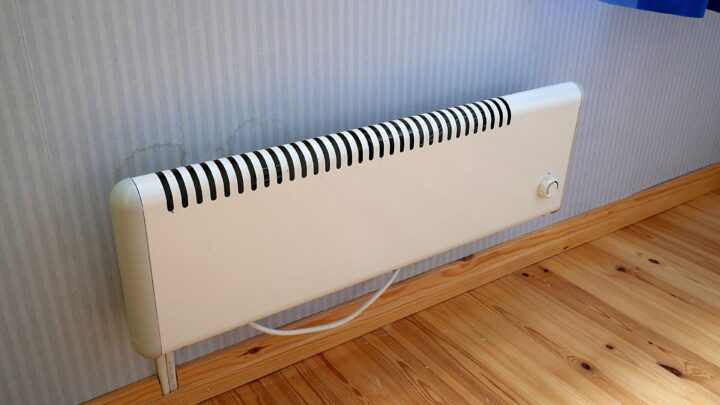
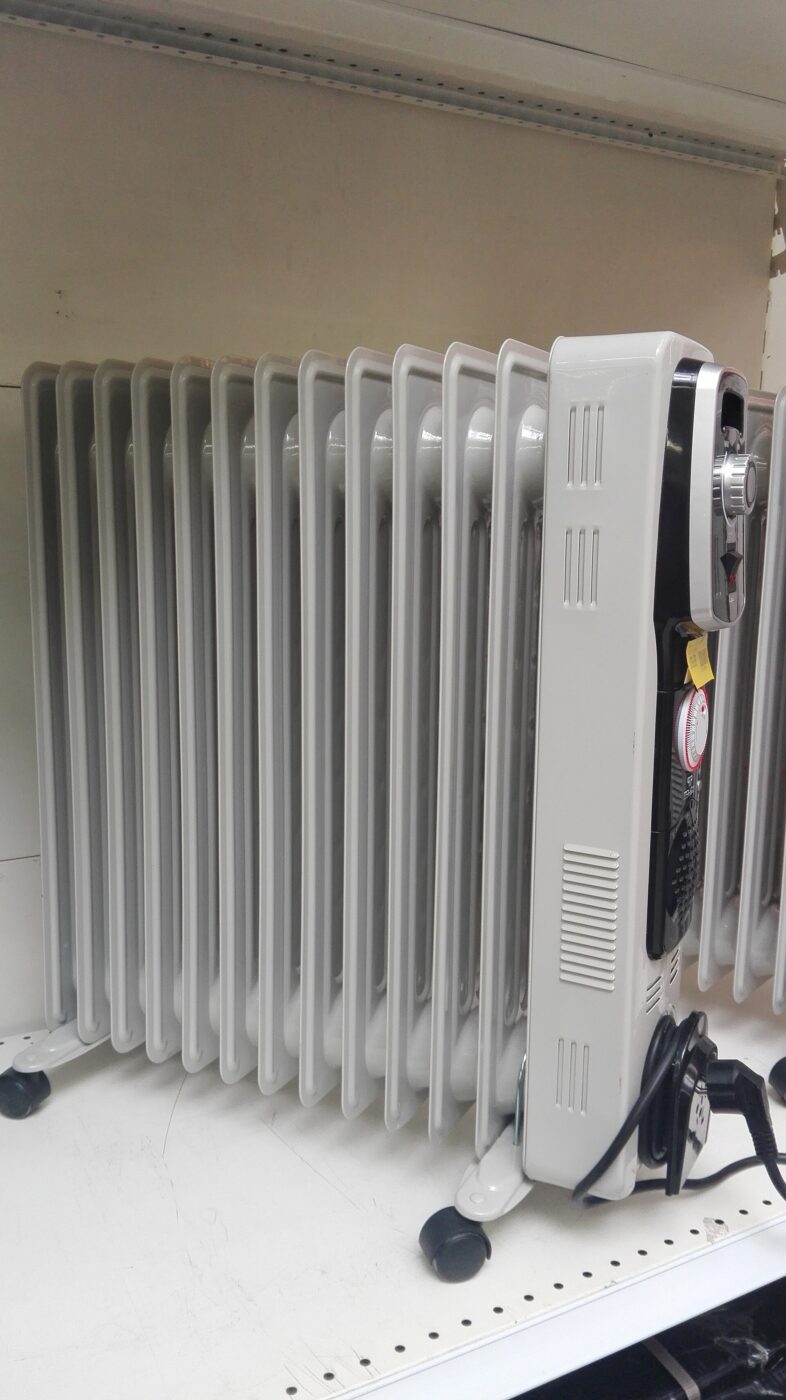
An oil-filled radiator has no exposed element and no fan. Current heats a sealed element inside diathermic oil, the oil carries heat to steel fins, and the fins warm the room by convection. De’Longhi publishes its TRD40615E at 1,500 watts maximum and 700 minimum across three settings, with six fins, a 24-hour timer, a thermal cut-off and a child lock, at 25.61 pounds. It is slow at both ends: slow to warm the room and slow to stop.
Fan heaters heat the air, radiant heaters heat what they can see, and oil-filled radiators keep going after you switch off.
Why the running cost is identical and the comfort is not
At the US average residential price of 18.31 cents per kilowatthour for July 2026, published by the Energy Information Administration on September 24, 2026, any 1,500-watt heater costs about 27 cents an hour running continuously, and any 750-watt setting about 14 cents. That is our arithmetic and it does not move with the element type. What changes is how much of that heat you feel, a comfort question rather than an energy one.
That is where format choice earns its keep. A radiant heater warms you directly and stops when you leave its line of sight, which suits a seat in a large cold room. A fan heater brings a small enclosed room up to temperature fastest, which suits a bathroom or a home office with the door shut. An oil-filled radiator holds a room steady with no noise, which suits a bedroom and long unattended running, at the price of a long warm-up.
Noise is the specification most worth chasing and the one most rarely published. Dr Infrared Heater publishes a 39-decibel figure for the DR-968 without stating the measurement conditions. Vornado describes the VH200 as whisper quiet and publishes no figure. De’Longhi does not need one, because there is no fan. If quiet matters, a fanless format removes the question rather than answering it.
How each type fails, according to the recall record
This is the part no specification sheet covers, and it separates the three formats more sharply than anything on the box. We pulled the CPSC recall database on September 25, 2026, read the hazard statement on every plug-in electric room heater notice since January 1, 2020, then looked further back for format-specific patterns.
The fan is the recurring weak point in forced-air heaters, and CPSC staff found 18 of their 27 samples were forced-air convection models. Two of the nine recent notices describe a fan-related failure: a fan that fails to start while the element keeps running, in the Konwin desktop heaters recalled March 13, 2025; a fan blade that detaches from the motor shaft and lets the enclosure melt, in the 255,000 Vornado SRTH heaters recalled June 4, 2026. Cords and plugs are second: about 580,000 WarmWave and Hunter ceramic tower heaters were recalled on June 16, 2022 after eight reports of fire at the plug or cord.
Oil-filled radiators fail in a way the other two cannot. On December 1, 2005 CPSC announced a recall of about 202,000 Maxi-Heat oil-filled radiators after welds in the heating fins broke and let oil leak, with 81 reports of leaking oil, two minor burns and two reports of people falling in spilled oil. On January 29, 2015 Sunbeam recalled about 34,000 Holmes oil-filled heaters after roughly 40 reports of units unexpectedly spraying heated oil.
| Type | How heat reaches you | Noise | Failure pattern in CPSC notices |
|---|---|---|---|
| Ceramic fan heater | Warm air pushed by a fan | Constant fan noise | Fan stall, cord and plug overheating |
| Infrared quartz | Radiant heat in line of sight, often plus a fan | Lower if the fan is small | Fan and control failures on hybrid models |
| Oil-filled radiator | Convection from warm steel fins | Silent, no fan | Oil leaks and sprayed hot oil, scald and fall hazards |
Which one fits which room
Take the room first and the format second. A small room with a door that closes and a need for warmth within minutes points at a ceramic fan heater, and the trade is noise and a fan as a wear part. A large room where you only need one chair warm points at an infrared unit, and the trade is that warmth stops at the edge of the beam. A bedroom or nursery where the heater runs for hours unwatched points at an oil-filled radiator, and the trade is weight and a slow start.
Two rules survive all three formats. The US Fire Administration found that placing the heat source too close to combustibles was the leading contributing factor in portable heater fires from 2017 to 2019, at 48%, and UL 1278 requires a caution marking on the front specifying three feet of clearance from cords, drapery and furnishings. CPSC told consumers on January 23, 2026 to plug electric space heaters directly into a wall outlet and never into an extension cord or power strip.
If none of the three suits the problem, because it is a whole floor or a room that is cold because it leaks, the comparison you want is with fixed heating rather than between portables. Our look at heat pump prices in 2026 covers that side, and the rest sits in Energy and Sustainability trends.
Pick the format for the room and the failure mode you can live with, not for an efficiency difference that does not exist.
What to watch next
- Whether makers begin publishing measured decibel figures with test conditions for fan heaters
- New format-specific hazards in the CPSC recall database as hybrid infrared cabinets spread
- The minimum wattage published on low settings, the only spec that changes running cost
Where to start
Paid links: we earn a commission if you buy through the buttons below, at no extra cost to you. As an Amazon Associate I earn from qualifying purchases.
Heater formats compared on the things that differ
| Product type | Good fit for | Where to look |
|---|---|---|
| Ceramic fan-forced room heater | Fits a small room warmed fast | See listings on AmazonOpens Amazon search results, not one listing: check the model on the product page. |
| Infrared quartz cabinet heater | Fits one chair in a big room | See listings on AmazonOpens Amazon search results, not one listing: check the model on the product page. |
| Oil-filled column radiator | Fits a quiet bedroom | See listings on AmazonOpens Amazon search results, not one listing: check the model on the product page. |
Product types that fit the trend described above, not tested models. Check the exact listing before you buy. How we pick them.
Ceramic fan-forced room heater
Where to look: Amazon
The format CPSC found most often in its sample, and the one whose failure pattern shows up most in the recall record. Good where speed matters and noise does not.
- Quickest to raise air temperature
- Light and easy to move
- Fan noise is constant
- Fan is the part that fails
Infrared quartz cabinet heater
Where to look: Amazon
Worth it where heating the whole room is hopeless. Read the specification to see whether you are buying radiant heat, a fan heater, or both in one cabinet.
- Warms people not air
- Works in rooms too big to heat
- Heat stops outside line of sight
- Most units are hybrids with a fan
Oil-filled column radiator
Where to look: Amazon
The only one of the three with no fan to stall. Its recall history runs to leaking and sprayed hot oil instead, so warranty terms and build quality matter here.
- Silent, no moving parts
- Holds heat after switch-off
- Slow to warm a room
- Heavy to reposition
More: Energy and Sustainability trends and how the Trend Signal is scored.
Sources
- Staff Assessment on Portable Electric Heaters, February 2023 — CPSC
- King of Fans recalls oil-filled radiator heaters, December 1, 2005 — CPSC
- Sunbeam recalls Holmes oil-filled heaters, January 29, 2015 — CPSC
- Vornado recalls SRTH tower heaters, June 4, 2026 — CPSC
- Sienhua recalls WarmWave and Hunter ceramic tower heaters, June 16, 2022 — CPSC
- Portable Heater Fires in Residential Buildings, 2017–2019 — U.S. Fire Administration
- Electric Power Monthly, Table 5.6.A, July 2026 data — EIA
- TRD40615E Dragon 4 oil-filled radiator specifications — De’Longhi
- DR-968 portable space heater — Dr Infrared Heater
Questions readers ask
Which is cheaper to run, ceramic, infrared or oil-filled?
None of them. All three are electric resistance heaters, so at the same wattage they draw the same power. At the US average residential price of 18.31 cents per kilowatthour in July 2026, any 1,500-watt heater costs about 27 cents an hour running continuously, by our arithmetic.
Is an infrared heater quieter than a ceramic one?
Only if it has no fan. Many cabinet units marketed as infrared are hybrids: Dr Infrared Heater publishes a dual system on the DR-968 combining an infrared quartz tube with a PTC element, with a claimed 39 decibels. An oil-filled radiator has no fan at all.
Do oil-filled heaters ever need refilling?
No. The oil is sealed inside the fins. That seal is also the failure mode specific to this format: CPSC announced recalls of about 202,000 oil-filled radiators in December 2005 after fin welds broke and let oil leak, and about 34,000 Holmes units in January 2015 after reports of heaters spraying heated oil.
Which type is safest?
The recall record does not support a ranking. It shows different hazards: fan stalls and cord overheating in forced-air models, oil leaks and scalds in oil-filled ones. The factors that cut risk are the same for all three, chiefly three feet of clearance and plugging straight into a wall outlet.