The phrase people type is specific: a draft stopper for a window sill, and what they picture is a fabric tube along the bottom rail. We have not tested any of these products. This explainer sets what manufacturers publish about the parts against what EPA publishes about where window leaks are, naming parts only where the maker lists a part number on a page we opened on September 25, 2026.
The distinction that matters is between where you feel cold and where air enters. Warm room air touching cold glass cools, grows denser and slides onto the sill, which feels exactly like a draft and is not one.
Trend Signal
50/100 Steady momentum
- Emerging
- Rising
- Mainstream
- Peaking
- Cooling
Ranked last by federal guidance for energy impact and first for accessibility
ENERGY STAR states that leaks through doors, windows and walls usually have the least impact on energy use while being the most accessible areas for a do-it-yourselfer, and rates its window film project easy, one day, under $100.
Our editorial reading of the cited data, not a forecast. How it is scored
By the numbers
- 0.3 cfm/ft2Air leakage limit for an ENERGY STAR certified window, Version 7.0ENERGY STAR
- under $100ENERGY STAR cost band for applying plastic film over windows, five-step scaleENERGY STAR
- 45 ftRoll length Frost King publishes for its 9-1/2 ounce fingertip caulking cordFrost King
- 25%Median cut in air leakage after retrofit, 23,100 homes, Berkeley Lab 2012 studyLawrence Berkeley National Laboratory
What a cushion on the sill is doing
Cold glass chills the room air touching it; that air becomes denser and falls, pooling at the sill and spilling across the floor. A soft barrier along the bottom rail slows that spill. It is a comfort device, and it works whether or not the window leaks at all.
Air leakage is the other half. ENERGY STAR’s page on sealing behind window and door trim lists the symptoms of a real leak: drafts around a closed window, visible gaps around the trim, pests and dust arriving through them, outside smells getting in, and paint peeling around the frame. None of those is fixed by anything on the sill.
Some products serve both purposes. Frost King’s double draft stop, part DDS1, is published at 1-1/4 inches by up to 36 inches wide, and the instruction is to close the window on it so a sealed tube sits on each side of the sash. That is a seal at the meeting point rather than a cushion, which makes it a different product from a fabric snake.
A cushion stops falling cold air. A tube closed in the sash stops moving air.
Two leak tests EPA publishes that cost nothing
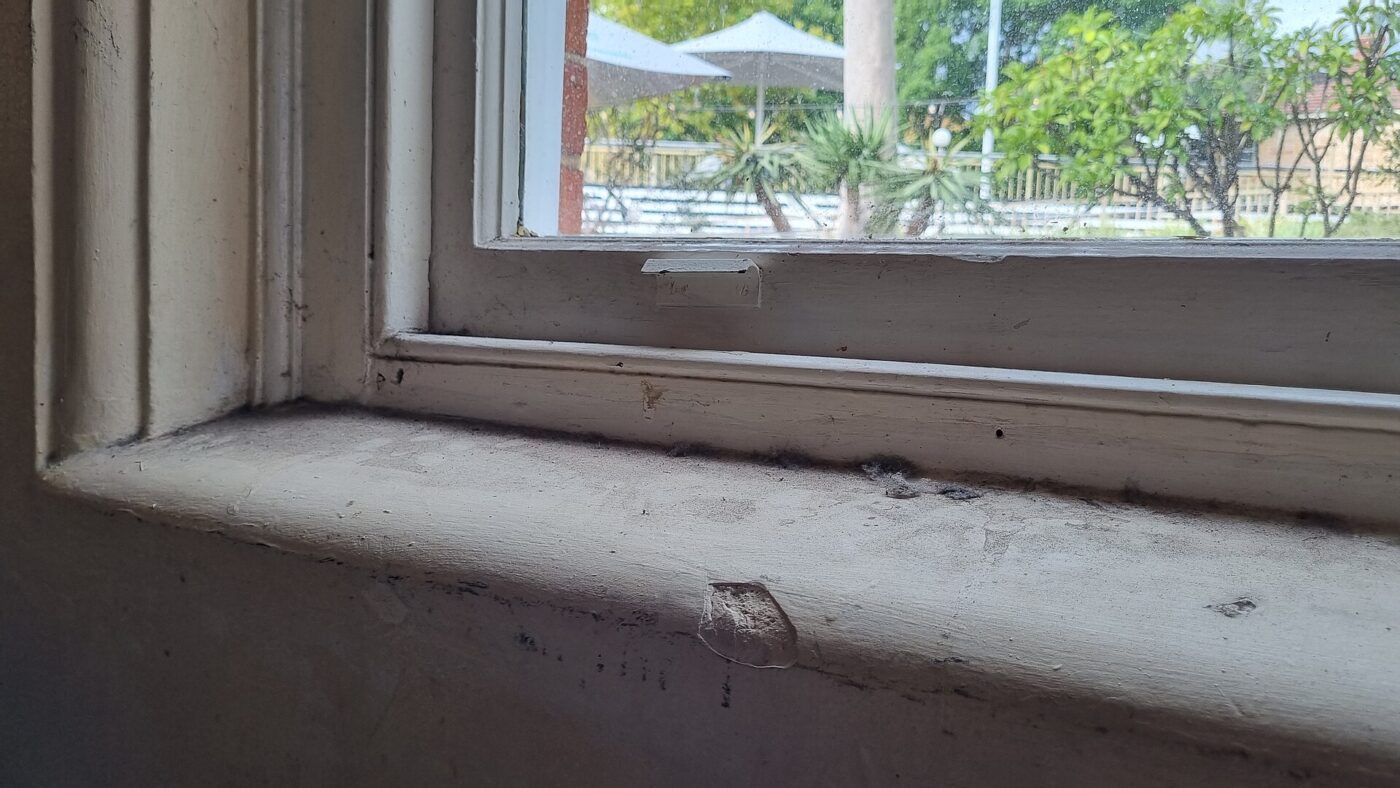
The paper test comes first. Close the window on a sheet of paper and try to pull it out. ENERGY STAR is explicit: if it moves back and forth easily the window could be tighter, and the fix is thicker weatherstrip. Run it at the top rail, the bottom rail and both sides, because a sash that seals at one edge and not another tells you where the compression has gone.
The smoke test comes second. ENERGY STAR says to light an incense stick, hold it next to the seams or sash, and watch whether the smoke is pushed in a particular direction; if it is, you most likely have a leak. Both change what you buy: a sash failing the paper test needs compression weatherstrip, a frame pushing smoke needs sealant or film over the woodwork, and a window passing both while still feeling cold has no leak at all.
Four fixes, ordered by how permanent they are
Least permanent is the sill draft stopper: a tube laid along the bottom rail, lifted out in spring, with nothing stuck to the window. The dual-tube versions that close inside the sash go further because they interrupt the air path, and Frost King states the foam tubes inside its version cut to any size.
Next is removable rope caulk, the old trick for sash windows that stay shut all winter. Frost King publishes its fingertip caulking cord in a 9-1/2 ounce roll at 1/8 inch by 45 feet and a 19 ounce roll at 90 feet, describing it as a gasketing material, insect barrier and crack filler pressed in by hand. It comes off in spring, which is the point, and it seals the sash shut, which is the cost.
Then shrink film, which ENERGY STAR rates easy, one day and in its under-$100 band, saying it reduces drafts, helps the house feel warmer in winter, cuts condensation and can eliminate leaks where it extends over the woodwork. Frost King publishes standard-window kits at 42 by 62 inches in 0.75 mil. Most permanent is compression weatherstrip: Frost King’s V-seal at 7/8 inch by 17 feet has a hinge that compresses to fill gaps.
| Fix | What it addresses | Published spec | Off in spring |
|---|---|---|---|
| Sill draft stopper | Cold air falling off the glass | Sold by length; match the sash | Yes |
| Double draft stop in the sash | Air moving through the sash gap | Frost King DDS1, up to 36 in. | Yes |
| Removable rope caulk | Gaps around a sash kept shut | Frost King F4, 1/8 in. by 45 ft. | Yes |
| Indoor shrink film kit | The opening plus the trim joint | Frost King V73H, 42 in. by 62 in. | Yes |
| V-seal weatherstrip | Compression between sash and frame | Frost King M13, 7/8 in. by 17 ft. | No |
What none of this fixes, and what it is worth
The joint behind the interior trim is the leak these products cannot reach. ENERGY STAR calls that project moderate to difficult because it means removing the casing, and flags that homes built before 1978, or any work disturbing paint, fall under EPA lead renovation rules.
On what the category is worth, ENERGY STAR is consistent: doors, windows and walls cause uncomfortable drafts but usually have the least impact on energy use, while being the most accessible areas, and it rates that group a moderate one-to-two-day job in its second-cheapest cost band. For scale, Berkeley Lab’s 2012 analysis of 23,100 homes measured before and after a retrofit found a median 25% cut in normalized leakage. Those are whole-house numbers from professional crews, and the rules behind that work sit in our brief on whether weatherstripping is worth it.
Two safety notes before you seal a window shut
ENERGY STAR warns that sealing a home or its ducts can cause combustion appliances such as water heaters to backdraft, creating unsafe conditions indoors, and that a tighter home may need added mechanical ventilation. Sealing one bedroom window is not that situation; sealing every window in a house with vented gas appliances is closer to it.
The second note is about which windows you immobilize. Rope caulk and shrink film both make a sash hard to open quickly, and bedrooms rely on an openable window as a second way out. Choose which windows get the permanent treatments deliberately. Nothing here is a safety guarantee.
Seal the windows you never open. Leave the one you would escape through.
What to watch next
- Whether EPA revises the Version 7.0 specification that sets the 0.3 cfm per square foot window limit.
- Your own paper and smoke test results between October and midwinter, since a sash that seals in fall can loosen as the frame moves.
- Whether your utility posts a rebate for a professional home energy assessment, which ENERGY STAR points to for leaks behind the trim.
Where to start
Paid links: we earn a commission if you buy through the buttons below, at no extra cost to you. As an Amazon Associate I earn from qualifying purchases.
Window draft fixes compared on what they reach
| Product type | Good fit for | Where to look |
|---|---|---|
| Window sill draft stopper | Fits a sash you still open | See listings on AmazonOpens Amazon search results, not one listing: check the model on the product page. |
| Removable rope caulk | Fits a window sealed for the season | See listings on AmazonOpens Amazon search results, not one listing: check the model on the product page. |
| Indoor window insulation film kit | Fits single-glazed windows in winter | See listings on AmazonOpens Amazon search results, not one listing: check the model on the product page. |
Product types that fit the trend described above, not tested models. Check the exact listing before you buy. How we pick them.
Window sill draft stopper
Where to look: Amazon
The comfort option for cold air falling off the glass. If you want it to seal as well, look for the dual-tube style you close the sash on; Frost King publishes that at 1-1/4 inches by up to 36 inches.
- Nothing attached to the window
- Lifts out in seconds
- Does not close an air path
- Needs repositioning constantly
Removable rope caulk
Where to look: Amazon
The old answer for a sash window that will not open until spring. Do not use it on a bedroom window you would need as an exit.
- Presses into odd-shaped gaps by hand
- Peels off in spring
- Seals the window closed
- Leaves residue on some finishes
Indoor window insulation film kit
Where to look: Amazon
The only item here EPA gives its own project page, with step-by-step instructions and a note that the mounting tape comes off the trim in spring without damaging the finish.
- Adds an insulating layer of air
- Rated easy and under $100 by ENERGY STAR
- The window cannot be opened
- Needs a hair dryer and patience
More: Home Improvement trends and how the Trend Signal is scored.
Sources
- Applying Plastic Over Windows Project — ENERGY STAR
- Sealing Behind Window and Door Trim — ENERGY STAR
- Identify the Problems You Want to Fix — ENERGY STAR
- Determine the Effort Required — ENERGY STAR
- Mortite Fingertip Caulking Cord — Frost King
- Double Draft Stop — Frost King
- Windows, Doors and Skylights, Version 7.0 — ENERGY STAR
- Air Leakage of US Homes, LBNL-5966E, August 2012 — Berkeley Lab
Questions readers ask
Does a draft stopper on the window sill actually stop drafts?
It stops the cold air that falls off cold glass and spreads across the floor, which is what most people feel. It does not close the path air leaks through, which on a double-hung window is usually the meeting rail, the sash edges or the joint behind the trim.
How do I tell whether my window is leaking or just cold?
EPA publishes two tests. Close the sash on a sheet of paper and pull: if it slides easily, ENERGY STAR says the window needs thicker weatherstrip. Then hold a lit incense stick along the seams; if the smoke is pushed in a particular direction you most likely have a leak.
Is window shrink film worth putting up?
ENERGY STAR gives it a dedicated project page, rates it easy, one day and in its under-$100 cost band, and says the film reduces drafts, cuts condensation and can eliminate leaks where it extends over the woodwork. The window cannot be opened until you take it down.
Can I seal every window in the house?
ENERGY STAR warns that tightening a home can cause combustion appliances such as water heaters to backdraft and that a tight home may need added mechanical ventilation. Separately, rope caulk and shrink film both immobilize a sash, so leave bedroom windows that serve as an emergency exit openable.