For three years the pitch for a weekend of caulk and door sweeps came with a federal sweetener attached. The Energy Efficient Home Improvement Credit covered 30% of qualifying costs, with building envelope components such as insulation, air sealing materials, doors and windows capped at $1,200 a year. The IRS states that the credit is allowed for qualifying property placed in service on or after January 1, 2023, and before December 31, 2025.
That sweetener is gone for 2026 purchases; the underlying reason to seal a house is not. The Bureau of Labor Statistics measured the energy services index, which covers electricity and piped gas, up 4.0% over the 12 months ended August 2026. Weatherstripping is one of the few home energy jobs where materials cost tens of dollars rather than thousands, which is why losing a percentage credit changes the math less than it does for a heat pump.
Trend Signal
50/100 Steady momentum
- Emerging
- Rising
- Mainstream
- Peaking
- Cooling
A steady DIY category that keeps its payback without the tax credit
The federal Energy Efficient Home Improvement Credit applied to property placed in service before December 31, 2025, while the CPI energy services index rose 4.0% over the 12 months ended August 2026.
Our editorial reading of the cited data, not a forecast. How it is scored
By the numbers
- 15%EPA average estimate of heating and cooling savings from air sealing plus insulationENERGY STAR
- 9 in 10U.S. homes EPA describes as under-insulated on its seal and insulate pagesENERGY STAR
- 4.0%12-month rise in the CPI energy services index through August 2026U.S. Bureau of Labor Statistics
- $1,200Former annual cap on the home envelope credit, which ended with 2025 propertyInternal Revenue Service
What changed for buyers in January 2026
The credit itself was straightforward while it lasted. The IRS caps building envelope components at $1,200 a year, with exterior doors limited to $250 per door and $500 in total and windows and skylights to $600, while heat pumps sat under a separate $2,000 ceiling and a home energy audit was worth up to $150.
For a roll of foam tape and a pair of door sweeps, the credit was never the point. A $60 materials bill returned $18. The buyers who lost real money in January 2026 were the ones planning whole-house insulation or new doors, where the $1,200 cap was actually reachable.
One federal channel did not close. DOE’s home upgrades page still lists insulation and air sealing materials as eligible for either a High-Efficiency Electric Home Rebate of up to $1,600 or a Home Owner Managing Energy Savings Rebate of up to $8,000 for projects that significantly reduce household energy use. DOE says states, territories and Tribes manage these rebates and decide which products qualify, so availability is a local question.
The credit that ended mattered to door and insulation projects, not to a $60 box of weatherstripping.
What air sealing is actually worth
EPA puts a number on it. Its estimate is that homeowners save an average of 15% on heating and cooling costs, or an average of 11% on total energy costs, by air sealing and adding insulation in attics, floors over crawl spaces and basements. The agency also says 9 out of 10 homes in the United States are under-insulated, and describes the combined leaks in a typical home as the equivalent of having a window open every day of the year.
The assumptions behind that figure are modest rather than heroic. EPA assumed a knowledgeable homeowner or contractor could cost-effectively seal leaks to the attic, through the foundation and around windows and doors to achieve a 25% reduction in total air infiltration. Its modeling used composite houses across all U.S. climate zones, and savings range from about 5% of the total utility bill in the warmest zone to 16% in the coldest.
Ducts are the other leak worth knowing about. DOE states that in a typical house, 20% to 30% of the air moving through the duct system is lost to leaks, holes and poor connections. That is contractor work rather than a tape-and-sweep job, but it is why a house can feel drafty after every window is sealed.
Why the payback moved with energy prices
Savings measured as a percentage of a bill get bigger when the bill does. Over the 12 months ended August 2026, BLS measured electricity up 3.8% and utility piped gas service up 4.4%, with the energy services index up 4.0%. Those are the two lines a sealed envelope actually touches.
The longer view is steeper on the gas side. EIA’s residential natural gas price series, released August 31, 2026, shows the U.S. annual average moving from $10.78 per thousand cubic feet in 2020 to $15.34 in 2025, a rise of about 42% across five years on our arithmetic, with a dip in 2024 in between.
| Year | U.S. residential natural gas price, dollars per thousand cubic feet |
|---|---|
| 2020 | $10.78 |
| 2021 | $12.18 |
| 2022 | $14.75 |
| 2023 | $15.40 |
| 2024 | $14.50 |
| 2025 | $15.34 |
A fixed percentage saving is worth more each year the underlying fuel costs more.
What to seal first, and with what

EPA’s own ordering is a useful buying list, because it names where the leaks are rather than which product is popular: the attic, the foundation, and around windows and doors. Materials fall into a short set of types, and choosing between them is mostly about the size and shape of the gap.
Two measurements do most of the work before you order. Measure the gap at its widest point with a folded index card or a feeler gauge, and measure the run in feet, including the door head as well as the two sides. Ordering by door width alone is the usual reason a kit comes up short.
- Foam tape for compression gaps that vary in width, such as sashes and attic hatches
- V-strip or tension seal for the sliding sides of doors and windows
- Door sweep or threshold seal for the bottom gap, measured to the door width
- Caulk for fixed joints that never move, such as frame-to-wall seams
- Window insulation film for single-glazed windows you do not open in winter
Who should hand this to a contractor
Weatherstripping is a materials-only job, so the case for doing it yourself is strong. The case for a professional is different work under the same heading: attic and crawl space air sealing, duct sealing and blower-door testing, where the leaks are out of reach and results are hard to verify by feel.
Two situations argue for calling someone. If a house has combustion appliances such as a gas furnace or water heater drawing air from inside, tightening the envelope changes how that air is replaced, and a professional assessment is the right order of operations. And if a rebate is in play, the program that administers it decides which products qualify, so check the local program before buying materials.
For everyone else, the failure mode is disappointment rather than danger. Sealing three doors in a house with an uninsulated attic will not produce a 15% bill cut, because EPA’s figure covers sealing and insulation together. Treat weatherstripping as the cheapest first step, not the whole project.
What to watch next
- Whether Congress restores any version of the Energy Efficient Home Improvement Credit, which the IRS currently shows as ending with property placed in service before December 31, 2025.
- Your state or territory’s Home Energy Rebates program page, for whether rebates covering insulation and air sealing have opened locally.
- The monthly CPI energy services index, since the percentage savings EPA estimates are worth more as that index rises.
Where to start
Paid links: we earn a commission if you buy through the buttons below, at no extra cost to you. As an Amazon Associate I earn from qualifying purchases.
Air sealing materials compared on the gaps they suit
| Product type | Good fit for | Where to look |
|---|---|---|
| Adhesive foam weatherstrip tape | Fits doors that stick or drag | See listings on AmazonOpens Amazon search results, not one listing: check the model on the product page. |
| Door sweep or threshold seal | Fits the bottom door gap | See listings on AmazonOpens Amazon search results, not one listing: check the model on the product page. |
| Paintable acrylic latex caulk | Fits fixed frame joints | See listings on AmazonOpens Amazon search results, not one listing: check the model on the product page. |
Product types that fit the trend described above, not tested models. Check the exact listing before you buy. How we pick them.
Adhesive foam weatherstrip tape
Where to look: Amazon
Foam tape is the forgiving option for gaps that vary along their length, which is most old doors and sash windows. Clean and dry the surface first, because adhesive failure is the usual complaint.
- Compresses to fill uneven gaps
- No tools needed
- Adhesive fails in damp spots
- Needs replacing every few years
Door sweep or threshold seal
Where to look: Amazon
The gap under an exterior door is usually the largest leak in the room, and it is the one foam tape cannot reach. Measure the door width, not the frame, before ordering.
- Covers the biggest single opening
- Screw-on types last longest
- Can drag on thick carpet
- Needs cutting to width
Paintable acrylic latex caulk
Where to look: Amazon
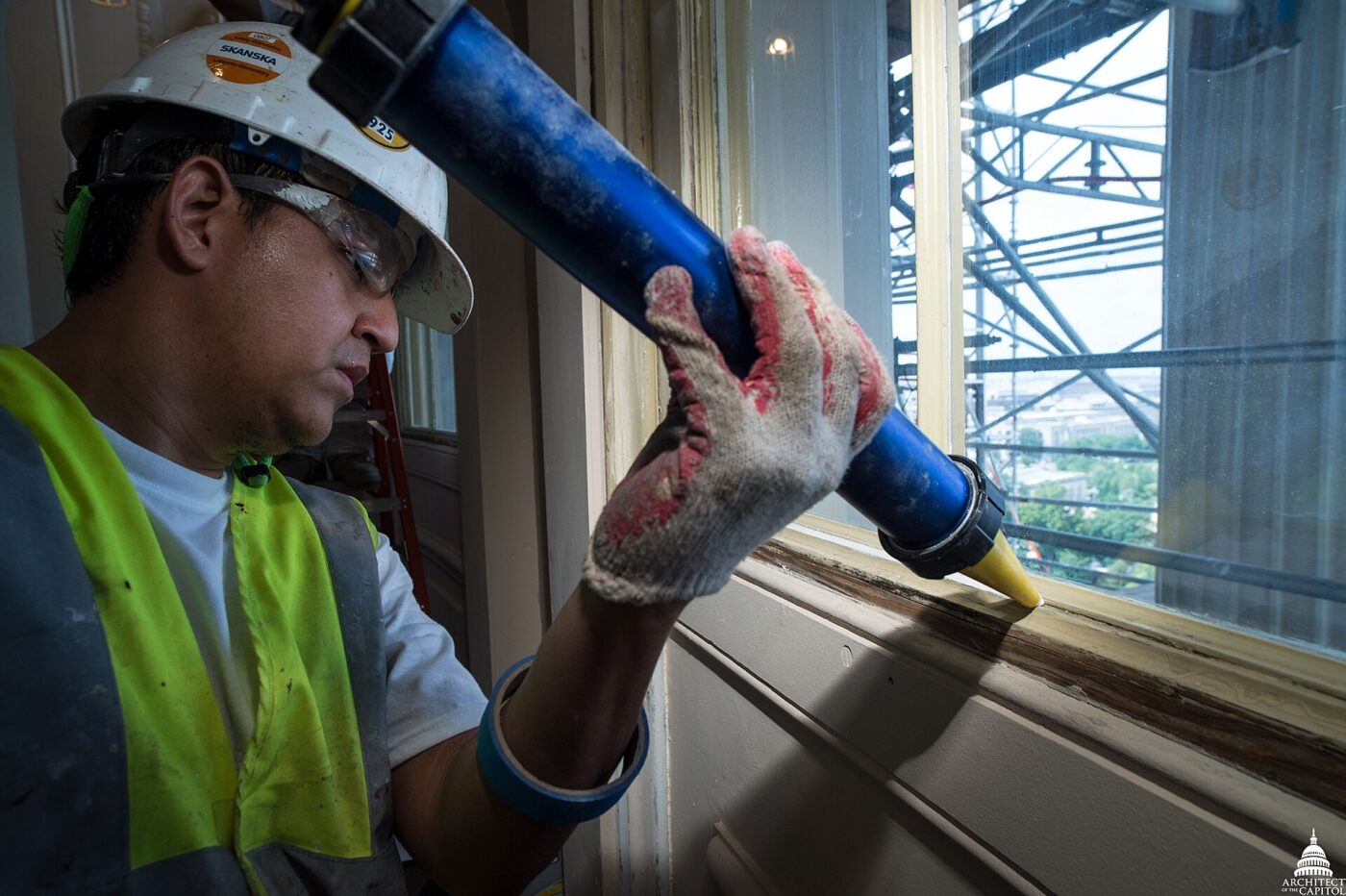
Caulk belongs on frame-to-wall seams, baseboard gaps and penetrations, never on a surface that opens. EPA lists the joints around windows and doors among the leaks worth sealing first.
- Permanent on joints that never move
- Paints over cleanly
- Wrong on any moving part
- Needs a steady hand and a gun
More: Energy and Sustainability trends and how the Trend Signal is scored.
Sources
- Methodology for Estimated Energy Savings — ENERGY STAR
- Why Seal and Insulate — ENERGY STAR
- Energy Efficient Home Improvement Credit — Internal Revenue Service
- Consumer Price Index, August 2026 — U.S. Bureau of Labor Statistics
- Home Upgrades — U.S. Department of Energy
- Natural gas prices, U.S. residential annual series — U.S. Energy Information Administration
Questions readers ask
Is the home energy tax credit still available in 2026?
No. The IRS states that the Energy Efficient Home Improvement Credit is allowed for qualifying property placed in service on or after January 1, 2023, and before December 31, 2025. Insulation and air sealing materials sat under the $1,200 annual cap for building envelope components.
How much does air sealing actually save?
EPA estimates an average of 15% on heating and cooling costs, or 11% on total energy costs, from air sealing plus adding insulation in attics, floors over crawl spaces and basements. Its modeling assumes a 25% reduction in total air infiltration, and savings range from about 5% of the utility bill in the warmest U.S. climate zone to 16% in the coldest.
Are there still rebates for insulation and air sealing?
DOE lists insulation and air sealing materials as eligible for either a High-Efficiency Electric Home Rebate of up to $1,600 or a Home Owner Managing Energy Savings Rebate of up to $8,000 for projects that significantly reduce household energy use. DOE says states, territories and Tribes manage the rebates and decide which products qualify.
What should I seal first?
EPA points to the attic, the foundation and the joints around windows and doors as the leaks a homeowner can reach cost-effectively. DOE separately notes that 20% to 30% of the air moving through a typical duct system is lost to leaks and poor connections.