The battery aisle is one of the few places in a store where the headline price is falling in 2026, and the reason is not a technology breakthrough. Energizer Holdings told investors on August 4, 2026 that pricing declines of 1.4% in its fiscal third quarter were driven by increased promotional investments in the Batteries and Lights segment. Volume rose 1.9% in that segment on distribution gains, so the company bought units with discounts.
Underneath the promotions the category is shrinking in a way discounts cannot fix. Batteries and Lights net sales came in at $524.2 million for the quarter ended June 30, 2026 against $535.1 million a year earlier, and organic sales for the nine months were down 3.1%. Energizer’s own risk disclosure names a driver: an increasing number of devices use built-in battery systems. For a shopper that means cheap packs now and a thinner shelf later.
Trend Signal
32/100 Weak momentum
- Emerging
- Rising
- Mainstream
- Peaking
- Cooling
Discounting is holding up sales while device makers design the cells in
Energizer’s Batteries and Lights segment posted net sales of $524.2 million in the quarter ended June 30, 2026, down 2.0%, with organic sales down 3.1% over nine months and company pricing down 1.4% on promotional investments.
Our editorial reading of the cited data, not a forecast. How it is scored
By the numbers
- $524.2MEnergizer Batteries and Lights net sales, quarter ended June 30, 2026, down 2.0%Energizer Holdings
- 1.4%Company pricing change in the quarter, driven by battery promotional investmentsEnergizer Holdings
- $64.1MEstimated IEEPA tariff refund benefit booked over the nine months ended June 30, 2026Energizer Holdings
- +2.0%Producer prices for U.S. battery manufacturing, August 2026 against August 2025U.S. Bureau of Labor Statistics
What the filings show about the category
Energizer’s fiscal year ends on September 30, so its filings are the cleanest public read on the U.S. battery aisle. The segment holding AA, AAA, 9-volt, specialty and hearing aid cells is Batteries and Lights, and its organic sales ended the nine months in the red.
The full-year picture before that was better but not strong. In fiscal 2025 the segment’s net sales rose 3.2% to $2,332.7 million, of which 2.8 points came from the Advanced Power Solutions acquisition and only 1.0 point was organic. Fiscal 2024 fell 3.6% with an organic decline of 3.4%.
| Period | Batteries and Lights net sales | Reported change | Organic change |
|---|---|---|---|
| Fiscal 2024 | $2,259.5M | –3.6% | –3.4% |
| Fiscal 2025 | $2,332.7M | +3.2% | +1.0% |
| Q1 fiscal 2026 | $685.2M | +8.3% | –3.8% |
| Q2 fiscal 2026 | $473.2M | –3.0% | –5.9% |
| Q3 fiscal 2026 | $524.2M | –2.0% | +0.3% |
Reported growth in fiscal 2025 came mostly from an acquisition, not from more batteries sold.
Why shelf prices are drifting down
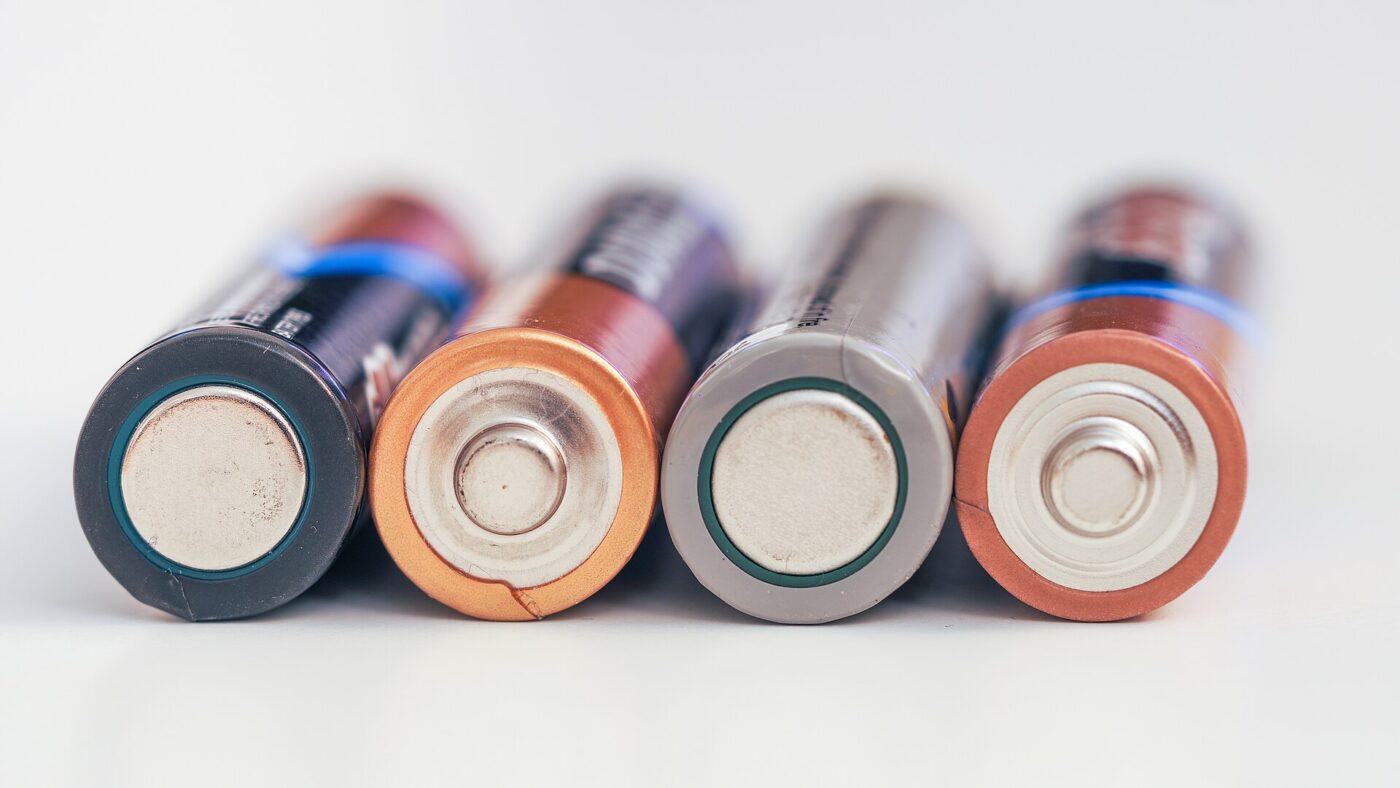
Promotion is the direct cause. Energizer said pricing declined 1.4% in the quarter ended June 30, 2026 on increased promotional investments in the Batteries and Lights segment, and the pattern is not new: in fiscal 2024 it reported pricing declines of about 2.5% from planned pricing and promotional investments, again concentrated in batteries.
Tariffs pushed the other way and then reversed. In fiscal 2025 Energizer reported segment pricing down about 0.5%, from planned pricing and promotional investments earlier in the year, partly offset by tariff pricing in the back half. Then, in the quarter ended June 30, 2026, it recorded a $16.5 million benefit to cost of goods sold, and $64.1 million across the nine months, for the estimated refund of tariffs previously paid under the International Emergency Economic Powers Act on inventory it had already sold, with a $67.1 million refund receivable on its cash flow statement. It still lists the timing of those refunds as a risk.
Margins show how hard the discounting is biting. Adjusted gross margin was 39.2% in the quarter, down 560 basis points from 44.8% a year earlier, and segment profit for Batteries and Lights fell to $127.9 million from $158.8 million. That is a company defending shelf space.
Factory-gate prices are not falling with the shelf. The Bureau of Labor Statistics producer price index for battery manufacturing was 2.0% higher in August 2026 than a year earlier, on our calculation. BLS publishes no price index for AA cells alone, so this is a proxy, and the gap between it and Energizer’s reported pricing is the promotional money.
| August | PPI, battery manufacturing | Change from prior August |
|---|---|---|
| 2022 | 262.9 | +12.9% |
| 2023 | 266.2 | +1.3% |
| 2024 | 265.5 | –0.2% |
| 2025 | 275.7 | +3.9% |
| 2026 | 281.2 | +2.0% |
The slow squeeze from built-in cells

The structural pressure is written into Energizer’s annual report. It says that while emerging device trends lead it to believe the long-term outlook for category volume will be flat to slightly positive, there is no assurance the trend continues, and that an increasing number of devices use built-in battery systems, such as rechargeable hearing aids and portable lights, leading to a potential declining volume trend in the battery and lights categories.
Remote controls, wall clocks, smoke alarms and children’s toys still take removable cells; headphones, flashlights, hearing aids and game controllers increasingly do not.
The replacement inside the aisle is the rechargeable pack, and the same companies sell both sides of the switch: Energizer says it offers primary, rechargeable, specialty and hearing aid batteries across lithium, alkaline, carbon zinc, nickel metal hydride, zinc air and silver oxide chemistries.
New rules are arriving in the battery aisle
Washington state passed the clearest example. Under Senate Bill 5144, signed on May 11, 2023, producers selling covered batteries or battery-containing products into Washington must participate in an approved stewardship plan beginning January 1, 2027, and a producer that does not participate may not sell those products in the state. From July 1, 2027, retailers may not sell a covered portable battery whose producer is outside a plan, with the restriction reaching medium-format batteries on July 1, 2029.
The collection side has been consolidating too. Call2Recycle rebranded to The Battery Network on January 13, 2026, after what it describes as 30 years as a battery recycling program, and reports more than 175 million pounds of batteries recycled and more than 20,000 drop-off locations.
Disposal rules differ by chemistry. EPA advises that used lithium-ion batteries go to separate recycling or household hazardous waste collection points rather than the trash or curbside recycling, with each battery or device bagged separately and non-conductive tape over the terminals, because of fires at waste facilities.
Stewardship fees and retailer restrictions start in Washington in 2027, which is the first date likely to move shelf prices back up.
What to buy while the discounting lasts
Alkaline packs are the thing to buy opportunistically. Promotional pricing is the stated reason prices are soft, so a bulk pack bought on a deep discount beats a subscription at list price. Check the best-by year, because alkaline cells lose capacity on the shelf.
Nickel metal hydride rechargeables earn their place in the handful of devices that eat cells: game controllers, camera flashes, wireless mice, toys that run daily. Low self-discharge types hold charge between uses. Compare milliamp hours, and treat the charger as part of the purchase.
USB-C rechargeable lithium AA cells are the newer option. They charge from a cable rather than a cradle and hold a steadier voltage through discharge. They are also the chemistry EPA singles out for separate collection and taped terminals, so treat them as lithium batteries at end of life rather than as AAs.
What to watch next
- Energizer’s next quarterly filing, for whether Batteries and Lights organic sales return to growth.
- Whether the IEEPA tariff refunds Energizer has booked actually arrive, since it lists their timing as a risk.
- Producer registrations under the Washington stewardship program ahead of the January 1, 2027 deadline.
Where to start
Paid links: we earn a commission if you buy through the buttons below, at no extra cost to you. As an Amazon Associate I earn from qualifying purchases.
Household cell types compared on the things that differ
| Product type | Good fit for | Where to look |
|---|---|---|
| Bulk alkaline AA batteries | Fits low-drain devices | See listings on AmazonOpens Amazon search results, not one listing: check the model on the product page. |
| Low self-discharge NiMH rechargeable AA | Fits daily heavy use | See listings on AmazonOpens Amazon search results, not one listing: check the model on the product page. |
| USB-C rechargeable lithium AA batteries | Fits charging without a cradle | See listings on AmazonOpens Amazon search results, not one listing: check the model on the product page. |
Product types that fit the trend described above, not tested models. Check the exact listing before you buy. How we pick them.
Bulk alkaline AA batteries
Where to look: Amazon
Remotes, clocks and smoke alarms draw so little that a rechargeable never pays back. Buy these on promotion, check the best-by year, and keep them out of devices you will not open for years.
- Cheapest per cell during promotions
- Long shelf life when fresh
- Leak risk in forgotten devices
- Capacity falls as stock ages
Low self-discharge NiMH rechargeable AA
Where to look: Amazon
The case is per device rather than per house: controllers, flashes and daily toys. Compare milliamp hours, and treat the charger as part of the purchase.
- Cost per use falls with every cycle
- Low self-discharge types hold charge
- Needs a charger and a routine
- Lower voltage upsets some devices
USB-C rechargeable lithium AA batteries
Where to look: Amazon
Convenient if you have cables but no charger. EPA treats these as lithium batteries at end of life, which means separate collection points, bagging and taped terminals.
- Charges from any USB-C cable
- Steadier voltage through discharge
- Lithium disposal rules apply
- Fewer independent capacity figures
More: Energy and Sustainability trends and how the Trend Signal is scored.
Sources
- Energizer Holdings third quarter fiscal 2026 results, Form 8-K exhibit — U.S. Securities and Exchange Commission
- Energizer Holdings annual report on Form 10-K for fiscal 2025 — U.S. Securities and Exchange Commission
- Engrossed Second Substitute Senate Bill 5144, battery stewardship session law — Washington State Legislature
- About Us, collection totals and network history — The Battery Network
- Used Lithium-Ion Batteries — U.S. Environmental Protection Agency
- Producer price index for battery manufacturing, series PCU335910335910 — U.S. Bureau of Labor Statistics
Questions readers ask
Are AA battery prices going up or down in 2026?
Energizer reported that pricing declined 1.4% in the quarter ended June 30, 2026, driven by increased promotional investments in its Batteries and Lights segment. The same segment’s net sales fell 2.0% to $524.2 million, so the discounting is defending volume rather than following cheaper costs.
Did tariffs make batteries more expensive?
Energizer reported Batteries and Lights pricing down about 0.5% in fiscal 2025, from planned pricing and promotional investments earlier in the year, partly offset by tariff pricing in the back half. It then booked a $16.5 million benefit in the June 2026 quarter, and $64.1 million across nine months, for estimated refunds of tariffs previously paid under the International Emergency Economic Powers Act on inventory already sold, while listing the timing of those refunds as a risk.
Are rechargeable AA batteries cheaper over time?
Only where the device actually cycles them. Energizer sells both chemistries, and its annual report describes devices increasingly using built-in battery systems, which is a different trend from households switching to rechargeable AAs. The practical test is how often you replace cells in that device.
How should I dispose of old batteries?
EPA advises taking used lithium-ion batteries to separate recycling or household hazardous waste collection points rather than the trash or curbside recycling, bagging each battery or device separately and taping over the terminals, because of fires at waste facilities. The Battery Network, formerly Call2Recycle, reports more than 20,000 drop-off locations.
What changes in Washington state in 2027?
Under Senate Bill 5144, producers must participate in an approved Washington battery stewardship plan beginning January 1, 2027, and from July 1, 2027 retailers may not sell a covered portable battery whose producer is outside a plan. Medium-format batteries come under the retailer restriction from July 1, 2029.