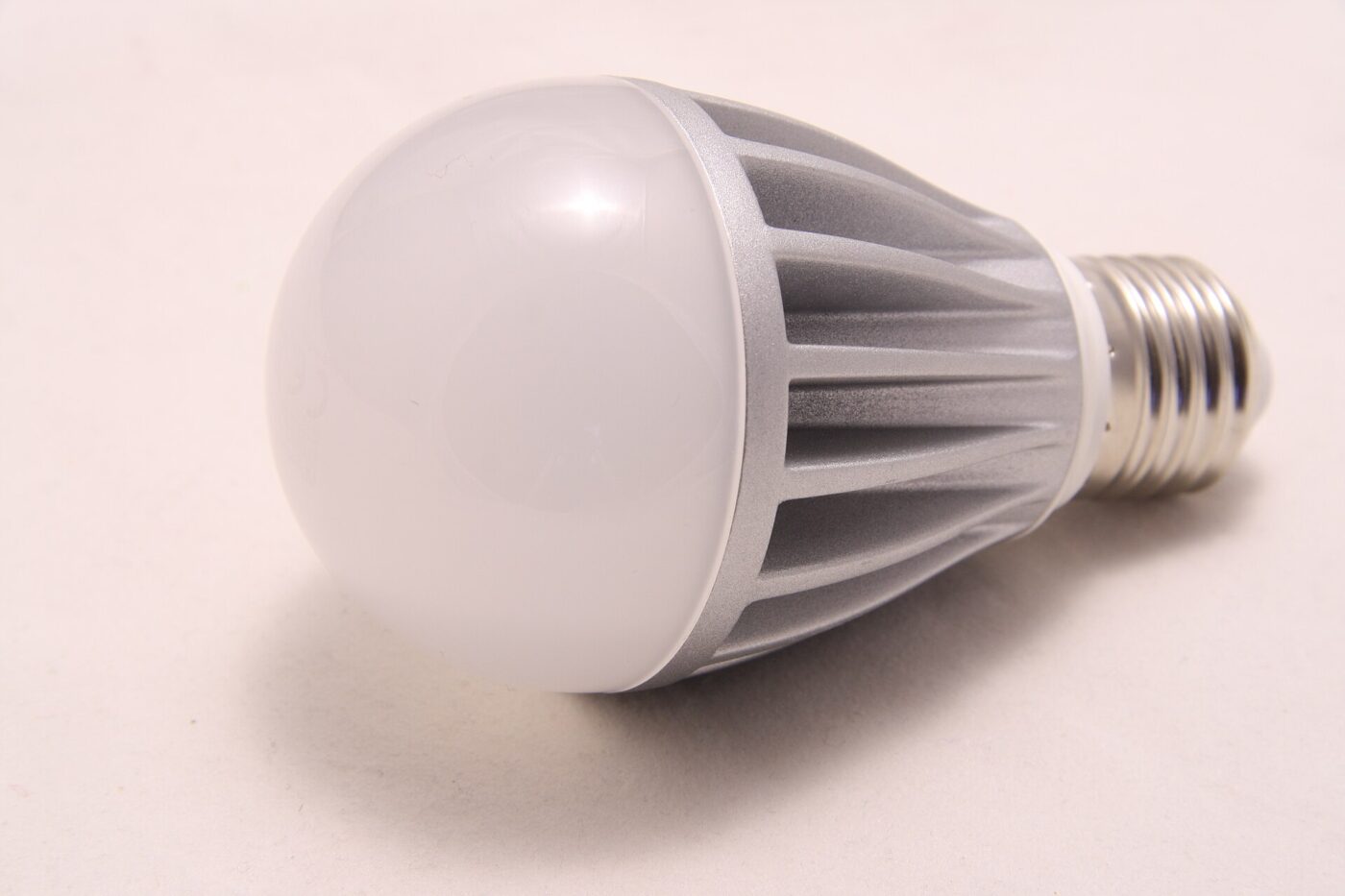
The light bulb aisle has quietly finished its big conversion. The U.S. Energy Information Administration’s 2024 Residential Energy Consumption Survey, published on March 23, 2026, found that 90% of U.S. households were using LED bulbs somewhere in the home and 63% were using them for all or most indoor lighting. In 2015 the share using mostly LED bulbs was 4%. Households using mostly compact fluorescents, which briefly looked like the future, had fallen to 7%.
What is left to change is the floor under the category rather than the share of homes buying in. On April 19, 2024 the Department of Energy published a final rule raising the minimum efficacy for general service lamps, the everyday screw-in bulbs most people buy. It took effect on July 3, 2024, but manufacturers do not have to meet the new level until lamps made or imported on and after July 25, 2028. That gap is the whole story for a shopper standing in front of a shelf in 2026.
Trend Signal
52/100 Steady momentum
- Emerging
- Rising
- Mainstream
- Peaking
- Cooling
Adoption is close to its ceiling while the next efficacy rule waits on 2028
EIA’s 2024 household survey, published March 23, 2026, found 90% of U.S. homes using LED bulbs, and DOE’s April 2024 final rule does not bite until lamps manufactured or imported on and after July 25, 2028.
Our editorial reading of the cited data, not a forecast. How it is scored
By the numbers
- 90%U.S. households using LED bulbs in 2024, per the EIA survey published March 2026U.S. Energy Information Administration
- 63%Households using LEDs for all or most indoor lighting in 2024, against 4% in 2015U.S. Energy Information Administration
- 17%Energy saving DOE projects for lamps bought from 2029 to 2058 versus no new standardsFederal Register
- 18.34 centsU.S. average residential electricity price per kilowatthour in June 2026U.S. Energy Information Administration
What the 2028 standard actually changes
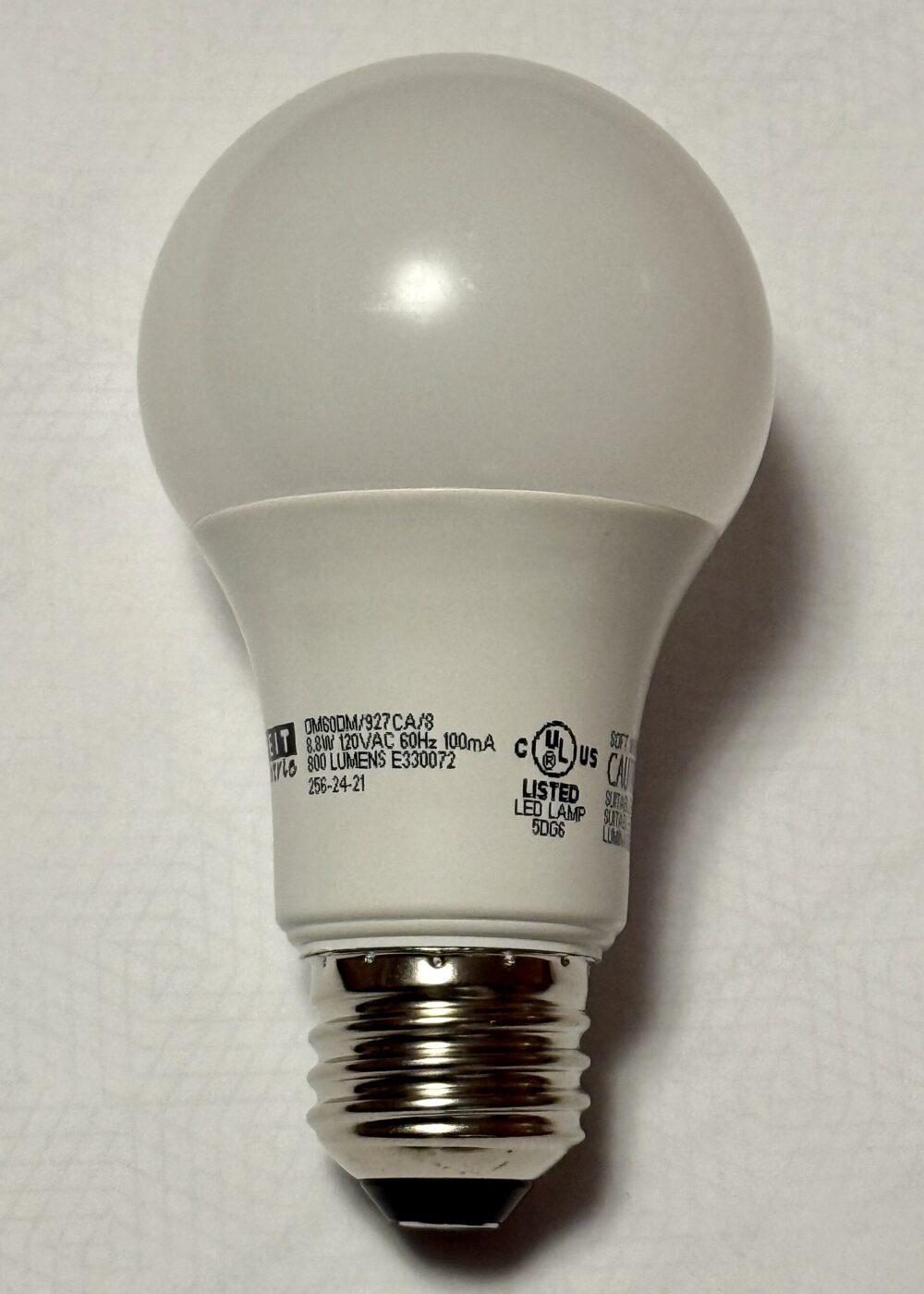
Two separate rules govern the aisle. The first is a statutory backstop already in force: under the Code of Federal Regulations text carried in the April 2024 rule, the sale of any general service lamp that does not meet a minimum efficacy of 45 lumens per watt has been prohibited since July 25, 2022. That is the rule that pushed general service incandescent and halogen bulbs off shelves, because they cannot reach 45 lumens per watt.
The second is the new one. DOE’s April 19, 2024 final rule adopted amended standards expressed in minimum lumens per watt, and those apply to products manufactured in or imported into the United States starting on July 25, 2028. DOE projects lifetime energy savings of 4.0 quadrillion Btu for lamps bought between 2029 and 2058, or 17% against a no-new-standards case, with cumulative consumer benefits of $8.5 billion at a 7% discount rate to $22.2 billion at 3%, and 70.3 million metric tons of avoided carbon dioxide. Nothing about that date reaches backward: it governs manufacture and import, not the bulbs already in your closet.
The shelf-clearing rule happened in 2022; the 2028 rule raises the floor on bulbs made after that date.
Why most bulbs on the shelf today would not qualify
The gap between the current floor and the future one is wide. DOE’s January 2023 proposed rule was built around an efficacy requirement of 120 lumens per watt for most lamp types, and the comment record shows how few products were there already. The California investor-owned utilities told DOE that the state’s appliance database listed 15,313 integrated, single-ended LED lamps producing between 800 and 1,100 lumens, and that 14% of them claimed an efficacy of 120 lumens per watt or higher.
Not every commenter read that as comfortable. The Edison Electric Institute argued in the docket that the proposed 120 lumens per watt requirement would eliminate 98% of the highest-efficiency light bulbs then available to consumers. DOE finalized the standard anyway, concluding that the level was technologically feasible and economically justified, and it estimated industry conversion costs of $430 million.
For a buyer, the practical read is that decorative filament-style LEDs and most color-tunable smart bulbs sit well below 120 lumens per watt today, while plain frosted A-shape bulbs cluster near the top of the range.
How far adoption already went
The EIA survey is the clearest picture of the installed base. In 2024, 90% of U.S. households reported using LED bulbs at all, 63% used them for all or most indoor lighting, and 37% said every bulb indoors was an LED. Households using mostly compact fluorescents fell from 32% in 2015 to 7% in 2024, and those using mostly incandescent or halogen bulbs fell from 31% to 10%.
That is why we treat the category as peaking rather than rising. When nine in ten homes already own the product, the remaining growth comes from replacement cycles rather than new buyers, and LED replacement cycles are long by design. The stubborn holdouts are awkward sockets: enclosed ceiling fixtures, dimmer circuits, appliance lamps, and outdoor fittings where heat and moisture shorten life.
What a socket costs to run in 2026

Running cost is the argument that is left. EIA’s Electric Power Monthly puts the U.S. average residential price at 18.34 cents a kilowatthour in June 2026, up from 17.47 cents in June 2025. The Bureau of Labor Statistics measured the electricity index up 3.8% over the 12 months ended August 2026, with the broader energy services index up 4.0%.
At that price, the arithmetic for a single socket burning three hours a day looks like this. It is worth doing per socket rather than per house, because the payback on chasing the last few bulbs depends entirely on how long each one is switched on.
| Bulb in one socket, 3 hours a day | Kilowatthours a year | Cost a year at 18.34 cents |
|---|---|---|
| 60-watt incandescent | 65.7 | $12.05 |
| 14-watt compact fluorescent | 15.3 | $2.81 |
| 9-watt LED, about 89 lumens per watt | 9.9 | $1.81 |
| 6.5-watt LED at 120 lumens per watt | 7.1 | $1.31 |
Moving from an incandescent saves real money; moving from a good LED to a better LED saves about 50 cents a socket a year.
Who should restock now, and who can wait
Anyone still running incandescent or halogen bulbs in a frequently used socket has the clearest case, and the EIA data says that is still one home in ten for most of their lighting. So does anyone with compact fluorescents in a fixture switched on and off often, since the warm-up delay is the usual complaint rather than the electricity.
Waiting makes sense in two situations. Products that clear the 2028 bar do not exist in volume among decorative and smart bulbs, so buying a case of those in 2026 locks in the current efficacy level for the life of the bulb. And if a fixture is on for a few minutes a day, the running-cost argument is close to nothing; replace it when it fails.
One practical check outlasts every rule change. The Lighting Facts panel on the package prints brightness in lumens and energy used in watts, and dividing the first by the second gives the efficacy figure the federal standards are written in. A bulb that does not print both is a bulb you cannot compare.
What to watch next
- Whether DOE opens any proceeding that revisits the July 25, 2028 compliance date for general service lamps in the Federal Register.
- The next EIA residential survey, for whether the share of homes using LEDs for all indoor lighting moves past 37%.
- Package efficacy on mainstream A-shape bulbs, for how many brands start printing figures at or above 120 lumens per watt.
Where to start
Paid links: we earn a commission if you buy through the buttons below, at no extra cost to you. As an Amazon Associate I earn from qualifying purchases.
Replacement bulb types compared on the things that differ
| Product type | Good fit for | Where to look |
|---|---|---|
| A19 LED bulbs, 60-watt equivalent | Fits everyday sockets | See listings on AmazonOpens Amazon search results, not one listing: check the model on the product page. |
| Dimmable warm-white LED bulbs | Fits dimmer circuits | See listings on AmazonOpens Amazon search results, not one listing: check the model on the product page. |
| LED bulbs rated for enclosed fixtures | Fits enclosed fixtures | See listings on AmazonOpens Amazon search results, not one listing: check the model on the product page. |
Product types that fit the trend described above, not tested models. Check the exact listing before you buy. How we pick them.
A19 LED bulbs, 60-watt equivalent
Where to look: Amazon
The plain frosted A-shape bulb is where efficacy is highest, so it is the type most likely to already sit near the level DOE will require in 2028. Check the lumens and watts on the panel before assuming.
- Highest efficacy per dollar
- Widest choice of color temperature
- Plain looks in exposed fixtures
- Not all are dimmable
Dimmable warm-white LED bulbs
Where to look: Amazon
Dimmable and decorative LEDs trade efficacy for looks and control, which is why they sit furthest from the 2028 level. Buy what the fixture needs rather than stocking up.
- Works on existing dimmers
- Warm color at low output
- Lower efficacy than plain bulbs
- Flicker varies by dimmer
LED bulbs rated for enclosed fixtures
Where to look: Amazon
Sealed ceiling globes and outdoor fittings cook ordinary bulbs. The enclosed-fixture rating is printed on the box, and it is the single most useful label in this aisle.
- Rated for trapped heat
- Longer life in sealed globes
- Fewer models to choose from
- Usually costs more per bulb
More: Energy and Sustainability trends and how the Trend Signal is scored.
Sources
- More U.S. homes used LEDs over other bulb types for indoor lighting in 2024 — U.S. Energy Information Administration
- Energy Conservation Standards for General Service Lamps, final rule, 89 FR 28856 — Federal Register via GovInfo
- DOE Finalizes Efficiency Standards for Lightbulbs — U.S. Department of Energy
- Electric Power Monthly, average retail price of electricity to ultimate customers — U.S. Energy Information Administration
- Consumer Price Index, August 2026 — U.S. Bureau of Labor Statistics
Questions readers ask
Are incandescent bulbs banned?
The Code of Federal Regulations text carried in DOE’s April 2024 rule says that beginning July 25, 2022 the sale of any general service lamp that does not meet a minimum efficacy of 45 lumens per watt is prohibited. DOE notes in the same document that general service incandescent and halogen lamps are not able to meet that requirement.
What happens to my bulbs in July 2028?
Nothing. DOE’s final rule states that the amended standards apply to products manufactured in, or imported into, the United States starting on July 25, 2028. It does not reach bulbs already made, sold or installed.
How do I tell if a bulb would meet the new level?
Divide the lumens printed on the Lighting Facts panel by the watts on the same panel. DOE’s standards are expressed in minimum lumens output per watt, and its January 2023 proposed rule was built around 120 lumens per watt for most lamp types.
Is it worth replacing a working compact fluorescent with an LED?
On electricity alone the gap is small. At the 18.34 cents a kilowatthour EIA reported for June 2026, a 14-watt compact fluorescent running three hours a day costs about $2.81 a year against about $1.81 for a 9-watt LED. The usual reasons to switch are instant full brightness and dimming, not the bill.