Search for a draft stopper for a sliding door and the results are dominated by tubes and strips that sit on the floor. We have not tested any of these products. This brief compares what manufacturers publish about size, placement and installation limits with what the federal specification for certified doors allows, naming parts only where the maker lists a part number on a page we opened on September 25, 2026.
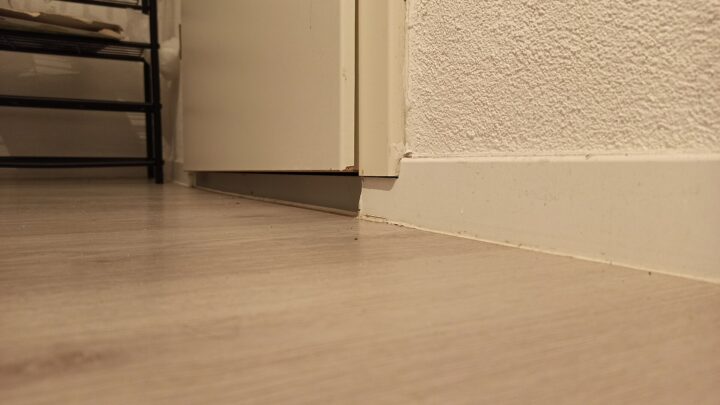
The floor products disappoint because of geometry. A hinged door has one large opening, at the bottom. A slider has three smaller ones, and the largest is usually vertical: the joint where the moving panel overlaps the fixed panel.
Trend Signal
52/100 Steady momentum
- Emerging
- Rising
- Mainstream
- Peaking
- Cooling
A certified slider is held to a tighter leakage limit than a certified entry door
ENERGY STAR Version 7.0, effective October 23, 2023, caps a certified sliding glass door at an air leakage rating of 0.3 cubic feet per minute per square foot while allowing a swinging door 0.5.
Our editorial reading of the cited data, not a forecast. How it is scored
By the numbers
- 0.3 cfm/ft2Air leakage limit for an ENERGY STAR certified sliding glass door, Version 7.0ENERGY STAR
- 84 in.Length Frost King publishes for its patio door center post weatherstripFrost King
- 1 dayENERGY STAR effort rating for applying plastic film over a window or patio doorENERGY STAR
- 17.99 centsU.S. average residential electricity price per kilowatthour, 12 months to July 2026U.S. Energy Information Administration
Three places a patio slider leaks
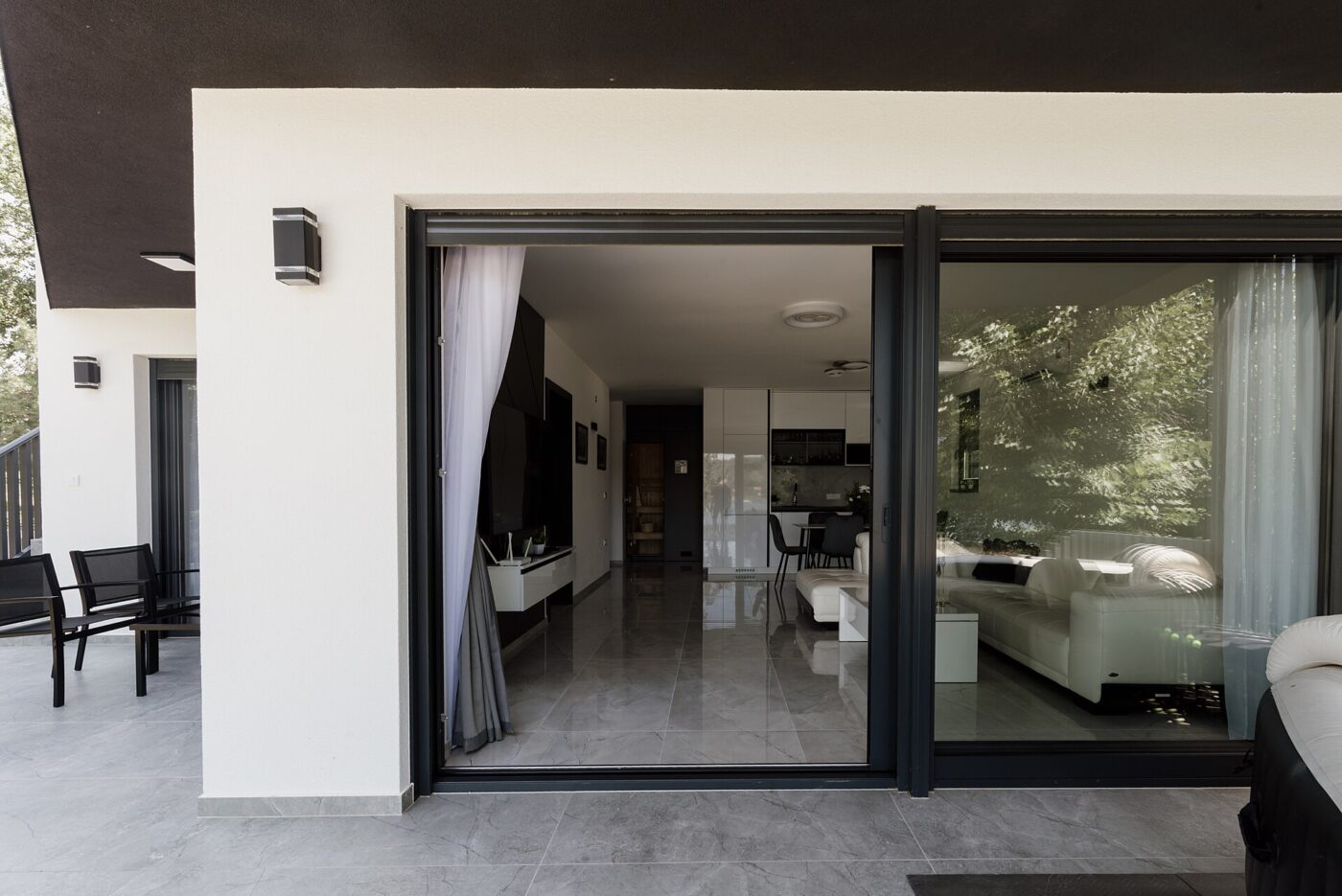
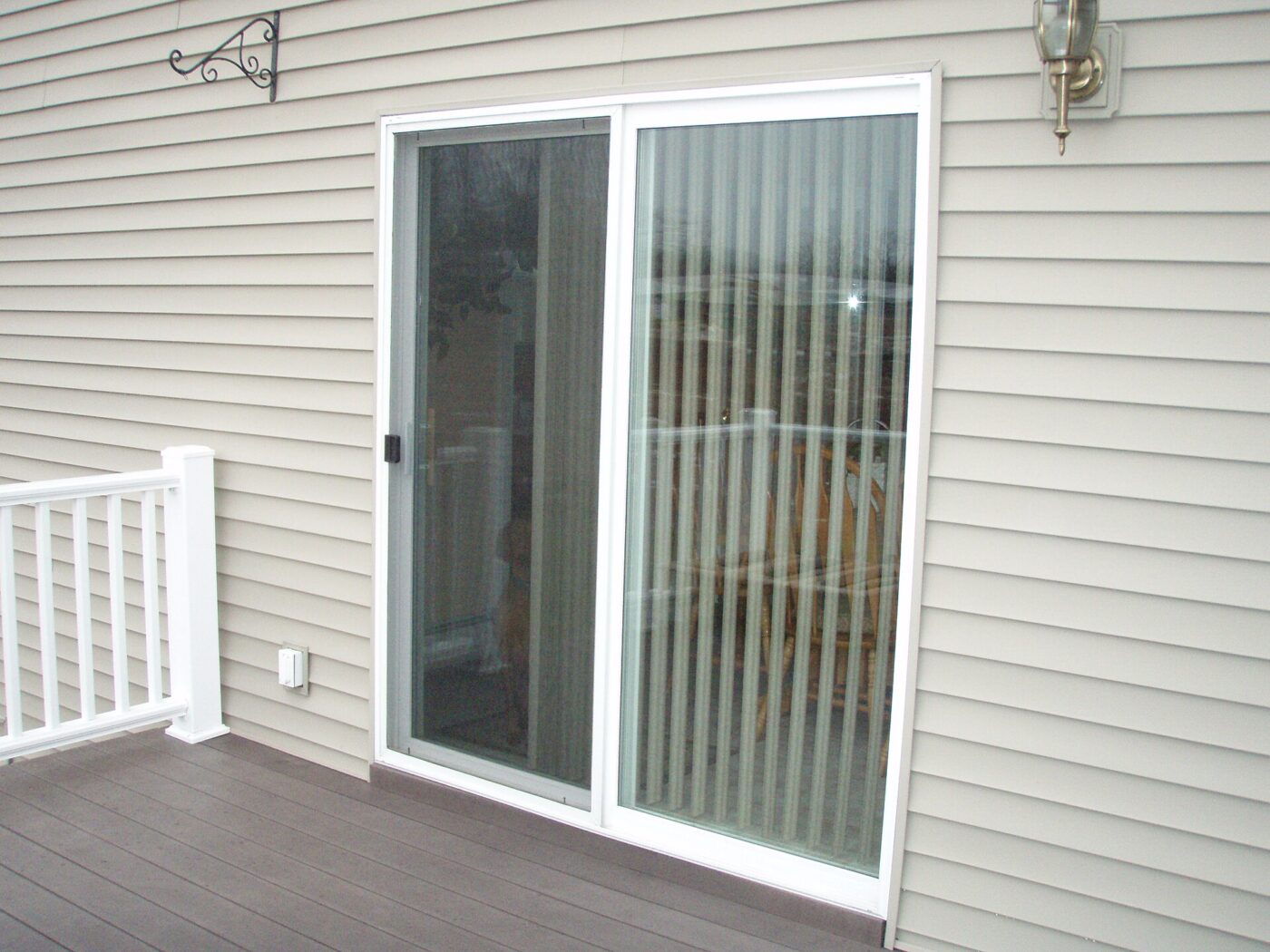
The meeting stile is the first and usually the largest. On a two-panel slider the moving panel overlaps the fixed one in a vertical interlock running the full height of the opening. Frost King describes its patio weatherstrip, which it also calls a center post weather strip, as the part that eliminates the gaps between the glass panels, and notes those gaps let air, dust and insects in. A tube on the floor closes none of it.
The bottom track is second, and the one everyone treats first. It is a channel the panel rolls in, so anything placed there has to clear the rollers and the drain slots that let rainwater out. The perimeter is third: the pile seals in the jamb and head that the panel presses against, plus the frame-to-wall joint. Pile seals flatten with age, which is why a slider that sealed well when installed whistles a decade later.
One opening, three gaps, three different parts. The vertical one is the one people miss.
What a certified slider is allowed to leak
ENERGY STAR Program Requirements for Residential Windows, Doors and Skylights, Version 7.0, took effect October 23, 2023. Table 5 sets the air leakage rating at 0.3 cubic feet per minute per square foot for a window, sliding door or skylight and 0.5 for a swinging door, shown by an NFRC temporary label or by an AAMA, Keystone, NAMI or WDMA certification label. The test method is ASTM E283 in accordance with NFRC 400.
The arithmetic gives a counterintuitive result. A two-panel patio slider at 6 feet wide and 6 feet 8 inches tall is about 40 square feet, so the 0.3 limit allows roughly 12 cubic feet per minute at the test condition on our calculation. A 36 by 80 inch entry door is 20 square feet, and the looser 0.5 limit allows about 10. The slider meets the tighter rate and still gets the larger total allowance, because it is a bigger hole in the wall.
One more line matters before spending on seals. EPA requires U-factor recertification every five years but air leakage recertification only every ten. A certified rating describes a design, not the condition of the seals in your door after fifteen winters.
What to buy for each of the three gaps

For the meeting stile the part is a self-adhesive strip on the movable panel. Frost King publishes its patio door weatherstrip as PD84CL at 1-7/8 inches by 84 inches in clear, calls it flexible plastic with adhesive backing needing no tools, and gives two limits: cut to fit with the door closed so the gap is fully covered, and do not apply below 50 degrees Fahrenheit outside. That is why this job belongs in early fall.
For the bottom track a draft guard is a comfort fix on the fixed panel and a nuisance on the moving one; check it clears the rollers and does not dam the weep holes. For the perimeter, Frost King publishes a V-seal at 7/8 inch by 17 feet whose quick-bonding adhesive it says can be applied in sub-freezing temperatures.
For the whole opening there is film. Frost King lists an indoor shrink kit for patio doors at 84 by 110 inches in 0.75 mil, tightened with a hair dryer. ENERGY STAR rates that project easy, one day, under $100 on its five-step scale, and says the plastic adds an insulating layer of air and can eliminate leaks where it extends over the woodwork.
| Gap | Part that reaches it | Published spec to match |
|---|---|---|
| Meeting stile, vertical | Self-adhesive center post strip | Frost King PD84CL, 1-7/8 in. by 84 in. |
| Bottom track | Draft guard on the fixed panel only | Must clear the rollers and weep holes |
| Jamb and head | V-seal compression weatherstrip | Frost King M13, 7/8 in. by 17 ft. |
| Whole opening | Indoor shrink film kit | Frost King V76H, 84 in. by 110 in. |
The film question, and the door you actually use
Film is the most effective item here and the least compatible with a door that opens. A patio slider is often the route to a deck, so taping it shut for the season is a decision about how the household lives. ENERGY STAR’s instructions assume a seasonal install: up in fall, down in spring, with the tape lifting off the trim without damaging the finish.
If the slider stays in service, the realistic package is the center post strip plus fresh perimeter weatherstrip, with a heavy curtain for comfort. A curtain does nothing measurable to the leakage rate. What any of it is worth scales with energy prices: EIA put the U.S. average residential price at 17.99 cents per kilowatthour over the 12 months ended July 2026, against 16.89 a year earlier.
When it is the door, not the seal
Three symptoms point past weatherstripping. A panel that drags or leaves an uneven gap along the interlock is out of adjustment or riding on failed rollers. Condensation running down the inside of the glass is a glazing and humidity problem rather than a draft. And a frame pulled away from the wall enough to show daylight is a sealant and trim job, which ENERGY STAR treats as its own moderate-to-difficult project.
Before buying, run the two tests EPA publishes free. Close the panel on a sheet of paper and see whether it pulls out easily, then hold a lit incense stick along the interlock and watch the smoke. The rules side is covered in our brief on whether weatherstripping is worth it; those savings figures describe whole-house work, not a strip of plastic.
Diagnose with paper and smoke before you buy adhesive.
What to watch next
- Whether EPA opens a revision of the Version 7.0 specification that sets the 0.3 cfm per square foot sliding-door limit.
- Outdoor temperatures where you live, since adhesive center post strips carry a published minimum application temperature.
- The monthly EIA residential electricity price series, which sets what comfort-driven sealing work is worth in dollars.
Where to start
Paid links: we earn a commission if you buy through the buttons below, at no extra cost to you. As an Amazon Associate I earn from qualifying purchases.
Sliding door fixes compared on the gap they reach
| Product type | Good fit for | Where to look |
|---|---|---|
| Sliding door center post weatherstrip | Fits the joint between the panels | See listings on AmazonOpens Amazon search results, not one listing: check the model on the product page. |
| Draft guard for a sliding door track | Fits the track at the floor | See listings on AmazonOpens Amazon search results, not one listing: check the model on the product page. |
| Patio door shrink film kit | Fits a slider you will not open | See listings on AmazonOpens Amazon search results, not one listing: check the model on the product page. |
Product types that fit the trend described above, not tested models. Check the exact listing before you buy. How we pick them.
Sliding door center post weatherstrip
Where to look: Amazon
This addresses the interlock between the two panels. Frost King publishes its version at 1-7/8 inches by 84 inches in clear, says to fit it to the movable panel with the door closed, and warns against applying below 50 degrees Fahrenheit.
- Reaches the gap most products miss
- No tools needed
- Adhesive needs a warm, clean surface
- One shot at placement
Draft guard for a sliding door track
Where to look: Amazon
A comfort fix for the half of the opening that does not move. Check the height against the track profile so it does not sit on the rollers, and lift it out after rain.
- No adhesive or fixings
- Removes in seconds
- Pushed aside by the moving panel
- Can dam water in the track
Patio door shrink film kit
Where to look: Amazon
The most complete option and the least compatible with daily use. ENERGY STAR notes the plastic adds an insulating layer of air and can close leaks around the opening where it extends over the woodwork.
- Seals the entire opening
- Rated easy and under $100 by ENERGY STAR
- The door cannot be used until spring
- Needs a hair dryer to tension
More: Home Improvement trends and how the Trend Signal is scored.
Sources
- Windows, Doors and Skylights, Version 7.0 — ENERGY STAR
- Patio Door Weatherstrip — Frost King
- V-Seal Weatherstrip — Frost King
- Indoor Shrink Window Kits — Frost King
- Applying Plastic Over Windows Project — ENERGY STAR
- Sealing Behind Window and Door Trim — ENERGY STAR
- Electric Power Monthly, Table 5.3 — U.S. EIA
Questions readers ask
Where does a sliding patio door leak the most?
The vertical interlock where the moving panel overlaps the fixed one is the opening most often left unsealed. Frost King sells a dedicated center post weatherstrip for it and describes it as the part that eliminates the gaps between the glass panels, which nothing placed on the floor can reach.
Is a sliding door leakier than a normal door?
Per square foot, no. ENERGY STAR Version 7.0 allows a certified sliding glass door 0.3 cubic feet per minute per square foot and a swinging door 0.5. Because a slider is roughly twice the area, its total allowance is larger: about 12 cubic feet per minute against about 10, on our arithmetic.
Can I put shrink film over a sliding door?
Yes. Frost King publishes an indoor kit at 84 by 110 inches sized for patio doors, and ENERGY STAR rates the project easy, one day, under $100 on its scale. The film has to be cut away to use the door, so it suits a slider that stays closed for the season.
Why does the package say not to apply it in the cold?
Adhesives cure differently at low temperatures. Frost King states that the surface must be clean and dry and that its patio door weatherstrip should not be applied below 50 degrees Fahrenheit outside. Its V-seal uses a different adhesive the company says works in sub-freezing temperatures.