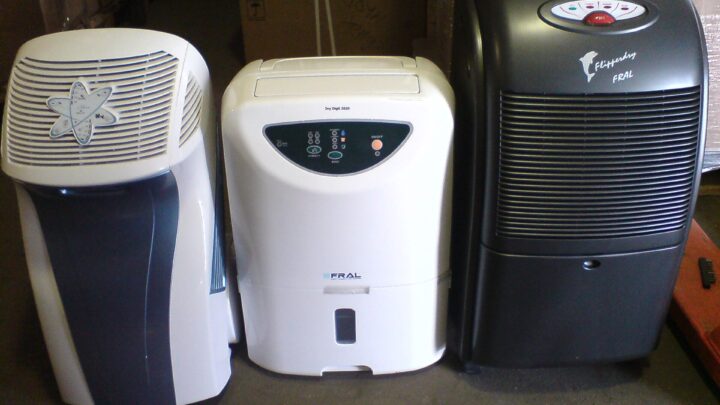
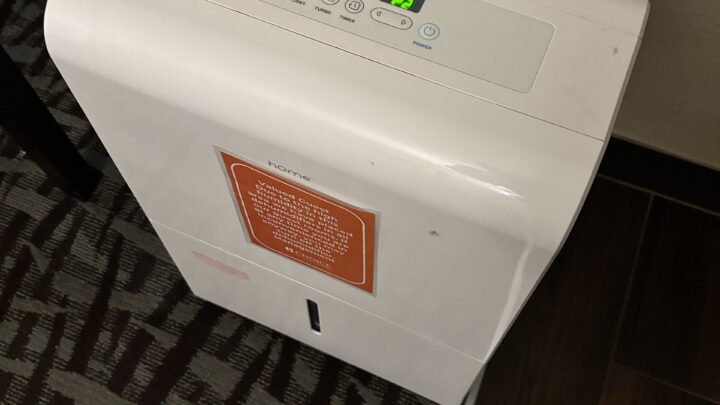
We have tested none of these machines. What follows compares how each type works, what its manufacturer publishes, and what the federal rules say about which ones can be measured at all. The named products are ones their makers currently sell and specify on their own sites, read on September 25, 2026, chosen because each publishes a technology and enough specification to be checked, and each brand was run past the CPSC recall database.
The reason this comparison matters is temperature. Shoppers searching for a desiccant unit are mostly searching for one phrase alongside it: cold spaces. A compressor pulls water out of air by chilling a surface below the dew point, and the colder the room, the less well that works. A desiccant rotor does not depend on chilling anything. Whether that is worth the trade-offs depends on numbers that, for one of these categories, do not officially exist.
Trend Signal
54/100 Steady momentum
- Emerging
- Rising
- Mainstream
- Peaking
- Cooling
Only one of these three machines is a dehumidifier in federal law
DOE stated in its 2015 test procedure rule that desiccant-only products do not meet the statutory definition, so only vapor-compression units carry a measured pint rating and an integrated energy factor.
Our editorial reading of the cited data, not a forecast. How it is scored
By the numbers
- 65°FDry-bulb condition at which portable dehumidifiers are now tested under appendix X1eCFR
- 20 ozDaily removal published for a 72-watt thermoelectric unit rated to 2,200 cubic feetIvation
- 1.30-2.80Minimum integrated energy factor in L per kWh across the three portable classesFederal Register 81 FR 38338
- 20%Energy saving EPA claims for a certified unit against a similarly sized conventional oneENERGY STAR
Three machines, one shelf
A compressor dehumidifier is the machine the federal definition describes: a refrigerated surface that condenses moisture, a refrigerating system, an air-circulating fan and a means of collecting the condensate. Air passes over a cold coil, water condenses on it, and the drier air returns to the room slightly warmed.
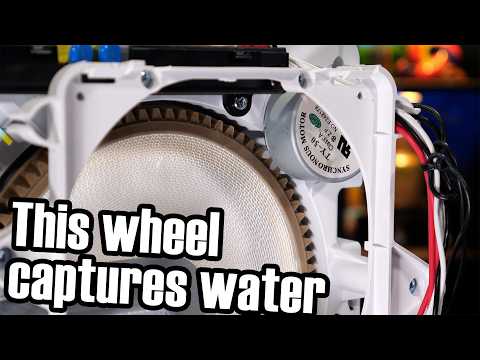
A desiccant unit chills nothing. Air passes through a rotor coated with a moisture-absorbing material that holds the water, and a separate heated airstream then drives it back out of the rotor. Ivation lists a desiccant rotor among the components of its 13-pint and 19-pint small-area models.
The third type is thermoelectric, also sold as Peltier: a small solid-state device is made cold electrically, water condenses on it and drips into a tank. Eva-Dry describes its EDV-2400 that way. A fourth thing on the same shelf is not a machine at all, the renewable silica gel unit, which absorbs a stated weight of water and is then plugged in to dry out.
Condensing on a cold coil, adsorbing onto a heated rotor, and chilling a small plate electrically are three different jobs.
Only one of them is a dehumidifier in federal law
The 2015 final rule addressed alternative technologies head on. Because the statutory definition specifies a refrigeration system, DOE wrote, products that use solely a desiccant or a technology other than vapor-compression refrigeration would not be covered by statute, and it concluded that desiccant-only products do not meet the definition.
The consequences run down to the listing. A desiccant or thermoelectric unit has no capacity in pints per 24 hours measured at the appendix X1 condition of 65 degrees F and 60 percent relative humidity, and no integrated energy factor, the metric both the federal standards and the ENERGY STAR criteria are written in. It cannot be ENERGY STAR certified either, because the Version 6.0 criteria define an eligible product as one with a refrigerated surface and a refrigerating system.
You can see the gap in the marketing. Ivation’s 19-pint desiccant listing says the unit absorbs up to 19 pints of water before the reservoir is full, which describes a tank rather than a daily rate, and neither desiccant page we read publishes a wattage. A compressor unit of the same nominal size has to publish a capacity at a defined condition and meet an efficiency floor.
Cold is where the difference shows up
A compressor unit gets into trouble as the room cools because its coil can drop below freezing and pick up frost, at which point it builds ice instead of collecting water. The industry answer is a defrost cycle, and makers advertise it: Ivation’s ENERGY STAR compressor listing tells buyers that auto defrost means not worrying about the evaporator coils freezing up and halting the process.
The rulemaking record shows how live this question is. DOE said that if dehumidifiers defrost under 65 degree ambient conditions it is appropriate for the test to capture that, while noting most products it examined did not require defrosts at those conditions. Efficiency commenters pushed DOE to test at a lower dry bulb, such as 55 degrees F, specifically to capture performance under frost.
That is the honest framing of the desiccant argument. Ivation says its rotor technology retains its efficiency at low temperatures and that its 19-pint model dries air even in cool temperatures, but those are manufacturer claims with no federal test behind them, because the law that would require one does not reach these products.
The cold-room advantage is real in principle and unmeasured in practice, because no federal test covers desiccant units.
What each one costs to run
For compressor units this is answerable. Since June 13, 2019, a portable must reach an integrated energy factor of 1.30 liters per kilowatt-hour at 25.00 pints a day or less, 1.60 in the 25.01 to 50.00 class and 2.80 above that. ENERGY STAR Version 6.0 asks 1.70, 2.01 and 3.30, and EPA states a certified unit removes the same moisture as a similarly sized conventional one on about 20 percent less energy.
For the other two it is not. The thermoelectric unit in our set publishes both halves of the equation by accident rather than by rule: Ivation lists 20 ounces a day at 72 watts. A day of that removes about a pint and a quarter for roughly 1.7 kilowatt-hours, a long way from the efficiency a regulated compressor unit has to reach. Neither Ivation desiccant page publishes a wattage, so no comparison is possible.
| Type | Federally rated | What the page publishes | Where it is sold as fitting |
|---|---|---|---|
| Compressor | Yes, pints per day and integrated energy factor | Capacity, condition, efficiency class | Basements, whole rooms, season-long running |
| Desiccant rotor | No | Rotor type, coverage in square feet, reservoir size | Cool rooms, garages, laundry drying |
| Thermoelectric | No | Ounces per day in some cases, watts, cubic feet | Bathrooms, closets, small bedrooms |
| Renewable silica gel | No | Total absorption in ounces, recharge time | Cabinets, safes, closets, vehicles |
Which one to buy for which room
If the space is heated and you want the humidity held through a damp season, buy a compressor unit and use the rating. It is the only type where two products from two brands can be compared on a measured number, the only type with an efficiency floor underneath it, and the only type that can carry the ENERGY STAR label. Then check the model against the CPSC recall database, because that is where this category’s history sits: our pull on September 25, 2026 returned 18 dehumidifier records, and Ivation is one of about twenty brand names on the two million unit New Widetech recall of August 4, 2021.
If the space is genuinely cold — an unheated garage, a boat, a cabin closed for winter — the desiccant argument is worth hearing, with the caveat that you are buying on the manufacturer’s word. Ask for a wattage first, since a rotor is reheated electrically and that energy has to come from somewhere. For a small enclosed volume neither large type applies: a thermoelectric unit or a silica gel pack is sized for a cabinet or a counter, and the figures to read are ounces per day and ounces absorbed. Keep the EPA target in view either way, below 60 percent relative humidity and ideally 30 to 50 percent.
What to watch next
- Whether DOE revisits coverage of non-refrigeration dehumidification, which it declined to include in the 2015 rulemaking
- Whether desiccant makers begin publishing wattage and a daily removal rate at a stated condition
- The ENERGY STAR certified list, which by the Version 6.0 definition can only contain refrigeration-system machines
Where to start
Paid links: we earn a commission if you buy through the buttons below, at no extra cost to you. As an Amazon Associate I earn from qualifying purchases.
Which dehumidifier technology suits which room, on published specifications
| Product type | Good fit for | Where to look |
|---|---|---|
| Desiccant rotor dehumidifier | Fits a heated room all season | See listings on AmazonOpens Amazon search results, not one listing: check the model on the product page. |
| Compressor dehumidifier | Fits an unheated garage or cabin | See listings on AmazonOpens Amazon search results, not one listing: check the model on the product page. |
| Thermoelectric mini dehumidifier | Fits a closet or a cabinet | See listings on AmazonOpens Amazon search results, not one listing: check the model on the product page. |
Product types that fit the trend described above, not tested models. Check the exact listing before you buy. How we pick them.
Compressor dehumidifier
Where to look: Amazon
The only type with a capacity measured at a defined condition and an efficiency metric behind it. In a heated basement or living space it is the default answer.
- Measured capacity you can compare
- Efficiency floor in federal rules
- Can carry the ENERGY STAR label
- Loses ground as the room cools
- Needs a defrost cycle
- Compressor noise
Desiccant rotor dehumidifier
Where to look: Amazon
Sold for cold spaces, and the physics supports the argument, but DOE does not cover these products, so nothing on the page is measured to a common method.
- No cold coil to frost over
- Often lighter
- Makers claim steady output as it cools
- No federal rating at all
- Wattage often unpublished
- Reheating the rotor uses energy
Thermoelectric mini dehumidifier
Where to look: Amazon
One mid-size model publishes 20 ounces a day at 72 watts. That is the right scale for a cabinet or a small bathroom and the wrong scale for anything larger.
- Tens of watts
- No compressor
- Fits on a shelf
- Removes ounces, not pints
- No rating
- Not for whole rooms
More: Home Improvement trends and how the Trend Signal is scored.
Sources
- Test Procedures for Dehumidifiers, 80 FR 45802 — GPO
- Energy Conservation Standards for Dehumidifiers, 81 FR 38338 — GPO
- Appendix X1 to Part 430, dehumidifier test method — eCFR
- Dehumidifiers Key Efficiency Criteria, Version 6.0 — ENERGY STAR
- Dehumidifiers overview — ENERGY STAR
- 13 Pint Small-Area Desiccant Dehumidifier — Ivation
- 19 Pint Small-Area Desiccant Dehumidifier — Ivation
- Mid-Size Thermo-Electric Dehumidifier — Ivation
- EDV-2400 Large Dehumidifier with Humidistat — Eva-Dry
- A Brief Guide to Mold, Moisture and Your Home — US EPA
- Recall records for dehumidifier — CPSC recall web service
- Two Million Dehumidifiers Recalled, Manufactured by New Widetech — CPSC
Questions readers ask
Does a desiccant dehumidifier work better in the cold?
It does not rely on chilling a surface below the dew point, so it has no frost problem, and makers advertise steady output at low temperatures. There is no federal test behind those claims, because DOE has stated that desiccant-only products fall outside the statutory definition of a dehumidifier.
Why does a compressor dehumidifier have a defrost cycle?
Because its cold coil can drop below freezing in a cool room and ice up. DOE discussed this in its 2015 test procedure rule and noted that efficiency commenters wanted testing at a lower dry bulb, such as 55 degrees F, specifically to capture performance under frost conditions.
Can a desiccant dehumidifier be ENERGY STAR certified?
No. The Version 6.0 criteria, effective October 1, 2025, define an eligible dehumidifier as an assembly with a refrigerated surface that condenses moisture and a refrigerating system, which a desiccant-only unit does not have.
How much water does a thermoelectric unit remove?
Far less than a compressor unit. Ivation publishes 20 ounces a day, about a pint and a quarter, for a 72-watt model rated to 2,200 cubic feet. Many thermoelectric listings publish no removal figure at all.