We have not tested any of these machines, and nothing below is a listening impression. This is a comparison of what manufacturers publish about their own units, what the federal test procedure actually measures, and what the Consumer Product Safety Commission has on file. The models named are ones their makers sell and specify on their own sites, read on September 25, 2026; we chose them because each publishes enough of a specification to be checked, and we ran every brand named against the CPSC recall database.
Noise is the reason most people are searching for a bedroom unit rather than simply a dehumidifier, and it is the specification with the least support behind it. A capacity figure in pints per day has a federal test method, a stated temperature and a stated humidity. A decibel figure on the same page has none of those things.
Trend Signal
70/100 Strong momentum
- Emerging
- Rising
- Mainstream
- Peaking
- Cooling
A sound claim with no test behind it is doing a lot of selling
No federal rule and no ENERGY STAR criterion sets a sound test for dehumidifiers: the Version 6.0 criteria cover capacity and integrated energy factor only, and the AHAM sections DOE incorporates cover instrumentation, capacity and energy.
Our editorial reading of the cited data, not a forecast. How it is scored
By the numbers
- 33 dBNoise level published for a 22-watt electric mini unit rated to 1,100 cubic feetEva-Dry
- 38 dBNoise level published for a compact compressor model rated at 8 pints a dayhOmeLabs
- 49 dBNoise level published for a 40-pint model with a built-in pumphOmeLabs
- 3 dBAIncrease at which NIOSH halves the allowed exposure duration, its exchange rateCDC NIOSH
Nothing makes a dehumidifier prove its decibel number
The federal test procedure for dehumidifiers, 10 CFR part 430 subpart B appendix X1, incorporates specific sections of the AHAM DH-1-2022 standard by reference. Those sections cover definitions, instrumentation, the test room, positioning of the test unit, control settings, test tolerances, the capacity test, standard test voltage, psychrometer placement, energy consumption and the calculation of results. Sound is not among them.
The certification side is the same. The ENERGY STAR criteria for dehumidifiers, Version 6.0, effective October 1, 2025, set one performance requirement per product class, the integrated energy factor in liters per kilowatt-hour, alongside the capacity class in pints per day. A model can carry the label at any noise level at all.
So a decibel figure on a product page is a manufacturer claim. It may be measured carefully. It carries no required distance, no required fan speed, no required room and no required instrument, and two brands quoting the same figure are not necessarily describing the same experience.
Capacity has a federal test method. The decibel figure beside it does not.
The figures makers do publish
Of the dozen manufacturer product pages we opened for this category, three published a sound figure at all. Here is every one we found, with the capacity claim beside it so you can see what the quiet is buying.
Read down the last column and the pattern is obvious: the quieter the published figure, the less water the unit claims to remove. The quietest number in the set belongs to a machine that publishes no removal rate whatsoever.
| Model | Published sound level | Distance or mode stated | Published removal |
|---|---|---|---|
| Eva-Dry EDV-1100 Petite | About 33 dB | No | Not published |
| hOmeLabs 8 Pint compact | 38 dB | No | 8 pints a day at 80 degrees F, 60% RH |
| hOmeLabs 40 Pint with pump | 49 dB | No | 40 pints a day at 80 degrees F, 60% RH |
| Eva-Dry EDV-2400 with humidistat | None published | Not applicable | Not published |
| Ivation 13 Pint desiccant | None published | Not applicable | 13 pints in the model name, no condition given |
Why 38 and 49 are further apart than they look
Decibels are logarithmic, and the A-weighted scale that appliance claims use, written dBA, is weighted to approximate how human hearing responds across frequencies. The practical consequence is that small-looking gaps are large. NIOSH, which sets an occupational recommended exposure limit of 85 dBA averaged across an eight-hour workday, halves the allowed exposure duration for every 3 dBA increase and calls that the exchange rate.
None of that is a reason to worry about a bedroom appliance, which sits far below any occupational threshold. It is a reason to stop reading the difference between a 38 dB claim and a 49 dB claim as eleven small steps. On the scale these numbers are drawn from, it is a substantial gap in sound energy, and it is exactly the gap between a compact unit and a 40-pint machine with a pump in it.
On a logarithmic scale, 11 decibels is not a rounding difference.
A compressor unit is not one noise, it is three
The federal test procedure does not treat a dehumidifier as a single-state machine, and neither should a buyer. It measures dehumidification mode, in which the compressor runs; off-cycle mode, which DOE defined in its 2015 rule to include fan operation after the compressor has cycled off; and inactive or off mode. Whichever of those a published figure describes, and the page usually does not say, it cannot describe the other two.
That is what people are reacting to when they say a bedroom unit woke them up. The steady hum is one thing; the compressor starting is another, and in a quiet room at three in the morning the transition is the part you hear. A thermoelectric unit avoids this entirely because it has no compressor to start, which is the honest argument for one in a bedroom, and it removes correspondingly little water.
What to check before one goes in a bedroom
Since the decibel claim is unverifiable from the outside, buy on the things that are stated plainly and that you can hold a manufacturer to. Capacity at a stated condition is one. Whether there is a compressor at all is another, and it is usually inferable from the energy figures: the small electric units in our table draw 22 to 72 watts, while hOmeLabs rates its 40-pint compressor model at 1.8 liters per kilowatt-hour, which works out at roughly 10 kilowatt-hours to remove its rated 40 pints, our arithmetic on the maker’s own figures.
The other three are practical. A unit on a hard floor transmits more than one on a rug, so check the footprint and the feet. A tank that fills overnight means the machine shuts off at two in the morning and the room climbs again, so check tank size against the claimed removal rate. And check whether the unit restarts by itself after a power interruption, because manufacturers publish that and it varies between two models in the same product line.
- Look for the fan speed and distance beside any decibel claim, and assume the quietest setting if neither is given
- Compare the power draw as a proxy for whether there is a compressor inside
- Check tank capacity against the published removal rate to see whether it will run all night
- Check the drain hose option if the tank is small, since that removes the overnight shutoff
What to watch next
- Whether any maker starts quoting a sound level with a stated distance and fan speed, which would be the first real basis for comparison
- Whether ENERGY STAR adds a sound criterion when the dehumidifier specification is next revised after Version 6.0
- The spread of published decibel claims in the compact class, which has been widening as more thermoelectric units arrive
Where to start
Paid links: we earn a commission if you buy through the buttons below, at no extra cost to you. As an Amazon Associate I earn from qualifying purchases.
Bedroom dehumidifier types, compared on what the maker will put in writing
| Product type | Good fit for | Where to look |
|---|---|---|
| Compact compressor dehumidifier for bedrooms | Fits a room where no compressor is acceptable | See listings on AmazonOpens Amazon search results, not one listing: check the model on the product page. |
| Thermoelectric bedroom dehumidifier | Fits a bedroom that stays damp overnight | See listings on AmazonOpens Amazon search results, not one listing: check the model on the product page. |
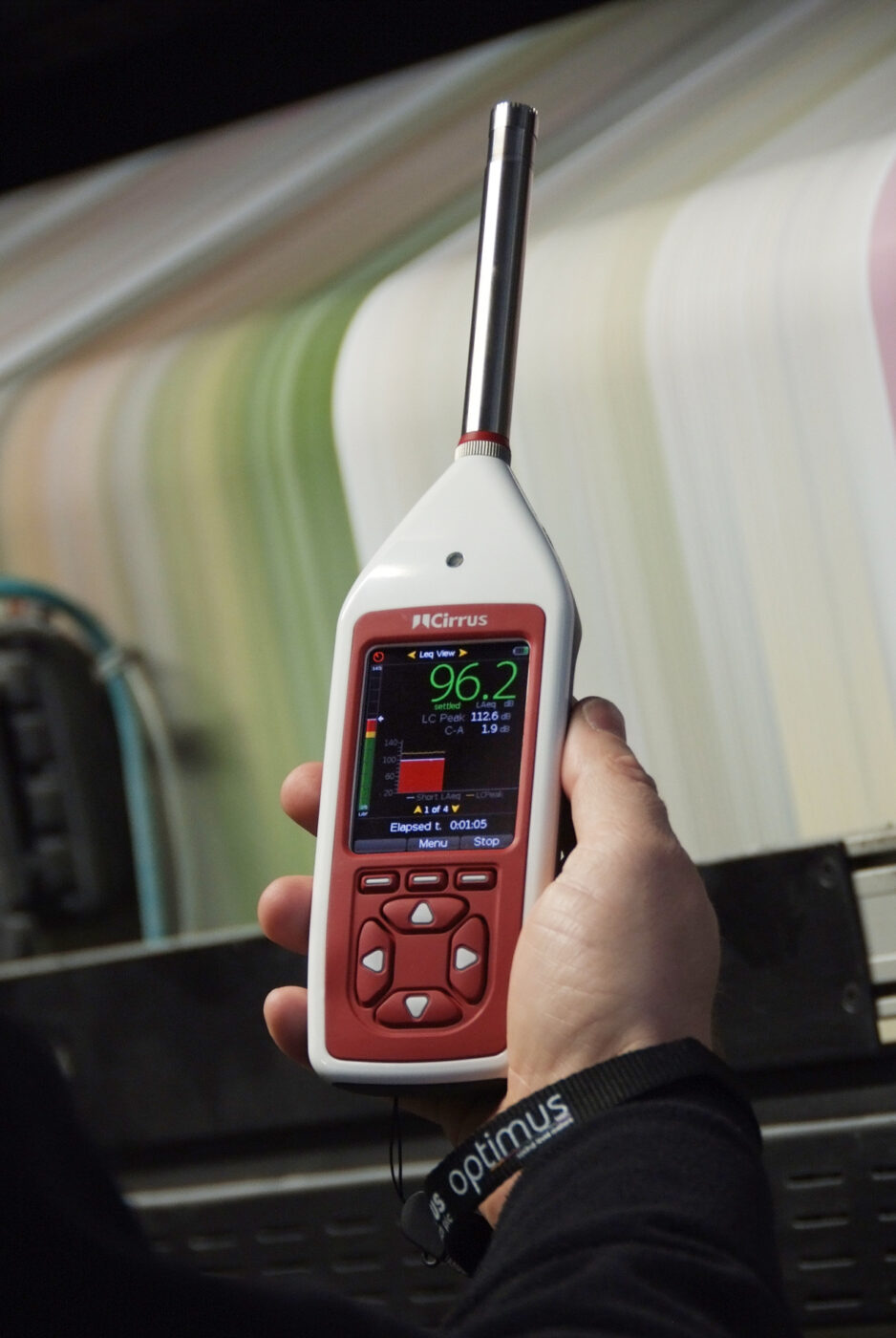
| Sound level meter | Fits checking a claim yourself | See listings on AmazonOpens Amazon search results, not one listing: check the model on the product page. |
Product types that fit the trend described above, not tested models. Check the exact listing before you buy. How we pick them.
Compact compressor dehumidifier for bedrooms
Where to look: Amazon
The only type with a capacity figure you can compare across brands. Treat its decibel claim as a claim and weigh the compressor cycling, not the steady hum.
- Real capacity rating to compare
- Drain hose option
- Holds a set humidity
- Compressor cycling is audible
- Larger footprint
- Sound claim has no stated method
Thermoelectric bedroom dehumidifier
Where to look: Amazon
A thermoelectric unit has no compressor to start in the middle of the night. That is the argument for one, and the price is how little water it moves.
- Nothing switches on and off loudly
- Tens of watts
- Small
- Removes ounces, not pints
- Usually no rating at all
- Tank fills slowly but still fills
Sound level meter
Where to look: Amazon
Since no dehumidifier has to prove its decibel figure, the only way to know what a unit does in your bedroom is to measure it once it arrives.
- Cheap
- Settles the question in your own room
- Works on other appliances
- Consumer meters vary
- Needs a quiet baseline reading
More: Home Improvement trends and how the Trend Signal is scored.
Sources
- Appendix X1 to Part 430, dehumidifier test method — eCFR
- Dehumidifiers Key Efficiency Criteria, Version 6.0 — ENERGY STAR
- Noise and Hearing Loss — CDC NIOSH
- Test Procedures for Dehumidifiers, 80 FR 45802 — GPO
- EDV-1100 Petite Electric Dehumidifier — Eva-Dry
- 8 Pint Wi-Fi Dehumidifier — hOmeLabs
- 40 Pint Dehumidifier with Pump — hOmeLabs
- 13 Pint Small-Area Desiccant Dehumidifier — Ivation
Questions readers ask
Is there a standard test for dehumidifier noise?
Not in the federal rules. Appendix X1 incorporates AHAM DH-1-2022 sections covering instrumentation, the test room, the capacity test and energy consumption, and the ENERGY STAR Version 6.0 criteria set requirements only for integrated energy factor and capacity.
Is a 38 dB dehumidifier quiet?
It is quieter than a 49 dB one, but the claim comes with no stated distance or fan speed. Because the decibel scale is logarithmic and A-weighted, an 11 decibel gap is a substantial difference in sound energy rather than a small one.
Do thermoelectric mini dehumidifiers make any noise?
They still have a fan, so they are not silent, but they have no compressor to switch on and off. Only the passive silica gel type, which uses no power while it works, has no moving parts at all.
Why does a dehumidifier get louder at night?
It usually does not. A unit holding a set humidity cycles its compressor on and off, and in a quiet room the start of a cycle is far more noticeable than the steady running noise the published figure is likely to describe.
Will a drain hose make a bedroom unit quieter?
No, but it stops the unit shutting down when the tank fills, which means the humidity does not climb back overnight. The manufacturers that include a hose publish the length, which is typically a few feet.