We have not tested a dehumidifier and we are not going to pretend otherwise. What this article does instead is set what manufacturers publish about their own machines — water removed, coverage, power draw, drainage — against the federal test procedure that governs the category and the recall record the Consumer Product Safety Commission keeps. We name only products that the maker itself sells and specifies on its own site, all read on September 25, 2026, and we checked every brand named against the CPSC recall database.
The search that brings most people here is revealing. Amazon’s autocomplete finishes the phrase with cordless, with drain hose, battery, counter and plug in, so buyers are choosing on where the thing sits and whether they have to empty it. What the completions never mention is capacity, and capacity is the one number the small units are least willing to give you.
Trend Signal
72/100 Strong momentum
- Emerging
- Rising
- Mainstream
- Peaking
- Cooling
Small units are selling on numbers nobody has to prove
Federal law defines a dehumidifier as a machine with a refrigerating system, so the thermoelectric and silica gel units sold for bathrooms sit outside the DOE test procedure and carry no measured pints-per-day rating.
Our editorial reading of the cited data, not a forecast. How it is scored
By the numbers
- 20 ozDaily water removal published for a mid-size thermoelectric unit rated to 2,200 cubic feetIvation
- 8 pintsDaily removal published for a compact compressor model, quoted at 80 degrees F and 60% RHhOmeLabs
- 30-50%Indoor relative humidity range the EPA advises keeping a home withinUS EPA
- 18Dehumidifier recall records returned by the CPSC recall service on 25 September 2026CPSC
What buyers add to this search, and what it tells you
Type the phrase into a store search box and the completions arrive in a predictable order: cordless, with hose, with drain hose, battery, counter, plug in, wireless. Six of those seven are about power and drainage. None is about how much water the machine removes. That is a fair way to shop for a bathroom, where the unit has to live on a narrow surface, but it means the specification that decides whether the thing works at all never enters the decision.
A machine sold on placement rather than performance can be tiny, quiet and cheap, and can advertise a room size instead of a rate. Once you know which numbers are measured under a federal procedure and which are not, the shelf separates into two groups that look alike and behave nothing alike.
The qualifiers people search with are about where the unit sits, not how much water it removes.
What a mini unit removes in a day, in its maker’s own numbers
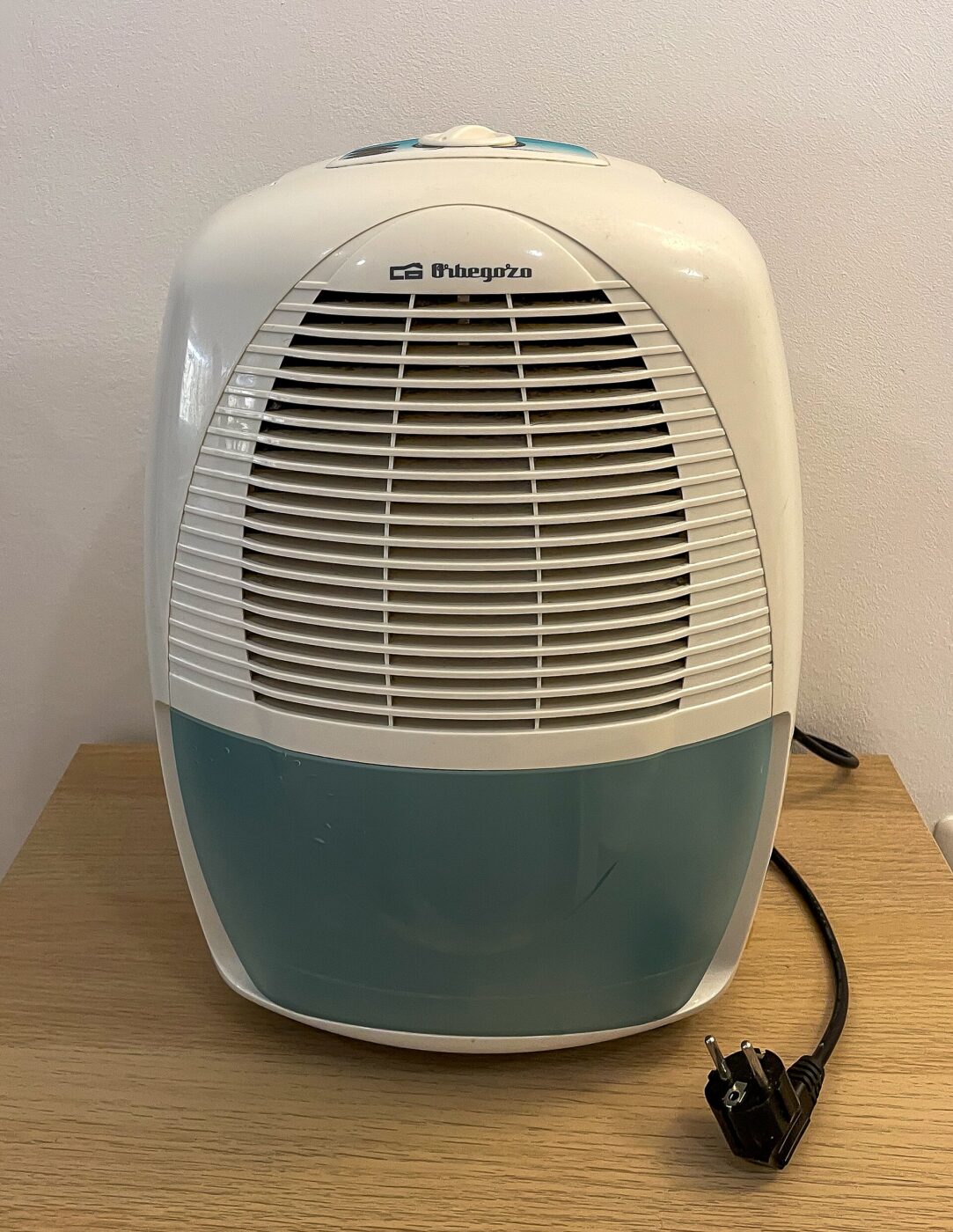
Here is what four currently sold units publish on their own product pages. We changed nothing except to put them side by side, and we left blanks where the manufacturer publishes no figure, because those blanks are the point.
Twenty ounces a day is one and a quarter pints. The compact compressor model claims roughly six times that, at 80 degrees F and 60 percent relative humidity, a warmer and wetter condition than the federal test uses. Two of the four publish no water-removal figure at all.
| Model | How it removes water | Published removal | Coverage claim | Power |
|---|---|---|---|---|
| Ivation mid-size thermo-electric | Thermoelectric, no compressor | 20 oz per day | 2,200 cubic feet | 72 W |
| Eva-Dry EDV-1100 Petite | Electric, type not stated on the page | Not published | 1,100 cubic feet | 22 W |
| Eva-Dry E-333 | Renewable silica gel, no power in use | 13 oz absorbed before a recharge | 333 cubic feet | Recharge only |
| hOmeLabs 8 Pint compact | Compressor | 8 pints per day at 80 degrees F, 60% RH | 1,800 sq ft | Not published |
Why none of the small ones carry a pint rating

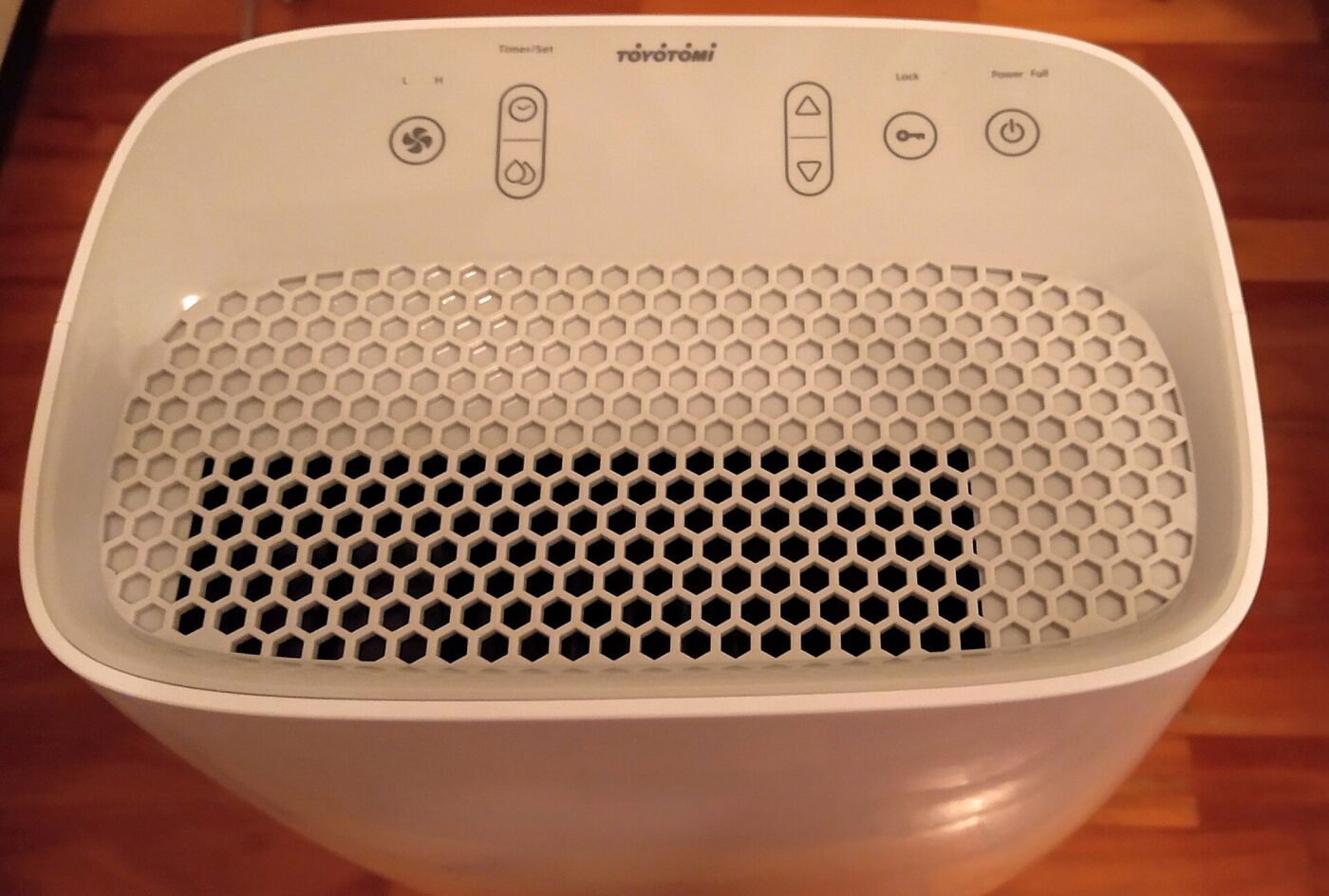
The reason is statutory. The definition the Energy Department works from describes a self-contained assembly with a refrigerated surface that condenses moisture, a refrigerating system, an air-circulating fan and a means of collecting the condensate. In the 2015 rule that rewrote the test procedure, DOE stated plainly that products using solely a desiccant, or a technology other than vapor-compression refrigeration, are not covered by statute, and that desiccant-only products do not meet the definition.
Everything follows from that. A thermoelectric or silica gel unit is not tested under 10 CFR part 430 appendix X1, so it has no capacity in pints per 24 hours measured at a stated ambient condition and no integrated energy factor in liters per kilowatt-hour. It cannot be certified either: the ENERGY STAR criteria for dehumidifiers, Version 6.0, effective October 1, 2025, define an eligible product as one built around a refrigerating system, and set requirements only in terms of capacity class and integrated energy factor.
No refrigerating system means no federal test, no pint rating and no ENERGY STAR label.
What the recall record covers, and what it does not
This category has an unusually heavy safety file, so we pulled it ourselves. Querying the CPSC recall web service for the product name dehumidifier on September 25, 2026 returned 18 records. Six are re-announcements or expansions, leaving 12 distinct recalls between April 2001 and August 2023 and, adding the United States unit counts across them, about 12.1 million units. That is our count from a product-name match, not an official tally, so a recall worded as an air conditioner with a dehumidifier mode would not appear in it.
Seventeen of the 18 records describe the same failure: the unit overheats, smokes or catches fire. The largest single action, CPSC notice 17-024 dated November 2, 2016, covered about 3.4 million Midea-built units sold under roughly 50 brand names.
For a bathroom buyer the useful part is what is absent. Every recalled model whose capacity CPSC lists falls between 20 and 75 pints, so every one is a compressor machine, and no thermoelectric or silica gel unit appears in the 18 records. We read that as a statement about how little these small units do rather than a clean bill of health: they draw tens of watts rather than hundreds.
Choosing one for an actual bathroom
Start with the target rather than the product. The EPA advises keeping indoor humidity below 60 percent and ideally between 30 and 50 percent relative humidity, and a cheap humidity meter will tell you within a day whether your bathroom sits outside that band once the extractor fan has done its work. A room that is back to 45 percent an hour after a shower does not need a machine at all.
If it does sit high, match the technology to the job. A silica gel unit is built for a closed volume such as a cabinet or a linen closet and has to be plugged in periodically to dry the beads out. A thermoelectric unit runs continuously on a few dozen watts at a rate published in ounces per day. A small compressor unit removes several times more, is the only one of the three with a rating you can compare across brands, and is the only one you will hear.
Whatever you pick, read the number beside the capacity claim. A cubic-feet or square-feet figure is the manufacturer’s own description of the intended space, arrived at by a method it does not have to publish, and two such figures from two brands are not comparable the way two pint ratings are.
- Check whether the page states water removed per day, and at what temperature and humidity
- Check the tank size against how often you are willing to empty it
- Check whether the unit restarts by itself after a power interruption
- Check the brand and model against the CPSC recall database before you buy
What to watch next
- Whether makers of thermoelectric units start publishing removal rates at a stated temperature and humidity
- Any CPSC notice naming a thermoelectric or silica gel unit, which would be the first in the database
Where to start
Paid links: we earn a commission if you buy through the buttons below, at no extra cost to you. As an Amazon Associate I earn from qualifying purchases.
Three ways to pull water out of a small room, compared on what each one publishes
| Product type | Good fit for | Where to look |
|---|---|---|
| Thermoelectric mini dehumidifier | Fits a countertop that stays plugged in | See listings on AmazonOpens Amazon search results, not one listing: check the model on the product page. |
| Renewable silica gel moisture absorber | Fits a closed cabinet or closet | See listings on AmazonOpens Amazon search results, not one listing: check the model on the product page. |
| Digital humidity monitor | Fits finding out what the room does | See listings on AmazonOpens Amazon search results, not one listing: check the model on the product page. |
Product types that fit the trend described above, not tested models. Check the exact listing before you buy. How we pick them.
Thermoelectric mini dehumidifier
Where to look: Amazon
The type most listings mean by mini. Look for a page that states ounces per day rather than only the volume of air the unit is said to suit.
- Runs on tens of watts
- No compressor to cycle
- Small enough for a shelf
- Removal measured in ounces per day
- No federal capacity rating
- Tank still needs emptying
Renewable silica gel moisture absorber
Where to look: Amazon
Built for a closet, a safe or a cabinet rather than an open room. The published figure is total absorption before a recharge, not a daily rate.
- No power while working
- Nothing to empty
- Silent
- Only suits enclosed volumes
- Needs periodic recharging
- Absorbs ounces, not pints
Digital humidity monitor
Where to look: Amazon
The EPA target is below 60 percent and ideally 30 to 50 percent. A meter tells you where your room actually sits before you spend anything else.
- Cheap
- Tells you whether you need a machine
- Useful afterwards
- Removes no water
- Accuracy varies by model
More: Home Improvement trends and how the Trend Signal is scored.
Sources
- Appendix X1 to Part 430, dehumidifier test method — eCFR
- Test Procedures for Dehumidifiers, 80 FR 45802 — GPO
- Dehumidifiers Key Efficiency Criteria, Version 6.0 — ENERGY STAR
- A Brief Guide to Mold, Moisture and Your Home — US EPA
- Recall records for dehumidifier — CPSC recall web service
- Mid-Size Thermo-Electric Dehumidifier — Ivation
- EDV-1100 Petite Electric Dehumidifier — Eva-Dry
- E-333 Renewable Mini Dehumidifier — Eva-Dry
- 8 Pint Wi-Fi Dehumidifier — hOmeLabs
Questions readers ask
Will a mini dehumidifier clear a steamy bathroom after a shower?
Not quickly. The published rates are small: one mid-size thermoelectric unit is rated at 20 ounces of water a day, about a pint and a quarter over 24 hours. These units are built to hold a room down over hours rather than to clear a burst of steam in minutes.
Why do mini dehumidifiers advertise cubic feet instead of pints?
Because most of them are not dehumidifiers under federal law. DOE stated in its 2015 test procedure rule that products using solely a desiccant, or a technology other than vapor-compression refrigeration, are not covered, so they are not tested under appendix X1 and have no measured pints-per-day capacity.
Can a mini dehumidifier be ENERGY STAR certified?
No. The ENERGY STAR criteria for dehumidifiers, Version 6.0, effective October 1, 2025, define an eligible product as an assembly that includes a refrigerated surface and a refrigerating system, and set requirements in terms of integrated energy factor and capacity in pints per day.
Have any mini dehumidifiers been recalled?
Not in this database. We queried the CPSC recall service for the product name dehumidifier on September 25, 2026 and read all 18 records returned. Every recalled model whose capacity is listed falls between 20 and 75 pints, all of them compressor units.