Type “diy mini split” into Amazon and the box finishes it: pre charged, quick connect kit, installation kit, 18000 btu. We pulled those completions on October 1, 2026, with ductless mini split heat pump also rising on Google Trends in the United States over twelve months.
We have installed and tested nothing. What follows compares what makers publish on their own specification pages, what the federal refrigerant rules say in their own words, and what the CPSC recall database holds. Our selection rule: widely sold product types whose makers publish a full specification sheet we could open, each checked against that database on October 1, 2026.
Trend Signal
74/100 Strong momentum
- Emerging
- Rising
- Mainstream
- Peaking
- Cooling
Pre-charged kits are the fastest-moving shelf in a trade-installed category
Amazon’s US autocomplete returns ten pre-charged, quick-connect and installation-kit completions for the prefix diy mini split, pulled October 1, 2026. Our CPSC database search the same day found only two notices naming ductless equipment, both routing the remedy through the installing dealer.
Our editorial reading of the cited data, not a forecast. How it is scored
By the numbers
- 2Recall notices naming ductless heat pumps, our CPSC database search on Oct. 1, 2026CPSC
- 5 poundsCharge ceiling in the EPA small appliance definition, a class that excludes split systemseCFR 40 CFR 82.152
- 921 PSIPressure rating MRCOOL publishes for its certified pre-charged line set valvesMRCOOL
- R-454BRefrigerant named on both maker pages we read for pre-charged systems, Oct. 1, 2026Pioneer
What a pre-charged line set actually is
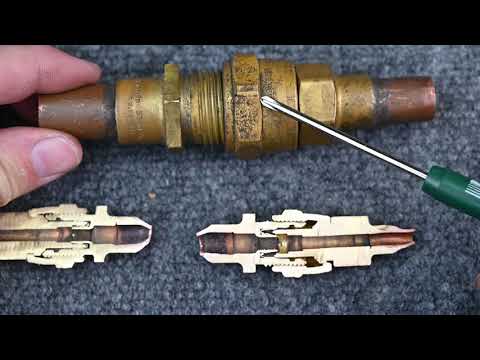
The outdoor unit leaves the factory holding its refrigerant, and the copper line set arrives charged and sealed at both ends, with couplers meant to be opened once as they are torqued on. Pioneer lists its 12,000 Btu/h 115-volt system as factory-precharged with R-454B. MRCOOL says the pre-charged line set valves on its DIY 5th Generation line are tested and certified by Intertek under Intertek number 5029931 to UL STD 207 and CSA STD C22.2 number 140.3, rated to handle 921 PSI, and used with R-454B.
What is not in the carton matters as much. The electrical supply, the condensate route and the wall penetration are all on the buyer, and so is the line length: a factory charge is matched to one run, which makes kit length a specification, not a preference.
The marketing language is where confusion starts. MRCOOL describes the DIY 5th Generation as the only mini split on the market designed for full homeowner installation. Pioneer says on its 115-volt page that a professional install is entirely dependent on the buyer’s skillset and comfort level. Neither statement is a reading of federal law, and the two are easy to blur.
Pre-charged says where the refrigerant sits. It does not say what any federal rule permits.
What the EPA rule says about opening a refrigerant circuit
The operative text is 40 CFR 82.161(a)(1): any person who could be reasonably expected to violate the integrity of the refrigerant circuit during maintenance, service, repair or disposal of an appliance containing a class I or class II refrigerant or a non-exempt substitute must pass a certification exam from an approved program. Persons working on medium-, high- or very high-pressure appliances, other than small appliances and vehicle systems, must be certified as Type II technicians, and 40 CFR 82.152 lists R-410A among the high-pressure appliance refrigerants.
The same definitions section names the actions that count: attaching or detaching hoses and gauges, adding or removing refrigerant, adding or removing components, and cutting the refrigerant line. Painting the unit or rewiring an external electrical connection is not on that list.
Two further sections sit behind it. The venting prohibition at 40 CFR 82.154(a)(1) says no person maintaining, servicing, repairing or disposing of an appliance may knowingly vent or otherwise release refrigerant. And 40 CFR 82.156(a) requires technicians to evacuate refrigerant to the levels in the rule’s Table 1, using equipment certified under 40 CFR 82.158, before opening any appliance other than a small appliance. A mini split is not a small appliance: 40 CFR 82.152 reserves that term for factory-sealed products holding five pounds or less. We report the rule rather than advise on it; who may open a sealed product runs through the 2026 right-to-repair laws.
The rule governs the refrigerant circuit. Mounting, wiring and condensate sit elsewhere.
Buying refrigerant later is a separate rule again
The sales restriction at 40 CFR 82.154(c)(1) says no person may sell a non-exempt substitute for use as a refrigerant unless one of nine listed conditions is met. The first two are that the buyer has been certified as a Type I, II, III or Universal technician under 40 CFR 82.161, or employs one and proves it to the seller. Condition seven is what lets a charged system reach a consumer at all: the refrigerant is contained in an appliance with a fully assembled refrigerant circuit, or in an appliance component.
That is the difference a buyer should price in. The carton ships because the refrigerant sits inside the hardware; a cylinder to top the system up later falls under a different sentence of the same rule. DOE assumed a 15-year average lifetime for heat pumps when it set the current efficiency floors, and a system lasting that long will need somebody with a recovery machine at least once.
Both maker pages we read name R-454B, the lower-global-warming A2L refrigerant used in newly made residential equipment. We covered what changed in the R-410A phase-out explainer; the equipment-cost side sits in heat pump prices in 2026.
What the recall record says about who fixes it
We queried the CPSC recall database on October 1, 2026, through the agency’s own recall service, for the product names heat pump, ductless and air conditioner. The three searches return 33 unique notices across the database. Ten are dated on or after January 1, 2020, nine of them home air conditioning or heat pump equipment. Exactly two name ductless equipment.
Both read the same way. Lennox recalled three models of ductless single-zone and multi-zone heat pumps on February 27, 2020, about 1,650 US units, over internal electrical components that can fail and let the units overheat. Carrier and Bryant recalled 1.5-ton and 4-ton ductless outdoor units, about 5,350 US units, over a fan motor that can overheat, in a notice dated October 10, 2019. Both tell owners to contact their installing servicer, dealer or contractor, and to keep foliage at least 24 inches away while they wait.
Two notices is a small record, and it tells a reader which products were found to fail, not which will not. What it shows is an assumption: both remedies route through a trade party, and a system installed by its owner has no installing dealer to call.
| Notice | Date in the database | US units | What the notice says failed |
|---|---|---|---|
| Lennox ductless single-zone and multi-zone heat pumps | Feb. 27, 2020 | About 1,650 | Internal electrical components can fail, allowing the unit to overheat |
| Carrier and Bryant ductless outdoor units | Oct. 10, 2019 | About 5,350 | The fan motor can fail, causing the unit to overheat |
What to check before the kit ships
Six lines decide most of this, all checkable before the pallet leaves the warehouse. None is the headline Btu number.
The one that catches people late is the warranty, and the two differ: Pioneer requires registration within 90 days of purchase, MRCOOL says none is required. Those terms are separate from the federal rules. Filters and coil cleaning stay owner jobs on any system, the same way the MERV rating on a furnace filter is.
- The refrigerant, named on the specification page rather than implied by the model year
- The line set length the kit is charged for, and whether a longer run changes the charge
- The AHRI reference number, which looks the rated combination up in the public directory
- The voltage and the breaker the maker specifies, which is not the same as a wall outlet
- Whether the warranty requires registration, and inside what window
- The model and serial numbers against the CPSC recall database
The listing tells you the capacity. The specification page tells you everything that decides whether the system fits.
What to watch next
- CPSC for new notices naming ductless equipment; our October 1, 2026 count was two in the whole database
- EPA Section 608 pages for any change to the technician categories or the nine conditions in the sales restriction
- Whether more makers publish third-party certification numbers for coupler hardware, as MRCOOL does
Where to start
Paid links: we earn a commission if you buy through the buttons below, at no extra cost to you. As an Amazon Associate I earn from qualifying purchases.
Pre-charged mini split kits compared on what to check
| Product type | Good fit for | Where to look |
|---|---|---|
| Pre-charged DIY mini split heat pump | Fits a single room with no ductwork | See listings on AmazonOpens Amazon search results, not one listing: check the model on the product page. |
| Mini split quick-connect line set | Fits a run that needs a different length | See listings on AmazonOpens Amazon search results, not one listing: check the model on the product page. |
| Mini split condenser wall bracket | Fits an outdoor unit on a wall | See listings on AmazonOpens Amazon search results, not one listing: check the model on the product page. |
Product types that fit the trend described above, not tested models. Check the exact listing before you buy. How we pick them.
Pre-charged DIY mini split heat pump
Where to look: Amazon
The category exists because the refrigerant sits inside a fully assembled circuit, the condition that lets it be sold without a technician certificate.
- Refrigerant ships sealed in the hardware
- Maker publishes a full spec sheet
- Charge is matched to one line length
- No installing dealer if a recall lands
Mini split quick-connect line set
Where to look: Amazon
Line sets sell separately because kit length is a specification. Match the gas and liquid diameters to the unit page, not a listing title.
- Sold in set lengths
- Fitting sizes are published
- Must match the unit port sizes
- Changing length can change the charge
Mini split condenser wall bracket
Where to look: Amazon
Outdoor unit net weight is on every specification page we read. Compare it with the bracket rating, not the description.
- Keeps the unit off wet ground
- Weight ratings are published
- Rating must exceed the unit weight
- Vibration transfer into the wall
More: Energy and Sustainability trends and how the Trend Signal is scored.
Sources
- 40 CFR 82.154 prohibitions — eCFR
- 40 CFR 82.161 technician certification — eCFR
- 40 CFR 82.152 definitions — eCFR
- 40 CFR 82.156 evacuation of refrigerant — eCFR
- Section 608 technician certification — EPA
- Lennox recalls ductless heat pumps — CPSC
- Carrier and Bryant recall ductless heat pumps — CPSC
- DIY 5th Generation page — MRCOOL
- DIY 5th Generation limited warranty — MRCOOL
- Quantum Ultra 12,000 BTU 115V spec page — Pioneer
- 82 FR 1786 heat pump standards — GovInfo
Questions readers ask
Does a pre-charged mini split need EPA certification to install?
40 CFR 82.161(a)(1) requires certification for any person who could reasonably be expected to violate the integrity of the refrigerant circuit during maintenance, service, repair or disposal. 40 CFR 82.152 counts attaching hoses, adding or removing refrigerant, adding or removing components and cutting the line among those activities. We report the rule and leave its application to the reader and their local authority.
Why can a pre-charged system be sold to anyone when refrigerant cannot?
40 CFR 82.154(c)(1) lists nine conditions under which refrigerant may be sold. One is that it is contained in an appliance with a fully assembled refrigerant circuit. A sealed, factory-charged system meets it; a cylinder does not.
Is a mini split a small appliance under the EPA rules?
No. 40 CFR 82.152 limits that term to products fully manufactured, charged and hermetically sealed in a factory with five pounds or less of refrigerant, naming window units, portable units and packaged terminal air heat pumps as examples.
Have ductless mini splits been recalled in the United States?
Two notices in the CPSC database name ductless equipment, by our search on October 1, 2026: Lennox, about 1,650 US units on February 27, 2020, and Carrier and Bryant, about 5,350 US units in a notice dated October 10, 2019. Both involve overheating.