Energy monitoring has been a checkbox on smart plugs for years, and for most of those years it meant a number inside one manufacturer’s app that no other system could read. That changed in two steps. The Connectivity Standards Alliance released Matter 1.3 on May 8, 2024 with electrical power and energy measurement built into the specification, so any device type can report instantaneous power, voltage and current in real time, as well as its energy consumption or generation over time.
The second step arrived on November 20, 2025 with Matter 1.5, which added an electrical energy tariff device type carrying data from utilities, grid operators and energy services on real-time and forecast pricing, tariff and carbon data in standardized formats. The result is that a plug’s reading and the price of the electricity it is measuring can live in the same system, at a moment when that price keeps moving.
Trend Signal
62/100 Steady momentum
- Emerging
- Rising
- Mainstream
- Peaking
- Cooling
Energy reporting moved out of vendor apps and into the Matter specification
Matter 1.3, released May 8, 2024, let any device type report instantaneous power and energy over time, and Matter 1.5, released November 20, 2025, added a device type for utility pricing, tariff and carbon data.
Our editorial reading of the cited data, not a forecast. How it is scored
By the numbers
- 18.34 centsU.S. average residential electricity price per kilowatthour in June 2026U.S. Energy Information Administration
- 3.8%12-month rise in the CPI electricity index through August 2026U.S. Bureau of Labor Statistics
- 72.3%Share of U.S. meters that were advanced meters in 2022, in FERC’s November 2024 reportFederal Energy Regulatory Commission
- 10%DOE estimate of yearly heating and cooling savings from an 8-hour thermostat setbackU.S. Department of Energy
Energy reporting became part of the standard
Matter 1.3 is the release that matters for hardware buyers. The Alliance describes it as enabling any device type to report actual and estimated measurements, including instantaneous power, voltage and current in real time, as well as energy consumption or generation over time. The same release added electric vehicle supply equipment and appliance types including cooktops, ovens and laundry dryers.
Matter 1.5 extended the idea from measurement to price. Its electrical energy tariff device type shares real-time and forecast pricing, tariff and carbon data in standardized formats, and it also lets utilities communicate connection details and power limits.
Why this matters for a cheap plug is simple. Before the specification carried these clusters, a reading was a feature of one app; after it, a reading is a data type any Matter controller can request, which is what makes cross-brand dashboards and kilowatthour-based automations possible.
Metering stopped being a brand feature and became a device capability the specification defines.
Why households started measuring
The price of the thing being measured did most of the work. EIA’s Electric Power Monthly puts the U.S. average residential price at 18.34 cents a kilowatthour in June 2026, against 17.47 cents in June 2025. The Bureau of Labor Statistics measured the CPI electricity index up 3.8% over the 12 months ended August 2026, inside an energy services index up 4.0%.
Rates are also getting more complicated, which raises the value of knowing when a device runs rather than only how much it draws. FERC’s assessment of demand response and advanced metering, published in November 2024 and built on 2022 data collected by EIA, reported 119.3 million advanced meters out of 165.0 million total meters in the United States, a penetration rate of 72.3%. The same report noted regulators in Colorado, Maine and Minnesota evaluating or approving retail time-of-use rates. Those are four-year-old counts, so treat them as the direction of travel rather than as today’s share.
That is the practical case for metering at the socket: under a flat rate a kilowatthour is a kilowatthour, but under a time-varying rate the same load costs different amounts by the hour.
What a plug can and cannot tell you

A metering plug measures the load behind it and nothing else, which is a genuine limit because the biggest residential electricity users are mostly hardwired. EIA’s figures for 2020 put air conditioning at 19% of residential electricity consumption, space heating at 12% and water heating at 12%, and name lighting and refrigerators as the next two largest end uses.
What the plug is good at is the long tail. Dehumidifiers, aquariums, second refrigerators and freezers, gaming setups, grow lights and older media equipment all run on plugs, and they are precisely the loads people guess wrong about. Measuring one for a week turns an argument into a number.
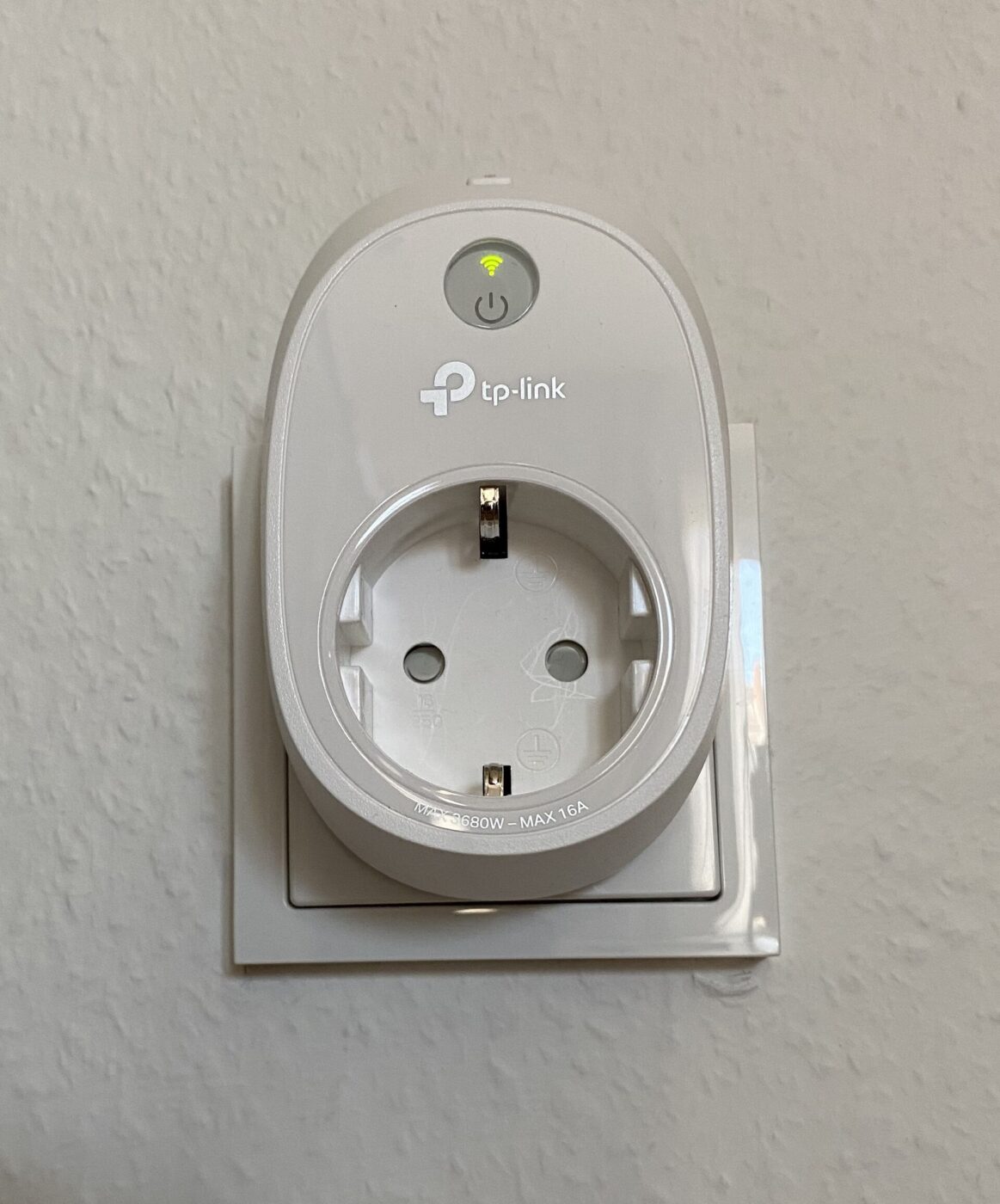
There is also a hard limit to respect. Every plug carries a maximum current and wattage printed on the body and in the listing, and high-draw resistive loads such as space heaters sit close to or above what many plugs allow. The rating is a specification, not a suggestion.
| Residential electricity end use, 2020 | Share of household electricity use |
|---|---|
| Air conditioning | 19% |
| Space heating | 12% |
| Water heating | 12% |
Scheduling is where the savings actually come from
Measurement on its own does not lower a bill. What lowers a bill is moving or removing a load, and the clearest sourced figure for that belongs to the thermostat rather than the plug: DOE states you can save as much as 10% a year on heating and cooling by turning a thermostat back 7 to 10 degrees Fahrenheit for eight hours a day, and notes that programmable thermostats have generally not been recommended for heat pump systems.
The same logic applies to plugs, one device at a time. A dehumidifier that runs outside peak hours, a recirculation pump switched off overnight, a second freezer that draws more than the kitchen one: each is a small decision a metering plug makes visible and a schedule makes permanent. The counter-signal is worth stating plainly, though. Most of the load in a typical house does not sit behind a plug, so households that want whole-house numbers need a panel-mounted monitor or their utility’s advanced meter data.
Who should buy one now, and who should wait
Buy now if you are on a time-varying rate or about to be, if you have a specific mystery load, or if you run a Matter controller and want readings that survive a change of brand. The standard work is done: power and energy measurement have been in the specification since May 2024 and tariff data since November 2025, so a product certified against those versions is not a bet on a roadmap.
Wait if your electricity is billed on a flat rate and your suspicious appliances are hardwired, because the plug will confirm what you assumed about small loads and tell you nothing about the large ones. Wait too if the load is a space heater or a window air conditioner, unless the plug’s printed amperage rating comfortably exceeds the appliance draw.
One buying check separates the useful products from the rest. A listing that promises monitoring should say what it reports and in what units: watts now, kilowatthours cumulative, and whether history lives on the device or only in a cloud account. A plug that shows live wattage alone cannot answer the question people actually ask.
What to watch next
- Certification listings for products built against Matter 1.5, the first version carrying tariff and pricing data.
- Your utility’s rate filings, since FERC’s November 2024 report named several states evaluating or approving retail time-of-use rates.
- The monthly EIA residential electricity price, which rose from 17.47 cents in June 2025 to 18.34 cents in June 2026.
Where to start
Paid links: we earn a commission if you buy through the buttons below, at no extra cost to you. As an Amazon Associate I earn from qualifying purchases.
Household energy measuring gear compared on what it sees
| Product type | Good fit for | Where to look |
|---|---|---|
| Smart plug with energy monitoring | Fits one appliance at a time | See listings on AmazonOpens Amazon search results, not one listing: check the model on the product page. |
| Matter-certified smart plug | Fits a mixed-brand setup | See listings on AmazonOpens Amazon search results, not one listing: check the model on the product page. |
| Plug-in watt meter | Fits a quick spot check | See listings on AmazonOpens Amazon search results, not one listing: check the model on the product page. |
Product types that fit the trend described above, not tested models. Check the exact listing before you buy. How we pick them.
Smart plug with energy monitoring
Where to look: Amazon
The workhorse for pinning down a single mystery load. Read the printed amperage rating before putting anything with a heating element behind it, and confirm the app reports cumulative kilowatthours.
- Logs usage over weeks
- Can switch the load on a schedule
- Only sees what is plugged in
- Amperage limits rule out big heaters
Matter-certified smart plug
Where to look: Amazon
Power and energy measurement entered Matter in version 1.3 and tariff data in 1.5, so the version a product is certified against decides what it can report.
- Readings any Matter controller can request
- Survives a change of ecosystem
- Needs a compatible hub
- Feature depth varies by version
Plug-in watt meter
Where to look: Amazon
A plain meter with a display is enough if the question is what a freezer draws. It keeps a running total on the device, which matters because the interesting figure takes days to accumulate.
- No account or network needed
- Cheapest way to get a number
- No scheduling or automation
- Readings copied by hand
More: Energy and Sustainability trends and how the Trend Signal is scored.
Sources
- Matter 1.3 Specification Released — Connectivity Standards Alliance
- Matter 1.5 Introduces Cameras, Closures, and Enhanced Energy Management Capabilities — Connectivity Standards Alliance
- Electric Power Monthly, average retail price of electricity to ultimate customers — U.S. Energy Information Administration
- Consumer Price Index, August 2026 — U.S. Bureau of Labor Statistics
- Assessment of Demand Response and Advanced Metering, November 2024 — Federal Energy Regulatory Commission
- Electricity use in homes — U.S. Energy Information Administration
- Home Upgrades — U.S. Department of Energy
Questions readers ask
Do smart plugs with energy monitoring save money?
Not on their own. They measure a single plugged-in load, and savings come from changing when or whether that load runs. The clearest sourced saving in this area belongs to scheduling: DOE states you can save as much as 10% a year on heating and cooling by turning a thermostat back 7 to 10 degrees Fahrenheit for eight hours a day.
What did Matter add for energy?
Matter 1.3, released May 8, 2024, added electrical power and energy measurement so any device type can report instantaneous power, voltage and current in real time plus energy consumption over time. Matter 1.5, released November 20, 2025, added an electrical energy tariff device type carrying real-time and forecast pricing, tariff and carbon data.
Can I put a space heater on a smart plug?
Only if the plug’s printed amperage and wattage rating exceeds the heater’s draw, and many do not. The rating is on the device body and in the listing, and it is the first thing to check before connecting any appliance with a heating element.
Would a whole-home monitor be better?
It depends what you are chasing. EIA’s 2020 figures put air conditioning at 19% of residential electricity use, space heating at 12% and water heating at 12%, and those are usually hardwired. A socket meter cannot see them; a panel-mounted monitor or your utility’s advanced meter data can.