There is no drama in the furnace filter aisle, and the federal price data agree. The BLS producer price index for air filters for air conditioners and furnaces of 2,400 CFM or less printed the identical value, 169.212, in every month of 2025, then edged to 171.812 in January 2026 and 171.580 by July. Since January 2023 the index has moved 3.2%.
A category that does not move on price moves on specification instead. What decides whether a filter does anything is the MERV number, whether your system can breathe through it, and whether the filter fills the slot without a gap around the edge. All three are documented by EPA rather than by a marketing scale, which makes this one of the easier buys to get right.
Trend Signal
46/100 Steady momentum
- Emerging
- Rising
- Mainstream
- Peaking
- Cooling
A flat-price category where the specification, not the price, decides the outcome
The BLS producer price index for home air filters sat at 169.212 for every month of 2025 and reached 171.580 by July 2026, a rise of about 1.4%, while EPA guidance points households to MERV 13 or as high as the system will take.
Our editorial reading of the cited data, not a forecast. How it is scored
By the numbers
- MERV 13Minimum rating EPA advises when upgrading a home HVAC filterEPA
- +1.4%Producer price index for home air filters, 2025 level to July 2026Bureau of Labor Statistics
- 60-90 daysReplacement interval manufacturers typically recommend, as cited by EPAEPA
- 1.8%3M consumer segment sales change in the second quarter of 2026 against a year earlier3M via SEC
What the MERV number measures
EPA defines minimum efficiency reporting values as a measure of an air filter’s ability to capture particles between 0.3 and 10 microns. Its published table runs from MERV 1 to MERV 16 and then to HEPA, with the low end, MERV 1 to 4, capturing particles in the 3.0 to 10.0 micron range at less than 20% efficiency. Filters rated MERV 13 and above are required to show at least 50% removal efficiency for the smallest particles tested.
That threshold is why the agency’s advice lands where it does. EPA writes that if you decide to upgrade to a higher efficiency filter, you should choose a filter with at least a MERV 13 rating, or as high a rating as your system fan and filter slot can accommodate. The second half of that sentence does as much work as the first.
The scale matters more than the adjectives on the box. Several manufacturers and retailers print their own numbering alongside MERV, so the like-for-like comparison is the MERV figure.
MERV 13 is the level EPA names, and the same sentence tells you to stop where your system stops.
A category where the price line barely moves
The producer price data for this product are unusually static. The BLS index for air filters for air conditioners and furnaces of 2,400 CFM or less was 166.294 in January 2023, 168.614 in August 2024, and then 169.212 for every single month of 2025. It moved to 171.812 in January 2026 and has printed 171.580 since. That is about 1.4% above the 2025 level and 3.2% above January 2023.
For comparison, the broader consumer index for tools, hardware and supplies rose 2.8% in the 12 months to August 2026 alone. A category flat enough to repeat the same index value 12 months in a row is not one where waiting for a sale changes much, and it is not one where paying more is likely to be buying more filtration.
The corporate picture is quiet too. 3M, whose consumer business includes home air filtration, reported consumer segment sales of $1,247 million in the second quarter of 2026 against $1,270 million a year earlier, a 1.8% decline, with organic sales down 2.1%. The release does not break out filters, so it reads on the segment rather than the aisle.
| Period | Home air filter producer price index | Change since January 2023 |
|---|---|---|
| January 2023 | 166.294 | — |
| August 2024 | 168.614 | +1.4% |
| Every month of 2025 | 169.212 | +1.8% |
| January 2026 | 171.812 | +3.3% |
| July 2026 | 171.580 | +3.2% |
Airflow and fit decide whether the rating is real

A higher MERV filter is a denser mat, and a denser mat is harder for a blower to pull air through. EPA’s position, in the second edition of its guide to air cleaners in the home, is that most furnaces and HVAC systems can accommodate a MERV 13 filter without creating equipment problems, provided that the filter is replaced frequently, and that you may need to consult an HVAC technician to find the highest efficiency filter that works with your system.
The other half is mechanical. EPA tells homeowners to make sure the filter fits snugly so air does not leak around the filter, and not to bend or crush the filter to make it fit. Air takes the easiest path; a gap at the edge of the slot is a bypass that no rating on the box can compensate for.
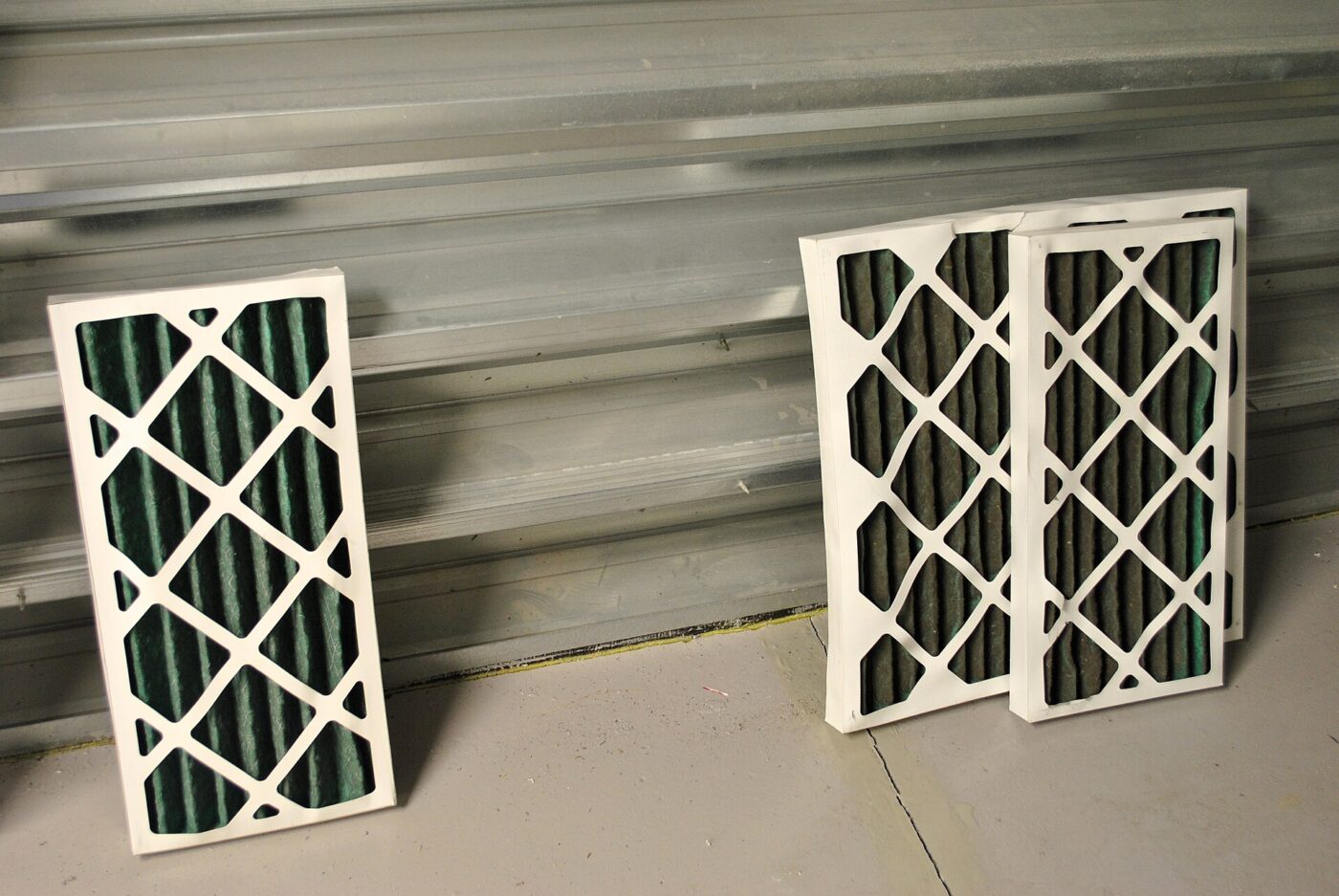
This is where filter depth becomes a real choice. A four-inch deep media filter presents far more surface area than a one-inch panel at the same rating, which is the usual way to get high efficiency without choking the return, but it only works if the cabinet has a slot that deep.
Smoke seasons changed the replacement rhythm
EPA’s wildfire smoke guidance is more specific than its general advice. During smoky periods, it says, upgrading to an HVAC filter rated MERV 13 or higher is recommended to effectively remove fine particle pollution from smoke in the indoor air, and the filter should be replaced when it appears dirty, dark brown or black, which may be more often than the manufacturer recommends.
That reframes the running cost. The usual manufacturer interval EPA cites is every 60 to 90 days; a household downwind of a smoke event may burn through filters faster for a few weeks and then go back to normal. A multipack in one size is a reasonable hedge against needing a spare at short notice.
EPA also draws the line between the two products people confuse. Central furnace or HVAC filters are designed to filter air throughout a home, it writes, while portable air cleaners filter a single room or area, and neither removes all pollutants.
Change the filter when it looks dirty, not only when the calendar says so.
How to buy one without guessing
Start with the slot, not with the rating. Write down the size printed on the frame of the filter currently installed and the depth of the slot, then shop for that. The number on the front of a filter package is a nominal size, and the smaller figure printed on the frame is what has to match, which is the practical version of EPA’s advice about a snug fit with no bending.
Then pick the rating your system can sustain. If you have never run above a basic panel filter and the blower is old, EPA’s own answer is to ask an HVAC technician which is the highest efficiency filter your system will take.
- The size printed on the filter frame, not the nominal size on the box
- The depth of the filter slot, since four-inch media will not fit a one-inch rack
- The MERV number, which is the figure EPA writes its guidance against
- How many you are buying, because smoke weeks shorten the interval
What to watch next
- The monthly BLS producer price index for home air filters, which has been flat enough that any move is news
- EPA wildfire smoke guidance during smoke season, for changes to the MERV level and replacement advice
- Whether more filters ship with the actual frame size printed on the front rather than only the nominal size
Where to start
Paid links: we earn a commission if you buy through the buttons below, at no extra cost to you. As an Amazon Associate I earn from qualifying purchases.
Furnace filter types compared on the things that actually differ
| Product type | Good fit for | Where to look |
|---|---|---|
| MERV 13 pleated furnace filter multipack | Fits a standard one-inch slot | See listings on AmazonOpens Amazon search results, not one listing: check the model on the product page. |
| Four-inch deep media filter | Fits a cabinet with a deep slot | See listings on AmazonOpens Amazon search results, not one listing: check the model on the product page. |
| Washable electrostatic furnace filter | Fits households that hate reordering | See listings on AmazonOpens Amazon search results, not one listing: check the model on the product page. |
Product types that fit the trend described above, not tested models. Check the exact listing before you buy. How we pick them.
MERV 13 pleated furnace filter multipack
Where to look: Amazon
The default choice for a standard return. EPA advises at least MERV 13 or as high as the fan and slot will take, and a multipack covers the shorter intervals that smoke weeks force.
- Meets the level EPA names
- Sold in most sizes and multipacks
- Denser media loads faster
- Needs a snug slot to work
Four-inch deep media filter
Where to look: Amazon
The usual way to run high efficiency without choking the return, because the pleats spread the load over more media. It is useless if the cabinet has a one-inch slot, so measure first.
- More surface area at the same rating
- Longer interval between changes
- Only fits a four-inch rack
- Higher cost per filter
Washable electrostatic furnace filter
Where to look: Amazon
A reusable panel solves the reordering problem and not the filtration one. If the reason you are shopping is particles rather than lint, check the printed MERV before choosing this route.
- No reordering
- Rinse and reuse
- Typically well below MERV 13
- Must be fully dry before reinstalling
More: Home Improvement trends and how the Trend Signal is scored.
Sources
- What is a MERV rating — U.S. Environmental Protection Agency
- Guide to Air Cleaners in the Home — U.S. Environmental Protection Agency
- Preparing for Smoke and Heat — U.S. Environmental Protection Agency
- PPI commodity data, air filters for air conditioners and furnaces — Bureau of Labor Statistics
- Air Cleaners and Air Filters in the Home — U.S. Environmental Protection Agency
- 3M second quarter 2026 results — 3M via SEC EDGAR
Questions readers ask
What MERV rating should a home furnace filter be?
EPA advises choosing a filter with at least a MERV 13 rating, or as high a rating as your system fan and filter slot can accommodate. It also says most furnaces and HVAC systems can accommodate a MERV 13 filter without creating equipment problems provided the filter is replaced frequently.
How often should a furnace filter be changed?
EPA says to replace filters according to the manufacturer’s recommendations, and that manufacturers typically recommend replacement every 60 to 90 days. It adds that if filters appear heavily soiled when you replace them, you should consider changing them more frequently, and during wildfire smoke it advises replacing the filter when it appears dark brown or black.
Are furnace filters getting more expensive?
Barely. The BLS producer price index for air filters for air conditioners and furnaces of 2,400 CFM or less printed 169.212 in every month of 2025 and 171.580 in July 2026, about 1.4% higher, and 3.2% above its January 2023 level.
Will a high-MERV filter damage my HVAC system?
EPA’s guidance is that most furnaces and HVAC systems can accommodate a MERV 13 filter without creating equipment problems if the filter is replaced frequently, and that you may need to consult a professional HVAC technician to determine the highest efficiency filter that will work best for your system.