The question most people ask before a first backpacking trip is whether they need a bear canister. The more useful question is whose list decides. Food storage rules in the United States are set park by park and forest by forest, and the document that governs your trip is the approved-container list published by the place you are going, not the marketing on the box.
Two national parks in the same state show the range. Olympic National Park, on a wilderness food storage page last updated July 7, 2026, requires food, trash, toiletries and scented items to be stored in a hard-sided vehicle, a park-provided food locker or a park-approved animal-resistant food container, and says the containers are required in all wilderness areas of the park. North Cascades National Park, on a page last updated April 2, 2026, says canisters are required at nine named backcountry camps and six cross-country zones, and only between June 1 and November 15. Same species, same region, different rules. Both are dated pages that can change between seasons, so check the one for your destination rather than relying on this summary.
Trend Signal
64/100 Steady momentum
- Emerging
- Rising
- Mainstream
- Peaking
- Cooling
Approved-container lists decide what counts, and they are maintained park by park
Olympic National Park requires approved animal-resistant containers in all of its wilderness areas and updated its approved list on June 25, 2026, while the Interagency Grizzly Bear Committee listed nearly 500 certified products from more than 100 manufacturers when we read its page on September 24, 2026. Rules like these are set locally and change between seasons.
Our editorial reading of the cited data, not a forecast. How it is scored
By the numbers
- WildernessWhere Olympic requires approved containers, on its page updated July 7, 2026National Park Service
- Jun 1–Nov 15Canister season at nine North Cascades camps and six zones, page updated April 2, 2026National Park Service
- 500Products on the IGBC certified list, from 100-plus makers, read September 24, 2026Interagency Grizzly Bear Committee
- 2009Year Rocky Mountain announced canisters below treeline, May 1 to October 31National Park Service
The rule you follow is the park list, not the label
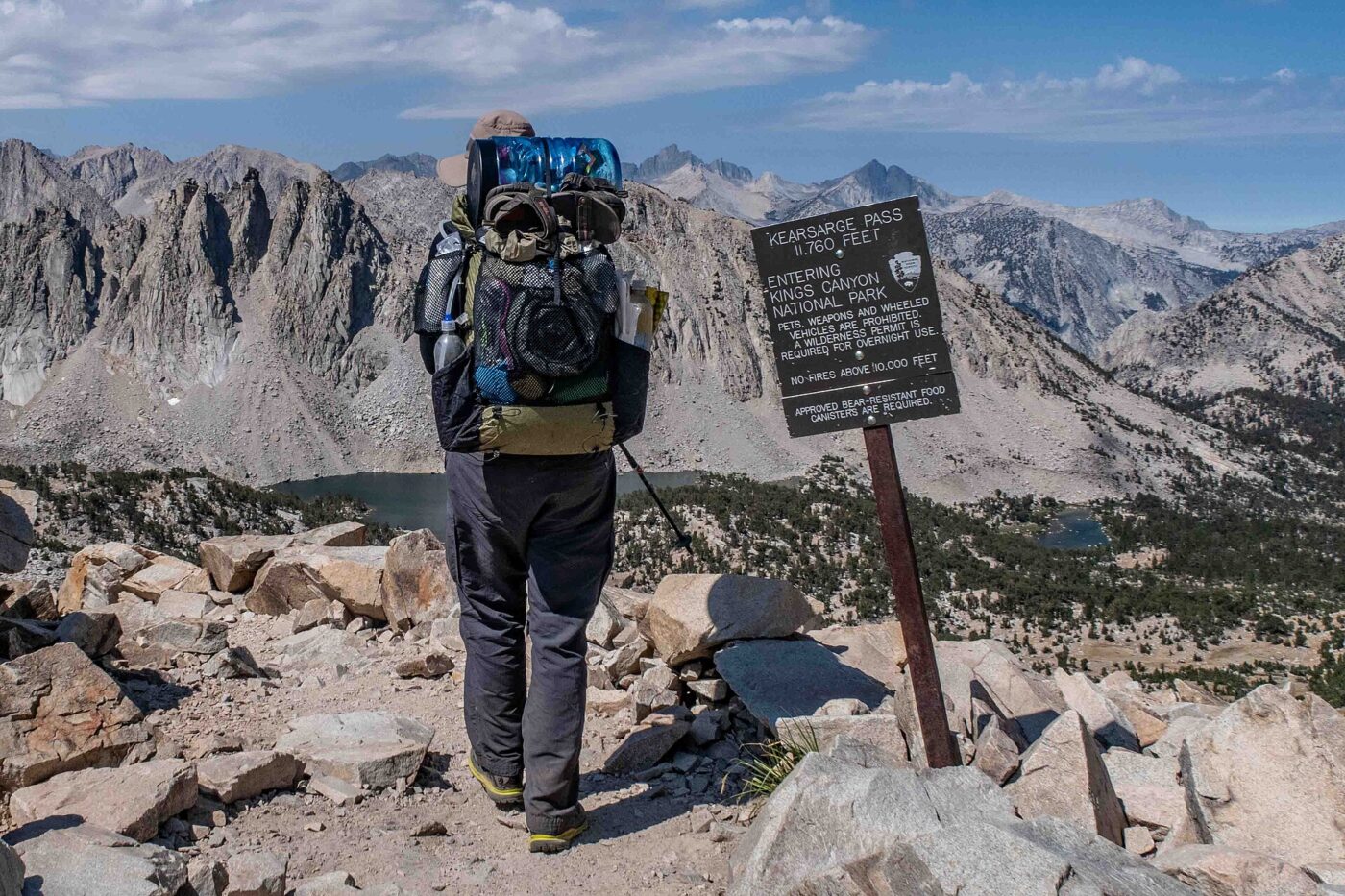
Olympic publishes a list of approved animal-resistant food containers and states that any container not on the list is not permitted in the park, regardless of what manufacturers or product testers may claim. The list names specific models, including the Backpackers’ Cache Garcia 812, Bare Boxer Contender and Champ, Bearikade Weekender MKII and Expedition MKII, several BearVault models, the Counter Assault Bear Keg, Grub Can, Lighter1, REI Traverse, Purple Mountain Engineering Tahoe and UDAP No-Fed-Bear. The park dated that list June 25, 2026 and the page July 7, 2026, and says it may change the list at any time.
North Cascades, on its page dated April 2, 2026, points to the IGBC certified products list and shows Ursack, Bearikade, BearVault and Garcia among the food storage systems it accepts, with Ursack allowed as of 2024 when it is tied with a proper double overhand knot. Where canisters are not required, the park allows a bear hang with the food at least 12 feet above the ground and 5 feet out from the limb and the trunk.
This is why buying by reputation fails. A soft, tie-off sack that satisfies one park can be refused where the rule says hard-sided, and a park can update its list between the season you bought the container and the season you use it.
Read the approved list for your destination in the week before the trip, not the season before.
What IGBC certification actually means
The committee says it began providing guidance on bear-resistant containers in the 1980s, and runs the testing program in partnership with the Grizzly and Wolf Discovery Center, the Washington State University Bear Center and the Wildlife Management Institute. Products are certified either through live bear testing with captive grizzlies at facilities in West Yellowstone, Montana and Pullman, Washington, or through a technical evaluation, and manufacturers complete an annual verification to stay on the list.
The committee said nearly 500 products from more than 100 manufacturers were on the certified list when we read the page on September 24, 2026, and it covers more than backpacking canisters. Olympic’s approved list, drawn from the same universe of products, also names panniers for stock animals and steel salvage drums with security lids.
The committee is blunt about the limits. Certification does not guarantee that a product is bear-proof, and it does not guarantee a product will never be breached. It is a test standard, not a promise, and it is separate from the permission question that the park list settles.
Sizing, packing and where the canister goes at night

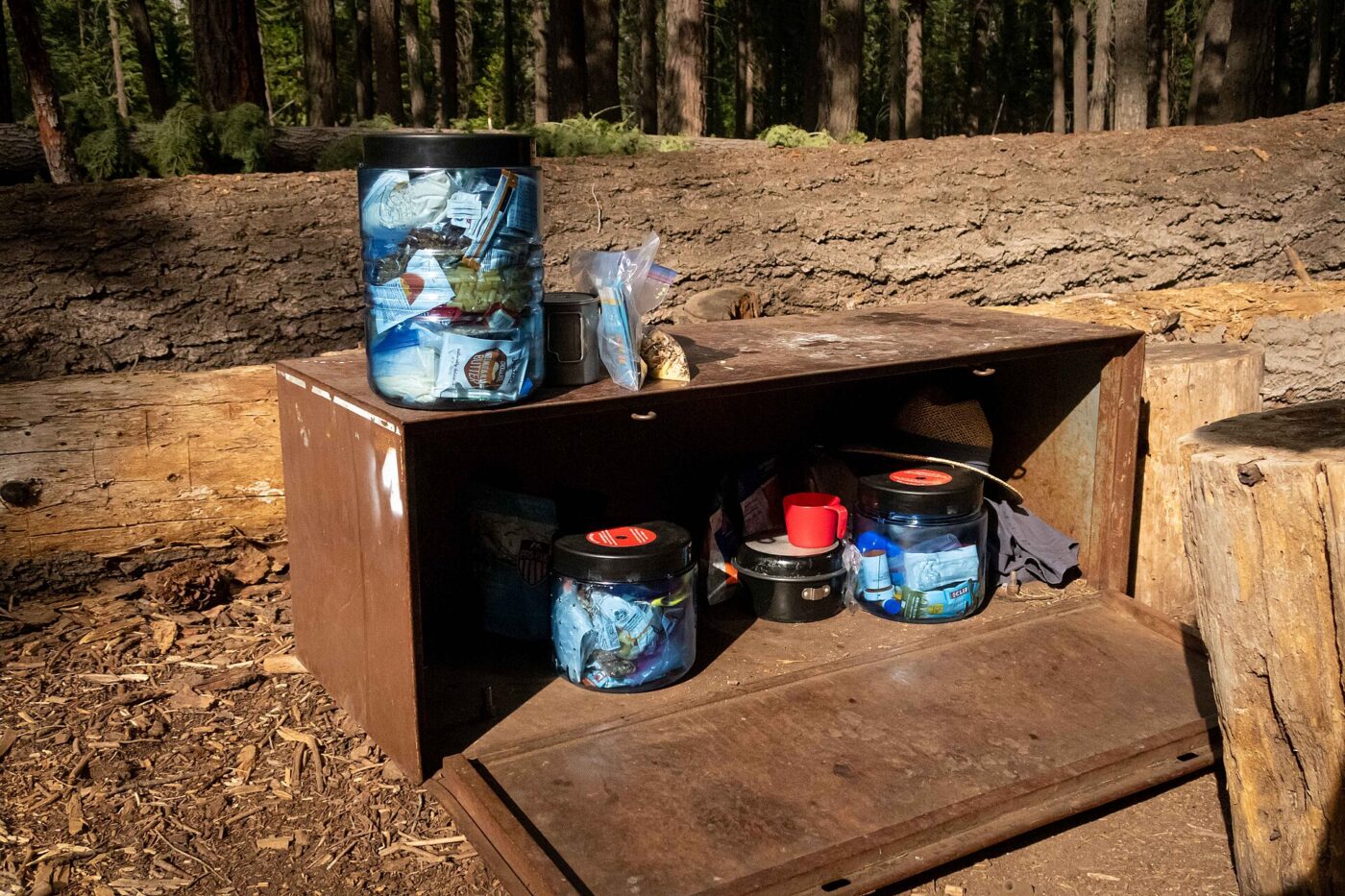
Canisters are sold by volume, and the planning number people use is days of food per person. Pack meals out of their boxes, because cardboard is most of what wastes space, and put the scented items the rules name alongside the food: toothpaste, sunscreen, lip balm, trash and anything a wrapper touched.
Placement is part of the rule, not a nicety. Park Service bear safety guidance, on a page last updated May 13, 2025, says to place containers on flat, level ground 100 feet or more from the campsite and not near cliffs or any water source, where a bear can knock a canister out of reach or roll it downhill. The same page says that in some parks food may be kept in a car only if it is out of sight with the windows closed and only during daylight, never in a pickup bed, while other parks require all food to go into lockers.
If your group is large, split food across two containers rather than stuffing one, because a lid that does not seat is a failed container on the first night.
Rent, borrow or buy
Buying is not the only route, and for one trip a year it is often the wrong one. Olympic says canisters may be available for loan from its Wilderness Information Centers during business hours, without advance reservation, and lists local outfitters that rent or sell them. North Cascades says its Marblemount Wilderness Information Center and the Glacier Public Service Center have canisters to loan. Many parks and forests run the same arrangement, which also solves the problem of flying with a container.
Buying makes sense once you are out several times a season or travel somewhere with a strict hard-sided rule. In that case, choose for the strictest park on your list rather than the average one, since a container that satisfies a hard-sided requirement will also satisfy a looser rule.
Requirements are not limited to canisters either. In an announcement dated June 1, 2026 the Bureau of Land Management said it had issued a temporary order restricting camping at the Carbella Recreation Site in Park County, Montana to hard-sided camping units through December 31, 2026, prohibiting tent camping, soft-sided pop-up campers and canvas-sided sleeping vehicles to reduce encounters with grizzly bears. That order applies to one site for one season, which is how these restrictions usually work.
What to watch next
- The approved-container list for your destination park, which is dated and changes between seasons.
- The IGBC certified products list, for new canister and cooler models and for products that drop off it.
- Seasonal orders from land agencies where bears are active, which can restrict tent camping as well as food storage.
Where to start
Paid links: we earn a commission if you buy through the buttons below, at no extra cost to you. As an Amazon Associate I earn from qualifying purchases.
Bear-resistant storage types compared on where each is accepted
| Product type | Good fit for | Where to look |
|---|---|---|
| Hard-sided bear canister | Fits parks that require hard sides | See listings on AmazonOpens Amazon search results, not one listing: check the model on the product page. |
| Bear-resistant food sack | Fits ounce counting where sacks are allowed | See listings on AmazonOpens Amazon search results, not one listing: check the model on the product page. |
| Bear-resistant cooler | Fits car camping and truck beds | See listings on AmazonOpens Amazon search results, not one listing: check the model on the product page. |
Product types that fit the trend described above, not tested models. Check the exact listing before you buy. How we pick them.
Hard-sided bear canister
Where to look: Amazon
The container type that satisfies a hard-sided requirement. Match the exact model to the park list, since approved lists name models rather than brands and are revised between seasons.
- Accepted where rules are tightest
- Doubles as a camp seat
- Heavy and awkward to pack
- Volume is fixed
Bear-resistant food sack
Where to look: Amazon
Accepted in some places and refused in others. North Cascades, on its page dated April 2, 2026, allows a sack tied with a proper double overhand knot, which makes the knot part of the requirement rather than a detail.
- Much lighter than a canister
- Packs down when empty
- Not accepted everywhere
- Depends on tying it correctly
Bear-resistant cooler
Where to look: Amazon
A bear-resistant cooler is the front-country answer where a campground or forest requires bear-resistant storage. Check the model against the managing agency’s list, and use the lock points, because an unlocked box is just a cooler.
- Holds a family trip of food
- Certified models are widely listed
- Only useful with a vehicle
- Heavy when loaded
More: Travel and Adventure trends and how the Trend Signal is scored.
Sources
- Wilderness food storage and approved containers — Olympic National Park, National Park Service
- Food storage requirements — North Cascades National Park, National Park Service
- Food canisters now required for backcountry camping — Rocky Mountain National Park, National Park Service
- Bear safety and storing food — National Park Service
- Bear-resistant products certification program — Interagency Grizzly Bear Committee
- Restrictions at Carbella Recreation Site due to grizzly bear activity — Bureau of Land Management
Questions readers ask
Do I need a bear canister for backpacking?
It depends entirely on the park or forest, and the answer changes between seasons. As of July 7, 2026 Olympic National Park required an approved animal-resistant container in all of its wilderness areas, while North Cascades, on a page dated April 2, 2026, required canisters only at nine named camps and six cross-country zones between June 1 and November 15.
Is an IGBC certified canister always accepted?
No. IGBC certification is a testing program, and the committee says certification does not imply a product is approved for use on all public lands. Parks publish their own approved lists; Olympic states that a container not on its list is not permitted, regardless of what manufacturers or product testers may claim.
Can I hang my food instead?
Only where the managing agency allows it. North Cascades, on its page dated April 2, 2026, permits a bear hang where a proper hang is possible, with food at least 12 feet above the ground and 5 feet out from the limb and the trunk, but parks with canister requirements do not accept hanging as a substitute.
Where should the canister sit overnight?
Park Service bear safety guidance, last updated May 13, 2025, says to place containers on flat, level ground 100 feet or more from the campsite and away from cliffs and any water source, so a bear cannot knock the container over an edge or into a stream.