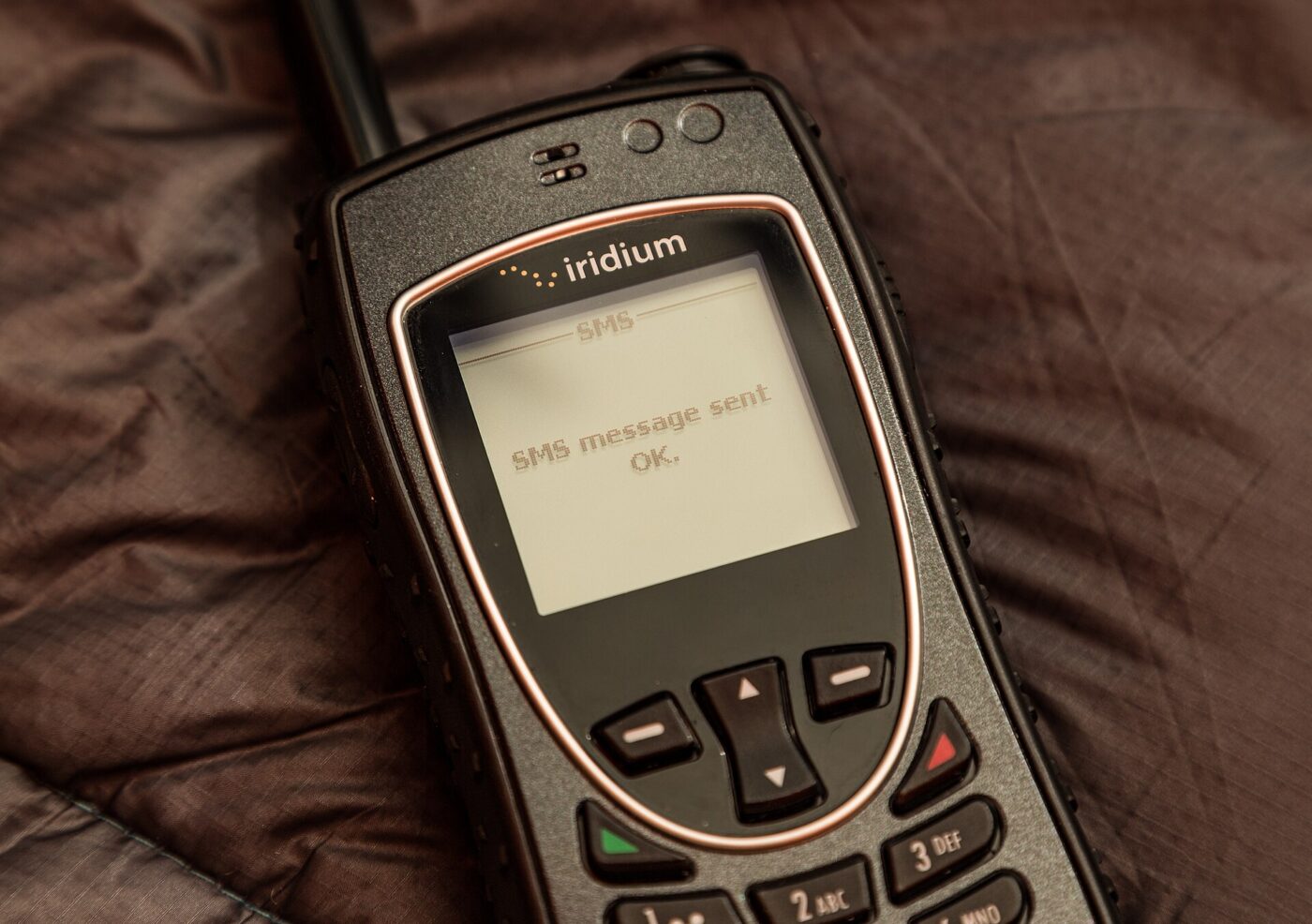
For a decade, sending a message from a place with no cell signal meant buying a second device and a second service plan. That changed on July 23, 2025, when T-Mobile began selling T-Satellite, its Starlink-connected messaging service. Trade publication Via Satellite reported in June 2025 that the service would cost $10 a month for customers on other T-Mobile plans and on other carriers and be included at no extra cost on T-Mobile’s Experience Beyond plan; that it would connect automatically to most smartphones from the previous four years; and that it would carry SMS texting, picture messaging and short audio clips, with 911 texting via satellite included at launch.
That moved a capability that used to require a second device and a second bill into the phone already in a hiker’s pocket. The federal registration data for emergency beacons has started to reflect it, and so has the balance sheet of the biggest maker of satellite communicators. Here is what the numbers show, and what the phone still cannot do.
Trend Signal
76/100 Strong momentum
- Emerging
- Rising
- Mainstream
- Peaking
- Cooling
Phone satellite texting went mass market while beacon registrations slipped
Via Satellite reported that T-Mobile made satellite texting a $10-a-month add-on from July 23, 2025, and new U.S. personal locator beacon registrations fell to 12,176 in January through August 2026 from 12,891 in the same months of 2025, on our sums of NOAA’s monthly registration file dated August 2026.
Our editorial reading of the cited data, not a forecast. How it is scored
By the numbers
- $10Monthly T-Satellite price outside T-Mobile’s top plan at the July 23, 2025 launchVia Satellite
- 12,176New U.S. personal locator beacon registrations, January to August 2026 (our sum)NOAA SARSAT
- 411People rescued in the U.S. in 2024 with help from NOAA rescue satellitesNOAA SARSAT
- $482.7MGarmin outdoor segment revenue in the quarter ended June 27, 2026, down 2% year over yearGarmin
What a phone can do off the grid now

The commercial launch details are specific. Via Satellite reported in June 2025 that T-Satellite with Starlink would go live on July 23, 2025 with SMS texting, MMS picture messaging and short audio clips; that it would cost $10 per month for customers on other T-Mobile plans and on other carriers, and be included at no extra cost on T-Mobile’s Experience Beyond plan; that it would work on most smartphones from the previous four years without added hardware; and that 911 texting via satellite would be included at launch. The same report said T-Mobile planned a data service for October 2025.
Two parts matter more than the price. No purchase decision is involved: the phone connects on its own when terrestrial coverage runs out, so a day hiker who never considered emergency gear has a way to send a message. And T-Mobile said it planned to extend 911 texting beyond its own subscribers to any carrier’s customers with a compatible device, which is a stated plan rather than a coverage guarantee.
The limits follow from the same design. The phone is the antenna, the screen and the battery, and messaging over satellite is one more job for a device that is also running maps and a camera. There is no separate button, no separate power source and no separate radio to fall back on.
Satellite texting is now a setting on a mainstream phone plan rather than a second device and a second bill.
What the beacon registration data shows
The cleanest public measure of the dedicated-hardware market is NOAA’s beacon registry. Every 406 MHz personal locator beacon sold in the United States is supposed to be registered with NOAA, and the agency publishes the monthly count of new registrations by beacon type. It is a record of first activations rather than of retail sales, but it moves with them.
We summed the monthly PLB column of that file, which we pulled on September 24, 2026 and which runs from April 2016 through August 2026. New PLB registrations totaled 18,600 in 2023, 18,194 in 2024 and 17,594 in 2025. Through the first eight months of 2026 they came to 12,176, against 12,891 in the same months of 2025, a decline of about 5.5% by our calculation, and about 23% below the 15,859 registered in the same months of 2019. The file’s own cumulative PLB column passed 400,000 in July 2026 and stood at 401,778 at the end of August 2026.
One caveat matters for reading those numbers: the registry covers 406 MHz beacons that talk to the international Cospas-Sarsat system, not subscription satellite communicators such as inReach or Zoleo, which run on commercial networks and are not registered with NOAA. So the data describes the emergency-beacon end of the shelf. On the rescue side, NOAA says its satellites helped rescue 411 people in the United States in 2024.
| Period | New U.S. PLB registrations |
|---|---|
| 2023 | 18,600 |
| 2024 | 18,194 |
| 2025 | 17,594 |
| January–August 2025 | 12,891 |
| January–August 2026 | 12,176 |
Where the dedicated device still earns its place
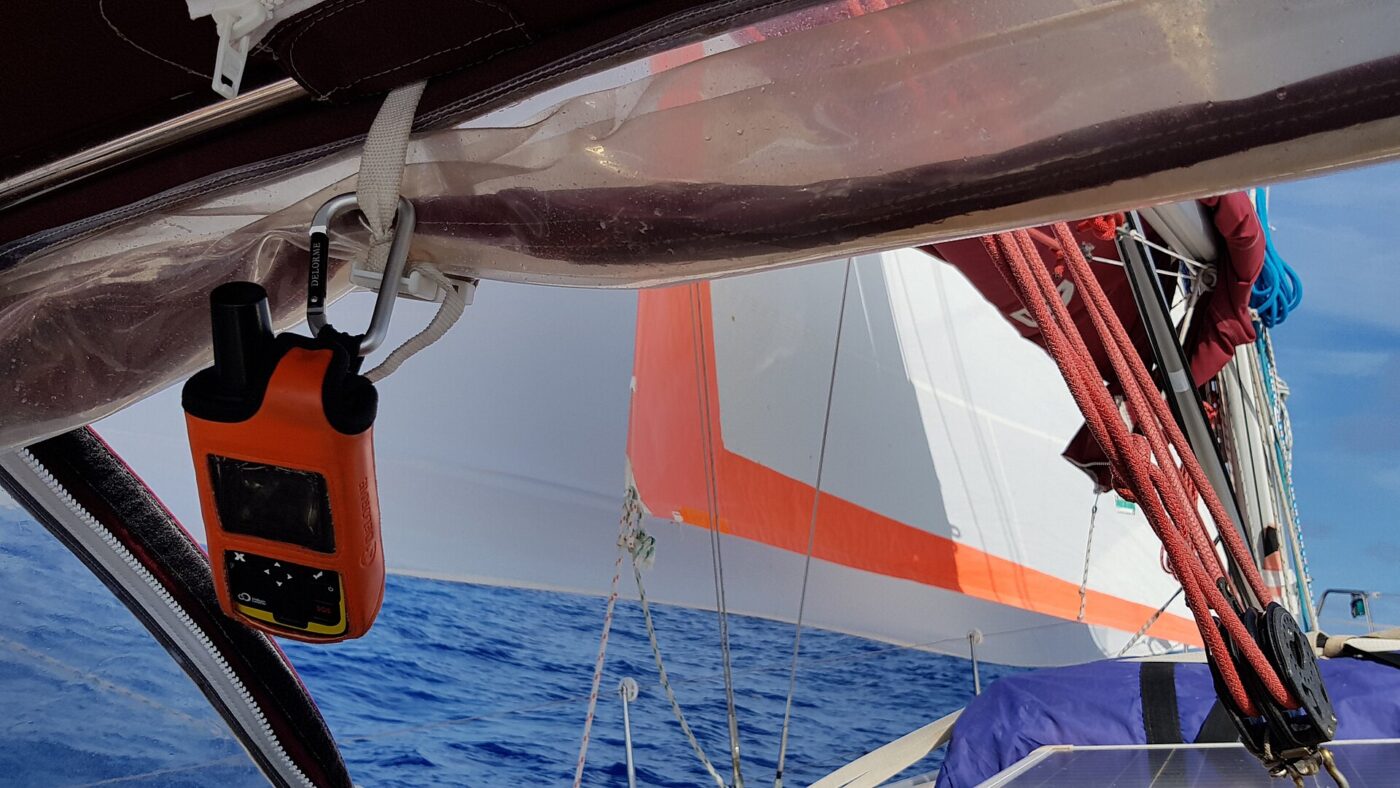
The case for separate hardware is narrow and has not changed: it is the device that still works when the phone does not. A beacon or a communicator carries its own battery, spends it on one job, and in the case of a 406 MHz PLB is registered with NOAA rather than activated on a monthly plan, so there is nothing to forget to renew before a trip.
Two-way communicators sit between the two. They cost a subscription, but they send and receive messages, share tracking with people at home, and route an emergency alert through whatever monitoring arrangement the plan describes. Read that part of the plan rather than assuming it: response arrangements and coverage are set by the provider, not by the device. For a group traveling for several days, that is a different product from a text that says the trip is running late.
What Garmin numbers say about the category
Garmin is the clearest listed read on satellite communicators. In results released on July 29, 2026 for the quarter ended June 27, 2026, the company reported revenue of $2.022 billion, up 11%, with outdoor segment revenue of $482.7 million, down 2% from a year earlier. Outdoor gross and operating margins were 69% and 34%.
The company attributed the outdoor decline to the consumer auto and adventure watch product categories rather than to satellite devices, so this is not a filing that says phones took the inReach business. It does say that the segment holding that business shrank while the rest of Garmin grew at a double-digit rate, which is the kind of divergence worth watching over the next several quarters.
Put the two data sets together and the category is no longer growing on novelty: fewer new beacons registered each year, a flat-to-down outdoor segment at the largest communicator maker, and a free-with-your-plan option that keeps improving.
Nothing in the public data shows the dedicated category collapsing. It shows it no longer expanding.
Who should buy which
If your trips are day hikes and drive-up campsites, the phone service covers the realistic emergency, and the money is better spent on a battery that keeps the phone alive for two days. Check your carrier’s satellite terms first, because coverage and the plans that include it differ.
If you travel for several days, guide other people, go out in winter or work alone in remote country, the argument for separate hardware holds. Decide between a two-way communicator and a beacon on one question: do you need to exchange messages and share a track, or only to raise an alarm? The first needs a subscription; the second does not.
What to watch next
- NOAA’s monthly beacon registration file, for whether new PLB registrations keep running below their 2025 pace.
- Garmin’s next quarterly results, for whether outdoor revenue returns to growth and whether the company breaks out satellite subscriptions.
- Whether carriers extend satellite service past texting and limited app data, which would narrow the gap further.
Where to start
Paid links: we earn a commission if you buy through the buttons below, at no extra cost to you. As an Amazon Associate I earn from qualifying purchases.
Off-grid communication types compared on what each one needs to work
| Product type | Good fit for | Where to look |
|---|---|---|
| Two-way satellite communicator | Fits multi-day trips with check-ins | See listings on AmazonOpens Amazon search results, not one listing: check the model on the product page. |
| Personal locator beacon | Fits alarm-only use with no plan | See listings on AmazonOpens Amazon search results, not one listing: check the model on the product page. |
| Compact USB-C power bank | Fits keeping a phone alive off grid | See listings on AmazonOpens Amazon search results, not one listing: check the model on the product page. |
Product types that fit the trend described above, not tested models. Check the exact listing before you buy. How we pick them.
Two-way satellite communicator
Where to look: Amazon
The type that suits groups and long trips, because people at home can see progress and reply. Read the plan terms, including what the provider says about emergency response: annual plans, pause-and-resume rules and message allowances all vary.
- Two-way messages
- Tracking others can follow
- Needs a subscription
- One more thing to charge
Personal locator beacon
Where to look: Amazon
A one-button device for raising an alarm through the Cospas-Sarsat system. NOAA registration is part of owning one, so do it when the beacon arrives and update it when your contacts change.
- No monthly plan
- Dedicated battery
- No messaging at all
- Battery service is scheduled
Compact USB-C power bank
Where to look: Amazon
If you are relying on carrier satellite texting, the phone battery is the single point of failure. A small pack that can refill it twice is the matching purchase.
- Cheapest way to extend range
- Useful on every trip
- Does nothing if the phone breaks
- Adds weight
More: Travel and Adventure trends and how the Trend Signal is scored.
Sources
- Garmin announces second quarter 2026 results — Garmin, filed with the SEC
- T-Mobile to Launch T-Satellite Commercial Service Next Month — Via Satellite
- Search and Rescue Satellite Aided Tracking program — NOAA
- Beacon registration statistics — NOAA SARSAT
- Initial new beacon registrations by type, through August 2026 — NOAA SARSAT
Questions readers ask
Does satellite texting on a phone replace an emergency beacon?
Not for the case beacons exist for. Carrier satellite messaging depends on the phone’s battery, screen and antenna, while a 406 MHz personal locator beacon carries its own power and a dedicated alert. For short trips near a road, the phone covers the realistic emergency.
When did phone satellite texting become a mainstream feature?
T-Mobile began selling T-Satellite commercially on July 23, 2025 at $10 a month, included at no extra cost on its Experience Beyond plan, with texting, picture messaging and short audio clips, according to Via Satellite, which also reported that T-Mobile planned a data service for October 2025.
Do personal locator beacons need a subscription?
No. A PLB is registered with NOAA rather than activated on a monthly plan, which is why the registry exists. Subscription communicators such as inReach and Zoleo are different products and are not counted in NOAA’s registration data.
Are satellite messengers still selling?
The public data is mixed. On our sums of NOAA’s monthly file, new U.S. PLB registrations fell for a third straight year in 2025 and are down about 5.5% through August 2026, and Garmin’s outdoor segment fell 2% in the quarter ended June 27, 2026, though Garmin attributed that to its consumer auto and adventure watch categories.