Camping propane is one of the few costs in an outdoor kit that has not climbed. The Energy Information Administration’s benchmark spot price at Mont Belvieu, Texas averaged $0.750 a gallon in 2025 and $0.688 in August 2026, against $1.107 in 2022. Wholesale fuel is cheap and, through 2026, has moved in a narrow band.
The price a camper pays has not followed, because the purchase is mostly a steel container. The small green cylinder that runs a two-burner stove or a lantern is built to the DOT 39 specification, which federal regulations at 49 CFR 178.65 title “Specification 39 non-reusable (non-refillable) cylinders,” so every bottle is bought once and thrown away. That is the part California decided to end: Senate Bill 1280, Chapter 466, signed by the governor on September 22, 2024, allows only reusable or refillable propane cylinders to be sold in the state on and after January 1, 2028.
Trend Signal
44/100 Steady momentum
- Emerging
- Rising
- Mainstream
- Peaking
- Cooling
One state has set a date for the end of single-use cylinders
California Senate Bill 1280, Chapter 466, signed September 22, 2024, allows only reusable or refillable propane cylinders to be sold in the state on and after January 1, 2028, while wholesale propane itself has stayed under a dollar a gallon.
Our editorial reading of the cited data, not a forecast. How it is scored
By the numbers
- $0.688Mont Belvieu propane spot price per gallon in August 2026, against $0.750 average for 2025EIA
- $2.674U.S. residential propane price per gallon excluding taxes, week ending March 30, 2026EIA
- Jan 1, 2028Date California allows only reusable or refillable propane cylinders to be soldCalifornia Legislature
- 535M galAnnual California propane sales, per an NPGA post dated September 26, 2024National Propane Gas Association
What propane actually costs right now
Two EIA series bracket the price. The wholesale benchmark at Mont Belvieu, Texas averaged $0.464 a gallon in 2020, spiked to $1.107 in 2022, and has since settled: $0.711 in 2023, $0.778 in 2024 and $0.750 in 2025. Monthly values for 2026 ranged from $0.614 in February to $0.830 in May before easing to $0.688 in August.
At the retail end, EIA’s weekly residential series, which covers home-delivered heating propane rather than exchange cylinders, was $2.674 a gallon excluding taxes in the week ending March 30, 2026, the last week of the reported heating season. That series resumes in October 2026.
Neither series is the price on a camping bottle, and that is the point. A camper buying fuel by the pound is paying for packaging, handling and a retail trip, not for a commodity that has been drifting sideways for three years.
| Year | Mont Belvieu propane spot price, dollars per gallon |
|---|---|
| 2020 | $0.464 |
| 2021 | $1.046 |
| 2022 | $1.107 |
| 2023 | $0.711 |
| 2024 | $0.778 |
| 2025 | $0.750 |
| August 2026 | $0.688 |
The fuel has been cheap and steady since 2023. Anything that got more expensive in your camp kitchen was not the propane.
Why the little green bottle is the expensive part
A single-use camping cylinder is a pressure vessel built to the DOT 39 specification. Federal regulations set that specification out at 49 CFR 178.65, under the heading “Specification 39 non-reusable (non-refillable) cylinders,” which is why the empties end up in campground bins and household waste streams instead of going back for another fill.
That design decides the economics. The steel, the valve, the fill, the shipping of a full pressurized container and the retail markup are all repeated every time you buy a bottle, while the propane inside stays a commodity trading below a dollar a gallon wholesale. A camper who burns several bottles a season is buying the same container over and over.
It also decides the disposal problem, which is what brought legislators in. A cylinder that still holds residual gas is not an ordinary recyclable, and handling them falls on campgrounds and municipal waste programs.
The California rule and what it covers
Senate Bill 1280 is short. On and after January 1, 2028, only reusable or refillable propane cylinders may be sold or offered for sale in California, and the bill directs the Department of Resources Recycling and Recovery to adopt regulations implementing the chapter with an effective date of January 1, 2028. The bill defines a compliant cylinder as one explicitly designed and marketed to be used multiple times, built for durability across multiple uses, and supported by adequate infrastructure to be conveniently and safely refilled.
The exemptions are narrow: construction-industry cylinders holding less than 15 ounces when full, cylinders with a height-to-width ratio of 3.55 to 1 or greater, and cylinders supplied to government agencies through the federal disaster purchasing program. The ratio exemption is worth noting for campers, because tall, slim fuel cartridges are shaped differently from the squat one-pound bottle the law targets.
Scale is why this one state matters to a national product line. The National Propane Gas Association, reporting the law in a post dated September 26, 2024, put California propane sales at 535 million gallons a year, called it the largest propane market in the country, and noted that single-use cylinders have also been the focus of product stewardship laws in Vermont. Manufacturers do not usually build one cylinder for California and another for everywhere else.
A 2028 sales ban in the largest U.S. propane market is the kind of deadline that moves a product line nationally.
Refilling: what is allowed and what is not

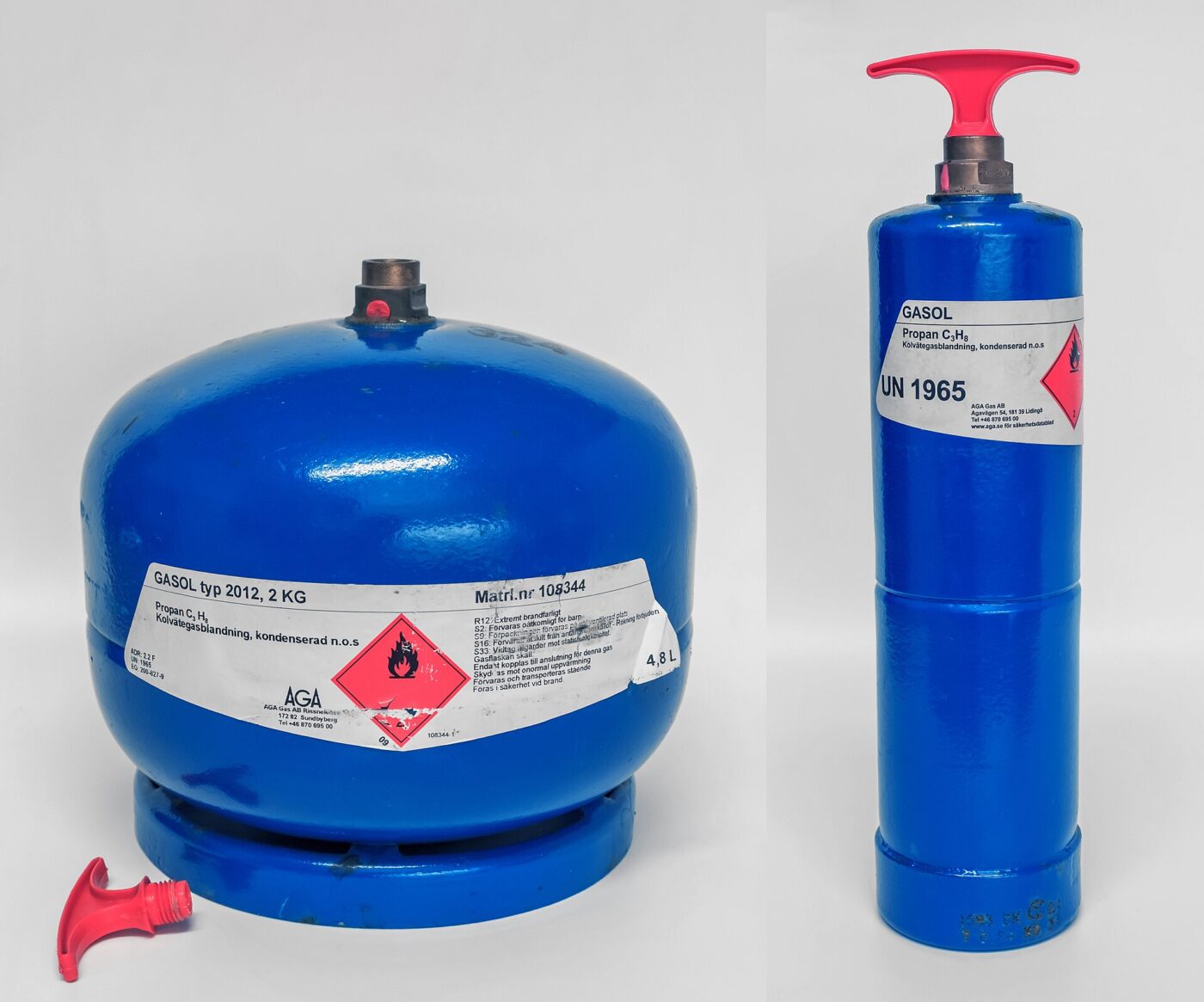
The distinction that matters at a campsite is printed on the cylinder. Under 49 CFR 178.65 a DOT 39 bottle is a non-reusable, non-refillable vessel and is not meant to be filled again. Refillable one-pound cylinders are a separate product, sold as refillable and built with a valve intended for repeated filling, and adapter hoses let them be filled from a standard 20-pound tank or let a stove run straight off the big tank.
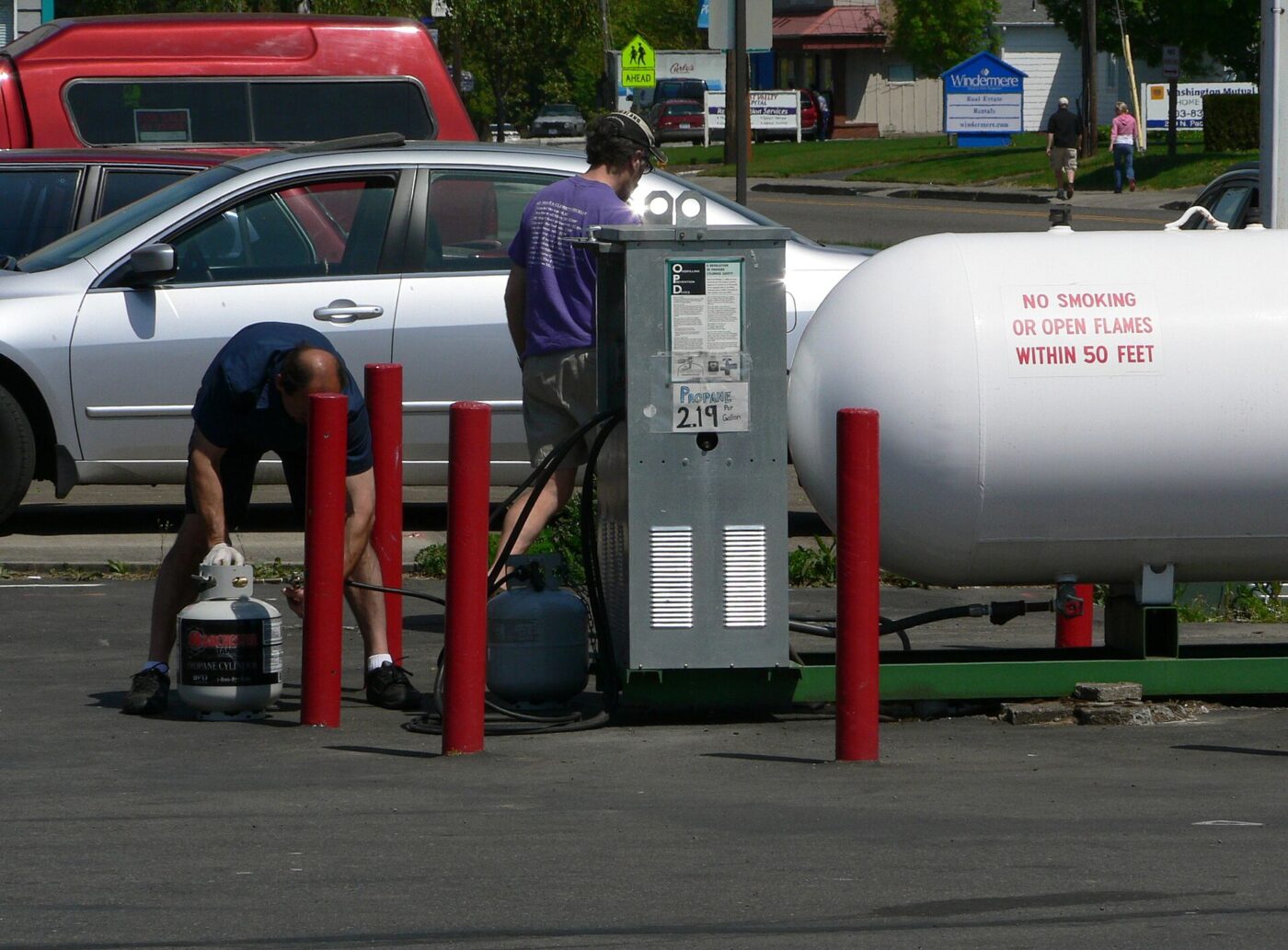
For anyone who camps more than a handful of nights a year, running a stove or lantern from a 20-pound tank through a hose removes the small-bottle purchase entirely. It trades convenience for bulk: the tank stays in the vehicle, and refills happen at a dealer or exchange point rather than in a checkout aisle.
Handle either route as the fuel transfer it is. Fill outdoors, keep cylinders upright and out of a hot car, and do not improvise with fittings that were not sold for the job.
What to check before you buy the stove, too
The other half of the fuel decision is the burner. On November 26, 2025 the Consumer Product Safety Commission announced a recall of about 201,000 Ozark Trail tabletop one-burner butane camping stoves sold at Walmart from March 2023 through October 2025, priced between $8 and $45, after 26 reports of stoves exploding or catching fire and 16 reports of injuries including second-degree burns.
That recall is a reminder that the cheapest canister appliance is the one most likely to be built to a price, and that cartridge stoves and the cartridges themselves are matched systems. Buy the fuel type the stove is designed for, check the manufacturer’s model and date codes against open recalls before a trip, and keep the instruction sheet with the stove.
What to watch next
- CalRecycle’s implementing regulations for Senate Bill 1280, which will decide what counts as adequate refill infrastructure.
- Whether Vermont or other states copy the California sales date, which would push manufacturers to one national product line.
- EIA’s weekly residential propane series when it resumes in October 2026, for whether the flat run continues into the heating season.
Where to start
Paid links: we earn a commission if you buy through the buttons below, at no extra cost to you. As an Amazon Associate I earn from qualifying purchases.
Ways to carry camping propane compared on cost per trip and bulk
| Product type | Good fit for | Where to look |
|---|---|---|
| Refillable 1 lb propane cylinder | Fits campers who burn several bottles | See listings on AmazonOpens Amazon search results, not one listing: check the model on the product page. |
| Propane refill adapter hose | Fits refilling at home from a big tank | See listings on AmazonOpens Amazon search results, not one listing: check the model on the product page. |
| Camp stove hose for a 20 lb tank | Fits car camping with one tank | See listings on AmazonOpens Amazon search results, not one listing: check the model on the product page. |
Product types that fit the trend described above, not tested models. Check the exact listing before you buy. How we pick them.
Refillable 1 lb propane cylinder
Where to look: Amazon
A drop-in replacement for the green bottle that survives the California sales rule. The saving only arrives after several refills, so it suits people who camp often rather than once a summer.
- Same size as the throwaway bottle
- Nothing to dispose of each trip
- Costs more up front
- Needs a filling setup
Propane refill adapter hose
Where to look: Amazon
The hose that moves fuel from a 20-pound tank into a refillable one-pound cylinder. Check the cylinder is stamped refillable first; a DOT 39 bottle is not a candidate whatever an online video claims.
- Cheap per fill
- Works with a tank you already own
- Only for refillable cylinders
- Needs care and outdoor space
Camp stove hose for a 20 lb tank
Where to look: Amazon
Skipping the small cylinder entirely is the cheapest route per hour of burn. The trade is that a 20-pound tank lives in the vehicle, so it works for drive-up camping and not much else.
- No small bottles at all
- Long run time
- Tank is heavy and bulky
- Not for walk-in sites
More: Travel and Adventure trends and how the Trend Signal is scored.
Sources
- Senate Bill 1280, Chapter 466, waste management and disposable propane cylinders — California Legislative Information
- 49 CFR 178.65, Specification 39 non-reusable (non-refillable) cylinders — Electronic Code of Federal Regulations
- California Bans Non-Reusable Propane Cylinders — National Propane Gas Association
- Mont Belvieu propane spot price, annual — U.S. Energy Information Administration
- Mont Belvieu propane spot price, monthly — U.S. Energy Information Administration
- Weekly residential propane prices — U.S. Energy Information Administration
- Ozark Trail tabletop butane camping stoves recalled — U.S. Consumer Product Safety Commission
Questions readers ask
Can you refill a 1 lb green propane bottle?
Not the standard disposable one. Those are DOT 39 vessels, and federal regulations at 49 CFR 178.65 title that specification “non-reusable (non-refillable) cylinders.” Cylinders sold and marked as refillable are a different product and are designed for repeated filling.
Is California banning camping propane?
No. Senate Bill 1280 bans the sale of single-use cylinders in California on and after January 1, 2028, and allows reusable or refillable ones. It exempts small construction cylinders under 15 ounces, cylinders with a height-to-width ratio of 3.55 to 1 or greater, and disaster-program supplies.
Is camping propane getting more expensive?
The fuel is not. EIA’s Mont Belvieu benchmark averaged $0.750 a gallon in 2025 and was $0.688 in August 2026, against $1.107 in 2022. Retail cylinder prices track packaging and distribution rather than the commodity.
What should I check on a camp stove before a trip?
Match the fuel type the manufacturer specifies and check the model and date codes against open recalls. The CPSC announced a recall of about 201,000 Ozark Trail butane tabletop stoves on November 26, 2025 after 26 fire or explosion reports and 16 injury reports.