An inner tube is the least interesting thing you will ever buy for a bicycle and one of the few you will buy again and again. It is also a good read on what tariffs do to a shelf, since almost none are made in the United States. Through 2026 the two official price series that touch bicycles told opposite stories. The producer price index for bicycles, adult tricycles, unicycles and parts rose from 165.701 in August 2025 to a preliminary 167.303 in August 2026, about 1%. The consumer price index for sports vehicles including bicycles went from 169.092 in January 2026 to 180.417 in August, up 6.7%.
Between those numbers sits a customs line. On July 23, 2026 the US Trade Representative concluded its Section 301 forced labor investigation and announced new tariffs of 10% and 12.5%. PeopleForBikes said the next day that they took effect at 12:01 a.m. Eastern on July 24, just after the 10% Section 122 tariffs expired. Bicycle Retailer and Industry News reported on July 23 that the new rates apply to 99.4% of all imports, with Taiwan, China, Cambodia, Vietnam and Malaysia among the 54 countries at 12.5%.
Trend Signal
58/100 Steady momentum
- Emerging
- Rising
- Mainstream
- Peaking
- Cooling
US producer prices crept up while new tariffs landed on imported bike parts in July 2026
The BLS producer price index for bicycles, adult tricycles, unicycles and parts rose about 1% in the year to August 2026, while the consumer index for sports vehicles including bicycles climbed 6.7% between January and August 2026, the stretch covering new Section 301 forced labor tariffs effective July 24, 2026.
Our editorial reading of the cited data, not a forecast. How it is scored
By the numbers
- +1.0%BLS producer price index for bicycles and parts, August 2026 against August 2025BLS
- +6.7%BLS consumer price index for sports vehicles including bicycles, January to August 2026BLS
- 12.5%Section 301 rate applied to 54 countries from July 24, 2026, including Taiwan and ChinaBicycle Retailer
- $13Price Schwalbe’s press release gives as the start of its Air Plus butyl tube rangeSchwalbe
What the price data actually show
Take the two series side by side and the divergence is the story. Producer prices for bicycles and parts moved in small monthly steps, from 162.215 in January 2025 to a preliminary 167.303 in August 2026, about 3.1% on our arithmetic.
The consumer series behaves nothing like it. After its recent low of 160.590 in March 2025, the index for sports vehicles including bicycles climbed to 180.417 in August 2026, past its previous high of 180.039 in February 2023 and the highest monthly reading in a series BLS publishes back to January 1978. The steepest stretch, from 172.026 in May to 180.417 in August, brackets the July tariff change. Both series carry caveats: the consumer index covers other sports vehicles as well as bicycles, and the producer index covers only US producers in an import-dominated market. That is why they diverge.
| Index | Jan. 2026 | Aug. 2026 | Change |
|---|---|---|---|
| PPI: bicycles, tricycles, unicycles and parts | 166.148 | 167.303 | +0.7% |
| CPI: sports vehicles including bicycles | 169.092 | 180.417 | +6.7% |
| CPI: all items | 325.252 | 334.980 | +3.0% |
US producer prices barely moved; the consumer category they sit in rose more than twice as fast as overall inflation in 2026.
The tariff line that lands on parts
The July 2026 round is the newest layer on a pile. PeopleForBikes, the industry association, said on July 24, 2026 that the new Section 301 forced labor tariffs of 10% or 12.5% replaced the expiring 10% Section 122 tariff, cover 60 countries including every major bicycle source country and apply to 99% of US imports, and that new limits on stacking will give meaningful relief for bicycle products from some nations.
Bicycle Retailer set out the mechanics on July 23, 2026. Canada, Ecuador, the European Union, Indonesia, Mexico and Pakistan draw 10%; 54 countries including Taiwan, China, Cambodia, Vietnam and Malaysia draw 12.5%. A net-of-most-favored-nation exception applies to Taiwan, the EU, Japan, Korea and Switzerland, so a product whose MFN duty is below the new rate rises to that rate and no further, while one already above it stays put. Many bikes and some bike-related products carry long-standing MFN duties of 5.5% to 11%, which is why that exception matters. Canadian bicycles under the USMCA are exempt, and goods already tariffed under Section 232, such as steel bike chains from China, are outside it.
Bicycle Retailer also noted that the Section 122 tariff it replaced had itself been imposed after the Supreme Court ruled in February 2026 that the International Emergency Economic Powers Act does not authorize tariffs, and that the Court of International Trade has since found the Section 122 use illegal, a decision under appeal. Section 232 and Section 301 rest on separate authorities and stand. The exclusions, meanwhile, have gone: SGB Media reported on May 28, 2024 that all Section 301 exclusions ran only to June 14, 2024 as a transition period, with bike trailers and some bicycle helmets extended to June 1, 2025, and quoted PeopleForBikes saying it had secured an estimated $600 million in savings through exclusions over more than seven years.
What changed inside the tube
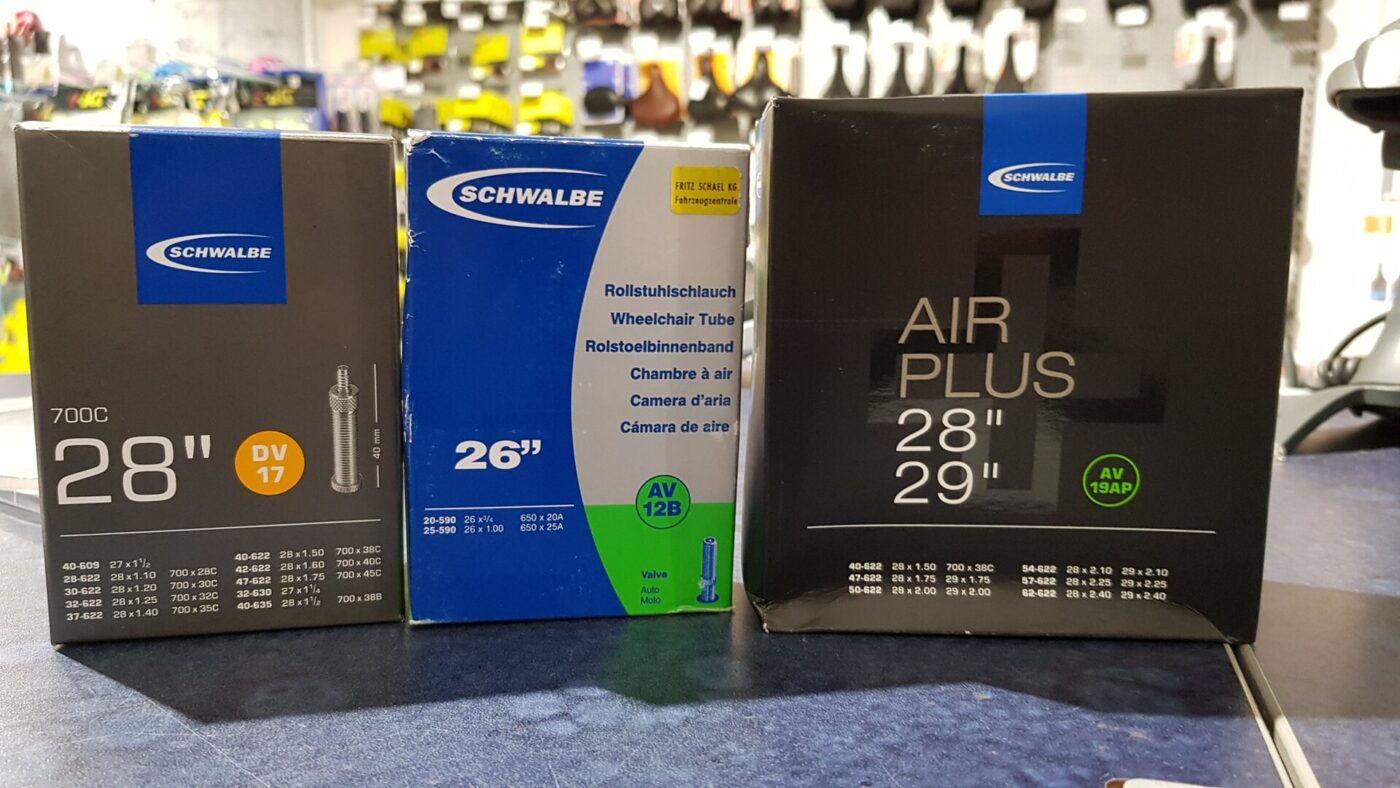
Butyl rubber is still the default, and it has been getting thicker rather than cheaper. Schwalbe’s Air Plus tube, aimed at e-bikes and cargo bikes, uses a 1.5 millimeter wall the company describes as about 70% thicker than a standard tube, weighs 120 grams in the 28 inch size, and is sold in the seven most common sizes from 20 inches, from US$13 in the company’s press release. Product manager Marcus Lambertz says the pure butyl rubber and the thicker wall give 50% higher air retention than a conventional tube, depending on tire size and pressure.
The newer option is thermoplastic polyurethane. Schwalbe describes its Aerothan tubes as 100% TPU and fully recyclable, with the material supplied by BASF and made by chemical recycling from pyrolysis oil, a by-product of Schwalbe tire recycling. The company lists a Plus version with 80% more puncture resistance than the standard Aerothan. TPU tubes pack far smaller and weigh a fraction of butyl, and they cost more: Schwalbe listed Aerothan from US$35 against US$13 for the Air Plus when we read its pages on September 24, 2026. That is why a butyl multipack is still the cheapest way to keep a household of bikes rolling.
Repair still beats replacement on the math

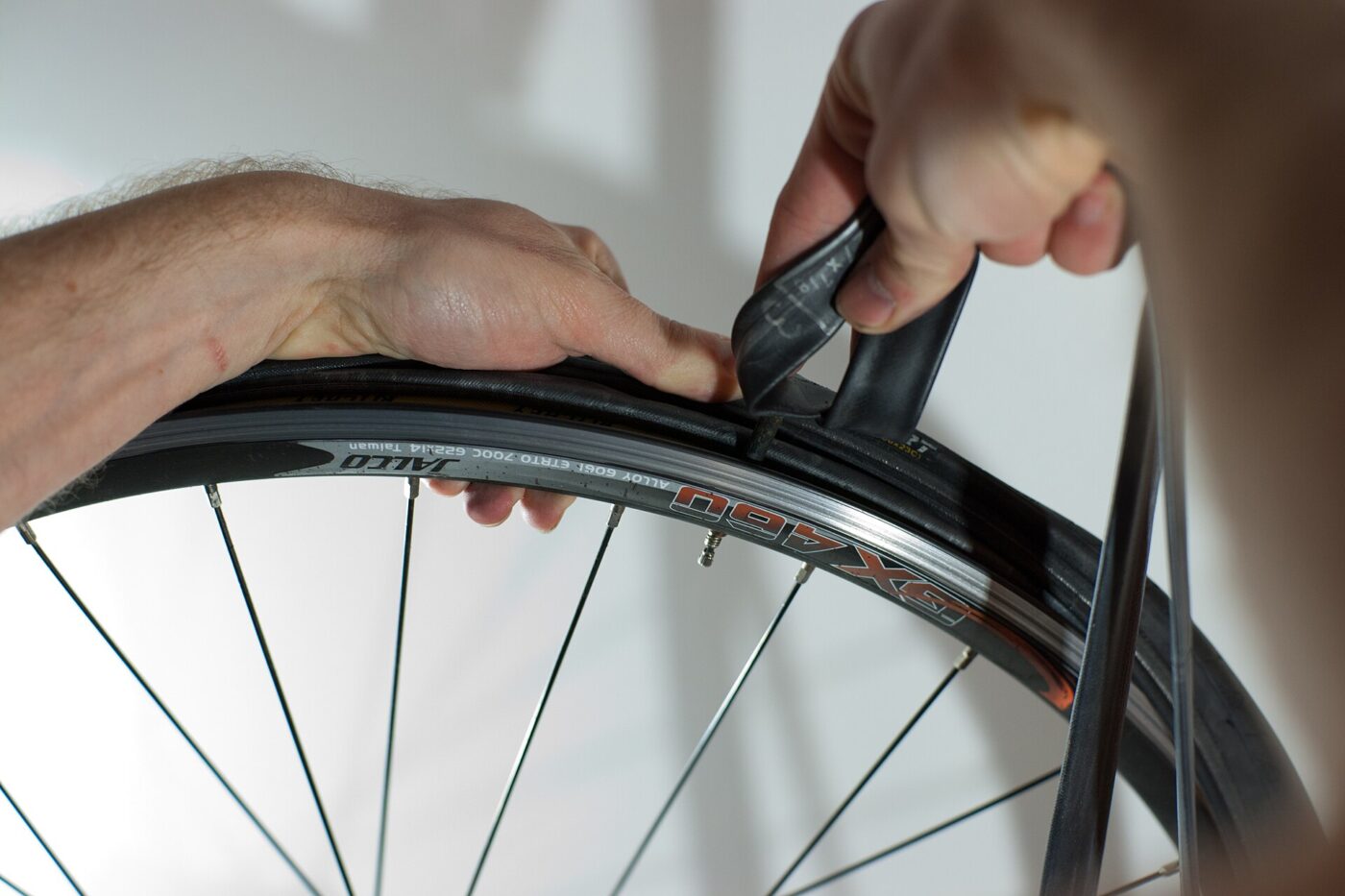
Nothing in the tariff picture changes the oldest economics in cycling: a patch is cheaper than a tube, and a tube is much cheaper than a tire. Glueless patches trade durability for speed; rubber cement takes longer and holds better.
Replacement wins at the edges. A tube with a torn valve stem, a split along the seam or a snakebite cut through both walls is not worth patching, and a thermoplastic tube wants a patch sold for the material rather than a standard rubber kit. On the tire itself the cheap preventive is inflation, since low pressure is what causes the pinch flat, and the pressure range is printed on the sidewall.
- Match the tube to the tire size range and to the valve type and length your rim needs
- Keep a patch kit in the saddle bag and the spare tube at home, not the other way around
- Check the sidewall pressure range and inflate to it, since pinch flats start with low pressure
Buy now or wait
The published data give no reason to expect a fall. The consumer index for the category has risen in every month since February 2026, and the newest tariff layer only took effect on July 24, so the August reading captures a few weeks of it. No replacement for the lapsed bicycle exclusions has been announced.
That argues for buying consumables in the sizes you already use rather than stockpiling something exotic. Tubes keep well in a dry drawer, patch kits keep almost indefinitely, and one spare tire per bike is enough. We read the gap between the producer and consumer series as the signal here: the part of the business that makes things in the United States is not where your money goes on a tube.
What to watch next
- The monthly BLS release for the sports vehicles including bicycles index, and whether it holds above the old high of 180.039 from February 2023.
- Any Section 301 exclusion process reopening for bicycle parts, which PeopleForBikes has pressed for.
- Whether the producer index for bicycles and parts starts tracking the consumer series, which would mean domestic producers are raising prices too.
Where to start
Paid links: we earn a commission if you buy through the buttons below, at no extra cost to you. As an Amazon Associate I earn from qualifying purchases.
Tube and repair options compared on the things that differ
| Product type | Good fit for | Where to look |
|---|---|---|
| Bicycle inner tubes multipack | Fits everyday riding | See listings on AmazonOpens Amazon search results, not one listing: check the model on the product page. |
| TPU bicycle inner tube | Fits weight and packing size | See listings on AmazonOpens Amazon search results, not one listing: check the model on the product page. |
| Bicycle tube patch kit | Fits fixing over replacing | See listings on AmazonOpens Amazon search results, not one listing: check the model on the product page. |
Product types that fit the trend described above, not tested models. Check the exact listing before you buy. How we pick them.
Bicycle inner tubes multipack
Where to look: Amazon
Butyl is the default and the cheapest way to keep several bikes on the road. Buy the width range and valve length your rims need; a short stem on a deep rim is the usual wasted purchase.
- Lowest cost per tube
- Patches with any standard kit
- Heaviest option
- Bulky in a saddle bag
TPU bicycle inner tube
Where to look: Amazon
Schwalbe describes its Aerothan tubes as 100% thermoplastic polyurethane and fully recyclable, with a Plus version rated at 80% more puncture resistance than the standard.
- Packs far smaller
- Much lighter than butyl
- Costs more per tube
- Check for a matching patch kit
Bicycle tube patch kit
Where to look: Amazon
With the category index up 6.7% from January to August 2026, the patch kit is the part of this shelf whose economics improved.
- Cheapest fix per flat
- Fits in a jersey pocket
- No help with a torn valve
- Glueless patches lift over time
More: Sports and Recreation trends and how the Trend Signal is scored.
Sources
- PPI commodity data for bicycles, adult tricycles, unicycles and parts — Bureau of Labor Statistics
- Sports vehicles including bicycles in US city average, CPI-U — Bureau of Labor Statistics
- All items in US city average, CPI-U — Bureau of Labor Statistics
- Bikes hit by new Section 301 tariffs taking the place of expiring Section 122 tariffs — Bicycle Retailer and Industry News
- 2026 Bike Industry Trade and Tariff Updates — PeopleForBikes
- Section 301 Tariff News is Not Good for the Bike Business — SGB Media
- Longer lasting: new bicycle tube for e and cargo bikes — Schwalbe Tires North America
- Aerothan TPU Tubes — Schwalbe Tires North America
Questions readers ask
Why are bike parts more expensive in 2026?
The category index moved with trade policy. New Section 301 forced labor tariffs of 10% and 12.5% took effect on July 24, 2026, covering 60 countries and, on Bicycle Retailer’s July 23 report, 99.4% of all imports, replacing an expiring 10% Section 122 tariff. The BLS consumer index for sports vehicles including bicycles rose 6.7% from January to August 2026.
Did US producer prices for bicycles rise too?
Only slightly. The BLS producer price index for bicycles, adult tricycles, unicycles and parts read a preliminary 167.303 in August 2026 against 165.701 in August 2025, about 1% on our arithmetic.
Is a TPU inner tube worth it over butyl?
It depends what you value. Schwalbe describes its Aerothan tubes as 100% thermoplastic polyurethane and fully recyclable, and lists a Plus version with 80% more puncture resistance than the standard. They also cost well over twice as much as the butyl Air Plus.
Are bicycles exempt from the new tariffs?
Some are. Bicycle Retailer reported on July 23, 2026 that a net-of-most-favored-nation exception limits stacking for Taiwan, the EU, Japan, Korea and Switzerland, that Canadian bicycles under the USMCA are exempt, and that goods already covered by Section 232, including steel bike chains from China, fall outside the new action.