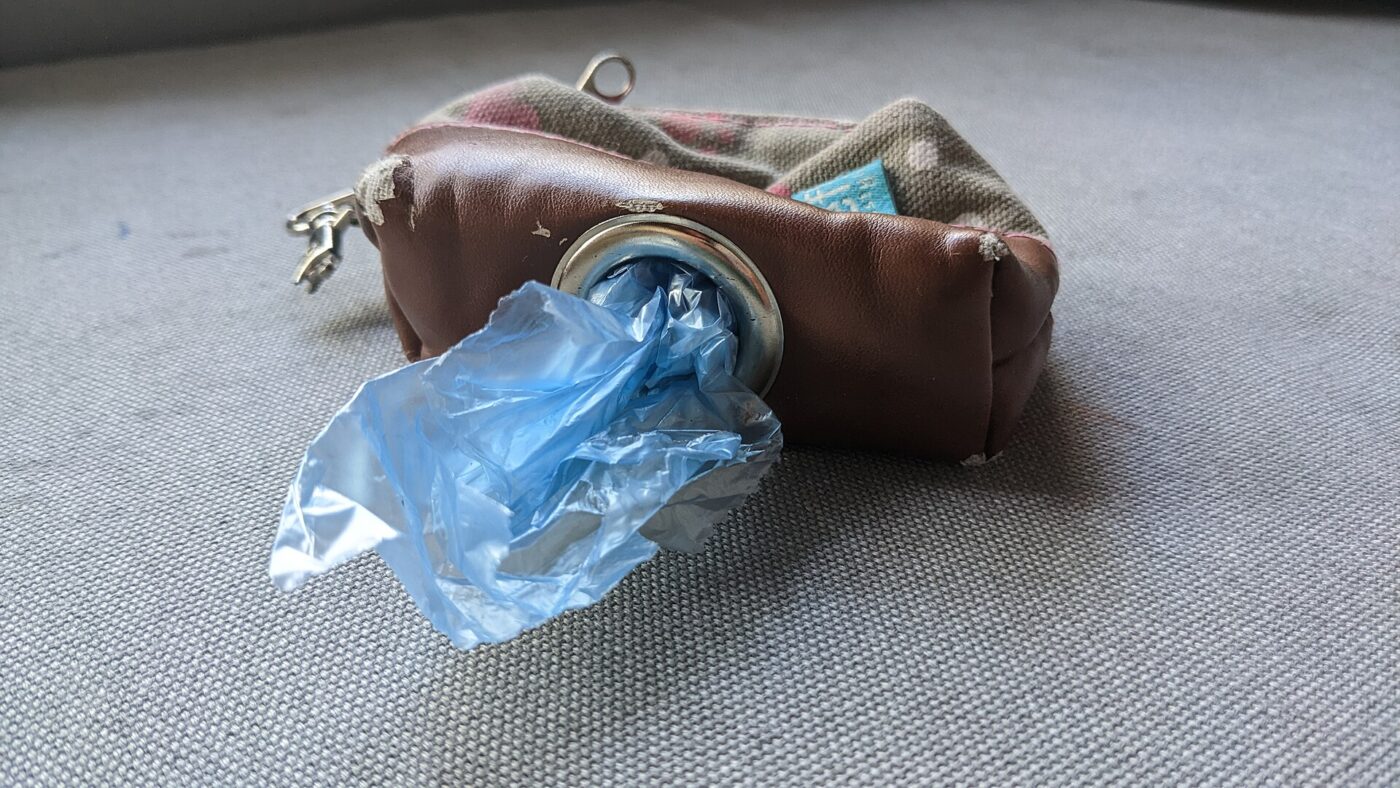
Dog waste bags are the definition of an unexamined purchase: a few dollars for a stack of rolls, chosen on color, scent and whether they fit the dispenser. The one decision most buyers do make is whether to pay extra for the box marked compostable or biodegradable, and that decision has become harder to read, because the words on the box are now regulated differently depending on where you live and what the bag is made from.
Two rules shape the shelf. The Federal Trade Commission’s environmental marketing guidance sets what a degradable or compostable claim has to mean anywhere in the United States. California’s labeling law adds a certification test, a chemical limit and a federal organic-input requirement that the state has now delayed to June 30, 2027. Neither rule solves the practical problem, which is that the bag and its contents almost always go in the trash.
Trend Signal
52/100 Steady momentum
- Emerging
- Rising
- Mainstream
- Peaking
- Cooling
Label rules tighten while the disposal route stays closed
California law now ties the word compostable to a federal organic-input test that CalRecycle has delayed to June 30, 2027, and the EPA still lists pet waste among the materials to keep out of a backyard compost pile.
Our editorial reading of the cited data, not a forecast. How it is scored
By the numbers
- 1 yearBreakdown period behind an unqualified degradable claim under FTC guidanceFederal Trade Commission
- 100 ppmTotal organic fluorine ceiling for a compostable label in CaliforniaCalifornia Legislative Information
- 2027Year the delayed organic-input condition for compostable labels takes effect in CaliforniaBioCycle
- $35.6BProjected 2026 U.S. spending on pet supplies, live animals and over-the-counter medicineAmerican Pet Products Association
What the words on the box are allowed to mean
The FTC guidance is the floor. Its summary of the Green Guides, issued in October 2012 and still the version on the agency’s site in September 2026, says an unqualified degradable claim means the entire product or package will completely break down and return to nature within a reasonably short period after customary disposal, and it sets that period at one year. Because items destined for landfills, incinerators or recycling facilities will not degrade within a year, the guidance says unqualified biodegradable claims should not be made for them.
Compostable claims carry their own conditions. The guidance expects evidence that the material will break down into usable compost safely and in about the same time as the materials it is composted with. Marketers are then told to qualify the claim if the product cannot be composted at home safely or in a timely way, and to qualify it again where composting facilities are not available to a substantial majority of consumers. A roll of bags sold nationwide sits squarely inside that second condition. None of this is a product standard in the sense that a light bulb has one, which is why the certification marks on the box, not the adjectives, are the part worth reading.
Biodegradable with no qualifier is the weakest word on the box, not the strongest.
California put a federal organic rule inside a plastics law

California’s Public Resources Code section 42357, added by Assembly Bill 1201 in 2021, sets the conditions for selling a product labeled compostable or home compostable in the state. The item must meet the applicable ASTM standard specification, D6400 or D6868 for industrial composting or an OK compost HOME certification for the home claim, and must not exceed a total organic fluorine concentration of 100 parts per million. Third-party certification became a condition on January 1, 2024.
The provision that turned the law into a problem for manufacturers is the next one. On and after January 1, 2026, a compostable product must also be an allowable agricultural organic input under the requirements of the USDA National Organic Program. Most compostable plastics have never been recognized under that program, which was written for organic farming inputs rather than for packaging.
CalRecycle used the extension authority in the statute to delay the condition. BioCycle reported on July 11, 2025 that the agency had granted an extension to June 30, 2027 in mid-June 2025, quoting its finding that there was no reasonable possibility that the federal process and the rulemaking that would follow it could conclude before January 1, 2026, and that the fluid status of stakeholders’ legal obligations would present a significant risk of market disruption. The Biodegradable Products Institute, which certifies compostable products, says on its Fix AB 1201 page that it wants the 2026 legislative session to decouple compostable labeling from those federal rules.
Where a dog waste bag actually ends up
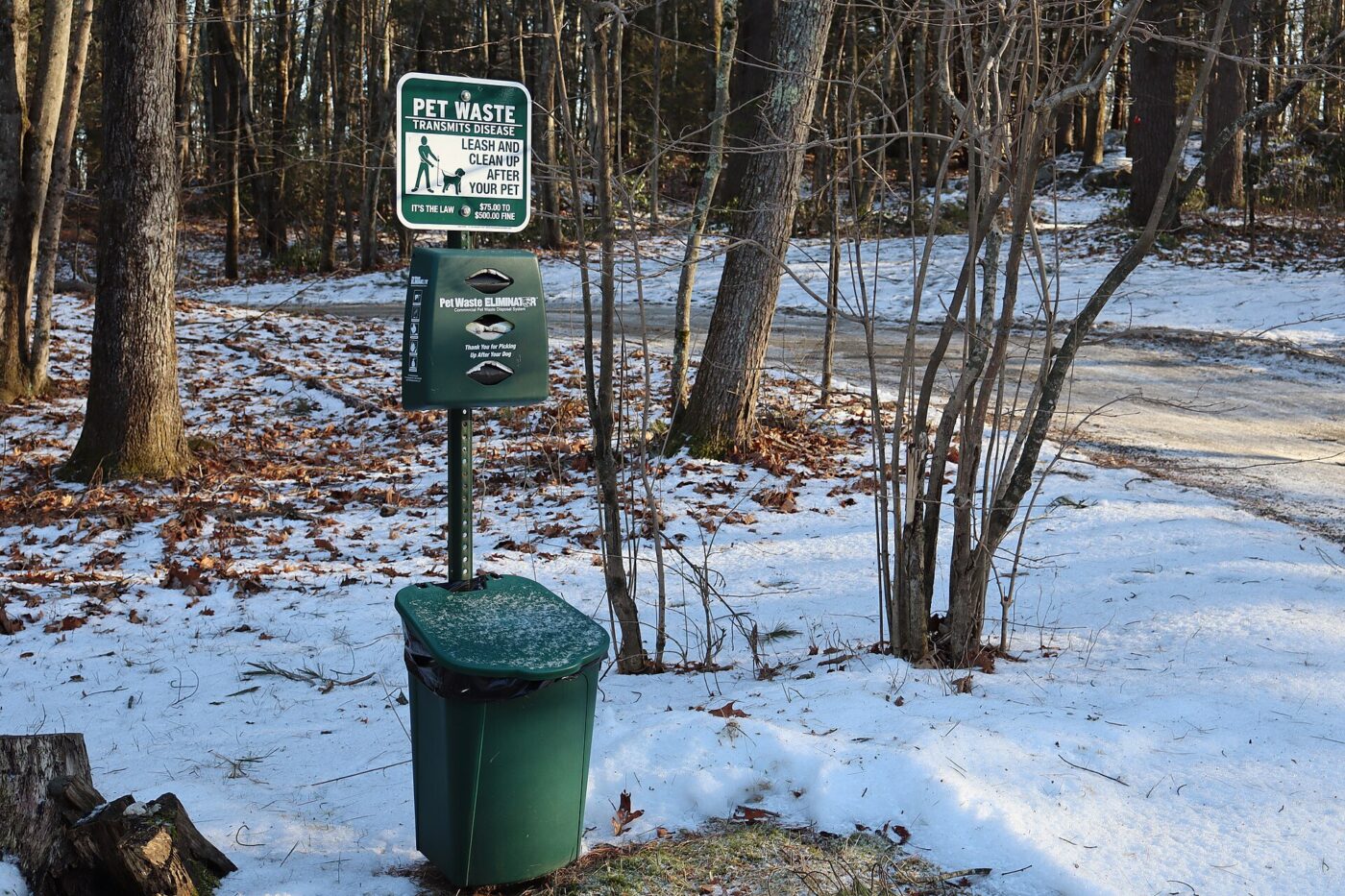
The EPA’s home composting guidance lists pet waste and cat litter among the materials to keep out of a backyard pile. It gives no reason for that entry and names no alternative route for pet waste, which settles the most common use case: the bag you carry on a walk is not destined for your own compost bin.
Municipal organics programs are the other possible route, and they are usually closed too. Compostable claims in the FTC guidance have to be qualified precisely because the facilities are not available to a substantial majority of consumers, and dog waste is excluded from many programs that do exist. Unless your city says in writing that it accepts pet waste in the green bin, a certified compostable bag goes to the same landfill as a conventional one. That does not make it pointless, but it does change what you are buying: a bag whose material is verified against a composting standard, rather than an outcome.
| Claim on the box | What stands behind it | What it does not tell you |
|---|---|---|
| Compostable | ASTM D6400 or D6868 certification, plus state conditions in California | Whether any facility near you will accept pet waste |
| Home compostable | An OK compost HOME certification | EPA advises against composting pet waste at home at all |
| Biodegradable, unqualified | FTC guidance expects complete breakdown within one year of customary disposal | Landfill conditions, where that breakdown does not happen |
| Plant-based or made with cornstarch | An ingredient statement, not a disposal standard | Whether the finished bag is certified to any composting standard |
What to check before you pay extra
Start with the certification mark rather than the adjective. A certification mark names a standard and a certifying body; a green leaf and the word eco name nothing. If the box claims home compostability, it should carry a home-specific certification, because the industrial standard does not cover a backyard pile.
Then check the physical specification, which decides whether the bag works. Thickness is quoted in mils and bag size in inches, and neither is interchangeable between brands; a thin bag sized for a small dog fails in an obvious way. Roll count is the number most listings lead with and the least useful of the three.
Finally, check your own city’s waste page before buying on the strength of a composting claim. If pet waste is not accepted in the organics stream where you live, buy on thickness, size and price per bag, and treat the certification as a preference rather than a function.
- A named standard on the box, such as ASTM D6400, or a certifier’s mark rather than an unqualified adjective
- Bag dimensions and mil thickness, checked against your dog rather than against the roll count
- Your city’s organics rules, which decide whether a composting claim changes anything
- Whether the dispenser you already own takes that core size
What to watch next
- Whether the USDA National Organic Program recognizes compostable plastics as an allowable input, which is what California’s condition waits on
- Any California bill in the 2026 session that amends the compostable labeling law
- Whether CalRecycle renews or lets lapse the extension that currently runs to June 30, 2027
Where to start
Paid links: we earn a commission if you buy through the buttons below, at no extra cost to you. As an Amazon Associate I earn from qualifying purchases.
Dog waste bag types compared on what changes in use
| Product type | Good fit for | Where to look |
|---|---|---|
| Certified compostable dog waste bags | Fits a certified claim | See listings on AmazonOpens Amazon search results, not one listing: check the model on the product page. |
| Heavy-duty dog waste bags | Fits large dogs | See listings on AmazonOpens Amazon search results, not one listing: check the model on the product page. |
| Dog waste scooper with bag holder | Fits yard cleanup | See listings on AmazonOpens Amazon search results, not one listing: check the model on the product page. |
Product types that fit the trend described above, not tested models. Check the exact listing before you buy. How we pick them.
Certified compostable dog waste bags
Where to look: Amazon
Worth buying if you want the material verified rather than asserted. Read it as a certification you are paying for, not a disposal outcome you are buying.
- Material verified against a named standard
- Often thicker than budget rolls
- Costs more per bag
- Almost nowhere composts dog waste
Heavy-duty dog waste bags
Where to look: Amazon
For most households the honest choice: buy on thickness and size, and put the money saved toward a dispenser that fits the core.
- Thicker film at a low price per bag
- Sizes stated in inches
- No composting claim
- Scented versions are divisive
Dog waste scooper with bag holder
Where to look: Amazon
A yard tool rather than a walking tool. Check that the jaw suits your ground surface, since grass, gravel and pavement each defeat a different design.
- Keeps hands away from the job
- Works for owners with limited reach
- Bulky to carry on walks
- Jaw designs struggle on gravel
More: Pets trends and how the Trend Signal is scored.
Sources
- Environmental claims: summary of the Green Guides — Federal Trade Commission
- Assembly Bill 1201, solid waste: products: labeling: compostability and biodegradability — California Legislative Information
- CalRecycle extends January 2026 deadline impacting compostable products — BioCycle
- Composting at home, what to avoid adding to a backyard pile — U.S. Environmental Protection Agency
- Fix AB 1201 — Biodegradable Products Institute
- Industry trends and stats — American Pet Products Association
Questions readers ask
Are compostable dog poop bags actually composted?
Rarely. The EPA lists pet waste and cat litter among the materials to keep out of a backyard compost pile, and the FTC tells marketers to qualify compostable claims where facilities are not available to a substantial majority of consumers. Unless your municipal program states that it accepts pet waste, the bag goes to landfill.
What does biodegradable mean on a bag?
Under FTC guidance, an unqualified degradable claim means the entire item completely breaks down and returns to nature within a reasonably short period after customary disposal, set at one year in the commission’s October 2012 summary of the Green Guides. Items headed for a landfill do not meet that, so the unqualified claim should not be made for them.
What changed in California?
Public Resources Code section 42357 requires products labeled compostable to be certified to ASTM D6400 or D6868, or to an OK compost HOME standard for home claims, and to stay under 100 parts per million of total organic fluorine. A further condition, that the product be an allowable organic input under the USDA National Organic Program, was set for January 1, 2026 and extended to June 30, 2027.
Is a thicker bag better than a certified one?
For function, yes. Thickness in mils and bag dimensions decide whether the bag does its job; the certification decides what the film is made of. The two are independent.