The doorway pull-up bar used to be a bracket you screwed into the frame. The version the listings now lead with is a cantilever that hooks over the trim and relies on your own weight to stay there, and the search terms have followed: buyers type no drill and no screws straight into the query. That change moves the load off four fasteners and onto the molding, the wall above the frame and the padding at the contact points.
We have not tested any of these bars. This compares what two makers publish, what the single relevant federal recall notice says and what the housing data shows about who is buying. The selection rule was narrow: bars whose own product pages publish a weight capacity and a doorway or trim requirement, each checked against the Consumer Product Safety Commission recall database on October 12, 2026.
Trend Signal
54/100 Steady momentum
- Emerging
- Rising
- Mainstream
- Peaking
- Cooling
No-drill mounts move the load off four screws and onto the door trim
The only doorway bar our product-name searches of the CPSC recall database turned up on October 12, 2026 is a February 2011 recall of about 7,000 screw-in bars, after about 2,200 reports of handle cracking and 38 injury complaints. Makers now publish leverage-mount bars that state outright that they are held by downward force.
Our editorial reading of the cited data, not a forecast. How it is scored
By the numbers
- 300 lbWeight capacity published for a no-drill doorway pull-up bar, read October 2026Body-Solid
- 2,200Reports of handle cracking behind the 2011 recall of a screw-in doorway barCPSC
- 65.0%US homeownership rate in the second quarter of 2026, leaving about 35% rentingCensus via FRED
- 500 lbCapacity published for a stud-mounted wall or ceiling pull-up bar, read October 2026REP Fitness
What changed in the mount
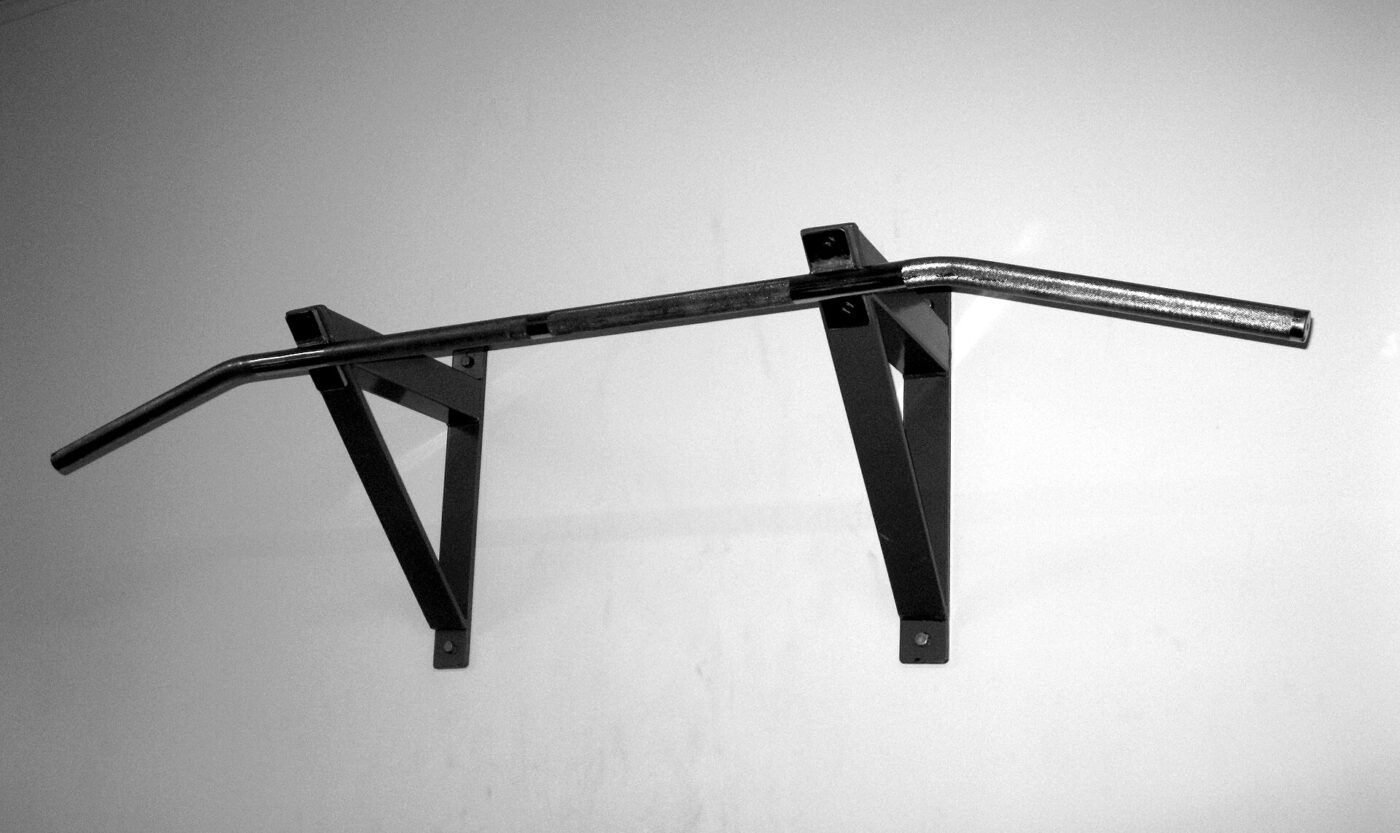
Body-Solid publishes the mechanism without euphemism. Its easy-mount bar installs with no hardware, hooks over the trim on the inside of the doorway, uses a cantilever so that your body weight holds it in place, and is described on the page as secured by downward force, with a warning that the bar may come loose if an upward force is applied. The published fit is doorways 27.5 to 30 inches wide with secure trim at least 2 inches wide, a 300-pound capacity, and a bar that weighs 4 pounds assembled at 37 by 16 by 7 inches.
Ultimate Body Press publishes a wider-fitting version of the same idea: a bar that leverages body weight to lock into the doorway with no drilling, for doorways 24 to 36 inches, engineered to clear decorative molding up to 8 inches tall, needing at least 36 inches of wall-to-wall clearance and a minimum of 8 inches of headroom above the trim, with padding at the contact points and the same 300-pound capacity.
Those two pages describe the shift. A screw-in bar transfers load into fasteners in the jamb. A leverage bar transfers it into the trim, the wall face above the opening and the friction of the padding, and the published numbers are about the opening rather than about the hardware. Neither page addresses what the trim itself is fixed to.
A no-drill bar does not remove the load. It moves it into your door trim and the wall above it.
Who the shift is aimed at
Our read is that the market here is renters, and that group is large. The US homeownership rate was 65.0% in the second quarter of 2026, which leaves roughly 35% of occupied homes rented, and the rental vacancy rate was 7.3% in the same quarter. Both figures come from the Census Bureau housing vacancies and homeownership series. A fastener hole in a rented door frame is a deposit question, and that is the whole argument for the leverage mount.
It also matters for anyone who moves often. A 4-pound bar that lifts off the trim travels in a suitcase, which is why the demand data includes portable and indoor alongside no drill and no screws. Apartment buyers already shop this way, as we found with under-desk treadmills and downstairs neighbors and the weighted vest category.
The trade is capacity and tolerance. Both no-drill bars publish 300 pounds, which has to cover the user plus whatever the movement adds, and both are specified against a door opening that was never engineered for a hanging load.
What the one recall notice shows
Product-name searches of the CPSC recall database on October 12, 2026 for pull-up and chin-up bars returned one bar, and it is a screw-in doorway model. The only other pull-up entry is a 2019 recall of a pull-up assist band. On February 17, 2011, Perfect Fitness recalled about 7,000 Perfect Pullup units, described in the notice as an adjustable-height pull-up bar installed in a doorway with screw-in holders, manufactured in China between December 2007 and April 2008 and sold at sporting goods stores and online from January 2008.
The hazard was the plastic handle, which could crack and cause a fall. The firm had received approximately 2,200 reports of cracking of the original handles, with 38 complaints of injuries including bruises, strains and sprains, and the remedy was a free handle replacement kit. The failure was not the mount. It was the part the user holds.
Fifteen years of entries with one result tells you two things. Recalls are not where the record for this product lives, and the published capacity is effectively the only number a buyer gets. That is different from resistance bands or adjustable dumbbells, where there is a run of notices to compare a product against, and it is a reason to weigh the frame requirements more heavily than the brand.
One bar recall in the whole category, and it was a handle, not a mount.
The measurements to take before ordering

Most of the fit problems in this category are measuring problems. The published requirements across the two bars we read cover four separate dimensions, and a doorway that satisfies three of them still sends the bar back.
Take the opening width first, since the two published ranges are 27.5 to 30 inches and 24 to 36 inches. Then the trim: one page requires at least 2 inches of secure trim width, the other is built to clear molding up to 8 inches tall. Then the headroom above the trim, published as a minimum of 8 inches on one bar. Then the wall-to-wall clearance in the room behind the door, published as at least 36 inches.
The one measurement nobody publishes is how the trim is attached, and on older molding that is the thing most likely to let go. Pressing up on an installed leverage bar before loading it is the only check available, given the Body-Solid page states that upward force may dislodge it.
- Door opening width, against the maker range of 24 to 36 inches or 27.5 to 30 inches
- Trim width, at least 2 inches on one published spec
- Trim height, up to 8 inches cleared on one published spec
- Headroom above the trim, minimum 8 inches published
- Wall-to-wall clearance behind the door, minimum 36 inches published
When to drill instead
If you own the wall, the published capacity goes from 300 to 500 pounds. REP Fitness publishes up to 500 pounds for its wall or ceiling mount bar when installed into studs with the supplied hardware, on a 1.25-inch bar 50 inches wide with 46 inches usable, in 11-gauge steel, standing off 14 or 26 inches from the mounting surface. That is a different class of fixture, and the two standoff options leave room to move rather than hang still.
Our read is that the no-drill bar is the right buy for a rented doorway and a light user, and a bad buy for anyone whose training involves pulling the body away from the wall. The published 300-pound figures are not weak, but they are specified against an opening whose strength is unknown, while the 500-pound figure is specified against studs you can find. Buyers kitting out a room should start with equipment prices and at-home HYROX gear.
What to watch next
- New CPSC entries for pull-up or chin-up bars, since product-name searches return one bar in total
- Whether makers begin publishing trim fastening requirements, the one dimension none of them states
- Quarterly Census homeownership releases, since the renter share is the market the no-drill design serves
Where to start
Paid links: we earn a commission if you buy through the buttons below, at no extra cost to you. As an Amazon Associate I earn from qualifying purchases.
Doorway pull-up bar mounts compared on the things that differ
| Product type | Good fit for | Where to look |
|---|---|---|
| No-drill leverage doorway pull-up bar | Fits a rented doorway | See listings on AmazonOpens Amazon search results, not one listing: check the model on the product page. |
| Width-adjustable doorway pull-up bar | Fits wide or heavy molding | See listings on AmazonOpens Amazon search results, not one listing: check the model on the product page. |
| Wall or ceiling mount pull-up bar | Fits a wall you can drill | See listings on AmazonOpens Amazon search results, not one listing: check the model on the product page. |
Product types that fit the trend described above, not tested models. Check the exact listing before you buy. How we pick them.
No-drill leverage doorway pull-up bar
Where to look: Amazon
One maker publishes doorways 27.5 to 30 inches, trim at least 2 inches wide, a 4-pound bar and a warning that upward force may dislodge it. That warning is the spec sheet in one line.
- No holes in the frame
- Published at 300 pounds
- Light enough to pack
- Held by downward force only
- Narrow published door width range
Width-adjustable doorway pull-up bar
Where to look: Amazon
The wider-fitting leverage design, published for decorative molding up to 8 inches tall with padding at the contact points. Measure the headroom above the trim before the width.
- Published for 24 to 36 inch openings
- Clears molding up to 8 inches
- Needs 8 inches of headroom
- Needs 36 inches of clearance behind
Wall or ceiling mount pull-up bar
Where to look: Amazon
Published at up to 500 pounds mounted into studs, 50 inches wide with 46 usable, standing off 14 or 26 inches. The right answer when the wall is yours and the movement is not static.
- Published at 500 pounds into studs
- Standoff leaves room to move
- Permanent holes
- Needs stud finding and hardware
More: Fitness and Training trends and how the Trend Signal is scored.
Sources
- Easy mount pull-up bar specifications — Body-Solid
- XXL doorway pull-up bar specifications — Ultimate Body Press
- Perfect Pullup doorway bar recall, February 2011 — CPSC
- Recalls and product safety warnings database — CPSC
- US homeownership rate — Census Bureau via FRED
- US rental vacancy rate — Census Bureau via FRED
- Wall or ceiling mount pull-up bar — REP Fitness
Questions readers ask
How much weight does a no-drill doorway pull-up bar hold?
Both of the no-drill bars whose pages we read publish 300 pounds. One also states that the bar is secured by downward force and may come loose if upward force is applied.
What door frame does a leverage bar need?
The two published specifications are doorways 27.5 to 30 inches wide with secure trim at least 2 inches wide, and doorways 24 to 36 inches with molding up to 8 inches tall, at least 8 inches of headroom above the trim and at least 36 inches of wall-to-wall clearance.
Have doorway pull-up bars been recalled?
Product-name searches of the CPSC database on October 12, 2026 return one bar. In February 2011, Perfect Fitness recalled about 7,000 screw-in doorway bars after approximately 2,200 reports of the plastic handles cracking and 38 injury complaints, and replaced the handles.
Why are no-drill bars so common now?
The market skews to renters. The US homeownership rate was 65.0% in the second quarter of 2026, leaving about 35% of occupied homes rented, and the rental vacancy rate was 7.3%, so a mount that leaves no fastener holes removes a deposit problem.
Is a wall-mounted bar stronger?
The published figures say so. One wall or ceiling mount bar publishes up to 500 pounds installed into studs with supplied hardware, on a 1.25-inch bar 50 inches wide with 46 inches usable and a 14 or 26 inch standoff.