The case for drip irrigation used to rest on plant health and a vague sense of waste. In 2026 it rests on two things a buyer can check: what water costs, and what the local rules let you do with it. Both have moved, and the second one has moved further than most gardeners realize.
EPA estimates residential outdoor use at nearly 8 billion gallons a day nationwide, more than 30% of average household water and as much as 60% in arid parts of the country. It also estimates that as much as half of that outdoor water is lost to wind, evaporation and runoff caused by inefficient watering methods. Utilities writing restrictions have started to draw the line in exactly that place, separating spray from low-volume delivery rather than simply banning outdoor watering.
Trend Signal
58/100 Steady momentum
- Emerging
- Rising
- Mainstream
- Peaking
- Cooling
Water prices and drought rules are doing the pushing, not the hardware
The BLS water and sewerage maintenance index rose 4.9% in the year to August 2026, and Denver Water’s Stage 1 drought rules cap sprinklers at two assigned days a week while allowing drip on any day.
Our editorial reading of the cited data, not a forecast. How it is scored
By the numbers
- 30%Share of average US household water use that goes outdoors, per EPA WaterSenseEPA
- 50%Share of outdoor water EPA says is lost to wind, evaporation and runoffEPA
- +4.9%Change in the BLS water and sewerage maintenance index in the year to August 2026BLS
- 2 daysSprinkler days a week allowed under the Denver Water Stage 1 drought rules in 2026Denver Water
What a drip line does that a sprinkler cannot
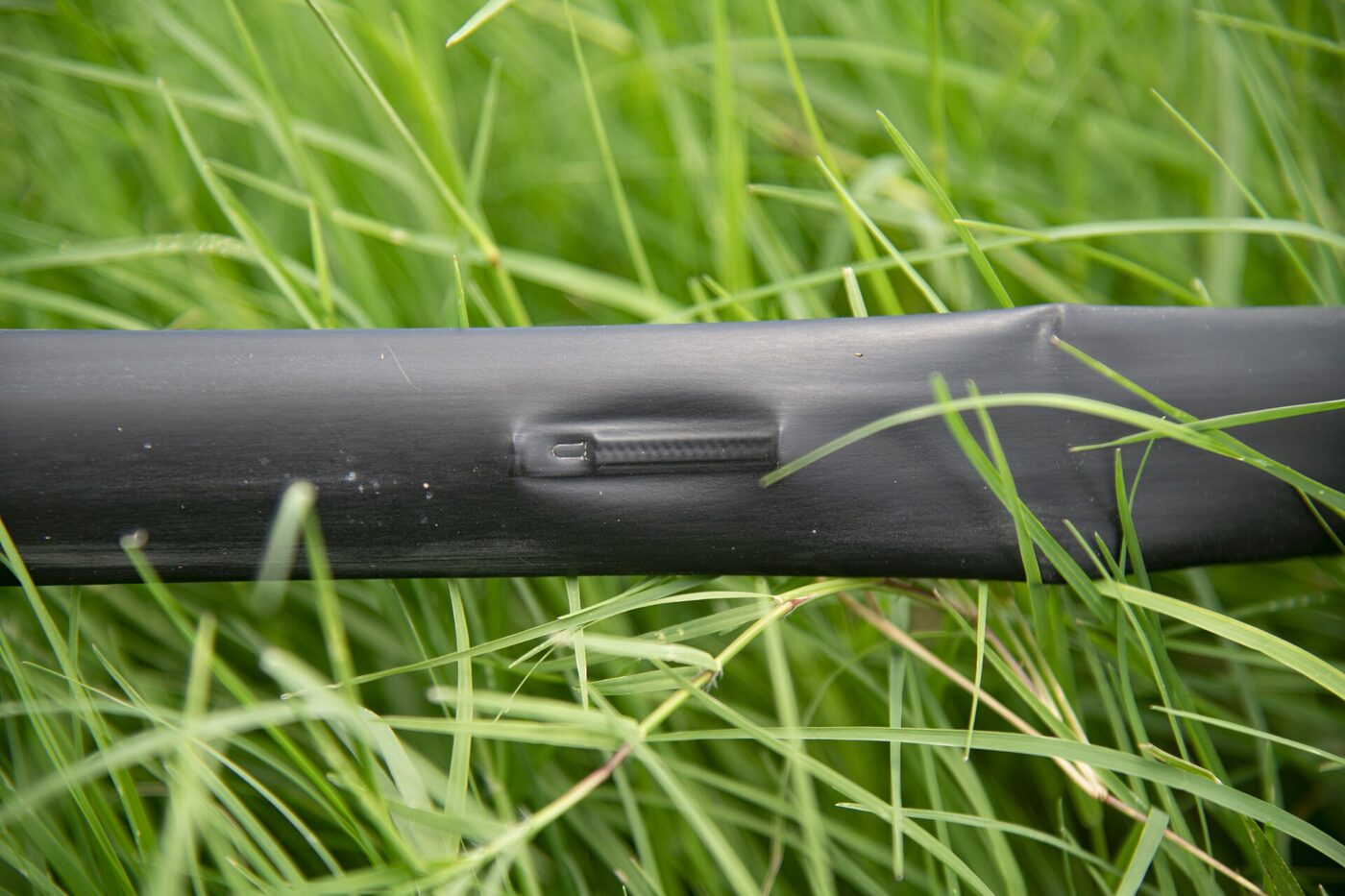
A sprinkler throws water into the air and lets gravity and wind decide where it lands. A drip line puts it on the soil at the base of a plant, at a rate low enough that it soaks in rather than running off. EPA’s framing is that as much as 50% of outdoor water is lost to wind, evaporation and runoff caused by inefficient watering methods, which is the loss a drip line avoids.
The other difference is where the water is not applied. A spray pattern waters the paths, the mulch and the gaps between plants as thoroughly as the plants. A drip line with spaced emitters waters only the root zones it points at, which also means fewer weeds between them.
The catch is that drip is not a set-and-forget upgrade. Emitters clog, tubing shifts, and a leak at a fitting drains slowly rather than making an obvious puddle. EPA notes that an automatic system that is not properly maintained can waste up to 25,000 gallons a year, and that applies to a badly run drip system too.
Drip wins on where the water goes; it loses on how much attention the system needs.
The rule change that matters most
Denver Water is a useful worked example because it publishes its rules in plain terms. Under the Stage 1 drought it declared for 2026, customers are asked to cut total use by at least 20%, and mandatory outdoor watering is limited to two assigned days a week, allowed only before 10 a.m. or after 6 p.m., split by even and odd address.
The exemption is the part worth reading twice. The same rules say that during a drought, trees, shrubs, perennials, annuals and vegetables may be watered on any day using a hand-held hose or low-volume, non-spray irrigation such as a drip system, with the same 10 a.m. to 6 p.m. blackout. A vegetable bed on drip is on a different schedule from a lawn on sprinklers.
The utility drew the same line at the end of the season. On August 26, 2026 its board declared an end to the lawn watering season, prohibiting lawn watering and all spray irrigation after September 30 while telling customers to keep hand watering or drip irrigating trees and plants as needed. Rules differ by utility and change by the season, so read your own provider’s current restrictions rather than assume drip is treated the same way everywhere.
What water actually costs now
The BLS index for water and sewerage maintenance has been climbing faster than headline inflation. It averaged 693.714 in 2024 and 725.575 in 2025, a rise of 4.6%, and reached 765.482 in August 2026 against 729.598 a year earlier, up 4.9%. Both percentages are our arithmetic from the published index levels. Unlike most household prices, this one is set locally by utilities and rate boards, so the national figure understates what some households have seen.
EPA puts the average family’s water costs at more than $1,000 a year, and outdoor use at more than 30% of household water. Multiply those two and the outdoor share of an average bill is roughly $300, our own arithmetic rather than an EPA figure, and it would be higher in a dry region where EPA says outdoor use can reach 60%. A hose-end kit and a timer for a few beds cost a small fraction of that.
The savings are not automatic. Drip lowers waste per watering, not the number of waterings, and an unattended timer will water through a rainy week. A rain sensor, or the habit of switching the timer off after a storm, is what turns efficiency into a bill that falls.
Water prices rose 4.9% in a year while the hardware barely changed, which is the whole argument.
What to check on a kit

Pressure is the first thing. Household hose pressure is far higher than drip tubing and emitters are designed for, and a kit without a pressure regulator will blow fittings off the tubing. A filter matters for the reverse reason: emitter openings are small and grit from a hose bib will block them. A kit including both is doing a job a cheaper kit leaves to you.
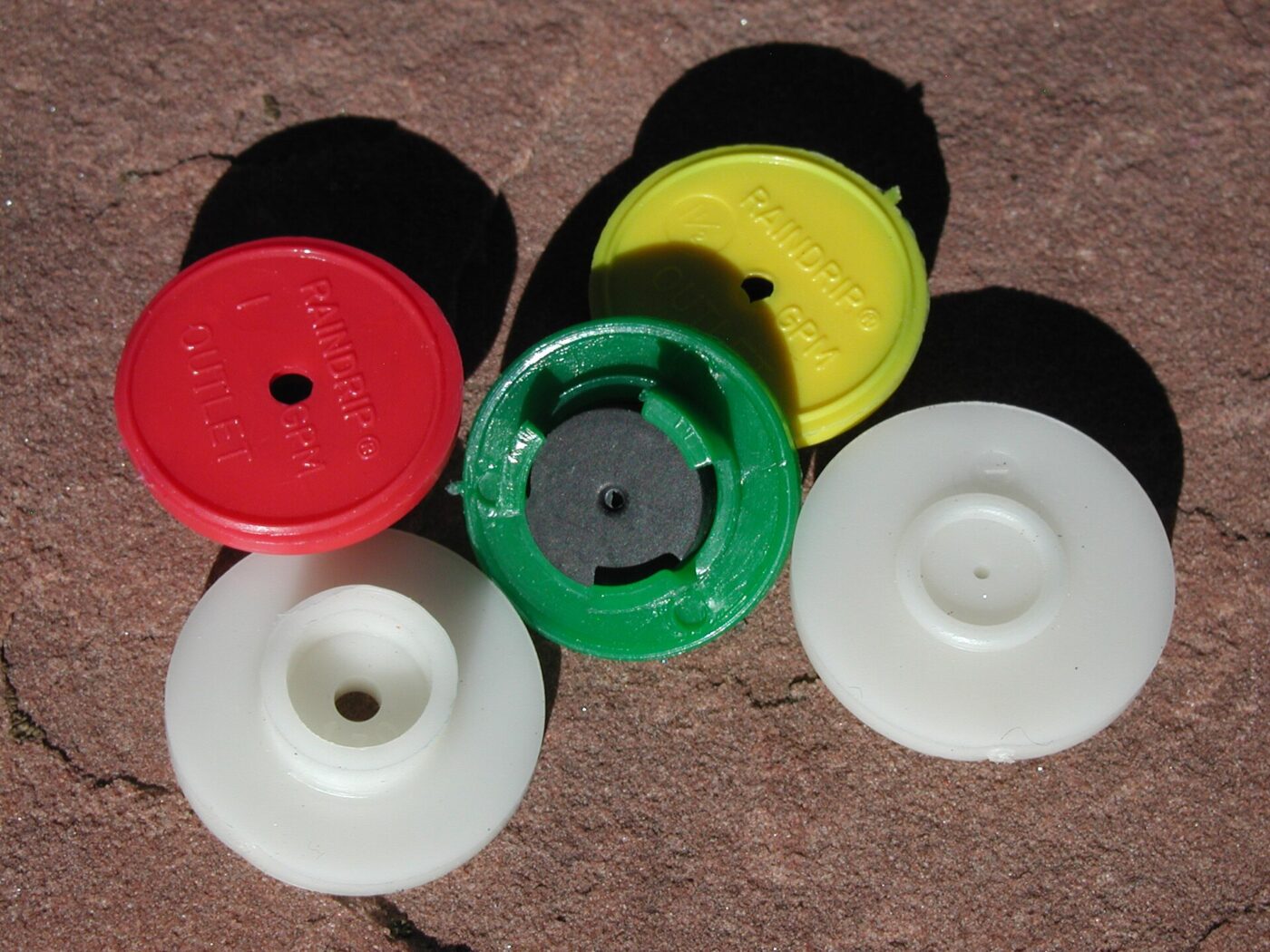
Then the emitters. Pressure-compensating emitters put out the same flow at the start and the end of a long run and on a slope, which is the difference between an even bed and a soggy first plant. Inline tubing with pre-spaced emitters suits rows and raised beds; punch-in emitters on blank tubing suit shrubs and pots at irregular spacing.
A timer is the third piece, and the choice is about failure behavior. Mechanical dial timers run one cycle and cannot forget, battery timers hold a schedule but stop when the battery dies, and app-connected models add rain skipping along with two more things that can drop out. A backflow preventer on the hose bib is commonly required by local plumbing rules, so check before assuming the kit covers it.
One label does not apply here. EPA WaterSense labels irrigation controllers, both weather-based and soil moisture-based, and spray sprinkler bodies with integral pressure regulation, and says replacing a standard clock-based controller with a labeled one can save an average home up to 15,000 gallons of water a year. Its labeled categories run to toilets, showerheads, faucets, urinals, sprinkler bodies, controllers and point-of-use reverse osmosis systems, so there is no WaterSense label on a hose-end drip kit.
- Pressure regulator and filter included, not sold separately
- Pressure-compensating emitters for runs longer than about 20 feet or on a slope
- Tubing diameter matched to the fittings you buy later
- A backflow preventer at the hose bib if local rules require one
Who should wait
Renters and anyone gardening in a handful of containers are the clearest cases for waiting. A drip system is a fixed layout, and a few pots on a balcony are watered faster by hand than by a system needing a regulator, a filter and a timer.
Cold-climate gardeners should count the seasonal work. Tubing and timers have to be drained or brought in before a freeze, and emitters left full split. That is 20 minutes twice a year, and it is why some kits end up in a garage after one season.
If your utility has no restrictions and water is cheap, the case is weaker. The strongest argument for drip in 2026 is regulatory: when a rule caps spray irrigation at two days a week and lets low-volume irrigation run on any day, the system that keeps a vegetable bed alive is the one that is not a sprinkler.
What to watch next
- Your own utility restriction page in spring, specifically whether low-volume or non-spray irrigation is listed separately from sprinklers
- The monthly BLS water and sewerage maintenance index, which has outpaced headline inflation
- EPA WaterSense, which has a draft specification out for spray sprinkler nozzles in addition to the labeled controllers and sprinkler bodies
Where to start
Paid links: we earn a commission if you buy through the buttons below, at no extra cost to you. As an Amazon Associate I earn from qualifying purchases.
Watering hardware compared on what differs
| Product type | Good fit for | Where to look |
|---|---|---|
| Drip irrigation starter kit | Fits raised beds and rows | See listings on AmazonOpens Amazon search results, not one listing: check the model on the product page. |
| Hose bib watering timer | Fits set-and-forget watering | See listings on AmazonOpens Amazon search results, not one listing: check the model on the product page. |
| Soaker hose | Fits one long bed or hedge | See listings on AmazonOpens Amazon search results, not one listing: check the model on the product page. |
Product types that fit the trend described above, not tested models. Check the exact listing before you buy. How we pick them.
Drip irrigation starter kit
Where to look: Amazon
Tubing, emitters, a regulator and a filter. This is the setup a drought rule allowing low-volume non-spray irrigation is describing.
- Water goes to root zones
- Fewer weeds between plants
- Emitters clog over time
- Needs winter draining
Hose bib watering timer
Where to look: Amazon
A timer is what makes a restricted watering window practical, since the allowed hours fall before most people are awake.
- Holds a fixed schedule
- Runs before 10 a.m. without you
- Waters through rain unless skipped
- Batteries fail quietly
Soaker hose
Where to look: Amazon
The simplest low-volume option, with far less control over how much each plant gets.
- Cheapest way to start
- Nothing to assemble
- Uneven along long runs
- Hard to adjust per plant
More: Garden and Backyard trends and how the Trend Signal is scored.
Sources
- WaterSense statistics and facts — U.S. Environmental Protection Agency
- WaterSense outdoors — U.S. Environmental Protection Agency
- WaterSense labeled irrigation controllers — U.S. Environmental Protection Agency
- WaterSense spray sprinkler bodies — U.S. Environmental Protection Agency
- Rules for outdoor water use — Denver Water
- CPI, water and sewerage maintenance, US city average — U.S. Bureau of Labor Statistics
Questions readers ask
Is drip irrigation exempt from watering-day restrictions?
It depends on the utility, and the exemption is usually written by method rather than by product. Denver Water allows trees, shrubs, perennials, annuals and vegetables to be watered on any day using a hand-held hose or low-volume, non-spray irrigation such as a drip system, while sprinklers are limited to two assigned days.
How much of a household water bill is outdoor use?
EPA WaterSense puts outdoor use at more than 30% of household water on average, and as much as 60% in arid regions. It also estimates the average family spends more than $1,000 a year on water.
Do I need a pressure regulator?
For a hose-end drip system, yes. Household hose pressure is higher than drip tubing and emitters are designed for, which is why the regulator and filter are the first parts to check on a listing.
Is there a WaterSense label for drip kits?
No. The irrigation products EPA WaterSense labels are weather-based and soil moisture-based irrigation controllers and spray sprinkler bodies with integral pressure regulation. Hose-end drip kits and soaker hoses are not among its labeled categories.