Computer hardware is supposed to get cheaper, and for two decades the federal index agreed: the Bureau of Labor Statistics series for computers, peripherals and smart home assistants, CUUR0000SEEE01, fell from an annual average of 120.9 in 2006 to 35.747 in 2024, down about 70 percent on our calculation. That pattern broke during 2026, and the agency table is the cleanest place to see it: in the 12 months to August 2026, the index rose 8.4 percent, while information technology commodities as a whole fell 4.3 percent.
This piece puts that index next to prices the makers published themselves and the cost driver one supplier disclosed in a filing. No store prices are typed here, because a store price on a page goes stale within days. Everything below is a figure published by the BLS, by a manufacturer in an announcement, or in a filing with the Securities and Exchange Commission, read on October 12, 2026.
Trend Signal
76/100 Strong momentum
- Emerging
- Rising
- Mainstream
- Peaking
- Cooling
A hardware class whose price index is climbing while televisions still fall
The BLS consumer price index for computers, peripherals and smart home assistants rose 8.4 percent in the 12 months to August 2026, and 3.8 percent in that single month, while televisions fell 1.0 percent and audio equipment fell 2.0 percent over the same 12 months.
Our editorial reading of the cited data, not a forecast. How it is scored
By the numbers
- +8.4%CPI for computers, peripherals and smart home assistants, 12 months to August 2026BLS
- $999.99US estimated retail price Xbox published for the ROG Xbox Ally X at pre-orderXbox Wire
- +140%Micron DRAM average selling prices, first nine months of fiscal 2026 against 2025Micron 10-Q
- $1,199Lenovo estimated starting price for the SteamOS Legion Go, announced January 2026Lenovo
What the price index says about computer hardware
Table 2 of the August 2026 consumer price index release is the most useful single page for this category. The unadjusted change for computers, peripherals and smart home assistants is 8.4 percent over the 12 months to August 2026, and 3.8 percent in the single month from July to August 2026. Both the unadjusted and the seasonally adjusted one-month figures are 3.8 percent, so this is not a seasonal artifact.
The contrast inside the same table is what makes the number legible. Televisions fell 1.0 percent over those 12 months. Audio equipment fell 2.0 percent. Video and audio products as a group rose 1.9 percent, and information technology commodities overall, the broader group the computer rows sit inside, fell 4.3 percent. Computer software and accessories, meanwhile, rose 25.4 percent. The deflation that shoppers rely on is still present in parts of consumer electronics; it is absent in the part that handheld gaming PCs belong to.
A category that normally rewards waiting has spent a year punishing it.
The maker-published prices, in order
Take the prices from the announcements rather than from listings. On September 25, 2025, Xbox Wire opened pre-orders and published both figures: the ROG Xbox Ally at 599.99 dollars estimated retail price, and the ROG Xbox Ally X at 999.99 dollars, with a global launch on October 16. The post describes the Xbox full screen experience as a dedicated experience purpose-built for gaming, powered by Windows 11, and says new modifications minimize background activity so more system resources go to gameplay.
Lenovo published its own figures on the same calendar. Its September 5, 2025 release lists the Legion Go at 8.8 inches, second generation, as available starting September 2025 with an expected starting price of 999 euros, built on up to an AMD Ryzen Z2 Extreme with 8 cores and 16 threads and an 8.8-inch WUXGA OLED panel at 144Hz and 500 nits. On January 6, 2026 Lenovo announced the Legion Go powered by SteamOS at the same screen specification, estimated to start at 1,199 dollars, with expected availability from June 2026.
| Device | Maker-published price | Announced | Availability stated |
|---|---|---|---|
| ROG Xbox Ally | 599.99 dollars estimated retail | 25 September 2025 | Global launch 16 October |
| ROG Xbox Ally X | 999.99 dollars estimated retail | 25 September 2025 | Global launch 16 October |
| Lenovo Legion Go 8.8-inch, second generation | 999 euros expected starting price | 5 September 2025 | From September 2025 |
| Lenovo Legion Go powered by SteamOS | 1,199 dollars estimated start | 6 January 2026 | From June 2026 |
Memory is the input that repriced the category
The cost driver is documented by a supplier rather than inferred. In its quarterly report for the period ended May 28, 2026, Micron states that DRAM average selling prices increased approximately 140 percent for the first nine months of 2026 compared with the first nine months of 2025, and that NAND average selling prices increased approximately 130 percent over the same comparison. Quarter on quarter, it reports DRAM sales up 67 percent primarily due to a low-60 percent range increase in average selling prices, and NAND sales up 99 percent primarily due to a mid-80 percent range increase.
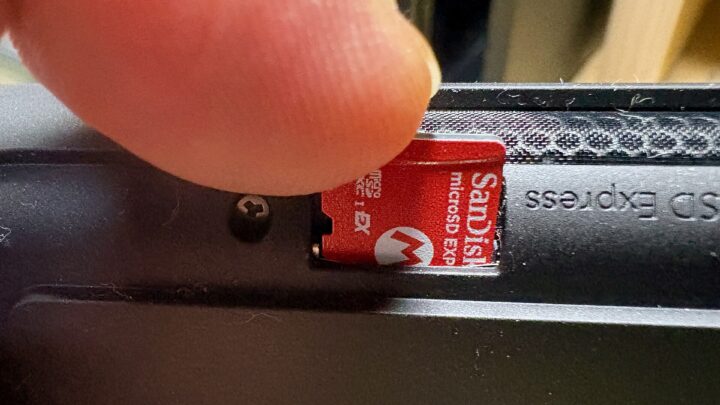
The same filing supplies the context that makes those numbers remarkable. Micron writes that over the past five fiscal years, annual percentage changes in DRAM average selling prices have ranged from an increase in the low 40 percent range to a decrease in the high 40 percent range. A 140 percent nine-month move sits outside that band entirely. Every handheld carries soldered memory and flash storage, which is why we traced the same input through the gaming PC side and the console side.
Tariffs moved in both directions
The second input is trade policy, and one maker put a number on it in a filing. In the consolidated financial highlights it published on August 6, 2026, Nintendo attributes part of a 150.5 percent year-on-year rise in quarterly operating profit, to 142.5 billion yen, to software taking a larger share of sales and to the refund of IEEPA tariffs in the US which were recorded as cost of sales in prior periods.
That is a console maker rather than a handheld PC maker, and the direction is unusual: a cost previously booked against goods sold came back. We read it as evidence that tariff treatment has been volatile enough to appear and disappear inside a single company’s cost of sales within a year, which is a reason to treat any announced price as a snapshot. It cuts against the memory story rather than with it, and both can be true at once.
One input pushed costs up all year; another reversed for at least one maker in one quarter.
Buy now or wait, read from the figures
Waiting is a bet that the index turns. The most recent BLS reading available, for August 2026, shows the opposite: the one-month move for computers, peripherals and smart home assistants was 3.8 percent, the same seasonally adjusted. On the supply side, Micron’s filing describes sequential price increases rather than a rollover. Neither of those says prices must keep rising, but neither supports the habit of waiting for a better number.
What the announcements do suggest is where the value sits. The gap between a 599.99 dollar entry device and a 999.99 dollar flagship, both published by Xbox on the same day, is the clearest fork in the category, and the SteamOS variant Lenovo priced in January 2026 shows the software shell is now a pricing variable too. If a handheld is a want rather than a need, the figures above argue for buying the cheaper tier now over a flagship later. More sits in our gaming and entertainment coverage and in how we track trends.
What to watch next
- The September 2026 CPI release and the months after it, for whether computers and peripherals stay above zero on a 12-month basis.
- Micron’s next quarterly filing, for whether sequential DRAM and NAND average selling prices keep climbing.
- Whether makers reprice existing handhelds in announcements rather than only pricing new models.
Where to start
Paid links: we earn a commission if you buy through the buttons below, at no extra cost to you. As an Amazon Associate I earn from qualifying purchases.
Handheld PC buying decisions compared on what the published figures support
| Product type | Good fit for | Where to look |
|---|---|---|
| Windows handheld gaming PC | Fits the entry tier | See listings on AmazonOpens Amazon search results, not one listing: check the model on the product page. |
| USB-C dock for a handheld PC | Fits a TV and desk setup | See listings on AmazonOpens Amazon search results, not one listing: check the model on the product page. |
| Hard case for a gaming handheld | Fits travel protection | See listings on AmazonOpens Amazon search results, not one listing: check the model on the product page. |
Product types that fit the trend described above, not tested models. Check the exact listing before you buy. How we pick them.
Windows handheld gaming PC
Where to look: Amazon
The published gap between tiers is 400 dollars on the same announcement day. With the BLS hardware index up 8.4 percent over 12 months, the entry tier is where the figures point.
- Entry tier published at 599.99 dollars by Xbox
- Runs the Windows 11 software shell makers now ship
- Memory and storage are priced into a rising market
- Soldered memory cannot be upgraded later
USB-C dock for a handheld PC
Where to look: Amazon
A dock is the least inflated part of this category. Confirm the output resolution and refresh rate the dock publishes, and remember the handheld sets the real ceiling.
- Turns a handheld into a second desktop
- Cheaper than a second machine
- Output ceiling is set by the handheld, not the dock
- Power delivery claims vary
More: Gaming and Entertainment trends and how the Trend Signal is scored.
Sources
- Consumer Price Index Table 2, detailed expenditure categories, August 2026 — Bureau of Labor Statistics
- CPI series CUUR0000SEEE01, computers, peripherals and smart home assistants — BLS
- Players Can Now Pre-Order the ROG Xbox Ally X and ROG Xbox Ally — Xbox Wire
- Lenovo Levels Up CES with Legion Gaming Devices — Lenovo StoryHub, January 6 2026
- New Lenovo Legion Gaming Devices and AI Tablets — Lenovo StoryHub, September 5 2025
- Micron Technology quarterly report for the period ended May 28 2026 — SEC EDGAR
- Consolidated Financial Highlights, three months ended June 30 2026 — Nintendo
Questions readers ask
Are handheld gaming PCs getting more expensive?
The category-level evidence says the hardware class is. The BLS index for computers, peripherals and smart home assistants rose 8.4 percent in the 12 months to August 2026 and 3.8 percent from July to August 2026, while televisions and audio equipment both fell over the same 12 months.
What did the ROG Xbox Ally cost at launch?
Xbox Wire published both figures on September 25, 2025 when pre-orders opened: 599.99 dollars estimated retail price for the ROG Xbox Ally and 999.99 dollars for the ROG Xbox Ally X, with a global launch on October 16.
Why is memory blamed for hardware prices?
Because a supplier published the numbers. Micron’s filing for the quarter ended May 28, 2026 reports DRAM average selling prices up approximately 140 percent and NAND up approximately 130 percent for the first nine months of 2026 against the same period of 2025.
Did tariffs raise prices in 2026?
The one figure we can point to runs the other way for one company. Nintendo’s August 6, 2026 financial highlights attribute part of its quarterly operating profit increase to a refund of IEEPA tariffs in the US that had been recorded as cost of sales in prior periods.