Countertop appliances tend to boom and fade, and 2026 has its casualties: SharkNinja reported declines in frozen drinks in the first quarter, and De’Longhi cited challenges in the personal blender market in the second. Espresso machines are moving the other way. Three major appliance makers, SharkNinja, De’Longhi and Breville, all point to coffee machines as a main source of growth in their latest results.
The shift is not only about volume. The machines selling now are more automated and, at the top end, closer to professional gear. Here is what the sales data show, what coffee prices have done, and how to decide whether a home setup makes sense for you.
Trend Signal
72/100 Strong momentum
- Emerging
- Rising
- Mainstream
- Peaking
- Cooling
Espresso machines are carrying growth at SharkNinja, De’Longhi and Breville
SharkNinja credited its Ninja Luxe Café espresso machine for a 36.5% jump in cooking and beverage sales in Q2 2026, and De’Longhi and Breville both reported double-digit, coffee-led growth in the Americas; De’Longhi’s coffee segment grew only mid-single digits across all regions, which keeps the score below 80.
Our editorial reading of the cited data, not a forecast. How it is scored
By the numbers
- 36.5%SharkNinja cooking and beverage net sales growth in Q2 2026, led by the Ninja Luxe CaféSharkNinja
- 20.8%De’Longhi Americas revenue growth at constant currency, Q2 2026De’Longhi Group
- 10.8%Breville Global Product revenue growth, Americas, constant currency, year to June 2026Breville Group
- 6.1%US CPI for coffee, 12 months to August 2026, down from 20.9% a year earlierBureau of Labor Statistics
The sales evidence
SharkNinja’s cooking and beverage category, where its espresso machines sit, grew net sales 19.8% to $414.6 million in the first quarter of 2026 and 36.5% to $499.0 million in the second. In both quarters the company named the Ninja Luxe Café espresso machine as a driver, alongside its Crispi air fryer.
De’Longhi reported second-quarter 2026 revenue up 8.4% to 898.7 million euros. Its Americas region grew 20.8% at constant exchange rates, and the household division there grew at a low-teens organic rate, which the company said was driven by strong coffee machine performance. Across all regions, its coffee segment grew at a mid-single-digit rate in the second quarter, with solid expansion in both automatic and manual machines and an acceleration in coffee accessories.
Breville Group reported record revenue of 1.81 billion Australian dollars for the year to June 2026, up 6.7%, or 9.7% at constant currency. In the Americas, revenue in its Global Product segment grew 10.8% at constant currency, with coffee up double digits on premium new launches and strong Barista Express sales, helped by 300 store-in-store displays at Best Buy.
Three companies with different price points report the same thing: coffee machines are where growth is coming from.
Why the counter shifted toward espresso
Coffee itself got expensive. The BLS index for coffee rose 20.9% in the 12 months to August 2025 and was still up 18.4% in the 12 months to February 2026 before slowing to 6.1% in the 12 months to August 2026. Eating out kept getting pricier too: food away from home was up 3.4%, and limited-service meals and snacks 3.2%, in the 12 months to August 2026.
Those numbers do not prove that people swapped café drinks for home espresso, and the companies do not claim they did. We read them as removing some friction: bean prices are rising far more slowly than a year earlier, while spending away from home keeps climbing. SharkNinja frames the opportunity around skill rather than price: its AutoBarista launch materials cite a YouGov survey it commissioned in which more than 60% of coffee drinkers said they struggle to consistently make a quality cup at home.
The other driver is premiumization. De’Longhi says its professional coffee division, which includes La Marzocco and Eversys, grew 33.2% in the second quarter of 2026, and it credits the expansion of the prosumer segment and a brand engagement strategy aimed at “the community of enthusiasts and specialists.”
What changed in the machines

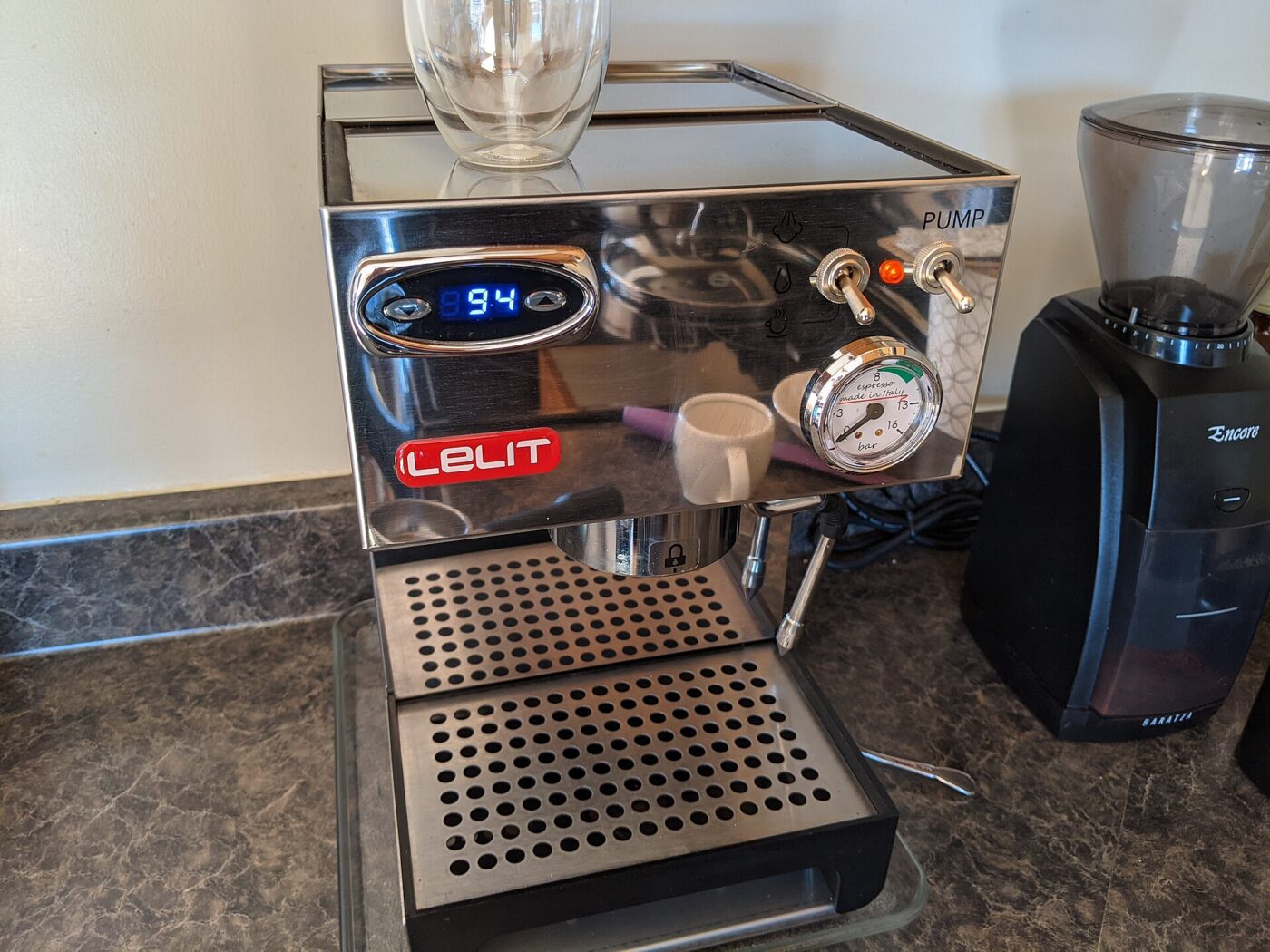
The new machines take over the steps that made home espresso frustrating. SharkNinja’s Ninja AutoBarista, launched May 27, 2026 at $899.99 to $999.99, uses what the company calls Grind iQ to adjust grind size, dose by weight and change brewing pressure in real time, with 13 drink presets and a drip-coffee mode. At the enthusiast end, Breville named its Oracle Dual Boiler, the Baratza Encore ESP Pro grinder and the Lelit MaraX3 among new products performing well.
Automation matters because espresso punishes small errors in grind and dose, which is exactly what these features target. The market now splits into three setups:
- Super-automatic: beans to cup at the push of a button, with the least skill required and the most internal parts to clean.
- Semi-automatic with a built-in grinder: you tamp and steam, the machine grinds and brews, and newer models automate dose and grind.
- Separate machine and grinder: the enthusiast route, with dual boilers and precise grinders at the top end.
Counter-signals worth weighing
Not every coffee number is strong. De’Longhi’s household division grew only 1.2% in the first half of 2026, or 3.1% at constant currency, after a first quarter spent absorbing excess inventory in retail channels. Its household price-mix was slightly negative in the second quarter after what it called selective list price repositioning, which we read as some machines being priced more sharply to keep sales moving.
Tariffs remain a wild card for imported machines. Breville said its net US tariff position for the coming fiscal year remains fluid, and SharkNinja’s 2026 outlook assumes minimum rates of 12.5% on goods from China, Vietnam and Thailand. And the fad risk is real inside the same companies: SharkNinja’s food preparation category fell 3.3% in the first quarter of 2026 on declines in frozen drinks.
Who should buy now, and who should wait
If you drink milk-based espresso drinks most days, the case is strongest now. The machines are more automated than they were, several brands are competing on features, and De’Longhi reported selective list price repositioning in its household business, which we read as targeted price cuts.
If you want the ritual and plan to learn, a semi-automatic machine with a separate burr grinder gives the most room to improve. If you want a latte without learning anything, a super-automatic trades control for convenience and needs regular descaling and brew-unit cleaning. If you drink one espresso a week, the math does not favor a machine at these prices.
What to watch next
- SharkNinja’s third-quarter 2026 results, for whether cooking and beverage growth holds above 30%
- De’Longhi’s coffee segment, for a move from mid-single-digit growth toward the pace of its Americas region
- Monthly BLS coffee prices, for whether the slowdown to 6.1% continues
Where to start
Paid links: we earn a commission if you buy through the buttons below, at no extra cost to you. As an Amazon Associate I earn from qualifying purchases.
Home espresso setups compared on the things that differ
| Product type | Good fit for | Where to look |
|---|---|---|
| Semi-automatic espresso machine with built-in grinder | Fits cooks who like to tinker | See listings on AmazonOpens Amazon search results, not one listing: check the model on the product page. |
| Super-automatic espresso machine | Fits push-button households | See listings on AmazonOpens Amazon search results, not one listing: check the model on the product page. |
| Espresso burr grinder | Fits upgrading an existing machine | See listings on AmazonOpens Amazon search results, not one listing: check the model on the product page. |
Product types that fit the trend described above, not tested models. Check the exact listing before you buy. How we pick them.
Semi-automatic espresso machine with built-in grinder
Where to look: Amazon
The middle path most new buyers take. Newer models automate dosing and grind, which shortens the learning curve.
- Grinder and machine in one footprint
- Room to improve your shots
- Tamping and steaming take practice
- Built-in grinder limits upgrades
Super-automatic espresso machine
Where to look: Amazon
For households that want a latte without a routine. Check the descaling steps and whether the brew group comes out for rinsing.
- Beans to cup in one step
- Consistent drinks for several people
- More internal parts to clean
- Less control over the shot
Espresso burr grinder
Where to look: Amazon
If you already own a machine and your shots vary, a grinder built for espresso is where to look first.
- Fixes uneven grind at the source
- Moves with you to the next machine
- Another appliance on the counter
- Espresso-range models cost more
More: Home and Kitchen trends and how the Trend Signal is scored.
Sources
- SharkNinja Reports Second Quarter 2026 Results — SharkNinja
- SharkNinja Reports First Quarter 2026 Results — SharkNinja
- Ninja AutoBarista Redefines Fully Automatic Espresso — SharkNinja
- First half 2026 results press release — De’Longhi Group
- Year Ended 30 June 2026 Investor Presentation — Breville Group
- Consumer Price Index News Release, August 2026 — Bureau of Labor Statistics
- Consumer Price Index News Release, February 2026 — Bureau of Labor Statistics
- Consumer Price Index News Release, August 2025 — Bureau of Labor Statistics
Questions readers ask
Are home espresso machines still popular in 2026?
Sales data say yes. SharkNinja credited its Ninja Luxe Café for a 36.5% rise in cooking and beverage sales in Q2 2026, De’Longhi’s Americas revenue grew 20.8% at constant currency in the same quarter, and Breville reported double-digit coffee growth in the Americas for its year to June 2026.
Did coffee prices stop rising?
They slowed. The BLS coffee index rose 6.1% in the 12 months to August 2026, after 20.9% in the 12 months to August 2025 and 18.4% in the 12 months to February 2026.
What is the difference between a super-automatic and a semi-automatic espresso machine?
A super-automatic grinds, doses and brews at the push of a button. A semi-automatic leaves tamping, and usually milk steaming, to you. The line is blurring: SharkNinja’s AutoBarista, sold as fully automatic, adjusts grind size, dose by weight and brewing pressure on its own.
Are espresso machines getting cheaper?
Not across the board. De’Longhi reported selective list price repositioning in its household business in Q2 2026, but makers still face tariffs; SharkNinja’s 2026 outlook assumes minimum rates of 10% to 12.5% on the sourcing countries it lists.