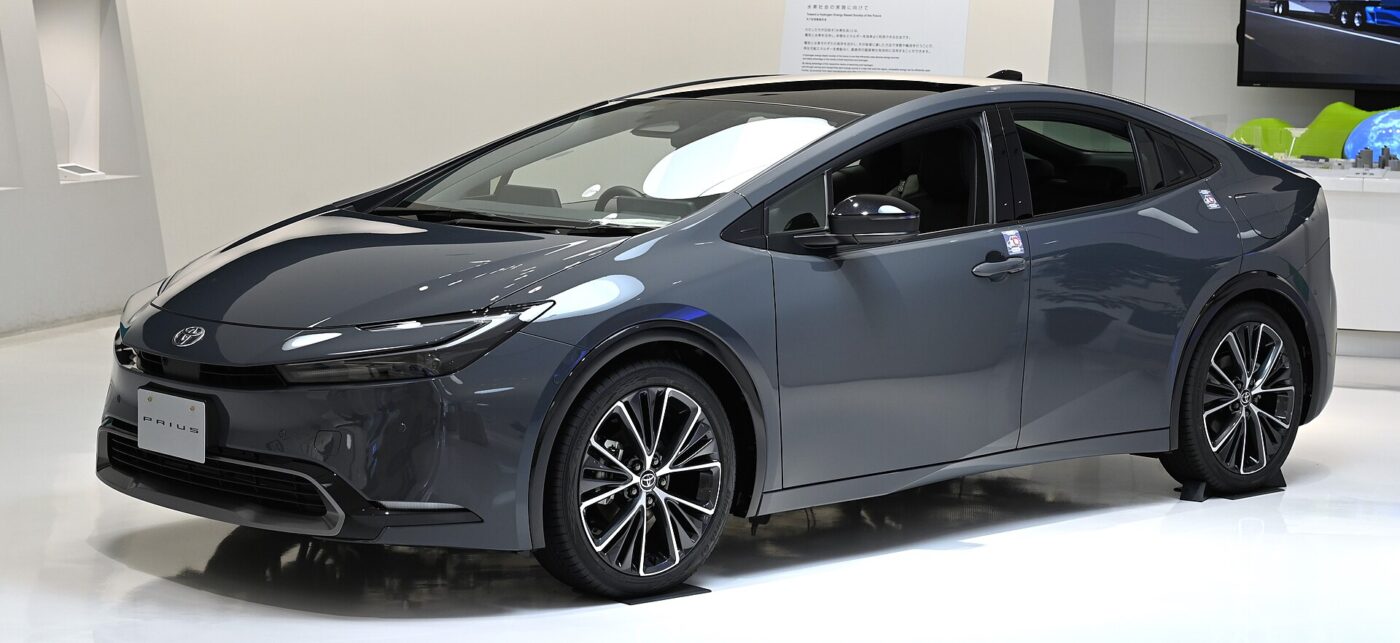
The electrified car winning in 2026 does not plug in. Hybrids, which pair a gas engine with an electric motor and a battery that recaptures braking energy, took a record share of new-vehicle sales in the second quarter while battery electric and plug-in hybrid sales slipped. Hybrids never qualified for the federal EV credits, so they had no cliff to fall off when those credits expired on September 30, 2025.
Then gasoline climbed. With the national average above $4.30 in September 2026, and EIA assuming some constraints on Middle East oil exports persist through the end of 2026, the fuel savings that sell hybrids got larger. Here is what the sales data, the price outlook and the EPA ratings say.
Trend Signal
80/100 Strong momentum
- Emerging
- Rising
- Mainstream
- Peaking
- Cooling
Record hybrid share while plug-in sales slide
EIA, citing Omdia estimates, put hybrids at a record 16% of U.S. new light-duty vehicle sales in the second quarter of 2026, while battery electric share fell to 6% from 7% a year earlier.
Our editorial reading of the cited data, not a forecast. How it is scored
By the numbers
- 16%Hybrid share of U.S. new light-duty vehicle sales, Q2 2026, a recordEIA, citing Omdia
- 24%Hybrid, battery electric and plug-in hybrid share combined, Q2 2026 (22% in Q2 2025)EIA, citing Omdia
- $4.319U.S. average regular gasoline per gallon, week of September 14, 2026EIA
- 50 mpgEPA combined rating, 2026 Toyota Corolla Hybrid, vs 34 mpg for the gas sedanfueleconomy.gov
Hybrids gained while plug-ins slipped
EIA’s July 27, 2026 analysis of Omdia estimates found that 24% of new light-duty vehicles sold in the second quarter of 2026 were hybrids, battery electrics or plug-in hybrids, up from 22% a year earlier. All of that gain came from hybrids, which reached a record 16%. Battery electric share fell from 7% to 6%, and plug-in hybrids from 1.9% to 1.4%.
The trend predates the credit expiration. For full-year 2025, EIA put the combined share at 22%, up from 20% in 2024, with battery electrics at 7.5% and plug-in hybrids at 1.6%, which by our subtraction leaves hybrids at roughly 13%. Battery electric share hit a record 12% in September 2025, immediately before the credits expired, then fell below 6% in each remaining month of 2025.
The shift reaches into luxury, where EVs had been strongest. Luxury vehicles made up 12% of light-duty sales in the second quarter of 2026, and battery electrics were 14% of that segment, down from 22% a year earlier, per EIA.
By EIA’s shares, hybrids outsold battery electric cars by more than two to one among new vehicles in the second quarter of 2026.
Gas prices did the selling
EIA’s weekly survey put regular gasoline at $4.319 a gallon for the week of September 14, 2026, $1.151 above the same week of 2025. Diesel topped $6 a gallon to set a record, according to Cox Automotive’s September 15, 2026 market brief.
EIA’s September 9, 2026 Short-Term Energy Outlook expects regular gasoline to average $3.84 for 2026 and $3.35 the year after, with Brent crude averaging $91 a barrel in 2026. It assumes some constraints on exporting oil from the Middle East persist through the end of 2026, keeping the region’s production below pre-conflict averages until the second quarter of the following year.
That forecast is the main counter-signal for hybrids. Lower gas prices shrink the yearly savings a buyer weighs against any price difference between hybrid and gas versions, though at EIA’s projected levels a hybrid still saves money on every mile.
What a hybrid saves at current gas prices

EPA ratings on fueleconomy.gov make the math concrete. The 2026 Toyota Corolla sedan with the 2.0-liter engine is rated 34 mpg combined, 31 city and 38 highway. The 2026 Corolla Hybrid is rated 50 mpg combined, 53 city and 46 highway. The hybrid’s edge is largest in town, which matches how the technology works: regenerative braking recaptures energy normally lost when braking, in some hybrids the electric motor alone moves the car at low speeds, and the engine shuts off at stops.
The savings scale with miles and with city driving. A driver covering 15,000 miles a year would save a quarter more than the table shows, and one who drives mostly on the highway, where the hybrid’s 46 mpg rating sits closer to the gas car’s 38, would save less.
A battery electric car is a different calculation, starting with the price. Kelley Blue Book data from Cox put the average new EV transaction price at $54,813 in August 2026, 9.4% above the $50,089 industry average, though that premium was down from more than 16% a year earlier.
| Gas price per gallon | Corolla, 34 mpg | Corolla Hybrid, 50 mpg | Yearly difference |
|---|---|---|---|
| $4.319 (EIA, week of Sept. 14, 2026) | $1,524 | $1,037 | $488 |
| $3.84 (EIA forecast, 2026 average) | $1,355 | $922 | $434 |
| $3.35 (EIA forecast, the year after 2026) | $1,182 | $804 | $378 |
Getting hybrid-like savings from the car you own
Not everyone is in the market for a new car, and fueleconomy.gov lists ways to recover part of the gap without one. Keeping tires at the recommended pressure improves mileage by 0.6% on average and up to 3% in some cases. Using the manufacturer’s recommended motor oil grade can improve it by 1–2%, and the site advises looking for oil labeled Energy Conserving.
Driving habits and cargo matter more than most owners expect, per the same DOE site:
None of these closes a 16 mpg gap, but they are the cheapest fuel savings available, and the cargo-box difference alone adds up on a long highway trip at $4-plus gas.
- A large roof-top cargo box can cut fuel economy by 2–8% in the city, 6–17% on the highway and 10–25% at 65–75 mph; a rear-mount box or tray costs 1–2% in the city and 1–5% on the highway.
- An extra 100 pounds in the vehicle reduces mpg by about 1%.
- Aggressive driving can lower mileage by roughly 15–30% at highway speeds and 10–40% in stop-and-go traffic.
- Each 5 mph over 50 mph is like paying an extra $0.30 a gallon, and idling burns a quarter to a half gallon an hour.
Who should buy a hybrid now
Buy a hybrid now if you drive a lot of city miles, keep cars for many years and cannot charge at home. That buyer captures the largest share of the EPA city-rating gap and does not depend on the charging access an EV needs.
Look harder at a battery electric car if you can charge at home and drive enough to use its lower running cost; new EV incentives averaged about 12% of the transaction price in August 2026, per Cox. Plug-in hybrids sit in between, and we read their shrinking 1.4% share as buyers choosing one side or the other.
Buy on price rather than urgency if you drive mostly highway miles. EIA expects gasoline to ease toward $3.35 after 2026, and at that price the hybrid advantage in the Corolla example drops to about $378 a year.
What to watch next
- EIA’s next quarterly powertrain analysis, for whether hybrid share holds at or above the 16% record set in Q2 2026
- EIA’s weekly gasoline price against its $3.84 forecast for the 2026 average
- Cox Automotive’s monthly EV share, 5.7% of new sales in August 2026, for signs that buyers are moving back to plug-ins
Where to start
Paid links: we earn a commission if you buy through the buttons below, at no extra cost to you. As an Amazon Associate I earn from qualifying purchases.
Fuel-saving gear for the car you already own
| Product type | Good fit for | Where to look |
|---|---|---|
| Hitch-mounted cargo carrier | Fits road trips with extra gear | See listings on AmazonOpens Amazon search results, not one listing: check the model on the product page. |
| Cordless tire inflator with auto shutoff | Fits monthly pressure checks | See listings on AmazonOpens Amazon search results, not one listing: check the model on the product page. |
| Energy Conserving motor oil | Fits DIY oil changes | See listings on AmazonOpens Amazon search results, not one listing: check the model on the product page. |
Product types that fit the trend described above, not tested models. Check the exact listing before you buy. How we pick them.
Hitch-mounted cargo carrier
Where to look: Amazon
Suits families who carry gear on highway trips. DOE figures show a large roof box costs far more fuel at interstate speeds.
- Rear-mount carriers cost 1 to 5% on the highway, per DOE
- Easier to load than a roof box
- Needs a receiver hitch
- Can block the rear camera or plate
Cordless tire inflator with auto shutoff
Where to look: Amazon
Suits drivers who want to check and top up pressure at home. Set it to the door-jamb figure, not the tire sidewall maximum.
- Proper pressure improves mpg 0.6% on average, per DOE
- Auto shutoff prevents overfilling
- Slow on large truck tires
- Battery needs charging
More: Auto and EVs trends and how the Trend Signal is scored.
Sources
- Hybrid sales rise while battery electric sales remain lower after tax credit expiration — U.S. Energy Information Administration
- Electric vehicle sales fell as hybrid vehicle sales continued to rise in 2025 — U.S. Energy Information Administration
- Gasoline and Diesel Fuel Update — U.S. Energy Information Administration
- Short-Term Energy Outlook, September 2026 — U.S. Energy Information Administration
- 2026 Toyota Corolla fuel economy — fueleconomy.gov
- Hybrid Vehicles: How They Work — fueleconomy.gov
- Driving More Efficiently — fueleconomy.gov
- Keeping Your Vehicle in Shape — fueleconomy.gov
- Kelley Blue Book Report: Average New-Vehicle Transaction Price, August 2026 — Cox Automotive
- EV Market Monitor, August 2026 — Cox Automotive
- The Auto Market Brief, Ep. 17: Diesel Hits Record Highs — Cox Automotive
Questions readers ask
What share of new cars are hybrids in 2026?
EIA, citing Omdia estimates, put hybrids at a record 16% of U.S. new light-duty vehicle sales in the second quarter of 2026. Hybrids, battery electrics and plug-in hybrids together were 24%.
Did hybrids qualify for the federal EV tax credit?
No. EIA notes that hybrid electric vehicles were not eligible for the federal tax credits that expired on September 30, 2025.
How much does a hybrid save on gas?
It depends on miles and prices. Using EPA ratings of 50 mpg for the 2026 Corolla Hybrid and 34 mpg for the gas Corolla, 12,000 miles at EIA’s $4.319 mid-September 2026 price costs about $488 less in the hybrid, by our calculation.
Will gas prices come down?
EIA’s September 2026 outlook forecasts regular gasoline averaging $3.84 for 2026 and $3.35 the year after, assuming flows out of the Middle East recover gradually.