The home phone has been fading for two decades, but 2026 is the year the wire itself started coming out. On March 26, 2026 the Federal Communications Commission adopted a Report and Order that eliminates the filing requirements tied to network change disclosure, overhauls the section 214 process carriers use to discontinue legacy services, and grants blanket authority to grandfather legacy voice service, lower-speed data and interconnected Voice over IP provisioned over copper wire. The FCC said the changes would free up tens of billions of dollars annually for new networks.
The user base explains the urgency. The National Center for Health Statistics, which has tracked household telephone status since 2003, found that in the second half of 2024, 78.7% of US adults lived in households with only wireless service and 0.9% lived in households with a landline and no working cell phone. That is a smaller share than the 1.3% recorded two years earlier. For anyone who still has a wall jack, the practical question is what replaces the dial tone, and what still works when the lights go out.
Trend Signal
20/100 Weak momentum
- Emerging
- Rising
- Mainstream
- Peaking
- Cooling
A shrinking base of users and a regulator clearing the way to switch it off
Only 0.9% of US adults lived in landline-only households in the second half of 2024, down from 1.3% two years earlier, and on March 26, 2026 the FCC adopted rules to speed copper retirement.
Our editorial reading of the cited data, not a forecast. How it is scored
By the numbers
- 78.7%US adults in wireless-only households, July to December 2024National Center for Health Statistics
- 0.9%US adults in landline-only households in the same period, down from 1.3% in 2022National Center for Health Statistics
- $6BAnnual direct cost AT&T gives for maintaining its copper network, reported September 2025Light Reading
- 8 hoursBackup power option the FCC required providers to offer until that rule expired in 2025Federal Communications Commission
How small the home phone has become
The best public measure of household telephone status is an unlikely one: the National Health Interview Survey, which asks about landlines and wireless phones so that telephone-based health surveys can be weighted correctly. Its early release estimates are the most up-to-date federal figures on the subject, and they are preliminary rather than final.
The trend line is steep. Among adults, the wireless-only share went from 72.6% in the second half of 2022 to 76.0% a year later and 78.7% in the second half of 2024. The share with both a landline and wireless service fell from 25.4% to 19.8% over the same two years. The landline-only share, meaning households with a landline where no resident has a working cell phone, fell from 1.3% to 0.9%. Among children the wireless-only share reached 86.9%.
| Period | Adults, wireless-only | Adults with landline and wireless | Adults, landline-only |
|---|---|---|---|
| July to December 2022 | 72.6% | 25.4% | 1.3% |
| July to December 2023 | 76.0% | 22.2% | 1.3% |
| January to June 2024 | 77.1% | 21.1% | 1.2% |
| July to December 2024 | 78.7% | 19.8% | 0.9% |
Fewer than one adult in a hundred now depends on a landline as the only phone in the house.
What the FCC changed in March 2026
The March 26, 2026 Report and Order, adopted as FCC 26-19 in WC Docket Nos. 25-209 and 25-208, is the regulatory hinge. The FCC framed it as getting communities off old and slow copper lines and onto new networks, and said carriers have been diverting resources to maintaining deteriorating legacy networks that serve an ever-decreasing number of subscribers. The order eliminates the filing requirements associated with the statutory network change disclosure mandate and streamlines the discontinuance applications carriers file under section 214.
It also grants blanket section 214(a) authority for carriers to grandfather legacy voice services, lower-speed data telecommunications services and interconnected VoIP provisioned over copper wire. In plain terms, a carrier can stop selling a copper-based service to new customers without a separate application, and only needs authority when it fully retires the service.
What replaces the dial tone
The largest single program belongs to AT&T. Light Reading reported on September 25, 2025 that the FCC had approved the carrier to discontinue legacy services across about 500 wire centers, roughly 10% of its footprint, effective in June 2026, and that an AT&T executive put the share of its residential customers still on copper at about 3%. The same report said AT&T estimates it spends about $6 billion a year on direct costs to keep the copper network running, and aims to shut down copper-based services across the bulk of its US footprint by the end of the decade.
The replacement is a small gateway rather than a wire. Light Reading described AT&T Phone-Advanced in the same report as supporting existing plain old telephone service devices over the carrier’s wireless and fiber networks, letting customers keep their existing numbers, with support for E911, fax machines, alarm systems and medical monitoring devices. Cable and fiber providers have offered similar VoIP home phone service for years, through the same box that carries broadband.
For the household, three things change. The phone number can usually move. The handsets on the shelf generally still work, because the gateway presents an ordinary analog jack. And the service now depends on electricity and on a working broadband or cellular connection, which is the part that deserves attention before the switch rather than after it.
Your existing corded and cordless handsets normally survive the switch. The dependence on power is what changes.
The power outage question

A copper line was powered from the phone company’s central office, so a plain corded phone kept working in a blackout. Anything that runs over broadband or cellular does not. The FCC dealt with this in 2015, when it adopted rules requiring providers of facilities-based, fixed residential voice service that is not line powered, including fixed wireless offered as a replacement for plain old telephone service, to offer new subscribers the option to buy a backup solution providing at least 8 hours of standby power, and within three years at least one option providing a minimum of 24 hours. Even then it was sold at the subscriber’s expense, covered only provider-furnished equipment needed for 911 access, and, as the FCC noted, did not extend to cordless telephones bought by the homeowner.
The part that matters in 2026 is that those rules are gone. The Commission wrote the expiry into the order, predicting that backup solutions would become commonplace within a decade and that consumers would then take primary responsibility for their own backup power; the rule text says the requirements shall no longer be in effect as of September 1, 2025. The 8-hour and 24-hour figures are still a useful benchmark for what a gateway should survive, but no provider is obliged to sell you a backup any more, which hands the household the whole job just as the copper is switched off.
Who should keep a home phone
The case for keeping one is narrower than it used to be, and it is mostly about the house rather than the phone. Homes with poor cellular coverage, households where several people share one number, alarm or medical monitoring equipment wired to a phone line, and anyone who finds a handset easier to use than a smartphone are the recurring reasons. The FCC order that speeds retirement does not remove any of them; it changes what the service runs on.
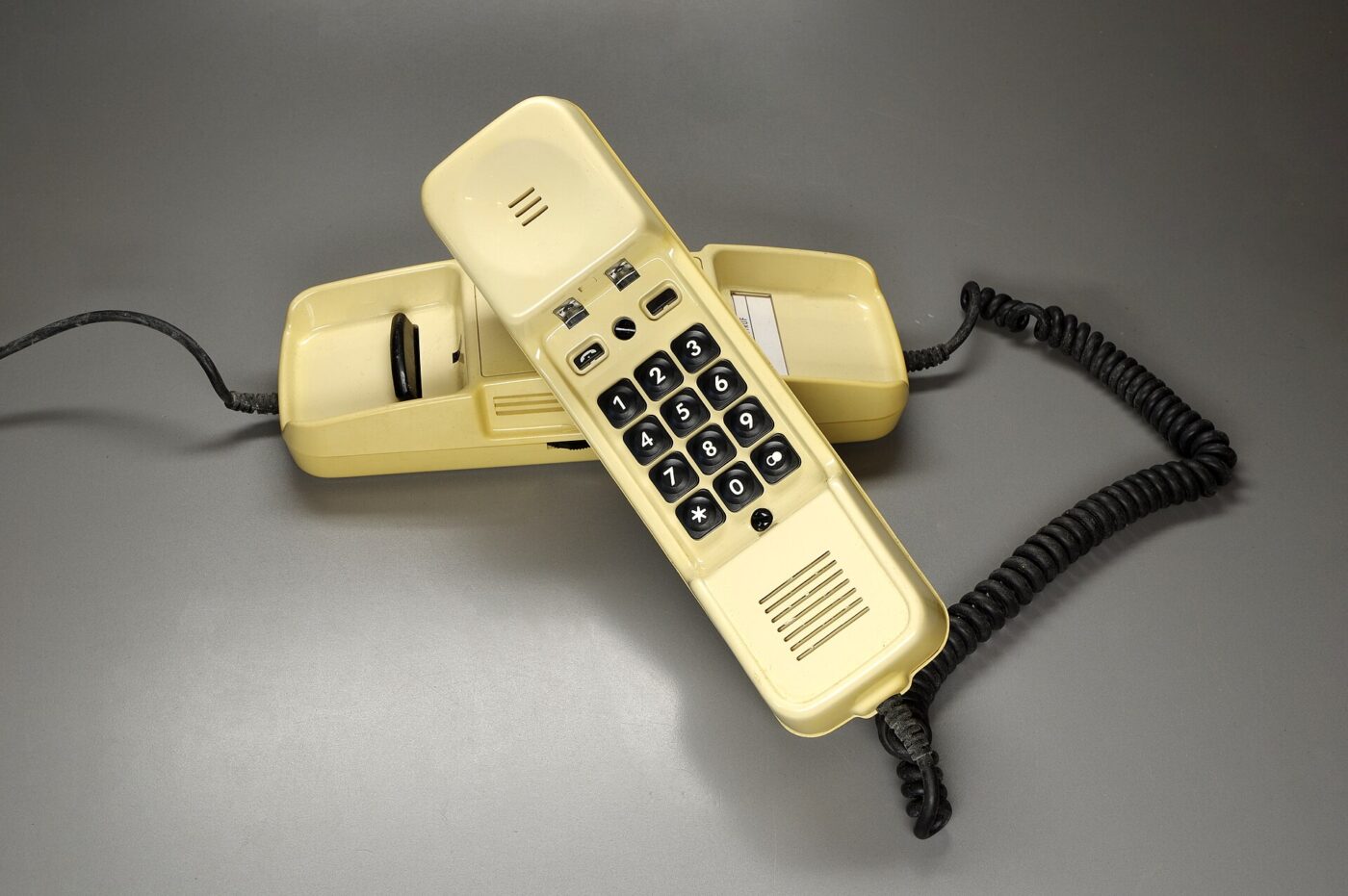
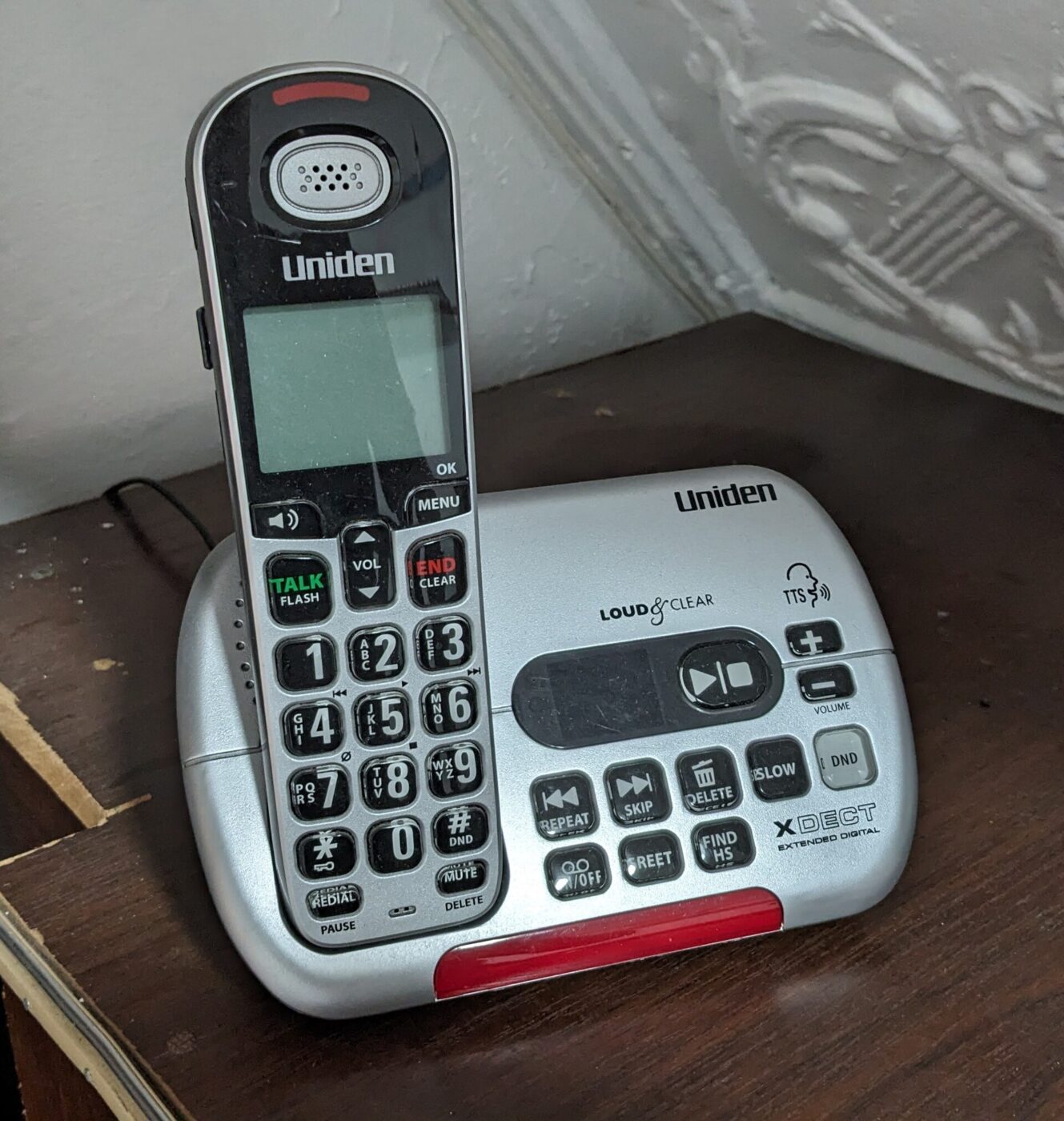
If you keep it, buy for the failure mode rather than for features. A corded handset costs little and needs no batteries. A cordless system with an answering machine is more convenient, needs wall power, and goes dark in an outage unless the base is on a battery backup. A small uninterruptible power supply behind the gateway is what converts the new setup into something that behaves like the old one.
What to watch next
- FCC section 214 discontinuance notices for your area, which list the wire centers a carrier has authority to switch off
- Whether your provider still sells a battery backup for its gateway now that the 2015 FCC requirement has expired, and what runtime it quotes
- Whether alarm and medical monitoring equipment in the house is certified for the replacement service before the copper line is cut
Where to start
Paid links: we earn a commission if you buy through the buttons below, at no extra cost to you. As an Amazon Associate I earn from qualifying purchases.
Home phone hardware compared on what matters during a switch
| Product type | Good fit for | Where to look |
|---|---|---|
| Basic corded telephone | Fits outage-proof basics | See listings on AmazonOpens Amazon search results, not one listing: check the model on the product page. |
| Cordless phone system with answering machine | Fits households wanting features | See listings on AmazonOpens Amazon search results, not one listing: check the model on the product page. |
| Battery backup for a modem and gateway | Fits keeping service alive in an outage | See listings on AmazonOpens Amazon search results, not one listing: check the model on the product page. |
Product types that fit the trend described above, not tested models. Check the exact listing before you buy. How we pick them.
Basic corded telephone
Where to look: Amazon
The handset that behaves most like the old setup once a gateway supplies the line. The FCC noted in its 2015 backup power order that the rules did not extend to cordless telephones purchased by the homeowner, which is the argument for owning one corded phone.
- No wall power needed at the handset
- Cheap enough to keep as a spare
- No answering machine or roaming handset
- Tied to one jack
Cordless phone system with answering machine
Where to look: Amazon
The convenient option, and the one most affected by the change. Check how many handsets the base supports and plan for what happens to it when the power is out.
- Handsets in several rooms
- Answering machine and call screening
- Base needs wall power
- Stops working in an outage without backup
Battery backup for a modem and gateway
Where to look: Amazon
Replaces what the copper line used to do for free. The FCC made providers offer 8-hour and 24-hour backup options until that rule expired on September 1, 2025, so the runtime target is still useful and the purchase is now entirely yours to make.
- Keeps gateway and modem alive
- Covers broadband as well as voice
- Another device to maintain
- Runtime depends on the load
More: Tech and Gadgets trends and how the Trend Signal is scored.
Sources
- FCC Takes Action to Speed Up Rollout of Modern, High-Speed Networks, FCC 26-19, March 26, 2026 — Federal Communications Commission
- Ensuring Continuity of 911 Communications, Report and Order FCC 15-98, including the September 1, 2025 sunset — Federal Communications Commission
- Wireless Substitution: Early Release of Estimates From the National Health Interview Survey, July to December 2024 — National Center for Health Statistics
- AT&T copper retirement plan plows ahead — Light Reading
Questions readers ask
Will my landline stop working?
Copper-based service is being retired carrier by carrier, wire center by wire center, under FCC discontinuance approvals. Carriers generally offer a replacement that delivers a dial tone over broadband or cellular and lets you keep your number. Light Reading reported in September 2025 that AT&T had approval covering about 500 wire centers, roughly 10% of its footprint, taking effect in June 2026.
Do my existing phones still work?
Usually yes. The replacement services present an ordinary analog jack from a small gateway. Light Reading described AT&T Phone-Advanced in September 2025 as supporting existing plain old telephone service devices, fax machines, alarm systems and medical monitoring devices. What changes is that the line now depends on power and on a working broadband or cellular connection.
What happens in a power outage?
Unlike copper, these services are not powered from the phone company. From 2016 the FCC required providers of non-line-powered fixed residential voice service to offer subscribers an 8-hour standby backup option, and later a 24-hour one. That rule carried its own expiry and ceased to be in effect on September 1, 2025, so backup power is now the household’s job.