For most of the past 50 years, buying a life jacket in the United States meant picking a Roman numeral. The Coast Guard removed references to those type codes from its carriage and labeling regulations in a September 22, 2014 final rule, Personal Flotation Devices Labeling and Standards, and the replacement landed on December 6, 2024 with Lifejacket Approval Harmonization. It incorporates ANSI/CAN/UL 12402-5, first edition 2015 revised through 2022, for Level 50 and Level 70 devices; ANSI/CAN/UL 12402-4, first edition 2020, for Level 100; and ANSI/CAN/UL 9595, first edition 2020, for factory follow-up. The rule took effect January 6, 2025; enforcement began June 4, 2025.
The result is two generations of labels on one rack. Some jackets still show a type; newer ones show a number in an icon, with pictograms for intended water, turning performance and activities the jacket is not built for. Here is what the numbers mean and what the rule did not change.
Trend Signal
52/100 Steady momentum
- Emerging
- Rising
- Mainstream
- Peaking
- Cooling
New labels reached stores from 2025 while every older approved jacket stays legal
The Coast Guard began enforcing its Lifejacket Approval Harmonization rule on June 4, 2025, adding approvals for Level 50, 70 and 100 devices, and wrote that owners do not need to buy new equipment if what they have is in good and serviceable condition.
Our editorial reading of the cited data, not a forecast. How it is scored
By the numbers
- 87%Drowning victims in 2024 boating deaths not wearing a device, where use was knownU.S. Coast Guard
- June 4, 2025Date the Coast Guard began enforcing its harmonized lifejacket approval ruleFederal Register via GPO
- 26%Share of 2024 recreational boating deaths on paddlecraft, where vessel type was knownU.S. Coast Guard
- 61Flotation device makers the Coast Guard counted as affected, 39 US and 22 foreignFederal Register via GPO
What the number on the label means
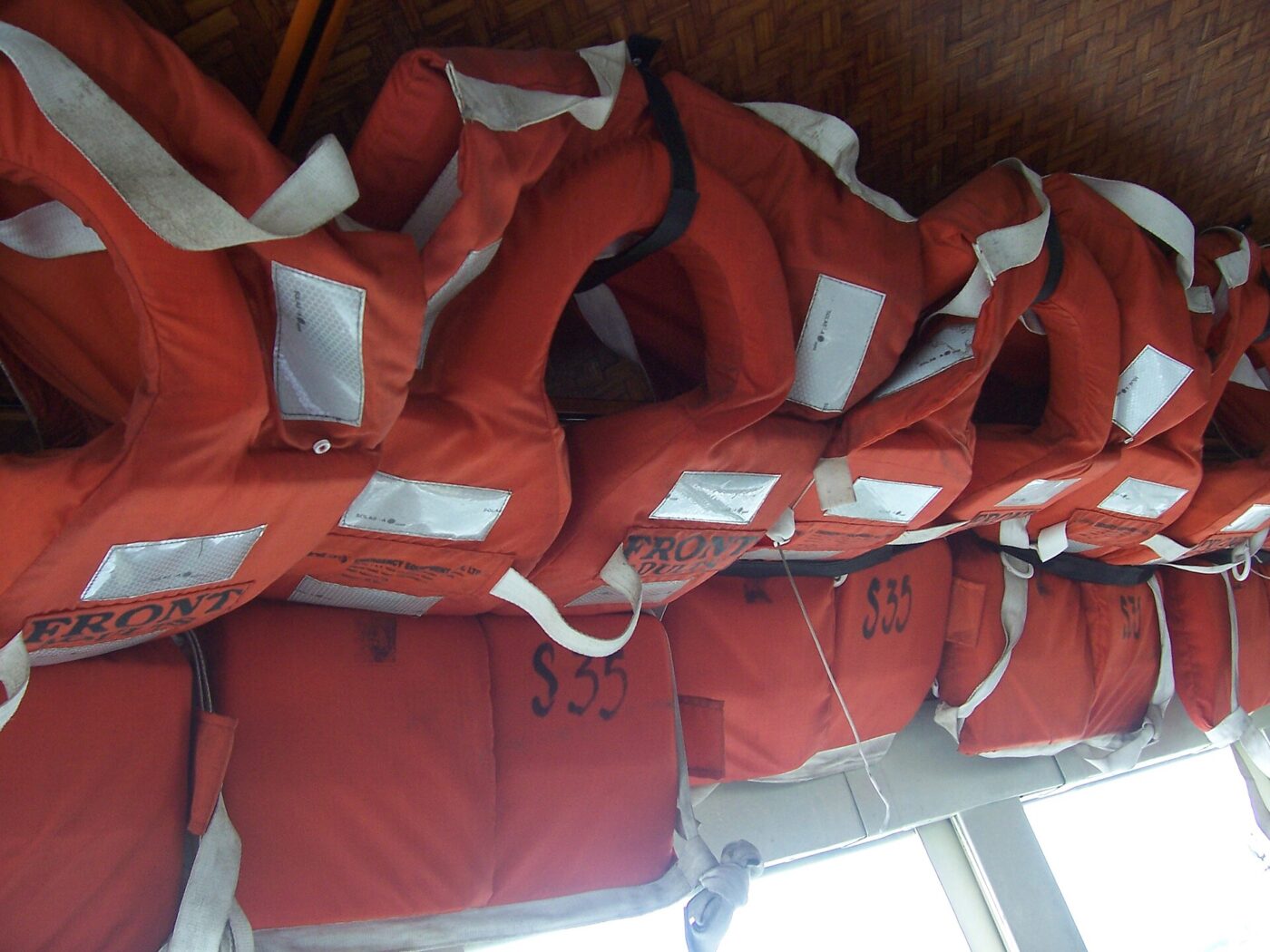
The number is a buoyancy class in newtons, sorting jackets by how much flotation they give and the water they are meant for. The Coast Guard’s boating safety site lists Levels 50, 70, 100, 150 and 275; the December 2024 rule covers approvals for 50, 70 and 100. In the agency’s own comparison, a Level 100 device carries the same minimum buoyancy, mechanical properties and in-water performance as a life preserver approved under 46 CFR 160.055, but the standard is less prescriptive about design, which the Coast Guard says lets manufacturers build shapes the old rules did not contemplate.
The rest of the label went from words to pictures. ANSI/CAN/UL 12402-4 specifies pictorial graphics for performance and warnings, and the Coast Guard wrote that it ran research and focus groups on the problems with type-code labels and found people consistently preferred the pictures. The rule also amends 33 CFR 181.702 so a placard can stand in for the instruction pamphlet that used to come with every jacket sold for recreational use.
The number tells you how much flotation and in what water; the icons tell you what the jacket is not for.
Nothing you already own expired
The Coast Guard answered this in the preamble. It added the new approval series to the carriage requirements without removing any accepted series, and wrote that it will therefore not be necessary for owners and operators to buy new equipment if their current equipment is in good and serviceable condition. UL Solutions, one of the laboratories that certifies these devices, said the same from the manufacturing side: existing approvals are unaffected, and approved devices may still be made, sold and used.
What retires a jacket is condition, not vintage. Under 33 CFR 175.23, buoyant material that has hardened or become waterlogged, ripped or detached webbing and broken or corroded hardware all take a device out of serviceable condition, and 33 CFR 175.21 separately requires the approval number to still be legibly marked. For inflatables the Coast Guard’s boating safety page is blunter: the device must have a full cylinder and all status indicators on the inflator must be green, or it is not serviceable and does not satisfy the requirement to carry life jackets.
The carriage rule in 33 CFR 175 was left alone. Section 175.15 requires at least one wearable PFD on board for each person, adds a throwable device on vessels 16 feet or longer, and bars operating a recreational vessel under way with a child under 13 aboard unless that child is wearing an approved PFD or is below decks or in an enclosed cabin. Where a state has set its own age requirement by statute, section 175.25 makes the state rule apply on that state’s waters in place of the federal one.
Level 50 comes with a string attached
Level 50 is the genuinely new category, and it carries a condition no earlier US class had. Its minimum buoyancy is lower than the old US minimum. The Coast Guard accepted it because ANSI/CAN/UL 12402-5 requires a Level 50 device to keep the wearer’s airway above the water in in-water testing, and because it is scoped to people who can swim with help or rescue nearby. Every one must be marked that it is not recommended for weak or non-swimmers.
The condition is that it only counts when worn. The standard requires a Level 50 device to be labeled with a statement that it must be worn to be counted as equipment required by vessels meeting Transport Canada or Coast Guard regulations. Stow one in a locker and, for the jacket count on board, it is not there.
The Coast Guard’s stated reason for wanting the class is the close-fitting competition watersports vest, which it described as currently unregulated. It also declined to add age limits to inflatables, noting that the standard already requires an inflatable intended for a wearer under 16 to inflate automatically, to need no secondary donning step, to be worn, and to carry an adult-supervision warning.
Where the risk actually sits
Recreational Boating Statistics 2024, the 66th annual edition, dated June 24, 2025, counted 3,887 verified incidents involving 556 deaths, 2,170 injuries and about $88 million in property damage. The fatality rate was 4.8 deaths per 100,000 registered recreational vessels, down from 4.9 in 2023, against 11,674,073 vessels registered by the states, 1.1% more than the year before.
The flotation figures are the ones that matter here. Where the cause of death was known, 76% of victims drowned; where device use was known, 87% were not wearing one; and where vessel length was known, four of every five boaters who drowned were aboard vessels under 21 feet. Where vessel type was known, paddlecraft accounted for 26% of deaths, split between kayaks at 16%, standup paddleboards at 5% and canoes at 4.5%, second only to open motorboats at 46%.
How to shop during the changeover
Because both label generations are legal, the check is the approval statement rather than the style of the label. Read the level or type, the size or chest range and the weight range, and on anything sold for competition watersports read whether it must be worn to be counted. If the approval number is no longer legible the device stops meeting 33 CFR 175.21, which makes a sun-bleached spare in the bilge the likeliest thing aboard to fail an inspection.
Then match the format to the activity. Foam needs no maintenance and asks nothing of the wearer once it is on, at the cost of bulk; how a device is meant to behave in the water is set by the type or level printed on its label, not by the filling. Inflatables are comfortable enough to wear all day but need a charged cylinder and a periodic check. Paddling vests cut the foam high and open the arm holes so the jacket clears a seat back. There is no deadline forcing a replacement, so buy on fit and condition rather than on the label revision.
- Check the approval statement, the level or type, and the size and weight range
- Check whether the device must be worn to count toward the number required aboard
- Retire anything with hardened foam, torn webbing or an unreadable label
What to watch next
- Recreational Boating Statistics 2025, which the Coast Guard lists as due on October 15, 2026, for whether the non-wear share moves.
- Level 50 approvals appearing on competition watersports vests, the segment the Coast Guard called previously unregulated.
- Whether the pictogram placard replaces the printed pamphlet across mass-market racks, since the rule permits both.
Where to start
Paid links: we earn a commission if you buy through the buttons below, at no extra cost to you. As an Amazon Associate I earn from qualifying purchases.
Life jacket formats compared on the things that differ
| Product type | Good fit for | Where to look |
|---|---|---|
| Inherently buoyant life jacket | Fits general boating | See listings on AmazonOpens Amazon search results, not one listing: check the model on the product page. |
| Inflatable life jacket | Fits all-day wear | See listings on AmazonOpens Amazon search results, not one listing: check the model on the product page. |
| Paddlesports life jacket | Fits kayaks and canoes | See listings on AmazonOpens Amazon search results, not one listing: check the model on the product page. |
Product types that fit the trend described above, not tested models. Check the exact listing before you buy. How we pick them.
Inherently buoyant life jacket
Where to look: Amazon
Foam is the default for a spare set aboard. It counts toward carriage whether worn or stowed, so long as it is serviceable.
- Works without any user action
- No cylinder to service
- Bulkier to wear for hours
- Foam hardens with age
Inflatable life jacket
Where to look: Amazon
Comfort is the reason to pick one, since Coast Guard guidance is to wear a device at all times when the vessel is under way. The same guidance says the cylinder must be full and the inflator indicators green.
- Light enough to keep on
- Low bulk in the heat
- Needs a charged cylinder
- Not rated for every activity
Paddlesports life jacket
Where to look: Amazon
Paddlecraft accounted for 26% of 2024 boating deaths where vessel type was known, and a vest cut for a seat back is likelier to stay on all trip.
- Clears a seat back
- Open arm holes for paddling
- Cut for one activity
- Pockets add cost
More: Sports and Recreation trends and how the Trend Signal is scored.
Sources
- Lifejacket Approval Harmonization, final rule — Federal Register via GPO
- Recreational Boating Statistics 2024 — U.S. Coast Guard
- Accident Statistics — U.S. Coast Guard Boating Safety Division
- Wearing Your Life Jacket — U.S. Coast Guard Boating Safety Division
- USCG Rulemaking Regulatory Update — UL Solutions
- 33 CFR part 175 subpart B, personal flotation devices — eCFR
Questions readers ask
Are Type I to Type V life jackets still legal?
Yes. The December 6, 2024 final rule added new approval series to the carriage requirements without removing existing ones, and stated that owners do not need to buy new equipment if what they have is in good and serviceable condition.
What does Level 50 mean on a life jacket?
It is the lowest of the new performance levels, for people who can swim with help nearby. It must be marked that it is not recommended for weak or non-swimmers, and under ANSI/CAN/UL 12402-5 it must be worn to count as required equipment.
Do children have to wear a life jacket?
Under 33 CFR 175.15(c) no one may operate a recreational vessel under way with a child under 13 aboard unless the child is wearing a Coast Guard approved PFD or is below decks or in an enclosed cabin. Section 175.25 provides that a state’s own statutory age requirement applies instead on that state’s waters.
How many boating drowning victims were wearing a life jacket?
In Recreational Boating Statistics 2024, where device use was known, 87% of drowning victims were not wearing one, and drowning accounted for 76% of deaths where the cause was known.