We have not tested any lock or hub named here. This article reads the published specification and the makers’ own pages, both opened on October 1, 2026. We name a lock only where its maker states the Matter arrangement on its own page, and we read the door lock section of the Matter 1.6.1 application cluster specification directly rather than relying on a summary.
That detail matters because Matter was sold to buyers as a compatibility guarantee, and for locks it is narrower: an agreement on how a controller asks a lock to lock and unlock, plus a long list of things a lock may optionally support. Which column a feature sits in decides what a works-with badge can promise.
Trend Signal
63/100 Steady momentum
- Emerging
- Rising
- Mainstream
- Peaking
- Cooling
The door lock cluster is at revision 10 and almost everything in it is optional
In the Matter 1.6.1 application cluster specification dated September 16, 2026, the door lock cluster sits at ID 0x0101 and defines thirteen feature bits, from PIN codes to Aliro. Not one of them is required on its own, so two certified locks can expose very different things.
Our editorial reading of the cited data, not a forecast. How it is scored
By the numbers
- 0x0101Matter cluster ID assigned to the door lock in the 1.6.1 application cluster specificationConnectivity Standards Alliance
- 13Feature bits the door lock cluster defines, from PIN codes to AliroConnectivity Standards Alliance
- 1.6.1Matter specification version published on the CSA download page on October 1, 2026Connectivity Standards Alliance
- Feb 2026Board acceptance date of the Aliro 1.0 specification, document 26-42802-001Connectivity Standards Alliance
What the door lock cluster has to do
In Matter, a device type is assembled from clusters, and a lock gets the door lock cluster at ID 0x0101. The specification describes it as an interface to a generic way to secure a door, with the physical locking object abstracted away. The mandatory part is genuinely small: the LockState attribute and the lock and unlock commands.
The revision history is a readable record of how the category has moved. Revision 7 added support for European door locks through an unbolting feature. Revision 8 removed logging and notification features and tightened schedule constraints. Revision 9 added support for Aliro credential provisioning. Revision 10, the current one, removed the AlarmMask attribute and the remaining Zigbee-derived elements.
The unbolting feature describes a real difference between US and European doors. Locks that support it treat unbolting and unlocking as separate actions: unbolt retracts the bolt without pulling the latch, while unlock also briefly pulls the latch. Locks without it do the same thing for both commands.
Mandatory means lock, unlock and report state. Everything else is a maker’s choice.
Every credential type in the specification is optional
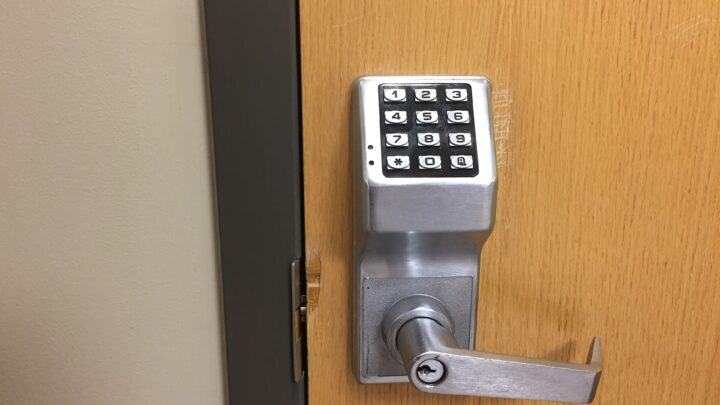
The feature map is where expectations go wrong. The 1.6.1 cluster defines thirteen features: PIN credentials, RFID credentials, finger credentials, week day access schedules, a door position sensor, face credentials, PIN codes over the air, a user database, year day schedules, holiday schedules, unbolting, Aliro provisioning and the Aliro Bluetooth and ultra wideband access flow. Eleven carry optional conformance outright; the user database is required only once a lock supports a credential type, and the Bluetooth and ultra wideband flow only where Aliro is implemented. A lock can be fully Matter compliant and support none of them.
Two of those entries carry a caveat in the specification text that buyers should know about. For finger credentials, the document states that the cluster only defines the metadata format for notifications when a fingerprint or finger vein credential is used, and does not describe how to create such credentials. The face credentials section says the same for face, iris and retina. In plain terms: you can be told through Matter that somebody opened the door with a fingerprint, but you cannot enroll that fingerprint through Matter. Enrollment happens at the lock or in the maker’s app.
The schedule features carry a quiet requirement. The specification states that week day, year day and holiday schedules all depend on the lock keeping track of local time, so a lock that cannot hold the time cannot offer guest schedules through Matter.
- Mandatory: report lock state, accept lock and unlock commands
- Optional and common: PIN credentials, a user database, auto-relock settings
- Optional and reported only: fingerprint and face, which Matter cannot enroll
- Optional and time-dependent: week day, year day and holiday schedules
Thread, bridges and the word compatible

Matter is an application layer, not a radio. A Matter lock reaches your network over Thread, over Wi-Fi, or through a bridge that speaks something else on the lock side. Those three arrangements feel very different to live with, and the word compatible covers all of them.
Schlage’s Sense Pro is an example of the first: the product page describes it as Matter certified and Matter over Thread, which means the lock itself joins a Thread network and needs a border router in the house. SwitchBot’s Lock Pro is an example of the third: the product description states that with the SwitchBot Hub 2, sold separately, the lock supports Matter, which brings Apple, Alexa and Google control. Both are honest descriptions, and they imply different shopping lists.
This is the same point we made about window coverings in what Matter changed for motorized shades and about border routers in cheap Matter over Thread gear: the question is not whether a device supports Matter but what else has to be in the house.
Aliro is the part that is actually about your phone
The feature most people mean when they say they want their phone to open the door is not in Matter at all; it is in Aliro, a separate CSA specification for the exchange between a user device and a reader. Aliro 1.0, document 26-42802-001, was accepted for release by the CSA board on February 18, 2026, and describes a protocol based on an asymmetric key model for home, hospitality and corporate readers.
Matter and Aliro meet at two of those optional feature bits. Aliro provisioning means the lock implements Aliro and supports Matter as a method for provisioning Aliro credentials. The Aliro Bluetooth and ultra wideband bit means the lock implements the combined access control flow, which is what makes a door open as you walk up rather than when you tap. Schlage describes its own ultra wideband implementation on Sense Pro as calculating speed, trajectory and motion toward the door before unlocking.
We went through what shipped and what is still coming in our report on Aliro locks. The short version for this article is that a lock can be Matter certified with no Aliro support at all, and the two badges answer different questions.
Matter moves the lock state. Aliro is the part that recognizes your phone.
What to check before you buy for a specific platform
Start with the radio, because it decides what else you need. Matter over Thread means a Thread border router; Matter over Wi-Fi does not; and Matter through the maker’s own hub makes that hub part of the purchase whether the listing says so or not.
Then check the specific features you care about against the optional list. Guest codes created from the hub app require PIN credentials and the user feature; scheduled guest access additionally requires the lock to keep time. Fingerprint enrollment will not happen through Matter in any case, so if a household member is to be added by fingerprint, somebody has to be at the lock.
Finally, separate interoperability from longevity. A Matter lock can be adopted by a different controller later, which is real insurance against a platform going away, but it does not extend the maker’s commitment to patch firmware, a separate number we track in smart home gear switched off by its maker.
What to watch next
- The door lock cluster revision history in the next Matter release, where new credential types appear first
- Whether locks start shipping with the Aliro Bluetooth and ultra wideband feature rather than Aliro provisioning alone
- Whether makers state the radio on the box rather than only the Matter logo, the detail that decides what else you have to buy
Where to start
Paid links: we earn a commission if you buy through the buttons below, at no extra cost to you. As an Amazon Associate I earn from qualifying purchases.
Matter lock arrangements compared on what else has to be in the house
| Product type | Good fit for | Where to look |
|---|---|---|
| Matter over Thread smart lock | Fits a home with a border router | See listings on AmazonOpens Amazon search results, not one listing: check the model on the product page. |
| Thread border router for Matter | Fits a home with no hub | See listings on AmazonOpens Amazon search results, not one listing: check the model on the product page. |
| Matter bridge hub for a Bluetooth lock | Fits a lock you already own | See listings on AmazonOpens Amazon search results, not one listing: check the model on the product page. |
Product types that fit the trend described above, not tested models. Check the exact listing before you buy. How we pick them.
Matter over Thread smart lock
Where to look: Amazon
The arrangement with the fewest moving parts once the infrastructure exists. Schlage describes the Sense Pro as Matter certified and Matter over Thread, which is the clearest way a maker can state it.
- Joins the network directly
- Adopted by any Matter controller
- Needs a border router present
- Thread is not on every hub
Thread border router for Matter
Where to look: Amazon
Buy this first if you are heading toward Thread. A device can be a Matter controller without being a border router, and only the second one lets a Thread lock join anything.
- Serves every Thread device
- Often doubles as a speaker or display
- Controller and border router are not the same
- Model year matters
Matter bridge hub for a Bluetooth lock
Where to look: Amazon
The retrofit route into Matter. SwitchBot states that its Lock Pro supports Matter with the Hub 2 sold separately, which is typical of how bridged support is described.
- Brings an older lock into Matter
- No new hardware on the door
- Adds a dependency on one maker
- Feature support varies by bridge
More: Smart Home trends and how the Trend Signal is scored.
Sources
- Matter 1.6.1 Application Cluster Specification — Connectivity Standards Alliance
- Aliro 1.0 Specification — Connectivity Standards Alliance
- Matter specification downloads — Connectivity Standards Alliance
- Schlage Sense Pro smart deadbolt page — Schlage
- SwitchBot Lock Pro page — SwitchBot
- BHMA Certified Products Directory — BHMA
Questions readers ask
What does Matter certification guarantee on a smart lock?
That a Matter controller can lock it, unlock it and read its lock state. In the Matter 1.6.1 application cluster specification dated September 16, 2026, the door lock cluster at ID 0x0101 defines thirteen features, none of them required on its own, so anything beyond lock, unlock and state is the maker’s choice.
Can I add a fingerprint to a Matter lock from my hub app?
No. The specification states that the cluster only defines the metadata format for notifications when a fingerprint or finger vein credential is used, and does not describe how to create such credentials. The same wording applies to face, iris and retina. Enrollment happens at the lock or in the maker’s own app.
Is Matter over Thread better than Matter over Wi-Fi for a lock?
They are different trades rather than a ranking. Thread is low power and meshes between devices, but needs a border router in the house; Wi-Fi needs no extra hardware but puts a higher-power radio in a battery device. Check which one a lock uses before assuming your existing hub can adopt it.
How is Aliro different from Matter?
Aliro is a separate specification, document 26-42802-001, accepted by the CSA board on February 18, 2026, covering the exchange between a phone or watch and a reader using an asymmetric key model. Matter can provision Aliro credentials, but a Matter lock is not automatically an Aliro lock.