A memory card used to be the cheapest thing in a camera bag. In 2026 it is a line item worth planning for. The squeeze did not start in photography: it started in data centers, where the same NAND flash that fills an SD card goes into drives bought for AI systems, in volumes and at prices no camera store can match.
The figures below come from the Bureau of Labor Statistics producer price index, from Sandisk’s fiscal fourth-quarter results released on August 5, 2026, and from dated price notices by two card makers. Together they show how far prices moved, what moved them, and what a photographer or video creator should do about it now.
Trend Signal
80/100 Strong momentum
- Emerging
- Rising
- Mainstream
- Peaking
- Cooling
Storage producer prices nearly doubled in a year and card brands keep raising prices
The BLS producer price index for computer storage device manufacturing, which covers storage devices broadly rather than memory cards, rose about 87% between August 2025 and August 2026 on our arithmetic, and card makers ProGrade Digital and OWC both raised US list prices in the spring of 2026.
Our editorial reading of the cited data, not a forecast. How it is scored
By the numbers
- +87%US producer prices for computer storage device manufacturing, August 2025 to August 2026BLS via FRED
- Two-thirdsShare of Sandisk sequential revenue growth from price, quarter ended July 3, 2026Sandisk
- 32%Change in Sandisk Consumer segment revenue against the prior quarter, ended July 3, 2026Sandisk
- +14%Rise in the OWC 480GB CFexpress 4.0 Type A list price, May 2026 against AprilPetaPixel
What the producer price index shows
The Bureau of Labor Statistics tracks a producer price index for computer storage device manufacturing. It covers US producers of drives, solid-state drives and storage systems rather than memory cards alone, so treat it as a direction, not a shelf price. The direction is not subtle. The index sat at 62.6 in August 2025 and 65.2 in December 2025, then reached 117.2 in August 2026, about 87% higher than a year earlier and the highest reading since 2003.
Most of the move landed in three months. The index went from 79.3 in May 2026 to 102.4 in June, a 29% jump in a single month, then 116.5 in July and 117.2 in August. For two decades this series drifted downward as storage got cheaper; that pattern broke in the first half of 2026.
A producer index is not what a retailer charges, and card prices at retail move with promotions, inventory and the age of a model. But when the cost of the parts inside a card rises this fast, retail discounts are the first thing to disappear.
| Month | Storage device PPI | Change from a year earlier |
|---|---|---|
| August 2025 | 62.6 | — |
| December 2025 | 65.2 | — |
| May 2026 | 79.3 | +28% |
| June 2026 | 102.4 | +68% |
| August 2026 | 117.2 | +87% |
The index rose about 48% in the three months to August 2026; by our count the largest three-month rise anywhere in the series before 2026 was about 11%.
Why data centers set the price of an SD card
Sandisk, which makes NAND flash and sells it as chips, retail cards and drives, reported revenue of $8.97 billion for its fiscal fourth quarter, ended July 3, 2026, up 51% from the previous quarter and up from $1.90 billion a year earlier. The company said the sequential increase came “approximately one-third from higher volumes and two-thirds from higher pricing.” Full-year revenue was $20.25 billion, up 175%.
The segment split explains where the flash went. Datacenter revenue rose 103% from the prior quarter to $2,977 million, and was up 437% for the year. Edge revenue rose 48%. The Consumer segment, the one that sits behind retail cards and drives, fell 32% from the prior quarter to $556 million. When wafers can be sold either way, they are not going into $30 SD cards.
Sandisk guided to revenue of $10.30 billion to $10.80 billion for the following quarter, higher again than the quarter it had just reported. That is a company forecast about its own sales, not a promise about card prices, but it does not describe a supplier expecting to discount.
What the card makers told buyers
ProGrade Digital, which sells SD, CFexpress Type A and Type B cards and portable SSDs, emailed customers on April 13, 2026 and published the same note on its site. Co-founder and CMO Mark Lewis wrote that “our costs are increasing significantly, and we will have to increase prices in May.” He had said in December 2025 that flash memory makers were raising prices by “100–200% in some cases, and in certain situations, even more.”
OWC published its own revision on May 6, 2026, averaging about 6% across its portfolio against April, with much larger moves on individual items. The company said it works “to absorb cost increases for as long as possible” before adjusting.
Two brands are not a market, and both sell at the professional end. What makes the notices useful is that they are dated and specific.
| OWC product | April 2026 | May 2026 | Change |
|---|---|---|---|
| 480GB CFexpress 4.0 Type A | $279.99 | $319.99 | +14% |
| 2TB CFexpress 4.0 Type B | $1,099.99 | $1,249.99 | +14% |
| 1TB USB4 external SSD | $329.99 | $429.99 | +30% |
Buy the class the camera asks for
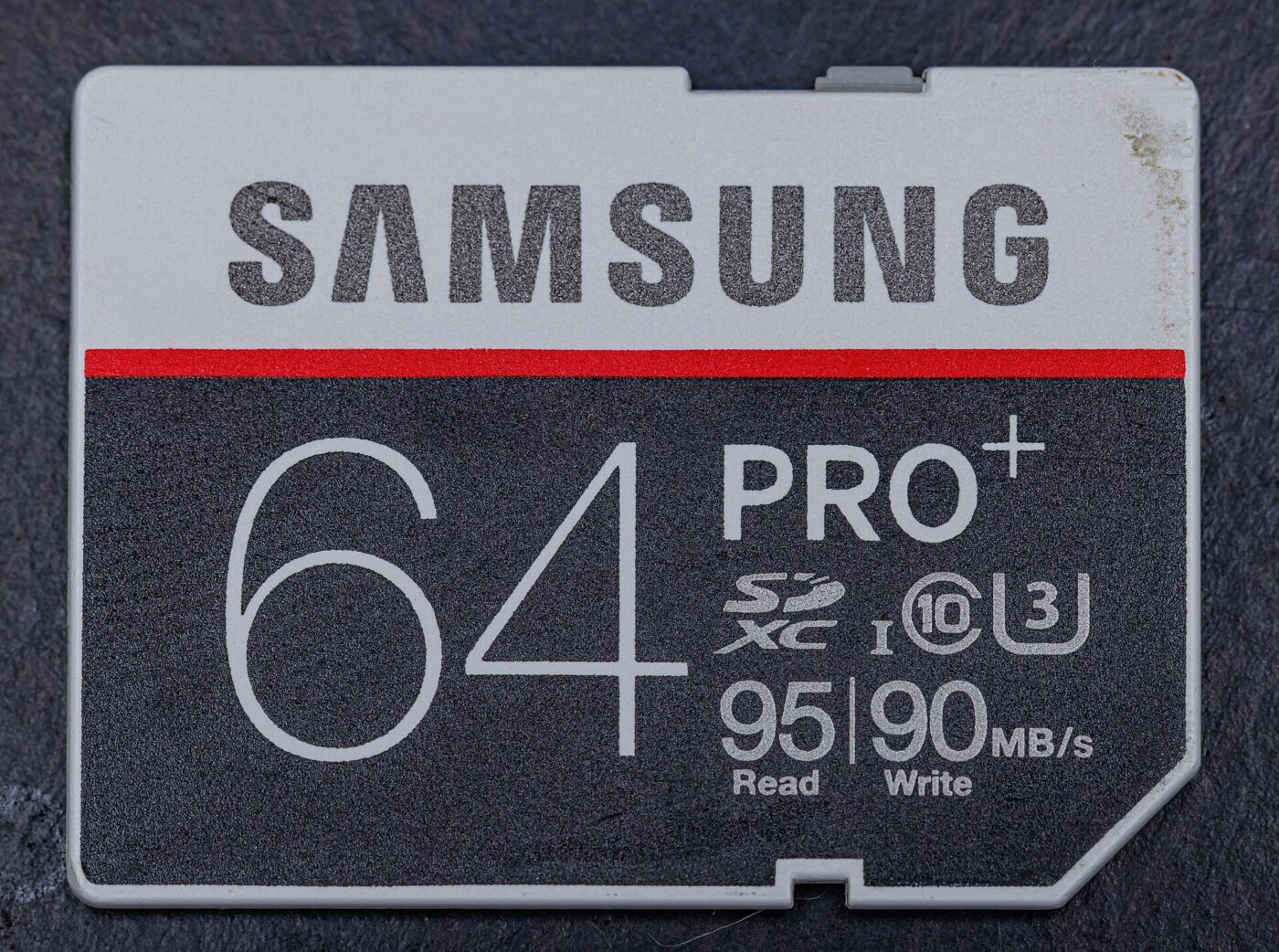
The SD Association defines the ratings printed on a card. Video Speed Class sets a minimum sustained write speed: V6 and V10 mean 6 and 10 MB/s, V30 means 30 MB/s, V60 means 60 MB/s and V90 means 90 MB/s. The older UHS Speed Class marks work the same way, with U1 at 10 MB/s and U3 at 30 MB/s. V60 and V90 cards need a UHS-II or UHS-III bus, which is the second row of pins on the back of the card and a matching slot in the camera.
A rating your camera cannot use is money spent on nothing: if the manual’s top recording mode is covered by V30, a V90 card writes no faster in that body. The reverse is also true, and high-bitrate, all-intra or high-frame-rate modes are where V60 and V90 earn their price.
The SD Association has also defined SD Express Speed Classes of E150, E300, E450 and E600, meaning 150 to 600 MB/s minimum writes over an SD Express bus. Those cards need cameras and readers built for the newer bus, which is worth checking before paying for one.
- Read the camera manual for the class its top video mode requires, then buy that class.
- Match the card family to the slot: CFexpress Type A and Type B are not interchangeable.
- A card reader on an old bus can undo the speed you paid for when offloading.
At 2026 prices, matching the rating to the camera saves more than hunting for a sale.
Who should buy now and who can wait
Buy now if you shoot regularly and are down to one working card, or if a paid job depends on having a spare. Nothing in the published data points to relief: producer prices rose through August 2026, and the largest supplier guided to a higher revenue quarter driven partly by price.
Wait if your cards cover your longest shooting day with room to spare. The next producer price reading is due October 15, 2026, and Sandisk reports again in the fall, which will show whether the consumer side of the business is still shrinking.
Two counter-signals are worth holding. The producer index measures storage devices broadly, so it overstates what happened to any single card line. And OWC’s portfolio-wide average was about 6%, far below its headline items.
What to watch next
- The BLS producer price index for computer storage device manufacturing, next released October 15, 2026.
- Sandisk’s next quarterly results, for whether the Consumer segment keeps shrinking while Datacenter grows.
- Whether SD Express cards rated E150 and above reach retail, and at what premium over UHS-II.
Where to start
Paid links: we earn a commission if you buy through the buttons below, at no extra cost to you. As an Amazon Associate I earn from qualifying purchases.
Memory card types compared on the things that actually differ
| Product type | Good fit for | Where to look |
|---|---|---|
| V30 SD card for 4K video | Fits most 4K cameras | See listings on AmazonOpens Amazon search results, not one listing: check the model on the product page. |
| CFexpress Type B card | Fits high-bitrate video | See listings on AmazonOpens Amazon search results, not one listing: check the model on the product page. |
| microSD card for action cameras | Fits action cameras and drones | See listings on AmazonOpens Amazon search results, not one listing: check the model on the product page. |
Product types that fit the trend described above, not tested models. Check the exact listing before you buy. How we pick them.
V30 SD card for 4K video
Where to look: Amazon
The class most mirrorless and DSLR bodies actually require. Check the manual first: if the camera never exceeds what V30 guarantees, a faster class changes nothing in the field.
- Covers common 4K modes
- Widest camera compatibility
- Not enough for all-intra modes
- UHS-I speeds on offload
CFexpress Type B card
Where to look: Amazon
The card type that took the sharpest published increases in 2026. Confirm the slot is Type B before buying, and price the reader at the same time.
- Sustains demanding video modes
- Fast offloads with the right reader
- Among the most expensive cards
- Needs a matching reader
microSD card for action cameras
Where to look: Amazon
Small cards are where rating claims get loosest. The V rating and the SD Association marks are what to read, not the headline capacity.
- Works in drones and action cameras
- Cheaper per card
- Easy to lose
- Ratings vary widely at the low end
More: Creators and Content trends and how the Trend Signal is scored.
Sources
- Producer Price Index by Industry: Computer Storage Device Manufacturing — BLS via FRED
- Sandisk Reports Fiscal Fourth Quarter 2026 Financial Results — Sandisk Corp, SEC Form 8-K exhibit
- ProGrade Digital Forced to Increase Prices as Memory Shortage Continues — PetaPixel
- AI-Driven Volatility Continues to Increase OWC Storage Prices — PetaPixel
- Speed Class standards for SD and SD Express cards — SD Association
Questions readers ask
Why did memory card prices rise so much in 2026?
Flash memory went to data centers. The BLS producer price index for computer storage device manufacturing rose about 87% between August 2025 and August 2026, and Sandisk reported that its Datacenter revenue rose 103% in a single quarter while its Consumer segment fell 32%.
Will memory card prices come back down?
No published figure promises that. Sandisk guided to revenue of $10.30 billion to $10.80 billion for the quarter after the one ended July 3, 2026, higher than the $8.97 billion it had just reported, of which two-thirds of the sequential growth came from pricing rather than volume.
Is a V90 card worth paying for?
Only if the camera can use it. The SD Association defines V90 as a 90 MB/s minimum sequential write, applied to UHS-II and UHS-III cards. If your camera’s top video mode is covered by V30, which guarantees 30 MB/s, the faster card writes no faster in that body.
Are CFexpress cards affected as well?
Yes. PetaPixel reported on May 6, 2026 that OWC raised its 480GB CFexpress 4.0 Type A card from $279.99 to $319.99 and its 2TB Type B card from $1,099.99 to $1,249.99, both about 14%.