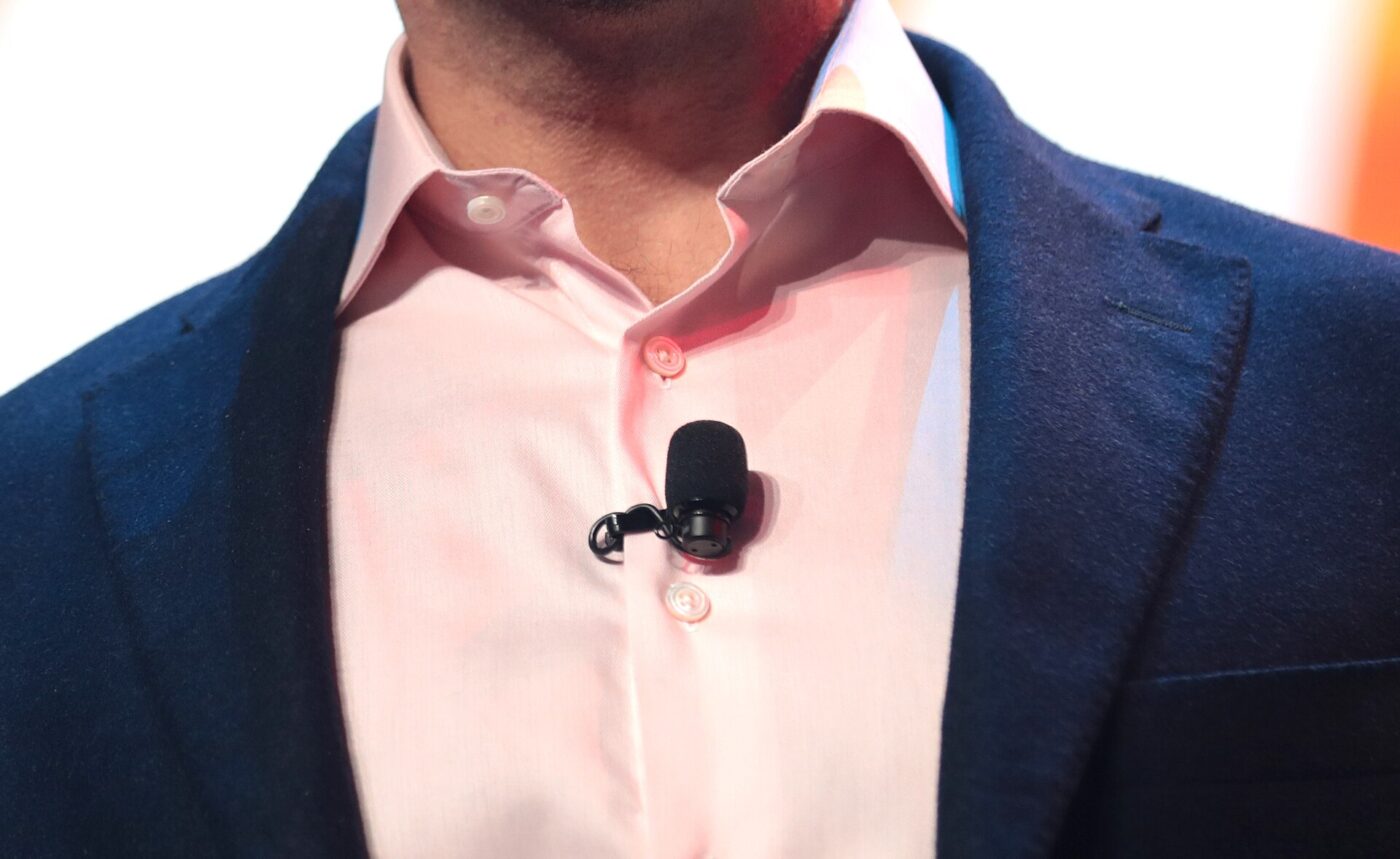
The clip-on wireless microphone has become a common add-on for anyone filming talking-head video, interviews and short vertical clips on a phone. Between March 2024 and September 2025 the category changed quickly: backup recording that can rescue clipped audio moved into mid-priced kits, transmitters learned to connect straight to phones, and the biggest brands cut prices.
This brief covers what changed, which features are worth paying for, and one issue specific to US buyers in 2026: which DJI models can still be sold here.
Trend Signal
62/100 Steady momentum
- Emerging
- Rising
- Mainstream
- Peaking
- Cooling
Price cuts pushed backup recording into the entry tier
Rode cut prices on its wireless mic systems by up to 33% in September 2025, taking the Wireless GO (Gen 3) from its $299 launch price to $199, weeks after DJI launched its 32-bit float Mic 3 in the US from $99.
Our editorial reading of the cited data, not a forecast. How it is scored
By the numbers
- $199Rode Wireless GO (Gen 3) US price after Rode’s September 2025 cuts of up to 33%Newsshooter
- 40+ hours32-bit float onboard recording per Wireless GO (Gen 3) transmitterNewsshooter
- $99DJI Mic 3 US starting price for a single transmitter, August 2025DroneDJ
- 200BAverage daily YouTube Shorts views cited by YouTube’s CEO in January 2026YouTube
What changed between 2024 and 2025
Three features moved into ordinary kits. The first is 32-bit float onboard recording, which Rode describes as allowing “the recovery of clipped or quiet audio files.” Rode’s Wireless GO (Gen 3), reported by Newsshooter in December 2024 at $299, records more than 40 hours of it per transmitter, and DJI’s Mic 3, which went on sale in the US on August 28, 2025, was DJI’s first mic with 32-bit float, alongside 32 GB of storage and timecode.
The second is a direct link to the phone. Shure’s MoveMic, announced March 5, 2024 at $249 for one mic and $349 for two, pairs directly with a phone and uses Shure’s free MOTIV apps for settings. DJI’s Mic Mini, launched November 26, 2024, weighs 10 grams per transmitter and can also connect straight to a phone over Bluetooth, at $89 for one transmitter and receiver or $169 for two with a charging case.
The third is price. On September 8, 2025, Rode announced cuts of up to 33% that took the Wireless Micro to $99, the Wireless GO (Gen 3) to $199, down from $299 at launch, and the Wireless PRO to $299, citing cost-of-living pressures “felt globally.”
| Model | Phone link | Headline feature | US price (date) |
|---|---|---|---|
| Shure MoveMic Two | Direct to phone via app | 24 hours of use with the case | $349 (March 2024) |
| DJI Mic Mini, two transmitters | Bluetooth or receiver | 10-gram transmitters | $169 (November 2024) |
| Rode Wireless GO (Gen 3) | Receiver with USB-C and 3.5mm | 40+ hours of 32-bit float | $199 (September 2025) |
| DJI Mic 3 | Receiver | 32-bit float, 32 GB, timecode | From $99 (August 2025) |
| Rode Wireless Micro | Receiver that plugs into the phone | USB-C or Lightning versions | $99 (September 2025) |
Why phone video is the target
Short vertical video is the use case the makers pitch, and the format is huge: YouTube’s chief executive wrote in January 2026 that Shorts averages 200 billion daily views. Shure framed MoveMic the same way, saying on-the-go interviews have become the primary way “journalists, content creators, and TikTokers” gather people’s opinions and experiences.
Earbuds are now part of the comparison. Apple announced in June 2025 that AirPods 4, AirPods 4 with Active Noise Cancellation and AirPods Pro 2 would gain “studio-quality audio recording” with iOS 26, working in the Camera app, Voice Memos and compatible third-party camera apps, and it named podcasters and interviewers among the intended users. For a solo creator who already owns those earbuds and records near the phone, that may be enough. A clip-on mic still helps when the speaker is away from the phone or a second person needs a mic.
Features worth paying for

Spec sheets for these kits are long. These are the features that change results for phone video:
- 32-bit float onboard recording: a backup file inside the transmitter that can recover clipped or quiet audio, useful when you film yourself and cannot watch levels.
- Two transmitters: needed for interviews; a charging case keeps both topped up between takes.
- Receiver outputs: a USB-C plug for the phone plus a 3.5mm output lets the same kit work with a camera later.
- Direct phone connection: fewer parts to carry, but check which apps can use the mic, since some settings run through the maker’s own app.
- Timecode: only matters if you film with several cameras and sync them in editing; DJI’s Mic 3 supports it.
The DJI question for US buyers
DJI’s microphones fall under the same rule as its cameras. On December 22, 2025, the FCC added the communications and video surveillance equipment named in section 1709 of the 2025 defense authorization act, which covers DJI, to its Covered List, which blocks the new authorizations needed to import and sell wireless devices. Products authorized earlier keep their authorization, according to a Goodwin client alert.
The Mic 3 went on sale in the US in August 2025, before the listing. New DJI models are a different matter: DJI’s Osmo Pocket 4 camera did not launch in the US in April 2026, which Newsshooter attributed to pending FCC authorization, and DJI has challenged the listing in the Ninth Circuit. If you see a DJI mic that DJI does not sell in the US, ask the seller who handles warranty service.
Range claims deserve less weight than they get. Rode quotes about 850 feet (260 meters) line of sight for the Wireless GO (Gen 3) and DJI about 1,300 feet (400 meters) for the Mic 3, and for talking-head clips shot at arm’s length, link stability and backup recording matter more.
Who should buy which type
Solo creators filming themselves on a phone: a single-transmitter kit or a direct-to-phone mic covers it; check that your phone’s port and camera app work with it. Interviewers and two-person shows: a two-transmitter kit with a charging case, ideally with onboard backup recording.
Creators planning to move to a camera: pick a receiver with both USB-C and 3.5mm outputs so the kit carries over. With Rode’s prices cut by up to a third in September 2025, we see little reason to wait for further cuts; the bigger variable for 2026 is which new models reach the US.
What to watch next
- Whether DJI’s next microphone launches in the US or skips it, as the Osmo Pocket 4 did.
- The Ninth Circuit case over DJI’s Covered List entry, filed February 20, 2026.
- Whether Rode, Shure or DJI change US prices again after Rode’s September 2025 cuts.
Where to start
Paid links: we earn a commission if you buy through the buttons below, at no extra cost to you. As an Amazon Associate I earn from qualifying purchases.
Wireless mic kit types for phone creators
| Product type | Good fit for | Where to look |
|---|---|---|
| Two-person wireless lavalier kit with USB-C receiver | Fits interviews and two-person videos | See listings on AmazonOpens Amazon search results, not one listing: check the model on the product page. |
| Wireless mic with 32-bit float internal recording | Fits self-filming without a monitor | See listings on AmazonOpens Amazon search results, not one listing: check the model on the product page. |
| Furry wind covers for clip-on transmitters | Fits outdoor and windy shoots | See listings on AmazonOpens Amazon search results, not one listing: check the model on the product page. |
Product types that fit the trend described above, not tested models. Check the exact listing before you buy. How we pick them.
Two-person wireless lavalier kit with USB-C receiver
Where to look: Amazon
The standard setup for interviews and two-host clips. Choose a receiver with a 3.5mm output as well as USB-C if a camera is in your plans.
- Two voices on one phone
- Charging case keeps both ready
- Receiver adds a part to carry
- Apps vary in what they support
Wireless mic with 32-bit float internal recording
Where to look: Amazon
When you are on camera, you cannot watch the audio meters. Onboard 32-bit float gives you a second copy to fall back on.
- Backup file if the link drops
- Recovers clipped or quiet audio
- Backup files must be synced in editing
- Costs more than basic kits
Furry wind covers for clip-on transmitters
Where to look: Amazon
Clip-on transmitters with built-in mics pick up wind outdoors. A fitted furry cover is the simplest fix.
- Cuts wind rumble
- Cheap add-on
- Makes the mic more visible
- Fit is model-specific
More: Creators and Content trends and how the Trend Signal is scored.
Sources
- Introducing the Wireless GO (Gen 3) — Rode
- Rode Wireless GO III adds 32-bit float on-board recording — Newsshooter
- Rode announced significant price reductions across its wireless microphone lineup — Newsshooter
- DJI Expands OsmoAudio Offerings with DJI Mic Mini — DJI
- DJI Mic 3 now available in US, price starts at $99 — DroneDJ
- Shure Unveils MoveMic — Shure
- AirPods now more versatile with studio-quality audio recording and camera remote — Apple
- The Future of YouTube: 2026 letter — YouTube Official Blog
- FCC Covered List Expansions: Foreign Drones and Drone Critical Components Are Now Restricted — Goodwin
- DJI Osmo Pocket 4 announced, but not available in the US due to pending FCC authorization — Newsshooter
- DJI FCC Covered List lawsuit — DroneLife
Questions readers ask
What is 32-bit float on a wireless mic?
It is an onboard recording format that Rode says allows recovery of clipped or quiet audio. Rode’s Wireless GO (Gen 3) records more than 40 hours of it per transmitter, and DJI’s Mic 3, launched in the US in August 2025, was DJI’s first mic with it.
Do I need a receiver to use a wireless mic with my phone?
Not always. Shure’s MoveMic and DJI’s Mic Mini can connect directly to a phone, though MoveMic uses Shure’s free apps for full control. A kit whose receiver has both USB-C and 3.5mm outputs can also move to a camera later.
Can I still buy DJI mics in the US?
Models authorized before the FCC’s December 22, 2025 Covered List update keep their authorization, and the DJI Mic 3 launched in the US in August 2025. New DJI models need an FCC authorization the listing blocks; DJI’s Osmo Pocket 4 camera skipped its US launch, citing pending FCC authorization.
Are AirPods good enough instead of a clip-on mic?
For some uses. Apple added studio-quality audio recording to AirPods 4 and AirPods Pro 2 with iOS 26, for the Camera app, Voice Memos and compatible apps. A clip-on mic still helps when the speaker is away from the phone or two people need mics.