If a camera you priced in 2024 cost noticeably more when you checked again in early 2026, the government’s price data agree with you. The Bureau of Labor Statistics consumer price index for photographic equipment and supplies climbed through 2025 as camera makers passed tariff costs to US buyers, and it peaked in March 2026.
Since then the index has fallen back to roughly where it stood a year earlier. Here is how prices moved, what changed in tariff policy, and why memory chip costs are the next thing to watch.
Trend Signal
50/100 Steady momentum
- Emerging
- Rising
- Mainstream
- Peaking
- Cooling
Tariff spike has passed its peak while memory costs keep a floor under prices
The BLS index for photographic equipment and supplies went from +12.2% year over year in March 2026 to –0.6% in August 2026, while Canon, Nikon and Fujifilm each warned in 2026 that memory costs could reach prices.
Our editorial reading of the cited data, not a forecast. How it is scored
By the numbers
- 12.2%Annual rise in the US CPI for photographic equipment and supplies, March 2026BLS
- 0.6%Annual change in the same CPI index in August 2026, the latest readingBLS
- ¥58.0BBoost to Canon’s Q2 2026 operating profit from US tariff refunds, all businessesCanon
- $200Fujifilm’s August 2025 US price increase on the X100VI, to $1,799Fortune
How the tariff price hikes rolled through 2025
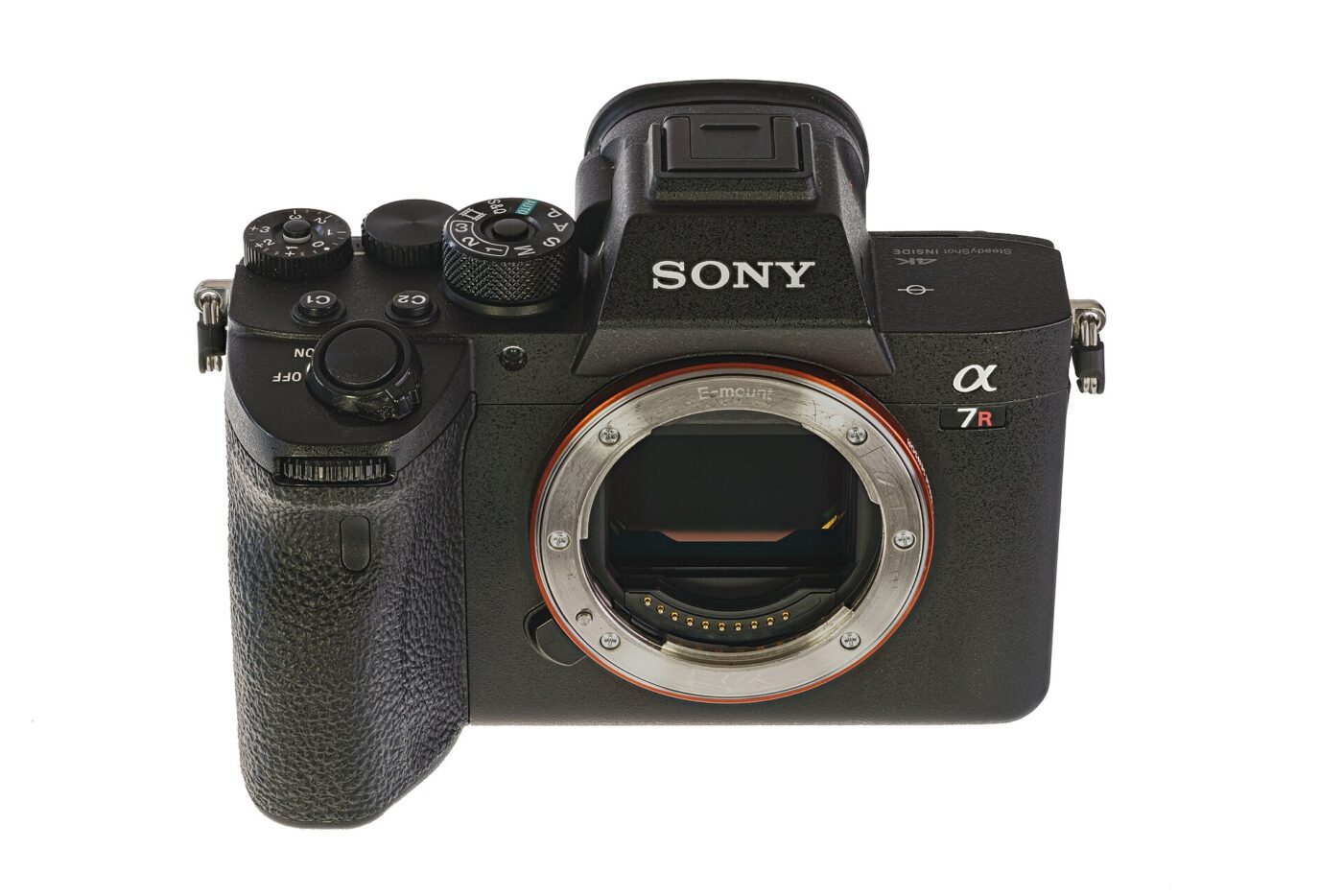
Camera makers raised US prices in waves. Nikon posted a notice on May 23, 2025 saying that “due to the recent tariffs” a price adjustment would take effect on June 23, 2025, and a second round followed at the end of the summer. PetaPixel tallied that second round on September 2, 2025: the Z6 III rose from $2,500 to $2,700, the Z5 II from $1,700 to $1,850 and the Z8 from about $4,000 to $4,300, with the Zf, Zfc and Z50 II up roughly 10% to 11%.
Fujifilm raised prices by $50 to $800 across cameras and lenses in August 2025, Fortune reported, including $200 on the X100VI, to $1,799, and $800 on the GFX100 II, to $8,299. Fortune also reported that Canon had already raised prices once. Sony made its second 2025 adjustment, which Digital Camera World tied to the US tariff rate on goods from Thailand, where most Sony cameras are made, rising from 10% to 19% on August 7, 2025.
| Model | US price before | US price after | Change |
|---|---|---|---|
| Sony A7 III | $1,899 | $1,999 | +$100 |
| Sony ZV-E10 II | $1,099 | $1,199 | +$100 |
| Nikon Z5 II | $1,700 | $1,850 | +$150 |
| Nikon Z6 III | $2,500 | $2,700 | +$200 |
| Fujifilm X100VI | $1,599 | $1,799 | +$200 |
What the government price index shows
The BLS index tracks what urban consumers pay for photographic equipment and supplies. By our calculation from its monthly index levels, prices were already rising before the 2025 tariffs: the index was up 14.7% year over year in August 2024. Its annual change then fell close to zero in early 2025, turned up again in the summer, reached 9.8% in December 2025 and 10.7% in February 2026, and reached 12.2% in March 2026, the month the index level peaked.
Then it reversed. The annual change slowed to 3.5% in June 2026, 0.0% in July and –0.6% in August. The index level in August 2026, 72.944, was 4.6% below March’s 76.461 but still about 4% above August 2024. BLS has no October 2025 reading because of the 2025 lapse in federal appropriations.
| Month | Index (1982–84 = 100) | Change vs a year earlier |
|---|---|---|
| August 2024 | 70.116 | +14.7% |
| August 2025 | 73.395 | +4.7% |
| December 2025 | 73.560 | +9.8% |
| March 2026 | 76.461 | +12.2% |
| August 2026 | 72.944 | –0.6% |
Camera-gear prices have stopped rising year over year, but they sit about 4% above where they were two years earlier.
Why the spike faded after February 2026
On February 20, 2026, the Supreme Court ruled 6–3 in Learning Resources v. Trump that the International Emergency Economic Powers Act does not authorize the president to impose tariffs. The same day, a presidential proclamation set a temporary 10% import surcharge under Section 122 of the Trade Act of 1974, effective February 24 for 150 days, with exemptions that included “certain electronics.”
That surcharge expired at the end of July 23, 2026. On July 24, according to the law firm Baker McKenzie, new Section 301 duties of 10% to 12.5% took effect on imports from 60 economies (59 countries and the European Union), with Japan’s combined rate capped at 12.5%. Import duties did not disappear; their legal basis and rates changed.
Money is flowing back to importers. Canon, which also sells printers and office equipment, credited US tariff refunds with a ¥58.0 billion boost to its second-quarter 2026 operating profit, and GoPro booked a $19 million benefit from tariff refunds in the same quarter. PetaPixel noted in April 2026 that no camera maker had said publicly whether it would share refunds with customers.
Memory chips are the next cost pressure
Digital Camera World reported in May 2026 that memory card prices had in some cases tripled on demand from AI storage, and that camera makers were warning investors about memory costs. Canon said it “cannot rule out the possibility of passing on the cost to prices,” Nikon said it may consider passing on increases, and Fujifilm pointed to “pricing measures” to offset memory, silver and crude oil costs.
Canon has put numbers on it: higher memory prices cut its second-quarter 2026 operating profit by ¥15.4 billion, and it added ¥6.0 billion to its full-year memory cost estimate. Sony has already raised prices in its home market, lifting Japanese list prices on seven Cinema Line cameras by up to about 19% from September 1, 2026, citing raw material, manufacturing and logistics costs. According to CineD, 11 of the 18 affected products were memory cards. That change applies to Japan only.
Buy now or wait?
We read the data as favoring a purchase you need in the next few months over waiting for refund-driven cuts. The price index has already given back its 2026 spike, and as of PetaPixel’s April 2026 review no maker had said refunds would reach customers.
Waiting carries two risks: the Section 301 duties that took effect in July 2026, and memory costs that Canon, Nikon and Fujifilm have said could reach prices. Memory cards are the accessory most exposed, since some card prices had already tripled by May 2026, according to Digital Camera World. If you need cards for a new camera, buy the capacity and speed class you will use rather than stocking up.
What to watch next
- The BLS consumer price release for September 2026, for whether the photographic equipment index keeps falling year over year.
- Whether Canon, Nikon, Sony or Fujifilm announce US price changes tied to memory costs, as Sony did in Japan on September 1, 2026.
- Any product exclusions affecting cameras in the Section 301 duties that took effect on July 24, 2026.
Where to start
Paid links: we earn a commission if you buy through the buttons below, at no extra cost to you. As an Amazon Associate I earn from qualifying purchases.
Camera purchases to time around the price cycle
| Product type | Good fit for | Where to look |
|---|---|---|
| Mirrorless camera body only | Fits owners of existing lenses | See listings on AmazonOpens Amazon search results, not one listing: check the model on the product page. |
| Mirrorless camera with kit lens | Fits first-time camera buyers | See listings on AmazonOpens Amazon search results, not one listing: check the model on the product page. |
| V90 UHS-II SD card | Fits 4K video shooters | See listings on AmazonOpens Amazon search results, not one listing: check the model on the product page. |
Product types that fit the trend described above, not tested models. Check the exact listing before you buy. How we pick them.
Mirrorless camera body only
Where to look: Amazon
If you already own lenses, the body is the main purchase. Compare the current list price with the pre-increase figures in the table above.
- No paying twice for a kit lens
- Easy to compare across sellers
- Useless without a compatible lens
- Mount adapters add cost
Mirrorless camera with kit lens
Where to look: Amazon
For a first camera, a kit is the simplest way to start. Confirm which lens is included, because the same body is often sold with several different kit lenses.
- One box covers most uses
- No lens research needed to start
- Kit lenses are basic
- Bundle contents vary by seller
V90 UHS-II SD card
Where to look: Amazon
Memory cards are where the 2026 chip shortage shows most. Match the V rating to your camera’s highest video mode instead of paying for speed you will not use.
- Sustained write speed for video
- Works across many camera brands
- Prices rose with the memory shortage
- Overkill for photos only
More: Creators and Content trends and how the Trend Signal is scored.
Sources
- CPI-U, Photographic equipment and supplies, U.S. city average (CUUR0000SERD01) — Bureau of Labor Statistics
- Notice regarding pricing changes — Nikon USA
- Nikon’s second tariff-induced price hike hits Z mirrorless cameras hard — PetaPixel
- Tariffs prompt Fujifilm to raise camera prices by up to $800 — Fortune
- Sony increased the price on some cameras by as much as $400 — Digital Camera World
- Learning Resources, Inc. v. Trump — SCOTUSblog
- Imposing a Temporary Import Surcharge — The White House
- New 10 to 12.5% Section 301 tariffs take effect July 24, 2026 — Baker McKenzie
- Second Quarter 2026 Results, Presentation Material and Speech Summary — Canon
- GoPro Announces Second Quarter 2026 Results, Exhibit 99.1 — GoPro via SEC
- Camera Makers Should Share Tariff Refunds With Customers — PetaPixel
- Memory card prices may just be the start, camera brands warn — Digital Camera World
- Sony Raises Cinema Line Prices in Japan — CineD
Questions readers ask
Why are cameras so expensive in 2026?
US prices rose through 2025 as Nikon, Sony, Fujifilm and Canon raised list prices citing tariffs. The BLS price index for photographic equipment peaked in March 2026, 12.2% above a year earlier; by August 2026 it was 0.6% below the year-earlier level but still about 4% above August 2024.
Will camera prices go down after the tariff refunds?
Nothing has been announced. Canon and GoPro booked tariff refunds in the second quarter of 2026, but PetaPixel reported in April 2026 that no camera maker had said publicly whether it would share refunds with customers.
Are tariffs on cameras gone?
No. After the Supreme Court ruled on February 20, 2026 that IEEPA does not authorize tariffs, a 10% Section 122 surcharge applied from February 24 through July 23, 2026, and Section 301 duties of 10% to 12.5% on imports from 60 economies, including the European Union, took effect on July 24, 2026, according to Baker McKenzie.
Could memory chip costs raise camera prices?
Camera makers say it is possible. Canon said it cannot rule out passing memory costs on to prices, Nikon said it may consider increases, and Sony raised Japanese prices on some cinema cameras and memory cards from September 1, 2026.