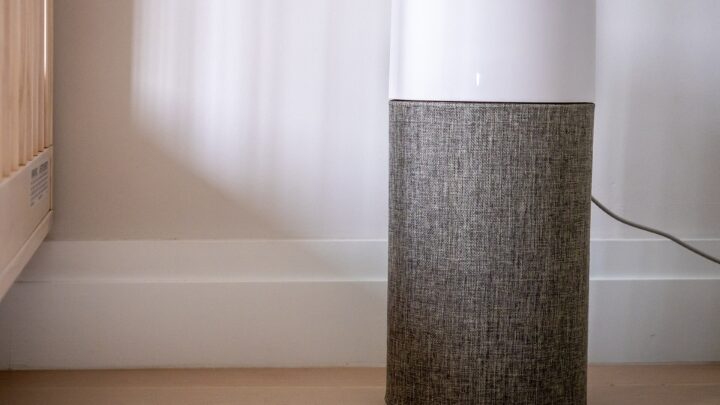
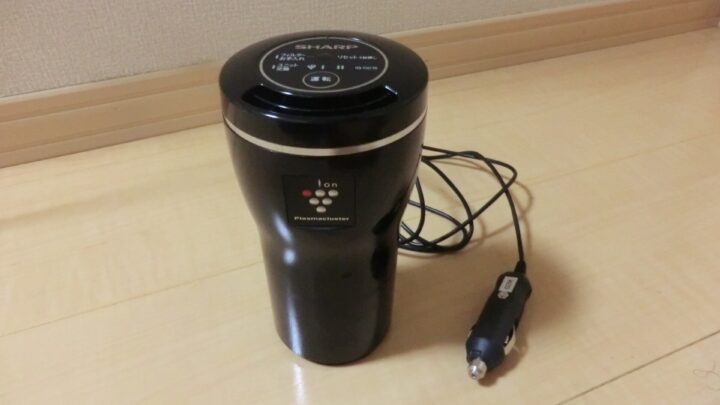
We have not tested any of these units and nothing here comes from listening to one on a desk. This compares published specifications, a federal certification dataset, the test standard those specifications come from and the federal recall database, all opened on September 25, 2026. We name a model only where its specification sheet or certification entry was on a page we read, and we checked each named brand against the CPSC recall database the same day.
Amazon autocomplete under portable air purifier offers both portable air purifier with battery and portable air purifier for office desk. The buyer intent is clear enough. The problem is that the two figures a listing leads with, hours of run time and a coverage area, come from settings that cannot happen at the same time.
Trend Signal
64/100 Steady momentum
- Emerging
- Rising
- Mainstream
- Peaking
- Cooling
Two headline numbers measured at fan speeds that cannot both be true at once
AHAM states the AC-1 test is performed at the highest fan speed and that at slower speeds the clean air delivered falls at least in proportion to the speed reduction, which is the setting battery run time is normally quoted at.
Our editorial reading of the cited data, not a forecast. How it is scored
By the numbers
- 34 cfmCADR Levoit publishes for the Core Mini, model LAP-C161-WUSLevoit
- 53 sq ftCertified room size for that same model on the ENERGY STAR list, 25 September 2026ENERGY STAR
- 65 cfmMinimum CADR EPA suggests for a 100 square foot room at an 8 foot ceilingEPA
- 27 of 246Certified models with a smoke CADR under that 65 cfm figure, our count 25 Sep 2026ENERGY STAR
CADR is a top-speed number and run time is a low-speed number
AHAM is explicit about how the rating is produced. Asked whether all speeds are tested under AC-1, it answers no: because there is no universally accepted way to test every speed, and because low or medium on one machine is not low or medium on another, the test runs at the highest speed setting. It adds that running slower reduces both efficacy and room coverage, and that at slower speeds the clean air delivered falls at least in proportion to the speed reduction.
Battery run time is quoted the other way round. Eight or twelve hours from a cell small enough to sit inside a desktop housing is a low-speed figure, because the fan drains the pack. The coverage number and the endurance number describe two different machines: one running flat out, one barely moving air. The question to put to a listing is how many hours it runs at the speed that produced the rated airflow. If that is not published, the endurance claim tells you about the battery and nothing about the air.
Ask for run time at the top speed. That is the only speed the rating was measured at.
What the certified small end actually looks like
The ENERGY STAR certified room air cleaner list is the cheapest reality check available, because every entry carries an AHAM-based smoke, dust and pollen CADR and a derived room size. We downloaded the file on September 25, 2026. It held 246 models across 74 brand names, with smoke CADR running from 31 cfm at the bottom to 577 cfm at the top and a median of 161 cfm.
The bottom of that range is the desk shelf. Twenty-seven of the 246 models certify below 65 cfm, the minimum EPA suggests for a 100 square foot room; the smallest certify at 31 cfm and 48 square feet, and the top of that tier at 40 cfm and 62 square feet. One more column is worth a look: the file reports ozone emissions in parts per billion, and 43 of the 246 listings report a value above zero, the highest at 5 ppb, far below the 50 ppb California certifies against. 235 of the 246 are plain fan-and-filter designs.
Two coverage numbers on the same product page
Levoit’s specification block for the Core Mini, model LAP-C161-WUS, publishes both conventions side by side. It lists a CADR of 34 cfm, a noise level of 25 to 44 dB, a rated power of 7 W, and an ideal room size given as 254 square feet at one air change an hour, or 53 square feet at 4.8 air changes an hour. The ENERGY STAR entry for that model number lists 34 cfm smoke CADR and a room size of 53 square feet.
Both numbers are arithmetically true and they differ by a factor of about five. AHAM derives suggested room size from smoke CADR as area equals CADR multiplied by 1.55, based on the removal of at least 80 percent of smoke particles in a steady-state room; at an 8 foot ceiling that works out, on our arithmetic, at roughly 4.8 air changes an hour, exactly the second figure Levoit prints. AHAM calls air changes per hour a building ventilation term rather than a filtration term, and says the suggested room size claim is the one that places all air cleaners in an equivalent position for a buyer.
When a product page shows two coverage figures, the smaller one is the AHAM convention.
A desk device is a regulated air cleaner in California
The state definition is wide on purpose. California’s regulation covers an energy-using product whose stated function is to reduce airborne pollutants from the air inside an enclosed space and from the air surrounding a person, and it names devices of any size intended for cleaning the air nearest a person as well as personal air cleaning devices. A purifier the size of a mug on an office desk is inside that.
So the same checks apply as for a floor-standing machine. The device must be certified by the state board to produce ozone not exceeding 0.050 ppm and carry packaging wording saying so, and if it is advertised online and not certified, the seller must display an advisory saying it cannot be shipped to California. EPA adds the other half for anything with an electronic stage: it does not certify air cleaning devices, no federal agency has approved ozone generators for occupied spaces, and ionizers in its cited experiments removed dust, smoke and pollen less effectively than high-efficiency filters.
What to check before it lives on your desk
Start with the model number rather than the brand, because on this shelf the brand is often the only thing that differs. In the ENERGY STAR file we pulled, 32 model numbers appear under more than one brand name and account for 85 of the 246 entries; one mini design is listed under six brand names and another under seven, with identical CADR figures, and the seven-brand design carries one certification date across all seven entries.
Then check that model number against the CPSC recall database. Our September 25, 2026 query returned nine air purifier notices, six of them portable room units, and every one concerns heat or electricity rather than filtration: overheating capacitors, circuit boards, ion generators and a power adapter whose casing could break. The current one, recall 26-244 from February 9, 2026, covers about 191,390 Aroeve MK04 units after 37 reports of overheating including one report of fire. Finally, price the filter rather than the machine: EPA notes that all filters need regular replacement and that an overloaded one will not work well.
What to watch next
- Whether any maker publishes battery run time at the fan speed that produced the rated CADR, which would make the two headline numbers comparable
- Whether ENERGY STAR extends its certified list to battery-powered units, which currently carry no comparable rating
- Whether the number of shared model numbers on that list keeps growing; it was 32 of 246 entries on September 25, 2026
Where to start
Paid links: we earn a commission if you buy through the buttons below, at no extra cost to you. As an Amazon Associate I earn from qualifying purchases.
Three ways to buy a desk purifier, and what each one is rated for
| Product type | Good fit for | Where to look |
|---|---|---|
| Mains-powered mini air purifier for a desk | Fits a desk with a free outlet | See listings on AmazonOpens Amazon search results, not one listing: check the model on the product page. |
| Rechargeable USB-C portable air purifier | Fits a desk with no free outlet | See listings on AmazonOpens Amazon search results, not one listing: check the model on the product page. |
| Replacement filters for a desk air purifier | Fits keeping the airflow up | See listings on AmazonOpens Amazon search results, not one listing: check the model on the product page. |
Product types that fit the trend described above, not tested models. Check the exact listing before you buy. How we pick them.
Mains-powered mini air purifier for a desk
Where to look: Amazon
The mains version is the one with published, comparable numbers behind it. Twenty-seven of the 246 certified models sit under the 65 cfm EPA suggests for 100 square feet, which is the tier this device belongs to.
- Comparable CADR figures exist
- No battery to age
- Runs continuously
- Certified coverage is under 65 sq ft
- Needs a socket and a cable run
Rechargeable USB-C portable air purifier
Where to look: Amazon
Useful where there is no socket, but read the two headline numbers separately. AHAM measures CADR at the top speed and says clean air delivery falls at least proportionally when you slow the fan down.
- Moves between desk, car and bag
- USB-C charging is common
- Run time is quoted at the slowest fan
- No certified CADR for battery units
Replacement filters for a desk air purifier
Where to look: Amazon
EPA says every filter needs regular replacement and that an overloaded one will not work well. On a cheap desk unit the filter schedule is the actual cost of ownership.
- Restores the airflow the rating assumed
- Cheap to stock ahead
- Small cartridges load quickly
- Generic media may not match
More: Home and Kitchen trends and how the Trend Signal is scored.
Sources
- Testing of Portable Air Cleaners, FAQs — AHAM
- Certified Room Air Cleaners finder — ENERGY STAR
- Core Mini air purifier specifications — Levoit
- Guide to Air Cleaners in the Home — EPA
- Ozone Generators that are Sold as Air Cleaners — EPA
- 17 CCR 94804 Certification — Legal Information Institute
- Aroeve Air Purifier Recall 26-244 — CPSC
Questions readers ask
Is a battery air purifier as effective as a plug-in one?
There is no certified answer, because battery units do not appear on the ENERGY STAR certified room air cleaner list we pulled on September 25, 2026. What is documented is that AHAM measures CADR at the highest fan speed and states that at lower speeds the clean air delivered falls at least in proportion to the speed reduction, and battery run time is normally quoted at a low speed.
Why does one product page show two different coverage areas?
Because they use different conventions. Levoit publishes an ideal room size for the Core Mini of 254 square feet at one air change an hour and 53 square feet at 4.8 air changes an hour, from the same 34 cfm CADR. AHAM derives suggested room size as smoke CADR multiplied by 1.55, which is the 53 square foot figure, and calls air changes per hour a ventilation term rather than a filtration one.
What CADR does a desk actually need?
EPA sizes by room, not by desk. Its guide gives a minimum CADR of 65 cfm for 100 square feet at an 8 foot ceiling, rising to 195 cfm for 300 square feet. A device certified at 31 to 40 cfm covers 48 to 62 square feet, a personal-space figure rather than a room figure.
Do desk purifiers produce ozone?
Most certified ones report little or none. In the ENERGY STAR file we downloaded on September 25, 2026, 43 of 246 models reported ozone emissions above zero, the highest at 5 ppb, against the 0.050 ppm certification limit California applies, and 235 of the 246 were plain fan-and-filter designs.