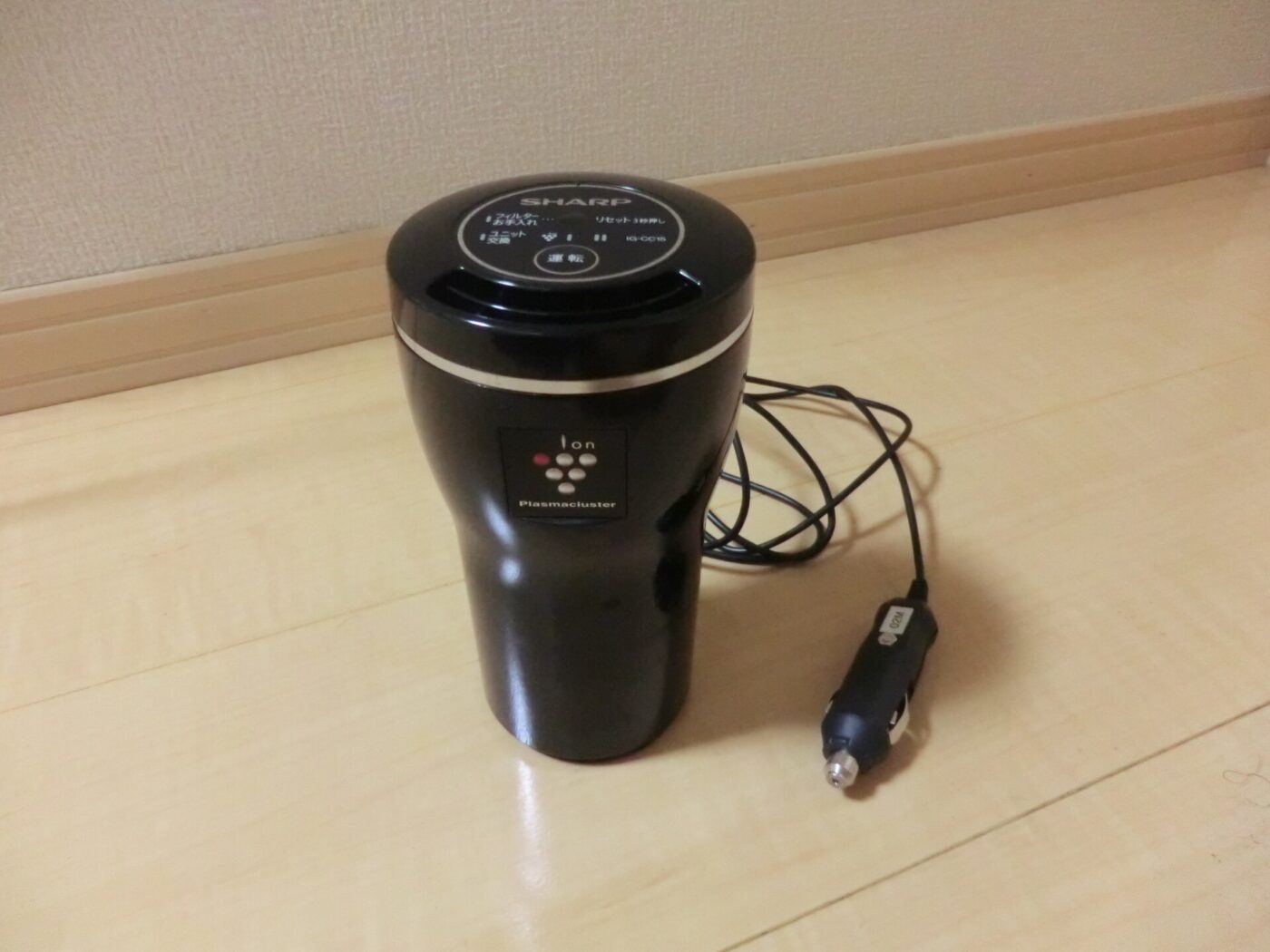
We have not tested an air purifier and will not imply otherwise. What follows sets what manufacturers publish against what the test standards cover, what California law requires of anything sold as an air cleaner, and what the federal recall database holds. We name a product only where we read its specification on a page we opened, and we checked every named brand against the CPSC recall database on September 25, 2026.
The demand is real: Google Trends listed portable air purifier as a rising US query at plus 700 percent over the 12 months to September 25, 2026, and Amazon autocomplete returns portable air purifier for car as one of the first completions offered. The rating that makes two room purifiers comparable was never written for a space the size of a car cabin.
Trend Signal
71/100 Strong momentum
- Emerging
- Rising
- Mainstream
- Peaking
- Cooling
Demand is climbing faster than any standard that would let a shopper compare units
Google Trends listed portable air purifier as a rising US query at plus 700 percent over the 12 months to September 25, 2026, while the AHAM AC-1 method behind every comparable Clean Air Delivery Rate is defined only inside a 1,008 cubic foot chamber.
Our editorial reading of the cited data, not a forecast. How it is scored
By the numbers
- 1,008 cu ftVolume of the AHAM AC-1 test chamber that every comparable CADR figure is measured inAHAM
- 0.050 ppmOzone limit a device must be certified to before it can be sold in CaliforniaCalifornia Code of Regulations Title 17
- under 20 cfmCADR range EPA reports for ionizer and photocatalytic air cleaners in reviewed studiesEPA
- 191,390Aroeve air purifiers recalled in the US in February 2026 for overheating and fire riskCPSC
The rating you cannot use in a car

Clean Air Delivery Rate is not a general term, though it gets used as one. AHAM defines it inside one method, ANSI/AHAM AC-1, and the arithmetic is fixed to a single room: the rate particles fall while the machine runs, minus the rate they settle on their own, multiplied by the chamber volume. AHAM states that chamber is 1,008 cubic feet, about 10.5 by 12 by 8 feet, and that its size is an integral part of the definition so comparisons between units are fair.
AHAM’s scope document is blunt about the edges. Products that do not fit the definition of a portable household electric room air cleaner are outside AC-1, and the example it works through is the whole-house unit, whose CADR claims it says are therefore not comparable to AC-1 claims. The method also requires that particles are not forced through the product: the unit sits on a table or floor and its own airflow decides what it sees. A unit clipped to a dashboard vent and fed by the car blower is not tested that way.
If a car unit prints a CADR, the only useful question is which chamber produced it, because AC-1 defines exactly one.
California already writes rules for the thing in your cupholder
California’s indoor air cleaning device regulation defines its subject as an energy-using product whose stated function is to reduce airborne pollutants from the air inside an enclosed space, and the text names rooms, houses, stores, offices and vehicles. It also covers the air surrounding a person and personal air cleaning devices outright. A 12-volt unit in a cupholder is squarely inside that.
The operative rule is short. No person may sell, supply, offer for sale or introduce into commerce any indoor air cleaning device in California unless the state board has certified it to produce an ozone emission concentration not exceeding 0.050 ppm and it is labeled as required. The authority is Health and Safety Code section 41986, effective January 1, 2007, which directed the board to set a standard equivalent to the federal ozone limit. Devices using only mechanical filtration are exempt from the ozone test itself.
| What should appear | Where the wording comes from |
|---|---|
| Meets California ozone emissions limit. CARB certified | Title 17 section 94806(b), non-medical devices |
| Does not meet California air cleaner regulation requirements; cannot be shipped to California | Title 17 section 94806(e), uncertified devices sold online |
| A UL or CSA safety certification mark on the device | Title 17 section 94806(d) |
Ozone, ionizers and what the agencies publish
EPA keeps a page about ozone generators sold as air cleaners and it does not hedge. No agency of the federal government has approved these devices for use in occupied spaces, it says, and EPA neither certifies air cleaning devices nor recommends manufacturers. The page lists the limits other agencies publish: the Food and Drug Administration requires ozone output of indoor medical devices to be no more than 0.05 ppm, OSHA requires that workers not be exposed to an average above 0.10 ppm over eight hours, and NIOSH recommends 0.10 ppm not to be exceeded at any time.
On effectiveness EPA is equally plain. At concentrations that do not exceed public health standards, it says ozone has little potential to remove indoor air contaminants, and it notes flatly that ozone does not remove particles such as dust and pollen. For the ion generators often built into the same housing, it cites experiments where they removed dust, smoke and pollen less effectively than high-efficiency particle filters. Its technical summary puts numbers on that: measured CADRs ran from under roughly 20 cfm for ionizer and photocatalytic units to about 150 to 300 cfm for many filter and precipitator units.
An ion generator is not a small filter. EPA places the two at opposite ends of the measured range.
The filter your car already has
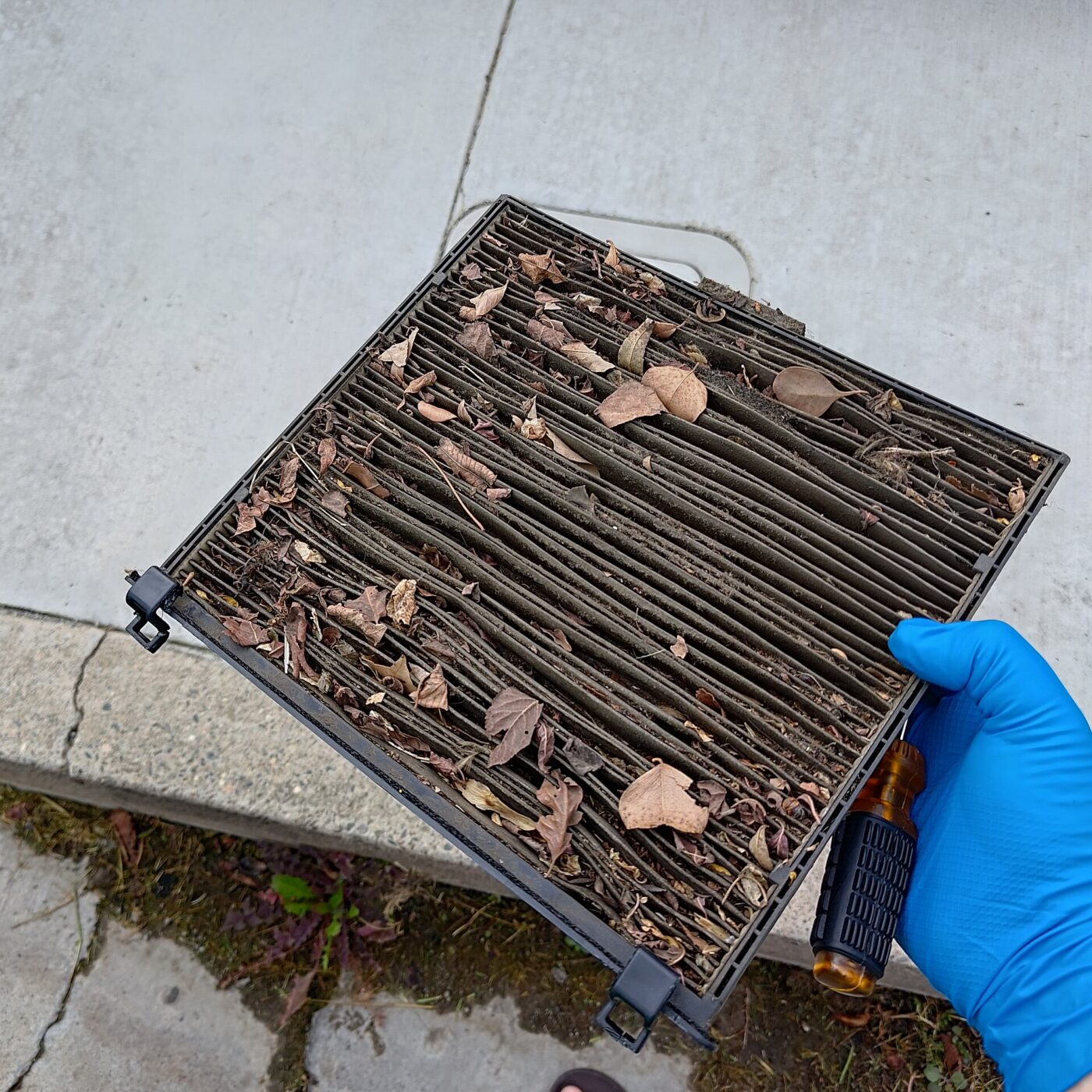
Before spending anything, there is a component already fitted to most cars that EPA has written about directly. In its questions and answers on near-roadway air pollution, the agency says a key factor in driver and passenger exposure is the vehicle ventilation setting, and that recirculation reduces the turnover of outdoor air into the vehicle. It then states that in vehicles equipped with properly functioning cabin air filters, recirculation reduces particulate concentrations from outdoors.
That is a free control with a cheap consumable behind it. A cabin air filter is a pleated panel, usually behind the glovebox, with a part number tied to make, model and year, and it is the only filter the carmaker sized the blower around. A plug-in purifier is an addition, not a replacement: it has its own small fan and no relationship to the ducting.
What the recall database shows
We queried the CPSC recall service for air purifiers and air cleaners on September 25, 2026 and got nine notices. Six describe portable units: Thane’s Perfect Air Ultra in November 2005, over an overheating capacitor; P3 International’s IonizAir in October 2007, after ten reports of melting or fire; 3M’s Filtrete in March 2013, because the ion generator could overheat; Daikin’s MC75KSU in December 2014; Brother’s AirSure DF-2 adapter in October 2022; and recall 26-244.
That last one is current. On February 9, 2026 Airova recalled about 191,390 Aroeve air purifiers, model MK04, after 37 reports of overheating including one report of fire, with no injuries reported; the notice records online sales through Amazon, Shopify, TEMU and TikTok from September 2024 through June 2025. The pattern across two decades is the useful part: not one notice is about a filter failing to catch anything. They are about capacitors, circuit boards, ion generators and power adapters. Our pull also found nothing for a 12-volt car unit, so the database holds no history on this shelf rather than clearing it.
What to watch next
- Whether in-car and personal units start carrying the California certification wording that Title 17 requires
- Whether any 12-volt or battery car purifier appears in the CPSC recall database; our September 25, 2026 pull returned none
- Whether any maker prints the test chamber beside a CADR claim on a car product
Where to start
Paid links: we earn a commission if you buy through the buttons below, at no extra cost to you. As an Amazon Associate I earn from qualifying purchases.
Three ways to spend on car cabin air, and what each one is measured by
| Product type | Good fit for | Where to look |
|---|---|---|
| Vent-mount car air purifier with a pleated filter | Fits a filter-first approach | See listings on AmazonOpens Amazon search results, not one listing: check the model on the product page. |
| Cabin air filter for your vehicle | Fits the cheapest first step | See listings on AmazonOpens Amazon search results, not one listing: check the model on the product page. |
| USB-powered compact air purifier | Fits a 12V or USB socket | See listings on AmazonOpens Amazon search results, not one listing: check the model on the product page. |
Product types that fit the trend described above, not tested models. Check the exact listing before you buy. How we pick them.
Cabin air filter for your vehicle
Where to look: Amazon
EPA states that in vehicles with properly functioning cabin air filters, recirculation reduces particulate concentrations from outdoors. This is the filter sitting in the airflow the car was designed around.
- Sized by the carmaker for the blower
- Interval is in the manual
- Only works while the fan runs
- Needs the right part number
Vent-mount car air purifier with a pleated filter
Where to look: Amazon
If you want an add-on, a pleated filter is the type EPA places at the high end of measured removal rates. Read the replacement interval first, because a cartridge this small loads fast.
- A physical filter rather than charged plates
- Replaceable media
- No comparable CADR exists for a car
- Small cartridge loads quickly
USB-powered compact air purifier
Where to look: Amazon
Check the technology before the price. EPA reports ionizer and photocatalytic units at the bottom of the measured CADR range, and anything sold in California carries certification wording either way.
- Cheap and small
- No installation
- Often an ion generator
- EPA measures ionizers under about 20 cfm
More: Home and Kitchen trends and how the Trend Signal is scored.
Sources
- Testing of Portable Air Cleaners, FAQs — AHAM
- ANSI/AHAM AC-1 Scope and Certification — AHAM
- 17 CCR 94801 Definitions — Legal Information Institute
- 17 CCR 94802 Standards — Legal Information Institute
- 17 CCR 94804 Certification — Legal Information Institute
- 17 CCR 94806 Labeling — Legal Information Institute
- Health and Safety Code section 41986 — California Legislative Information
- Rising searches, air purifier, United States, 12 months — Google Trends
- Ozone Generators that are Sold as Air Cleaners — EPA
- Residential Air Cleaners, Technical Summary 3rd ed — EPA
- Near Roadway Air Pollution and Health: FAQ — EPA
- Aroeve Air Purifier Recall 26-244 — CPSC
Questions readers ask
Does a car air purifier have a CADR rating?
Not a comparable one. AHAM defines Clean Air Delivery Rate inside the AC-1 method, whose arithmetic multiplies the measured decay rate by the volume of a 1,008 cubic foot chamber, and states that products outside the definition of a portable household room air cleaner are outside the standard.
Can an ionizing car purifier be sold in California?
Only if certified. Title 17 section 94802 bars selling or offering for sale any indoor air cleaning device in the state unless the board has certified it to produce ozone not exceeding 0.050 ppm and it carries the required label. Section 94801 explicitly covers devices used in vehicles, and uncertified devices advertised online must display an advisory saying they cannot be shipped to California.
Does ozone clean the air in a car?
EPA states that at concentrations which do not exceed public health standards, ozone has little potential to remove indoor air contaminants, and that ozone does not remove particles such as dust and pollen. It also says no federal agency has approved ozone generators for use in occupied spaces.
Has any car air purifier been recalled?
Our CPSC query on September 25, 2026 returned nine air purifier and air cleaner notices, six of them portable room units, and none for a 12-volt or battery car product. The current one is recall 26-244, about 191,390 Aroeve MK04 units over overheating and fire risk.