Auto shut-off is the feature buyers search for and the one most often misread. It appears in Amazon’s own autocomplete under full-size heated blankets, alongside washable and battery operated, and it is sold as the answer to the question everyone has. It answers a narrower question than that.
This explainer separates three things that get blurred: what a timer does, what the voluntary standard behind heated bedding covers, and what the federal recall record says the failures have been. We have tested nothing. The recall counts are ours, pulled from the U.S. Consumer Product Safety Commission recall database on September 25, 2026 and checked against the published notices.
Trend Signal
50/100 Steady momentum
- Emerging
- Rising
- Mainstream
- Peaking
- Cooling
A mature shelf with most of its recall record published since 2018
Of the 16 CPSC recalls of electrically heated bedding we counted on September 25, 2026, 10 were published since January 2018, and two of them, covering about 178,000 and about 195,000 units, landed in 2026.
Our editorial reading of the cited data, not a forecast. How it is scored
By the numbers
- 16CPSC recalls of electrically heated bedding in our count on September 25, 2026U.S. Consumer Product Safety Commission
- 9 hoursAuto-off function published for the MaxKare blankets CPSC recalled June 18, 2025U.S. Consumer Product Safety Commission
- 2020Year of the last revision to UL 964, the standard for electrically heated beddingUL Standards and Engagement
- 373,000Units in the two heated bedding recalls published during 2026, added by usU.S. Consumer Product Safety Commission
What an auto shut-off is, and what it is not
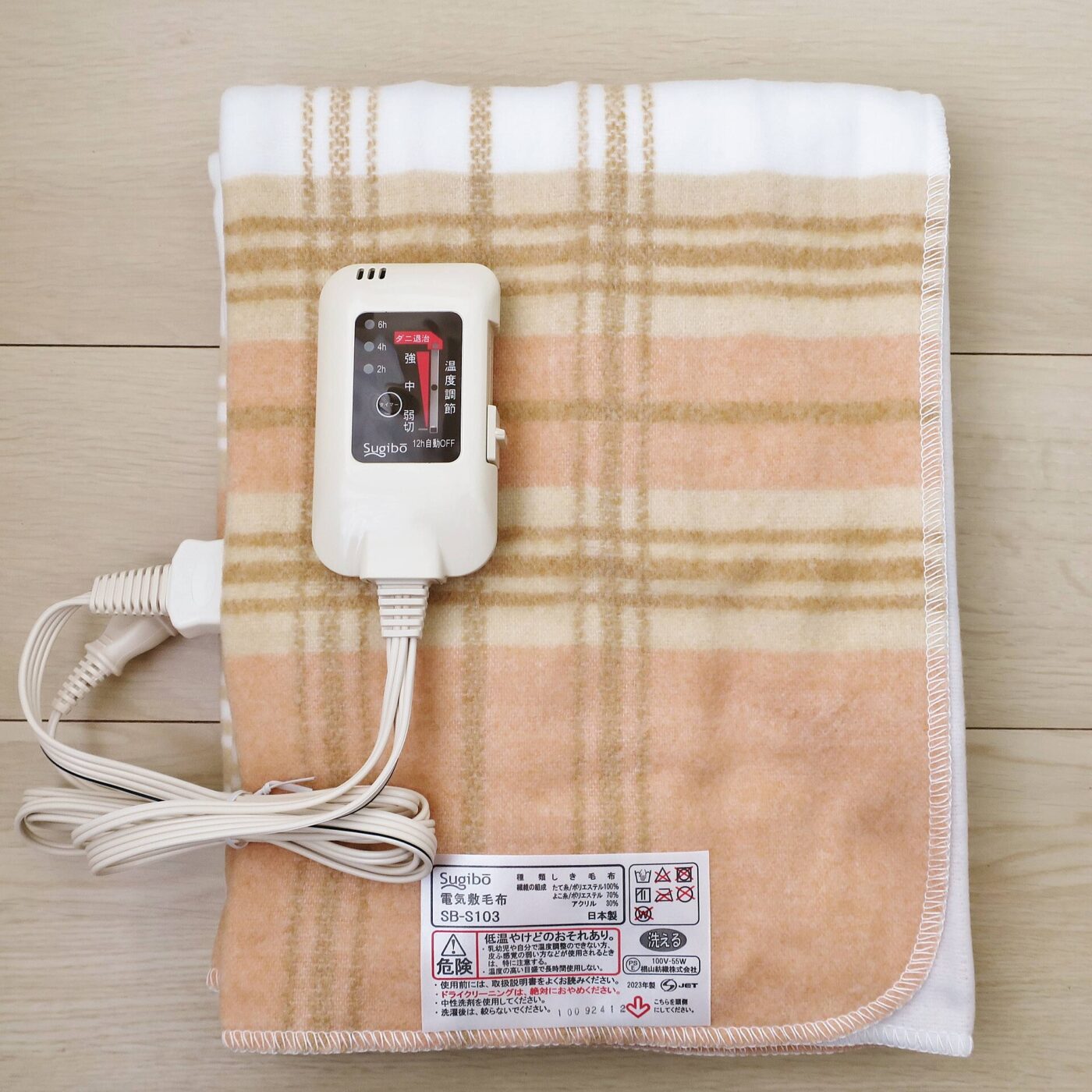
A timer turns the blanket off after a set period. Westinghouse publishes two-, four-, eight- and ten-hour options on one of its heated throws. That is useful for anyone who falls asleep with it running, and it is what the search phrase is asking about.
It is not overheat protection, and the recall record makes the distinction concrete. The MaxKare electric blankets CPSC recalled on June 18, 2025 are described in the notice as having six heating levels and a nine-hour auto-off function; the hazard statement says they can overheat and ignite, and the manufacturer had received 34 reports of overheating including three burn injuries and two fires. A timer counts minutes; a thermal cutout responds to temperature.
A second recall shows the reverse case. CPSC’s April 21, 2022 notice for about 4,200 LUXE and WILLOW heated blankets states the blanket can overheat if left plugged in and powered on for an extended period, which is the failure a timer is designed against.
Look for a stated shut-off time and a stated overheat protection. Different parts, different jobs.
What UL 964 actually covers

UL 964, Electrically Heated Bedding, is the voluntary standard behind this shelf. It is in its 12th edition, published August 31, 2011 and last revised September 18, 2020, and the summary of that revision states it added a new supplement covering remotely operated electrically heated bedding, including smart-enabled products. Its scope covers electrically heated blankets, comforters, quilts, sheets, mattress pads, mattresses, foot warmers, throw blankets and similar bedding.
Two further lines decide more than the product list does. The standard covers products used on single-phase alternating-current circuits at a nominal potential of 110 to 120 volts, in accordance with the National Electrical Code, and states that all bedding is cord-connected and supplied with either a switch or one or two user-adjustable temperature-control units. Read plainly, it is written for a blanket you plug into a wall.
Which raises the question behind the battery-operated and cordless autocomplete phrases. A product running off a battery pack rather than a 110 to 120 volt cord does not meet those conditions, so a listing saying only listed or certified has not told you what was evaluated. Neither standard is a federal rule, and UL 964 is sold for between $716 and $1,567 at the prices shown on September 25, 2026, so a shopper cannot read the requirements.
The standard for pads is a different document
This gets reversed often enough to state flatly. Heating pads fall under UL 130, the Standard for Electric Heating Pads, 13th edition, published July 15, 2011 and last revised May 6, 2015, whose scope covers pads made in a variety of shapes and sizes for direct or indirect application to persons.
Blankets, throws, mattress pads and foot warmers fall under UL 964. Different documents, different revision histories, and a product page claiming the wrong one is claiming compliance with a standard that does not describe it. Our report on the 2026 heating pad and blanket recalls works through the pad side, including the federal regime that puts some heating pads in the FDA device database rather than the CPSC recall list.
UL 964 for blankets and throws, UL 130 for pads. Getting it backwards is the tell of a copied listing.
What the recall record says the failures are
We counted 16 recalls of electrically heated blankets, throws and similar bedding in the CPSC database on September 25, 2026, running from October 5, 2001 to September 17, 2026, ten of them since January 2018. Read the hazard statements together and three failure modes cover almost all of them: the heating element overheating inside the fabric, the cord or connector overheating or detaching, and the controller malfunctioning.
The fourth pattern is about use rather than build. Four of the 16 notices name folding, bunching or tucking as the condition under which the product overheats, dated across 2003, 2004 and 2007. Volume is concentrated at the recent end: the two 2026 recalls alone account for about 373,000 units on the counts CPSC states, against about 826,900 for all ten notices since January 2018. Neither is the largest in the set: a March 9, 2023 recall covered about 350,000 units and the October 5, 2001 notice about 394,000.
| Published | Units stated | What the notice says failed |
|---|---|---|
| Feb 15, 2018 | About 9,600 | Electric cord can overheat and catch fire |
| Nov 12, 2020 | About 7,050 | Blankets can overheat |
| Apr 21, 2022 | About 4,200 | Overheats if left plugged in and powered on |
| Mar 9, 2023 | About 350,000 | Controller can malfunction |
| Nov 30, 2023 | About 29,840 | Throws and blankets may overheat |
| Jun 18, 2025 | About 8,560 | Can overheat and ignite, despite a nine-hour auto-off |
| Jul 30, 2026 | About 178,000 | Electrical cord can detach and ignite |
| Sep 17, 2026 | About 195,000 | Internal wire heating elements can overheat |
Who pays when it goes wrong
The remedy section is where a cheap purchase turns into paperwork. The pattern is consistent: stop using it, destroy it, prove you destroyed it, then get a refund. The 2026 notice for about 178,000 heated sherpa throws asks consumers to cut the electrical cord in half and email a photograph of it. The Berkshire Blanket notice of November 30, 2023 asks for an online registration, a photograph of the cut cord, and a second of the wash label with a five-digit refund code written on it.
That only works while the company is answering. Three notices in our count say it is not: those of October 5, 2001, November 9, 2004 and August 15, 2007, the last covering about 37,100 Classic Beautyrest electric warming throws, all state that the firm is out of business and no remedy is available. The practical defense is record-keeping: keep the model number, the order record and the wash label, because CPSC indexes these notices by model code.
What to watch next
- Whether UL publishes a 13th edition of UL 964, in its 12th edition since 2011 with its last revision dated September 18, 2020.
- Whether CPSC opens any action on battery-powered or cordless heated bedding, which sits outside the cord-connected conditions in the UL 964 scope.
- Whether the 2026 refund programs stay reachable through the winter, since both run through addresses operated by the recalling firms.
Where to start
Paid links: we earn a commission if you buy through the buttons below, at no extra cost to you. As an Amazon Associate I earn from qualifying purchases.
Heat sources compared on how they can fail
| Product type | Good fit for | Where to look |
|---|---|---|
| Heated throw with a stated shut-off timer | Fits falling asleep with it on | See listings on AmazonOpens Amazon search results, not one listing: check the model on the product page. |
| Heated mattress pad | Fits warming a bed before you get in | See listings on AmazonOpens Amazon search results, not one listing: check the model on the product page. |
| Hot water bottle with a cover | Fits a no-cord alternative | See listings on AmazonOpens Amazon search results, not one listing: check the model on the product page. |
Product types that fit the trend described above, not tested models. Check the exact listing before you buy. How we pick them.
Heated throw with a stated shut-off timer
Where to look: Amazon
Buy the timer for what it does: it stops the blanket running all night. The notice for the MaxKare blankets recalled June 18, 2025 describes a nine-hour auto-off on a product CPSC says can overheat and ignite, so look for a stated overheat protection too.
- Limits how long it runs alone
- Common across brands and prices
- A timer is not a thermal cutout
- Folded fabric is a named recall condition
Heated mattress pad
Where to look: Amazon
A mattress pad is explicitly inside the UL 964 scope, which covers blankets, comforters, quilts, sheets, mattress pads, mattresses, foot warmers and throw blankets. Check the controller unplugs for washing.
- Sits flat under a fitted sheet
- Named in the UL 964 scope
- Controller cords run under bedding
- Hard to inspect once made up
Hot water bottle with a cover
Where to look: Amazon
The unpowered route sidesteps every failure mode in the recall record, at the cost of duration. If you want heat with no electrical parts, nothing else here comes close.
- No cord, controller or cutout to fail
- Nothing to check against a recall list
- Holds heat for a limited time
- Filling it with boiling water can scald
More: Home and Kitchen trends and how the Trend Signal is scored.
Sources
- UL 964, Electrically Heated Bedding — UL Standards and Engagement
- UL 130, Standard for Electric Heating Pads — UL Standards and Engagement
- Recalls database — U.S. Consumer Product Safety Commission
- MaxKare Electric Blankets Recalled Due to Burn and Fire Hazards — CPSC
- MWA Recalls LUXE and WILLOW Heated Blankets — CPSC
- Berkshire Blanket Recalls Heated Throws and Blankets — CPSC
- Bilt-Safe Technologies Recall of Classic Beautyrest Electric Throws — CPSC
- Electric Heated Throw, 50 by 60 inches — Westinghouse
Questions readers ask
Does auto shut-off stop a heated blanket overheating?
No. A timer ends the heating cycle after a set period; overheat protection responds to temperature. The MaxKare electric blankets CPSC recalled on June 18, 2025 were sold with a published nine-hour auto-off function, and the notice states they can overheat and ignite, with 34 reports of overheating including two fires.
What is UL 964 and does my blanket have to meet it?
UL 964, Electrically Heated Bedding, is a voluntary standard in its 12th edition, published August 31, 2011 and last revised September 18, 2020. Its scope covers cord-connected heated blankets, comforters, quilts, sheets, mattress pads, foot warmers and throw blankets on nominal 110 to 120 volt circuits. It is not a federal regulation.
Is UL 964 the same standard as the one for heating pads?
No, and reversing the two is a common error. Heating pads sit under UL 130, the Standard for Electric Heating Pads, 13th edition, published July 15, 2011 and last revised May 6, 2015. Blankets, throws and mattress pads sit under UL 964.
What about battery-powered or cordless heated blankets?
They fall outside the conditions UL 964 describes, which cover cord-connected bedding on nominal 110 to 120 volt alternating-current circuits. A cordless product can still be evaluated to other standards, but a listing saying certified without naming the document has not told you which requirements were applied.
What happens if my blanket is recalled?
Usually you stop using it, destroy it and send proof for a refund. The July 30, 2026 notice for about 178,000 heated sherpa throws asks for the cord to be cut in half and a photograph emailed in. In three of the 16 we counted, the firm was out of business and no remedy was available.