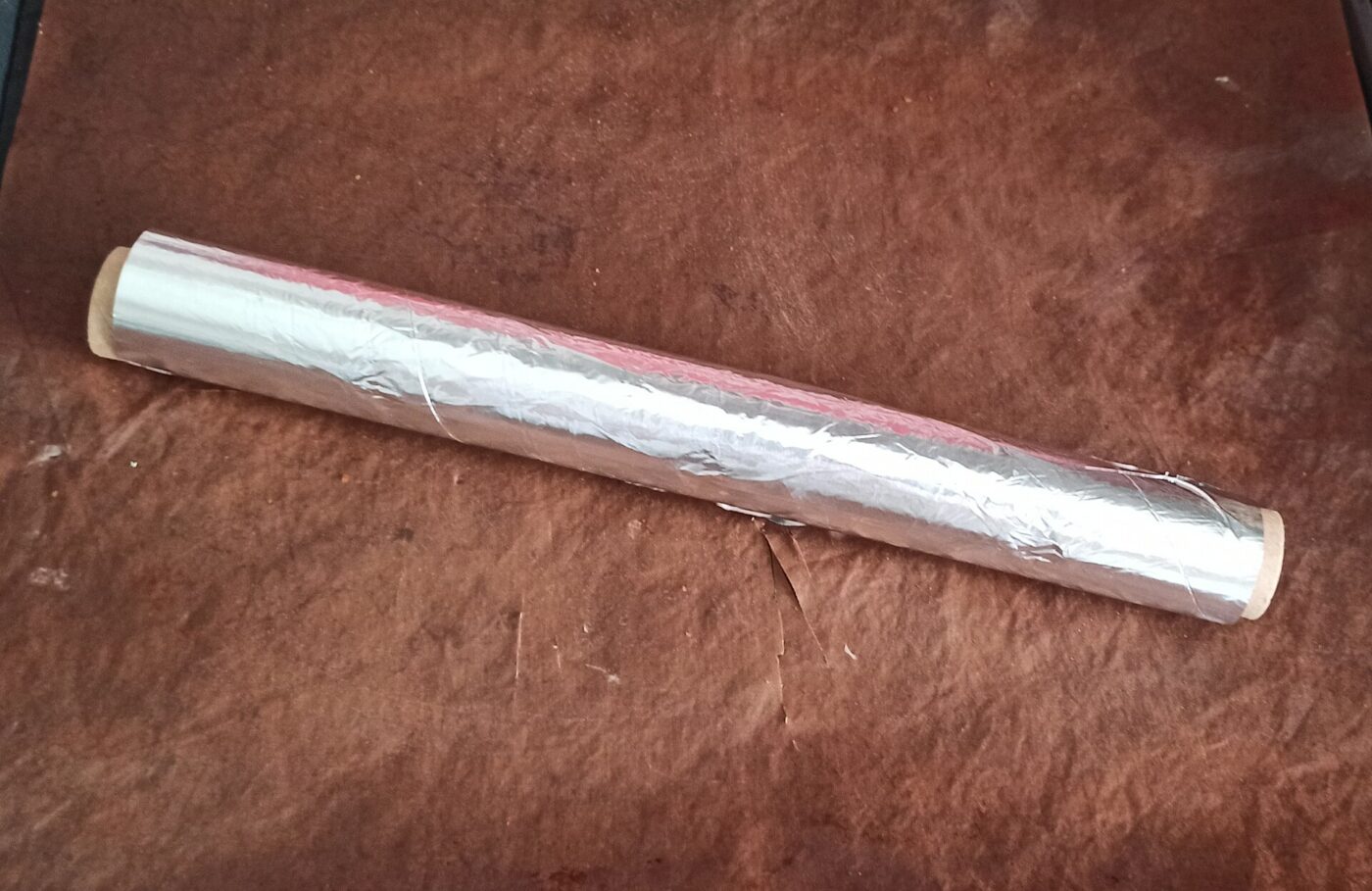
Foil is the kind of purchase nobody tracks. It sits in a drawer, it gets replaced two or three times a year, and the price on the box is rarely worth a second look. That makes the last two years unusual: foil is one of the few things in an American kitchen with a documented cost story behind it, running from a metal price index through two years of Section 232 tariff changes to the pricing lines in a public company’s quarterly results.
The short version is that the metal got much more expensive, the company behind Reynolds Wrap passed the cost on in small steps rather than one jump, and the neighboring products in the same aisle barely moved. Here is the trail.
Trend Signal
62/100 Steady momentum
- Emerging
- Rising
- Mainstream
- Peaking
- Cooling
Aluminum input costs up 27% in a year but 5.9% off their June peak
The BLS producer price index for aluminum mill shapes stood 27.3% above its August 2025 level in August 2026 but 5.9% below its June 2026 peak, by our calculation, while Reynolds Consumer Products added 19 points of pricing in the segment that includes Reynolds Wrap in the second quarter of 2026.
Our editorial reading of the cited data, not a forecast. How it is scored
By the numbers
- +64.7%BLS producer price index for aluminum mill shapes, January 2024 to August 2026BLS
- 19 pointsPricing added in the Reynolds Cooking and Kitchen Essentials segment in Q2 2026Reynolds Consumer Products
- +3.2%CPI for miscellaneous household products, 12 months to August 2026BLS
- $400MReynolds estimate of incremental 2026 commodity costs, doubled from an April figureModern Retail
What aluminum did to the price of a roll
The cleanest measure sits in a producer price series most shoppers will never see. The BLS index for aluminum mill shapes — the rolled and extruded forms foil is made from — read 225.1 in January 2024 and 370.9 in August 2026. That is a 64.7% increase in 31 months, by our calculation from published index values, and the climb accelerated sharply through the second half of 2025 and the first half of 2026.
Trade policy is part of the explanation, and the authority matters. Aluminum duties are imposed under Section 232 of the Trade Expansion Act, a separate statute from the International Emergency Economic Powers Act, which the Supreme Court held on February 20, 2026 does not authorize tariffs. Proclamation 10947 of June 3, 2025 raised the Section 232 rate; Proclamation 11021 of April 2, 2026 set the duty on aluminum articles at 50 percent of full customs value regardless of metal content, with a generally lower 25 percent on derivatives; and Proclamation 11032 of June 1, 2026 set 25 percent from June 8, 2026 through December 31, 2027 on the articles listed in its Annex I-C.
The regional premium US buyers pay on top of the world price did the rest. Packaging Dive reported on March 4, 2026 that the Midwest premium passed $1 per pound for the first time in late January 2026, and that the Aluminum Association had flagged supply risk because in 2025 the Middle East accounted for roughly 21% of unwrought and 13% of wrought aluminum imports.
| Month | Aluminum mill shapes index | Change from January 2024 |
|---|---|---|
| January 2024 | 225.1 | — |
| December 2024 | 246.6 | +9.5% |
| August 2025 | 291.3 | +29.4% |
| December 2025 | 320.6 | +42.4% |
| June 2026 | 394.3 | +75.1% |
| August 2026 | 370.9 | +64.7% |
The metal behind foil cost roughly two-thirds more in August 2026 than at the start of 2024.
How that cost reaches the box in your drawer
Reynolds Consumer Products is the most useful window here, because it makes Reynolds Wrap and reports segment pricing every quarter. In its first quarter of 2026, reported on May 6, 2026, the Reynolds Cooking and Kitchen Essentials segment posted net revenues of $314 million, up $55 million, and the company said the figure included 15 points of pricing to offset commodity cost increases. Retail volumes in that segment rose 6%.
Three months later the picture changed shape. In the second quarter, reported on July 29, 2026, the same segment again posted $314 million, up $19 million, and this time the number included 19 points of pricing. Retail volumes fell 8%, which the company attributed in part to promotional timing differences in foil. Company-wide net revenues were $944 million against $938 million a year earlier: flat sales with much higher prices inside them.
The guidance says it too. Reynolds raised its full-year 2026 net revenue outlook to +1% to +3% against 2025 revenues of $3,721 million and said the increase was there to account for increased pricing net of elasticity. Modern Retail reported on August 31, 2026 that the company had roughly doubled its estimate of incremental 2026 commodity costs to about $400 million, and that chief executive Scott Huckins credited the foil category’s resilience partly to a strategy of more frequent but smaller price changes.
Foil prices went up in several small steps rather than one visible jump, which is why the increase is easy to miss.
The rest of the drawer moved differently

It is tempting to assume the whole housekeeping aisle rose together. It did not. In the 12 months to August 2026, the BLS consumer price index for household paper products rose 0.2%, household cleaning products rose 2.1% and miscellaneous household products rose 3.2%, with the parent housekeeping supplies index up 2.1%.
Reynolds’ own segments match. Hefty Waste and Clean-Up, the trash bag business, reported second-quarter net revenues of $233 million, down $3 million, with retail volumes flat; in the first quarter it recorded no change in pricing at all and blamed softer revenue on competitive activity. Hefty Storage and Organization, which sells food and storage bags, posted a record second quarter of $176 million with volumes up 8%. Plastic-based products with plenty of competing store brands did not get the same pricing.
For the longer arc, the miscellaneous household products index is the closest published line to the odds and ends of the kitchen drawer. It rose 13.7% between December 2021 and December 2023, then went almost nowhere: up 1.0% over 2024 and 2.1% over 2025, by our calculation. BLS publishes no foil-only index, so the manufacturer’s pricing disclosures are the sharper instrument.
What to do at the shelf
Compare square footage, not boxes. Foil is sold in rolls of widely different footage and in more than one width, so the per-box price is close to meaningless on its own. Heavy-duty foil is thicker and costs more per square foot; it earns that on a grill or under a roast, and not much else.
Store brands are the direct beneficiary of a branded price increase. When a manufacturer takes 19 points of pricing, the gap to the private-label roll on the same shelf widens, and foil is a commodity where the specification that matters is thickness. If you use foil mainly as a cover or a liner, the cheapest roll in the right width is usually the right answer, and parchment sheets or reusable covers take over much of the rest.
- Check price per square foot on the shelf tag rather than price per box.
- Buy heavy-duty only for grilling and high-heat roasting; standard foil covers the rest.
The counter-signal worth watching
The aluminum index peaked at 394.3 in June 2026 and fell to 370.9 by August, a 5.9% decline in two months and the sharpest two-month fall since the climb began in 2024, by our calculation. A producer price index moving down does not pull shelf prices with it quickly, but the input side has stopped compounding.
The other thing to watch is volume. Retail volumes in the Reynolds segment that includes Reynolds Wrap fell 8% in the second quarter of 2026 while the segment carried 19 points more pricing, and that combination is usually where promotions return.
What to watch next
- The BLS aluminum mill shapes series each month, for whether the June 2026 peak holds as the high.
- Reynolds’ next quarterly results, for whether pricing points in the Cooking and Kitchen Essentials segment shrink and volumes recover.
- The three housekeeping supplies lines in the monthly CPI release, which have been moving apart rather than together.
Where to start
Paid links: we earn a commission if you buy through the buttons below, at no extra cost to you. As an Amazon Associate I earn from qualifying purchases.
Kitchen wrap options compared on what actually differs
| Product type | Good fit for | Where to look |
|---|---|---|
| Heavy-duty aluminum foil roll | Fits grilling and high heat | See listings on AmazonOpens Amazon search results, not one listing: check the model on the product page. |
| Pre-cut parchment baking sheets | Fits everyday baking trays | See listings on AmazonOpens Amazon search results, not one listing: check the model on the product page. |
| Reusable stretch lids for bowls | Fits cutting repeat purchases | See listings on AmazonOpens Amazon search results, not one listing: check the model on the product page. |
Product types that fit the trend described above, not tested models. Check the exact listing before you buy. How we pick them.
Heavy-duty aluminum foil roll
Where to look: Amazon
The one place where the thicker gauge earns its premium. For covering a dish in the refrigerator, the standard roll does the same job for less.
- Thicker and less prone to tearing
- Handles direct grill heat
- Costs more per square foot
- Overkill for covering leftovers
Pre-cut parchment baking sheets
Where to look: Amazon
Parchment absorbs most of the tray-lining work foil used to do, and its price sits in a different commodity entirely.
- No metal price exposure
- Flat sheets do not curl
- Not for direct grill heat
- Sheet size has to match your tray
Reusable stretch lids for bowls
Where to look: Amazon
Most household foil goes over a bowl. Check the diameter range, because a set that does not match your bowls will sit in the drawer.
- Replaces the most common foil use
- One purchase, many uses
- Only fits round rims well
- Needs washing
More: Home and Kitchen trends and how the Trend Signal is scored.
Sources
- PPI commodity data for aluminum mill shapes, series WPU102501 — Bureau of Labor Statistics
- CPI for all urban consumers by detailed expenditure category, August 2026 — Bureau of Labor Statistics
- CPI for miscellaneous household products, series CUUR0000SEHN03 — Bureau of Labor Statistics
- Reynolds Consumer Products reports second quarter 2026 financial results — Reynolds via SEC
- Reynolds Consumer Products reports first quarter 2026 financial results — Reynolds via SEC
- Rising raw material costs are hitting everything from stickers to foil — Modern Retail
- High Midwest premium, ongoing tariffs and conflict hit aluminum — Packaging Dive
- Proclamation 11021, Strengthening Actions Taken To Adjust Imports of Aluminum, Steel, and Copper — Federal Register via GovInfo
- Proclamation 11032, Further Adjusting the Tariff Regimes for Imports of Aluminum, Steel, and Copper — Federal Register via GovInfo
- Learning Resources, Inc. v. Trump, No. 24-1287, decided February 20, 2026 — Supreme Court of the United States
Questions readers ask
Is aluminum foil actually more expensive, or does it just feel that way?
It is more expensive. The BLS producer price index for aluminum mill shapes rose 64.7% between January 2024 and August 2026, by our calculation, and Reynolds reported 15 points of pricing in the segment that includes Reynolds Wrap in the first quarter of 2026 and 19 points in the second.
Did tariffs cause the increase?
Section 232 duties are part of it, and they are a separate authority from the emergency-powers tariffs the Supreme Court ruled on in February 2026. Proclamation 11021 of April 2, 2026 set the duty on aluminum articles at 50 percent of full customs value regardless of metal content, and Proclamation 11032 then set 25 percent on the articles listed in its Annex I-C. Packaging Dive also reported a US Midwest premium above $1 per pound in late January 2026.
Why did paper towels and trash bags not rise the same way?
Different inputs and more competition. In the 12 months to August 2026, the CPI for household paper products rose 0.2% against 3.2% for miscellaneous household products, and Reynolds reported no change in pricing in its trash bag segment in the first quarter of 2026.
Should I stock up on foil now?
Only if you use a lot of it. The aluminum index fell 5.9% between June and August 2026, and retail volumes in the Reynolds segment that includes Reynolds Wrap dropped 8% in the second quarter while pricing rose. Buying on promotion is more reliable than buying ahead of one.