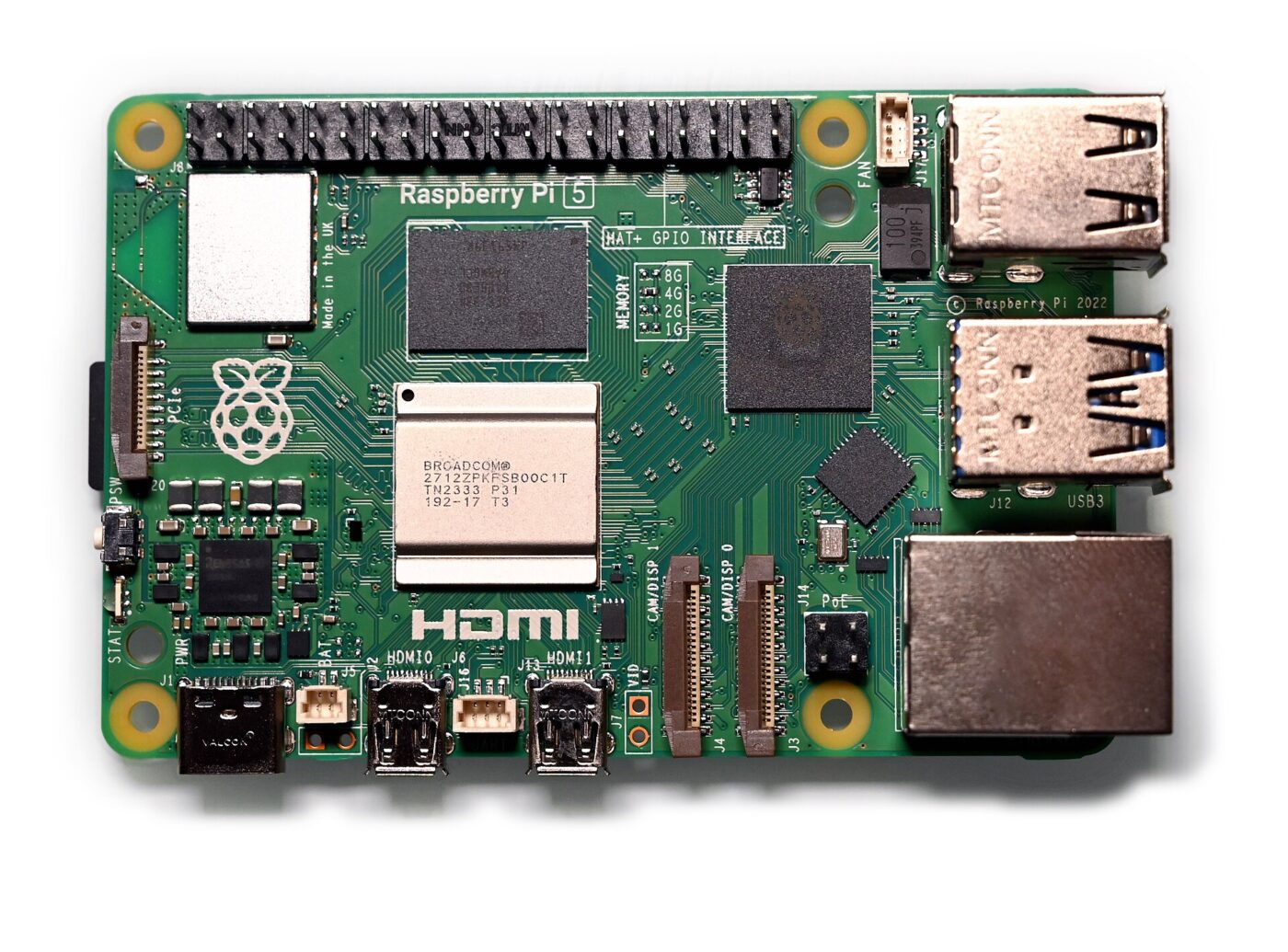
Raspberry Pi’s single-board computers are a fixture of school coding clubs, robotics projects and home STEM kits, largely because they have been cheap. Between December 2025 and April 2026 the company raised its board prices three times, and each announcement pointed at the same part: the LPDDR4 memory soldered onto the Raspberry Pi 4 and 5.
The increases scale with memory size, which is why the headline models moved the most. By our arithmetic from the three announcements, an 8GB Raspberry Pi 5 that listed at $80 before December 2025 lists at $175 after April 1, 2026. The 16GB model’s $305 price appears on the Raspberry Pi 5 product page in September 2026.
Trend Signal
76/100 Strong momentum
- Emerging
- Rising
- Mainstream
- Peaking
- Cooling
Three memory-driven price rounds and no reversal yet
Raspberry Pi raised board prices on December 1, 2025, February 2, 2026 and April 1, 2026, citing a seven-fold rise in LPDDR4 memory prices over a year, and its March 2026 results said it expects tight DRAM supply to last beyond 2026.
Our editorial reading of the cited data, not a forecast. How it is scored
By the numbers
- $305Raspberry Pi 5 16GB list price, September 2026; it was $120 before December 2025Raspberry Pi
- 7xRise in the price of LPDDR4 DRAM over the year to April 2026, per Raspberry PiRaspberry Pi
- 8.4%US CPI, computers, peripherals and smart home assistants, Aug 2025 to Aug 2026 (our calc)BLS via FRED
- 21%Share of the cost of Raspberry Pi’s direct boards made up by DRAM in 2025Raspberry Pi Holdings
Three price rounds in four months
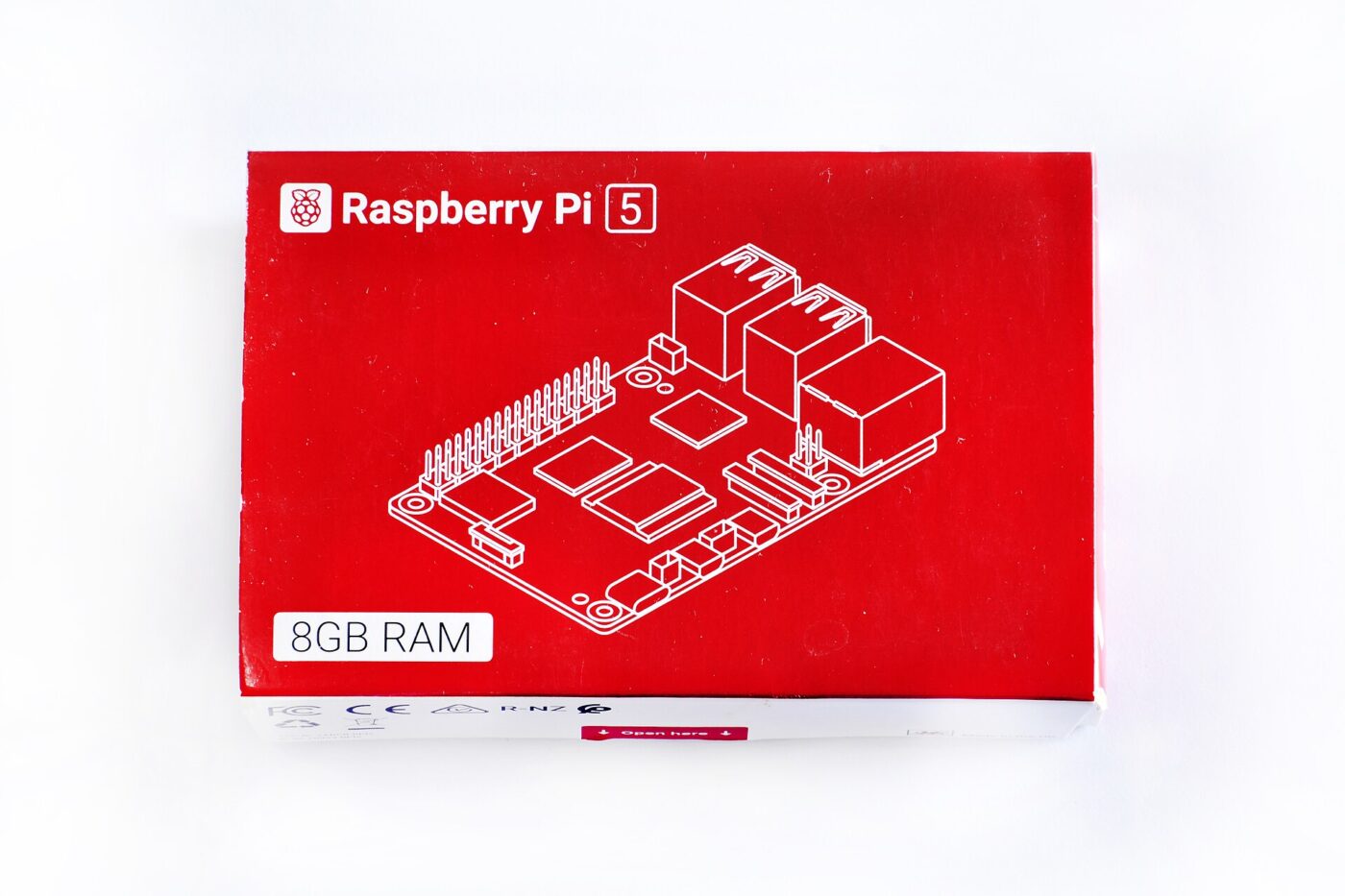
The first round came on December 1, 2025. CEO Eben Upton raised the 4GB Raspberry Pi 4 from $55 to $60 and the 8GB from $75 to $85, and moved the Raspberry Pi 5 up by $5 to $25 depending on memory: 2GB to $55, 4GB to $70, 8GB to $95 and 16GB to $145. The same post introduced a 1GB Raspberry Pi 5 at $45.
The second round, on February 2, 2026, added $10 to 2GB boards, $15 to 4GB, $30 to 8GB and $60 to 16GB across the Raspberry Pi 4, Raspberry Pi 5 and Compute Modules 4 and 5. The third, on April 1, 2026, added $25 to 4GB boards, $50 to 8GB and $100 to the 16GB Raspberry Pi 5, plus $50 on the Raspberry Pi 500 keyboard computer and $150 on the Raspberry Pi 500+. The April post also introduced a 3GB Raspberry Pi 4 at $83.75.
| Raspberry Pi 5 model | Before Dec 1, 2025 | After Dec 1, 2025 | After Feb 2, 2026 | After Apr 1, 2026 |
|---|---|---|---|---|
| 1GB | Not sold | $45 | $45 | $45 |
| 2GB | $50 | $55 | $65 | $65 |
| 4GB | $60 | $70 | $85 | $110 |
| 8GB | $80 | $95 | $125 | $175 |
| 16GB | $120 | $145 | $205 | $305 |
The more memory on the board, the more of the increase the buyer pays.
Why memory is the whole story

Each post names LPDDR4. In December, Upton cited “the recent unprecedented rise in the cost of LPDDR4 memory.” In February he wrote that the cost of some parts had “more than doubled over the last quarter,” which he tied to competition for memory fab capacity from the AI infrastructure roll-out. In April the company put the rise at seven-fold over the previous year for the LPDDR4 DRAM used on the Raspberry Pi 4 and 5.
Market data points the same way. TrendForce estimates the global DRAM module market brought in $21.2 billion in 2025, up 59% from 2024, and says server orders from North American and Chinese cloud providers limited suppliers’ allocations for PC and consumer products.
Raspberry Pi’s own results show why a small board feels it. In its results for 2025, the company said its fourth- and fifth-generation boards made up about 65% of unit sales, used an average of 4.9GB of DRAM each, and that DRAM represented 21% of the cost of its direct boards.
What did not go up
The low-memory end held. The February post left the 1GB boards and the Raspberry Pi 400 unchanged, with the 1GB Raspberry Pi 4 at $35 and the 1GB Raspberry Pi 5 at $45, and said the company did not expect changes to the Raspberry Pi Zero, the Raspberry Pi 3 and other older products. The April post held the 1GB and 2GB versions of the Raspberry Pi 4 and 5 at $35 to $65.
Part of the lineup never touches the affected memory. The company’s 2025 results say about one-third of its boards and modules by volume either use no DRAM, as with the Pico microcontroller boards, or use older LPDDR2 memory held in a separate inventory buffer, and that it had enough memory for almost all of 2026 for the Raspberry Pi 3, the Pi Zero and the 1GB and 2GB boards.
For first electronics lessons, that matters. The Raspberry Pi Pico 2 launched in August 2024 at $5, with 520KB of on-chip memory and MicroPython and CircuitPython support, and the company shipped 8.4 million of its RP2040 and RP2350 microcontroller chips in 2025, counting those built into its own boards such as the Pico, up 47% from 2024.
The 1GB boards, older models and microcontrollers are the parts of the lineup the memory squeeze has not reached.
Demand has held so far
Higher prices have not emptied the order book yet. Raspberry Pi Holdings reported 2025 revenue of $323.2 million, up 25%, and board and module shipments of 7.6 million, up 9%, with the average selling price per board rising from $43.3 to $46.7. In its March 2026 outlook the company said demand from its OEM and enthusiast customers held up despite the DRAM-related increases.
Raspberry Pi is not alone. The US consumer price index for computers, peripherals and smart home assistants rose 8.4% between August 2025 and August 2026 and about 12.7% between December 2025 and August 2026, by our calculation from the BLS series published on FRED.
Who should buy now and who should wait
Buy now if a class, club or project calls for a 1GB or 2GB board, a Pi Zero or a Pico. Those prices moved least or not at all in the 2026 rounds, and the company says it has memory stock for them for almost all of 2026. Check third-party starter kits carefully: a kit bundles a board with a case, power supply and storage card, and the memory size decides how much of the increase is baked into the kit price.
Wait if the plan needs an 8GB or 16GB board for AI, desktop or media projects and there is no deadline. In April the company wrote that the current conditions “will abate” and that when they do, “we will reverse our price increases.” It has not said when, and its results say it expects the tight supply to last beyond 2026, so waiting is a bet on timing rather than a sure saving.
What to watch next
- A Raspberry Pi news post reversing any of the three increases, which the company has promised once memory prices ease
- Raspberry Pi Holdings’ interim results, listed for September 24, 2026 on its financial calendar, for updated memory-cost commentary
- The monthly BLS index for computers and peripherals on FRED, which by our calculation rose 8.4% in the year to August 2026
Where to start
Paid links: we earn a commission if you buy through the buttons below, at no extra cost to you. As an Amazon Associate I earn from qualifying purchases.
STEM computing boards compared on memory exposure
| Product type | Good fit for | Where to look |
|---|---|---|
| Single-board computer kit, 1GB or 2GB | Fits first coding lessons | See listings on AmazonOpens Amazon search results, not one listing: check the model on the product page. |
| Microcontroller starter kit | Fits sensor and electronics projects | See listings on AmazonOpens Amazon search results, not one listing: check the model on the product page. |
| Single-board computer kit, 8GB | Fits AI and desktop projects | See listings on AmazonOpens Amazon search results, not one listing: check the model on the product page. |
Product types that fit the trend described above, not tested models. Check the exact listing before you buy. How we pick them.
Single-board computer kit, 1GB or 2GB
Where to look: Amazon
The part of the Raspberry Pi 4 and 5 lineup the 2026 increases barely touched: 1GB boards held and 2GB boards rose $10. Check the memory size in the listing title.
- Smallest increases in 2026
- Company has memory stock for it
- Limited memory for AI or desktop use
- Kit extras add cost
Microcontroller starter kit
Where to look: Amazon
Microcontroller boards such as the Pico run code on the chip itself, so the LPDDR4 squeeze does not reach them. A good fit for sensors, lights and motors.
- Uses no DRAM
- Low board cost
- Not a full computer
- Needs another computer to program
Single-board computer kit, 8GB
Where to look: Amazon
Buy only when the project needs the memory. The company has promised to reverse increases once memory costs ease, without giving a date.
- Room for heavier software
- Handles desktop use
- More than double its 2025 price
- Price may fall if memory eases
More: Education and Learning trends and how the Trend Signal is scored.
Sources
- 1GB Raspberry Pi 5 now available at $45, and memory-driven price rises — Raspberry Pi
- More memory-driven price rises — Raspberry Pi
- A new 3GB Raspberry Pi 4 for $83.75, and more memory-driven price increases — Raspberry Pi
- Raspberry Pi 5 product page — Raspberry Pi
- Raspberry Pi Pico 2, our new $5 microcontroller board, on sale now — Raspberry Pi
- Final results 2025 — Raspberry Pi Holdings plc
- Financial calendar — Raspberry Pi Holdings plc
- DRAM Module Revenue Surges 59% YoY in 2025 — TrendForce
- CPI: Computers, Peripherals, and Smart Home Assistants in U.S. City Average — BLS via FRED
Questions readers ask
Why did Raspberry Pi prices go up?
Raspberry Pi tied its December 2025, February 2026 and April 2026 increases to LPDDR4 memory, whose price it said rose seven-fold over the year to April 2026 as AI infrastructure competed for memory fab capacity.
Which Raspberry Pi models did not go up in 2026?
The 1GB Raspberry Pi 4 and 5 were unchanged in both 2026 rounds, the 2GB boards were held in April after a $10 rise in February, and the company said it did not expect changes to the Pi Zero, the Pi 3 and other older products.
How much does a Raspberry Pi 5 cost now?
By our arithmetic from the company’s three price posts, a Raspberry Pi 5 costs $45 with 1GB, $65 with 2GB, $110 with 4GB, $175 with 8GB and $305 with 16GB after April 1, 2026; the $305 figure appears on the product page.
Will Raspberry Pi prices come back down?
The company wrote in April 2026 that it will reverse its increases when memory market conditions abate, but its 2025 results said it expects the tight DRAM supply to persist beyond 2026.