For most of the past decade the argument about how children learn to read was fought in school boards and state legislatures. It has now arrived in the picture-book aisle, where a category that used to be sold only to schools sits next to ordinary early readers: decodable books, written so that a child can sound out almost every word using the letter-sound patterns already taught.
Parents are buying them because school reading instruction changed underneath them and the homework looks different from what they remember. The national test data gives a mixed but readable picture of whether the shift is working, and the federal evidence review is unusually clear about which parts of early reading instruction have strong support.
Trend Signal
55/100 Steady momentum
- Emerging
- Rising
- Mainstream
- Peaking
- Cooling
Phonics-first instruction is the default and the publishing catalog is still catching up
Nine-year-olds gained 4 points in reading on the 2025 NAEP long-term trend assessment, with the gains concentrated among lower performers, while only 31% of fourth graders reached NAEP Proficient in reading in 2024.
Our editorial reading of the cited data, not a forecast. How it is scored
By the numbers
- 31%Fourth graders at or above NAEP Proficient in reading in 2024The Nation’s Report Card
- +4 pointsReading gain for 9-year-olds in 2025 versus 2022 on the NAEP long-term trend assessmentThe Nation’s Report Card
- 39%9-year-olds reading for fun almost every day in 2022, 14 points below the 1984 readingThe Nation’s Report Card
- 117,400Fourth graders assessed in the 2024 NAEP reading sampleThe Nation’s Report Card
What the national reading numbers show

The headline number is still poor. In the 2024 main NAEP reading assessment, administered from January to March 2024 to 117,400 fourth graders, 31% scored at or above NAEP Proficient, two percentage points below 2022 and four below 2019. The average score was two points below 2022 and five points below 2019, and declines showed up at every reported percentile except the 90th.
The long-term trend assessment, administered in the winter of the 2024-25 school year, points the other way for the youngest group. Nine-year-olds scored 4 points higher in reading than in 2022 and 4 points higher in mathematics, and the improvement was concentrated among students at the 10th and 25th percentiles. Reading for that age group was no longer significantly different from 2020.
Thirteen-year-olds did not move. Their reading and mathematics scores showed no significant change from the 2023 assessment and remain below 2020, and their reading score is not significantly different from 1971.
| Measure | Result | Compared with |
|---|---|---|
| Grade 4 reading, NAEP Proficient or above, 2024 | 31% | 2 points below 2022 |
| Age 9 reading, long-term trend, 2025 | +4 points | versus 2022 |
| Age 13 reading, long-term trend, 2025 | No significant change | versus the prior assessment |
| Age 9 reading for fun almost daily, 2022 | 39% | 14 points below 1984 |
What a decodable reader is, and what it is not
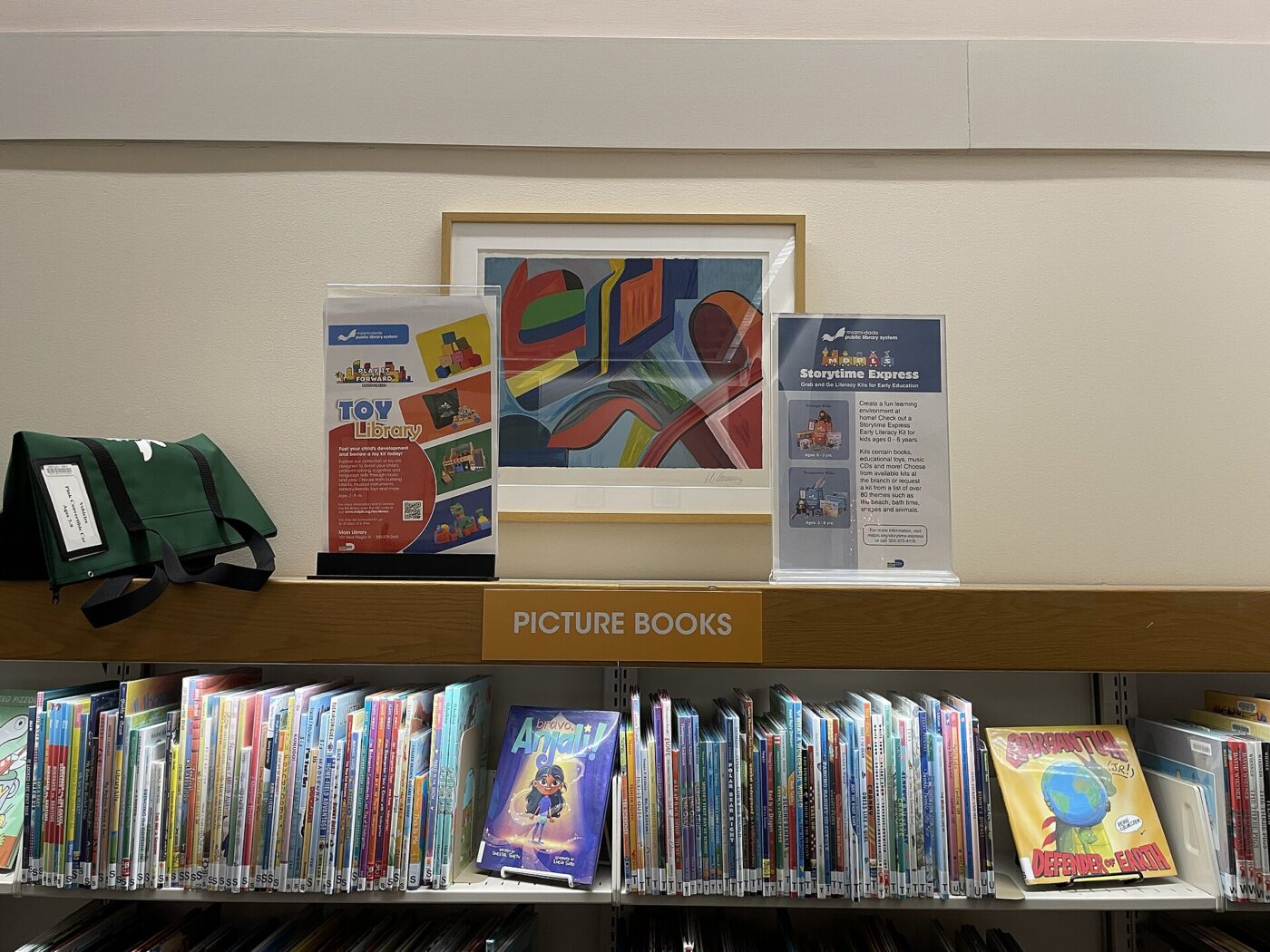
A decodable book is written backward from a phonics sequence. If a class has learned short vowels and the consonant sounds, the book uses those and a small set of taught high-frequency words, so a beginning reader can decode nearly every word rather than guessing from the picture. A set is usually sold in stages that follow a scope and sequence.
That is the opposite design from a leveled reader, which controls difficulty by sentence length, repetition and picture support and can include words a child has no way to sound out. Both have a place on a shelf, but they are not substitutes: a child mid-way through a phonics sequence can read a matching decodable independently and will stall on a leveled book with the same age label.
The practical consequence for a buyer is that the label on the box matters more than the reading level printed on the cover. A set that lists the sounds each book covers can be matched to what the school is teaching that month. A set that lists only a grade range cannot.
What the federal evidence review actually says
The What Works Clearinghouse, run by the Institute of Education Sciences, published its practice guide on foundational reading skills for kindergarten through third grade in July 2016 and revised it in December 2019. It makes four recommendations and rates the evidence for each.
Two carry the strongest rating: developing awareness of the sounds in speech and how they link to letters, and teaching decoding and word analysis. Daily reading of connected text to build accuracy and fluency gets a moderate rating. Teaching academic language skills, including vocabulary and narrative language, gets a minimal rating, which reflects the state of the research rather than a judgment that vocabulary does not matter.
Read together, that is a decent shopping list. The strongly supported parts of early reading are practiced with letter tiles, sound cards and a stack of books a child can actually decode. The rest is done by reading aloud together, which costs nothing.
The two recommendations with strong federal evidence ratings are exactly the ones decodable sets and letter tiles support.
Why the shelf changed
Publishers have been adding decodable lines steadily. Publishers Weekly reported on June 4, 2026 that Lee & Low, which had introduced a 13-title Drumbeat Decodable line developed with Indigenous Education Press, was launching a further collection with the Asia Foundation through its Bebop Books imprint, starting with 10 titles and adding 20 more later. The trade paper quotes a Lee & Low executive tying the expansion to falling reading proficiency and demand for engaging stories.
That matters to a household because decodables used to be a classroom consumable sold in boxed sets to districts. As trade publishers enter, the same material appears in single titles and small packs at consumer prices, with better illustration and stories built for reading aloud rather than for a worksheet.
The risk is the usual one in a growing category: decodable is not a regulated term. Some sets follow a documented sequence and others simply use short words, so the ones worth buying name the sounds each book covers.
Where the case gets complicated
A phonics requirement is not a guarantee of higher scores, at least not quickly. The Albany Times Union reported on August 21, 2026 that the 2025-26 school year was the first in which phonics was required in all New York schools, and that the state’s 2026 English language arts results came in sharply lower in the early grades, with third grade proficiency at 43% and fifth grade at 43%. The state education department called the results a significant decline and said it was analyzing where students need support; it did not attribute the drop to the phonics requirement.
National results carry the same warning. The 2024 NAEP reading scores fell even though most states had already passed reading laws, and the recovery visible in the 2025 long-term trend is for 9-year-olds only. A single year of test results cannot separate a new curriculum from staffing, attendance, test changes and everything else that moved at the same time.
The other counter-signal is about reading itself. In NAEP’s long-term trend survey, 39% of 9-year-olds said they read for fun almost every day in 2022, 14 points below the 1984 reading.
What to watch next
- The next NAEP long-term trend release, for whether the 9-year-old gains reach the older age groups.
- State assessment results in the states that adopted phonics requirements in 2025 and 2026, which are the first real test of the laws.
- Whether trade publishers keep expanding decodable lines into single consumer titles rather than boxed classroom sets.
Where to start
Paid links: we earn a commission if you buy through the buttons below, at no extra cost to you. As an Amazon Associate I earn from qualifying purchases.
Early reading materials and what actually differs between them
| Product type | Good fit for | Where to look |
|---|---|---|
| Decodable reader book set | Fits a phonics sequence | See listings on AmazonOpens Amazon search results, not one listing: check the model on the product page. |
| Magnetic letter tiles for word building | Fits word building by hand | See listings on AmazonOpens Amazon search results, not one listing: check the model on the product page. |
| Phonics sound and sight word cards | Fits quick daily review | See listings on AmazonOpens Amazon search results, not one listing: check the model on the product page. |
Product types that fit the trend described above, not tested models. Check the exact listing before you buy. How we pick them.
Decodable reader book set
Where to look: Amazon
The core purchase, and the one where the label does the work. A set that names the sounds in each book can be matched to what the class covered that month; one that only prints a grade range cannot.
- A child can read it independently
- Sets follow a stated order
- The word decodable is not regulated
- Stages get outgrown quickly
Magnetic letter tiles for word building
Where to look: Amazon
Letter tiles cover blending and word building, which the federal practice guide rates with strong evidence. Check the set includes enough vowels and common digraphs to build real words.
- Supports the strongly rated part of the evidence
- Reusable for years
- Small parts for younger siblings
- Needs a metal surface or board
More: Education and Learning trends and how the Trend Signal is scored.
Sources
- NAEP Reading Report Card 2024, grades 4 and 8 — The Nation’s Report Card
- NAEP Long-Term Trend Assessment Results 2025 — The Nation’s Report Card
- Long-term trend reading, student experiences, age 9 — The Nation’s Report Card
- Foundational Skills to Support Reading for Understanding in Kindergarten Through 3rd Grade — What Works Clearinghouse, Institute of Education Sciences
- Lee & Low Collaborates with the Asia Foundation on Decodable Books Line — Publishers Weekly
- After the first year of required phonics, reading scores plummet — Albany Times Union via Yahoo News
Questions readers ask
What is a decodable reader?
A book written so a beginning reader can sound out nearly every word using letter-sound patterns already taught, plus a small set of taught high-frequency words. Sets are sequenced to follow a phonics scope and sequence rather than a reading level.
Are decodable books better than leveled readers?
They do a different job. Leveled readers control difficulty through sentence length, repetition and picture support, which can include words a child cannot yet decode. The federal What Works Clearinghouse practice guide gives strong evidence ratings to decoding instruction and to phonological awareness, and a moderate rating to daily reading of connected text.
Is phonics instruction improving reading scores?
The evidence so far is mixed. On the 2025 NAEP long-term trend assessment 9-year-olds gained 4 points in reading versus 2022, with gains concentrated among lower performers, but only 31% of fourth graders reached NAEP Proficient in the 2024 main assessment, two points below 2022.
How do I match a set to what my child is learning?
Ask which sounds the class has covered and buy the stage that matches, then check the set lists those sounds. The term decodable is not regulated, so a set that only prints a grade range gives you no way to align it.