Mini-LED backlighting is now a mainstream TV feature: TrendForce expects mini-LED sets to pass 10% of global TV shipments for the first time in 2026. The premium tier has already moved on, to RGB mini-LED, a backlight built from red, green and blue LEDs. Samsung sells it as Micro RGB, Hisense as RGB MiniLED, and TrendForce counts TCL and Sony among the brands adopting it.
That makes 2026 the first year a shopper can choose among several brands and sizes, and the first year the choice needs a framework. Below is what the technology changes, what it costs, and who should buy now.
Trend Signal
55/100 Steady momentum
- Emerging
- Rising
- Mainstream
- Peaking
- Cooling
Every major brand has a model, but volume is about 1 percent of TVs
TrendForce raised its 2026 RGB mini-LED TV forecast to 1.7 million units in August 2026, possibly approaching 2 million, against total 2026 TV shipments it projects at 194.65 million.
Our editorial reading of the cited data, not a forecast. How it is scored
By the numbers
- 1.7MGlobal RGB mini-LED TV shipments TrendForce expects in 2026 (raised forecast, Aug. 2026)TrendForce
- 24.9MForecast 2026 global mini-LED TV shipments, up 87% year over year (May 2026)TrendForce
- $1,599.99Samsung US launch price of the 55-inch Micro RGB R85H, announced April 14, 2026Samsung Newsroom US
- 1.0%US CPI for televisions, Aug. 2026 vs a year earlier, after -10.2% in June 2025Bureau of Labor Statistics
What RGB mini-LED changes
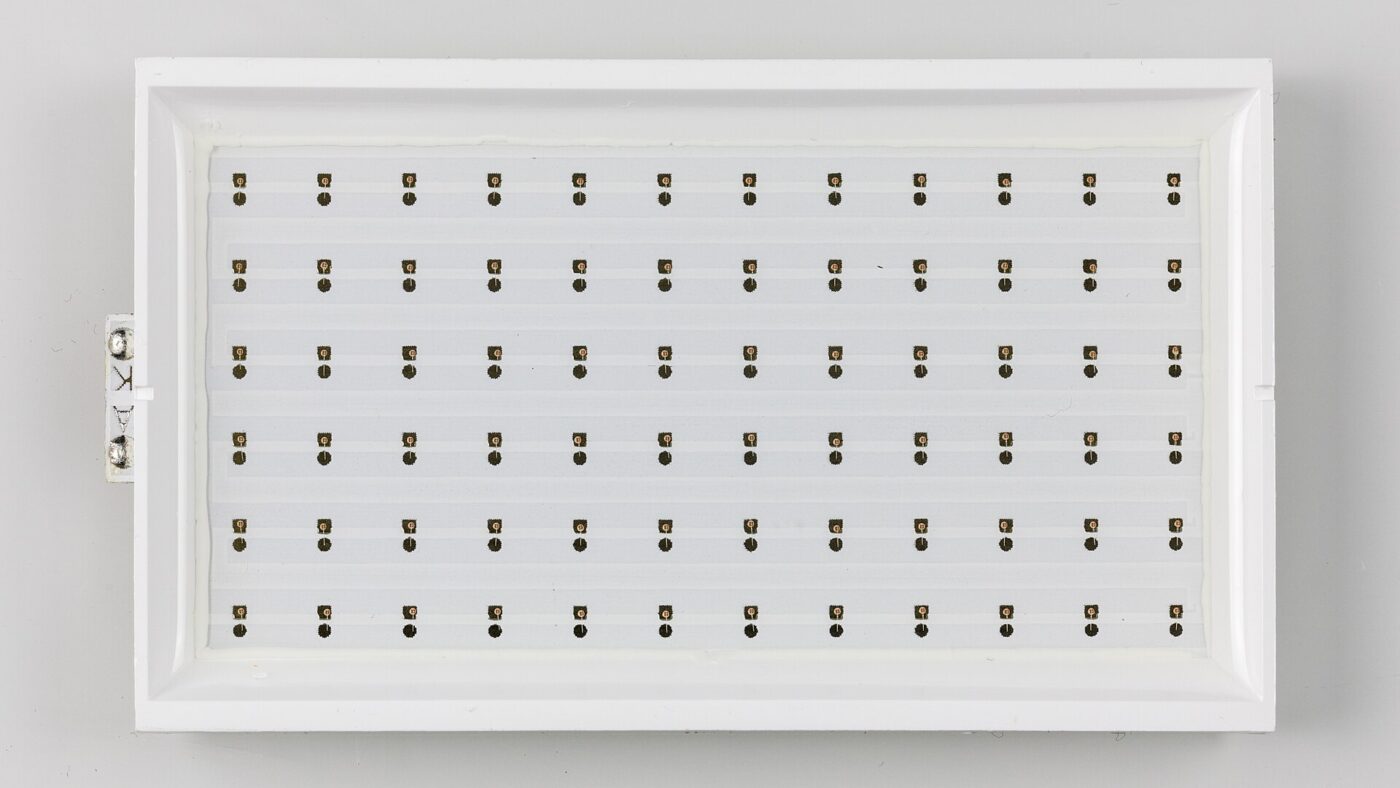
A standard mini-LED TV lights an LCD panel with many small LEDs grouped into local dimming zones. An RGB mini-LED TV keeps the LCD panel but makes the backlight itself red, green and blue, so the set manages color as well as brightness at the backlight. Samsung describes its Micro RGB sets as using “micro-sized RGB backlights” with local dimming for color and brightness.
The claimed payoff is color. TrendForce says RGB mini-LED offers advantages over conventional mini-LED in color gamut, brightness and energy efficiency. Samsung says its Micro RGB TVs cover 100% of the BT.2020 color gamut, verified by VDE, and Hisense claims up to 110% of BT.2020 for its 116-inch 116UXS, which adds cyan LEDs to red, green and blue.
Those are manufacturer claims, not independent measurements, and color gamut is only one part of picture quality. Dimming precision, processing and viewing angle still separate strong sets from weak ones, whatever the backlight.
RGB mini-LED is an LCD TV with a more capable backlight, not a new panel type.
How fast the category is moving
The volumes are small but the forecasts keep rising. In August 2026 TrendForce raised its 2026 RGB mini-LED forecast to 1.7 million units and said the technology is being adopted across expanding lineups from Samsung, TCL, Hisense and Sony. TrendForce said shipments could approach 2 million. Against its full-year forecast of 194.65 million TVs, that is roughly 0.9% to 1% of shipments by our calculation.
Standard mini-LED is the bigger story. TrendForce projected in May 2026 that global mini-LED TV shipments would reach 24.9 million units in 2026, up 87%, for a 12.8% share of the market. TrendForce’s August update added that Samsung’s mini-LED TV shipments rose more than 200% year over year in the first half of 2026, and LG is expanding its mini-LED lineup as it moves beyond its reliance on OLED.
Brands are using RGB to set their premium models apart while the overall TV market stalls. TrendForce counted 93.74 million TVs shipped worldwide in the first half of 2026, up 1.3%, and expects a 0.8% decline for the full year.
What it costs in 2026

Samsung’s April 14, 2026 announcement set the US price ladder. The 2026 R85H launched at $1,599.99 for 55 inches, $2,799.99 for 75 inches and $3,999.99 for 85 inches. The step-up R95H, offered in 65, 75 and 85 inches, launched at $3,199.99 to $6,499.99. The 2025 R95F comes only in 115 inches at $29,999.99. Hisense opened US pre-orders for its UR9 on March 26, 2026 at $3,499.99 for 65 inches, up to $8,999.99 for 100 inches. Launch prices are a starting point; retailer prices have since been discounted.
Cost pressure runs upward. TrendForce said in January 2026 that memory’s share of a TV’s bill of materials would rise from 2.5%–3% to 6%–7%, with contract prices for the 4GB DDR4 chips used in 4K TVs more than quadrupling over a year, and that retail price increases for new TV models were “now considered unavoidable.” The BLS price index for televisions shows the long slide nearly stopping: it fell 10.2% in the year to June 2025, but only 1.0% in the year to August 2026.
| Model | Sizes | US launch price |
|---|---|---|
| Samsung Micro RGB R85H (2026) | From 55 in. | $1,599.99 (55-inch); $2,799.99 (75-inch) |
| Samsung Micro RGB R95H (2026) | 65, 75, 85 in. | $3,199.99 (65-inch); $4,499.99 (75-inch) |
| Samsung Micro RGB R95F (2025) | 115 in. only | $29,999.99 |
| Hisense UR9 RGB MiniLED (2026) | 65, 75, 85, 100 in. | $3,499.99–$8,999.99 MSRP |
| Hisense U7 standard mini-LED (2026), for comparison | Up to 116 in. | From $1,299 MSRP |
RGB entry prices start near premium standard mini-LED, but the larger sizes still carry a flagship premium.
Who should buy now
An RGB set makes the most sense for a buyer who already planned to spend at the top of the LCD range, watches in a bright room and wants a screen of 75 inches or more. At those sizes and budgets the comparison is against flagship mini-LED and large OLED sets, and extra color range shows most in HDR movies and games.
Gamers do not give anything up: Samsung’s RGB models run at up to 144Hz on the R85H and 165Hz on the R95H, with a compatible PC. Before buying, work through a short checklist:
- Confirm the model name includes RGB or Micro RGB; standard mini-LED sets carry similar branding.
- Compare the same screen size across RGB and standard mini-LED lines, since the price gap differs by size.
- Count the HDMI 2.1 inputs if you connect more than one console or a PC.
- Check the return window; brightness and color are easiest to judge in your own room.
Who should wait
Most buyers. With forecast volume around 1% of the market, 2026 is the first year with a real spread of RGB brands and sizes, though TrendForce said in August that improving price competitiveness is pushing RGB from the ultra-premium tier into the broader premium market. Standard mini-LED, which TrendForce expects in about one in eight TVs shipped in 2026, already offers local dimming and high brightness across far more models and sizes; Hisense’s 2026 U7 starts at $1,299 MSRP, against $1,599.99 for Samsung’s cheapest Micro RGB set at launch.
Waiting has a cost, though. TrendForce’s view that memory and panel costs make TV price increases unavoidable suggests that RGB may take more than one model year to reach mainstream prices. A buyer who needs a TV now and is unsure should favor a strong standard mini-LED set and revisit RGB when the second wave of models arrives.
What to watch next
- Whether next-generation RGB models launch below the $1,599.99 entry point Samsung set for its 55-inch R85H in April 2026
- TrendForce’s next TV shipment update, which will show whether the 1.7 million RGB forecast holds
- The BLS television CPI: a return to year-over-year increases would confirm that TV prices have turned
Where to start
Paid links: we earn a commission if you buy through the buttons below, at no extra cost to you. As an Amazon Associate I earn from qualifying purchases.
TV backlight options compared on the things that differ
| Product type | Good fit for | Where to look |
|---|---|---|
| RGB mini-LED TV | Fits large, bright rooms with a premium budget | See listings on AmazonOpens Amazon search results, not one listing: check the model on the product page. |
| Standard mini-LED TV | Fits most buyers who want strong HDR per dollar | See listings on AmazonOpens Amazon search results, not one listing: check the model on the product page. |
| OLED TV | Fits dim-room movie watching | See listings on AmazonOpens Amazon search results, not one listing: check the model on the product page. |
Product types that fit the trend described above, not tested models. Check the exact listing before you buy. How we pick them.
RGB mini-LED TV
Where to look: Amazon
Suits a buyer already shopping flagship TVs. Compare the same size against standard mini-LED before paying the premium.
- Widest claimed color gamut
- High refresh rates on 2026 models
- Fewer sizes and brands than standard mini-LED
- $2,799.99 launch price for a 75-inch Samsung R85H
Standard mini-LED TV
Where to look: Amazon
TrendForce expects about one in eight TVs shipped in 2026 to be mini-LED. Dimming zone count and processing matter more than the label.
- Many sizes and brands
- Local dimming at midrange prices
- Narrower color than RGB claims
- Quality varies widely by model
OLED TV
Where to look: Amazon
The main alternative at the premium end, and a stronger fit for dim rooms than bright ones.
- Light controlled pixel by pixel
- Wide viewing angles
- Less peak brightness than bright LCDs
- Static images carry burn-in risk
More: Gaming and Entertainment trends and how the Trend Signal is scored.
Sources
- Global TV shipments rise 1.3% in 1H26 as RGB Mini LED commercialization advances — TrendForce
- Global TV shipments hit a post-pandemic high for the same period in 1Q26 as memory price hikes led to early pull-in of orders — TrendForce
- Surging memory, panel and precious metal prices weigh on TV brand profitability — TrendForce
- Why Micro RGB: technology and lineup — Samsung US
- Samsung Micro RGB TV lineup US pricing, April 14, 2026 — Samsung Newsroom US
- Hisense opens UR9 RGB MiniLED TV pre-orders, March 26, 2026 — PR Newswire
- 75-inch Micro RGB R85H product page — Samsung US
- 75-inch Micro RGB R95H product page — Samsung US
- 115-inch Micro RGB R95F product page — Samsung US
- Hisense pioneers the evolution of RGB MiniLED at CES 2026 — Hisense USA
- Hisense 2026 ULED MiniLED TVs — Hisense USA
- CPI: Televisions, 12-month percent change — Bureau of Labor Statistics
Questions readers ask
What is an RGB mini-LED TV?
It is an LCD TV whose backlight uses red, green and blue LEDs with local dimming. Samsung markets it as Micro RGB; TrendForce says the approach improves color gamut, brightness and energy efficiency over conventional mini-LED.
Is RGB mini-LED better than OLED?
They solve different problems. RGB mini-LED targets brightness and color on large screens, while OLED controls light pixel by pixel. Samsung claims 100% BT.2020 coverage for its Micro RGB sets, but that is a manufacturer figure, so compare in person or through independent reviews.
How much does an RGB mini-LED TV cost?
Samsung announced US launch prices on April 14, 2026 from $1,599.99 for the 55-inch Micro RGB R85H to $6,499.99 for the 85-inch R95H, with the 115-inch R95F at $29,999.99. Hisense priced its UR9 from $3,499.99 (65-inch) to $8,999.99 (100-inch) MSRP when US pre-orders opened in March 2026. Retail prices vary.
Will RGB mini-LED TVs get cheaper soon?
Not quickly across the board. TrendForce said in January 2026 that rising memory and panel costs made retail price increases on new TV models unavoidable. In August, though, it said improving price competitiveness is pushing RGB from the ultra-premium tier into the broader premium market, with 2026 volume forecast at about 1.7 million units.