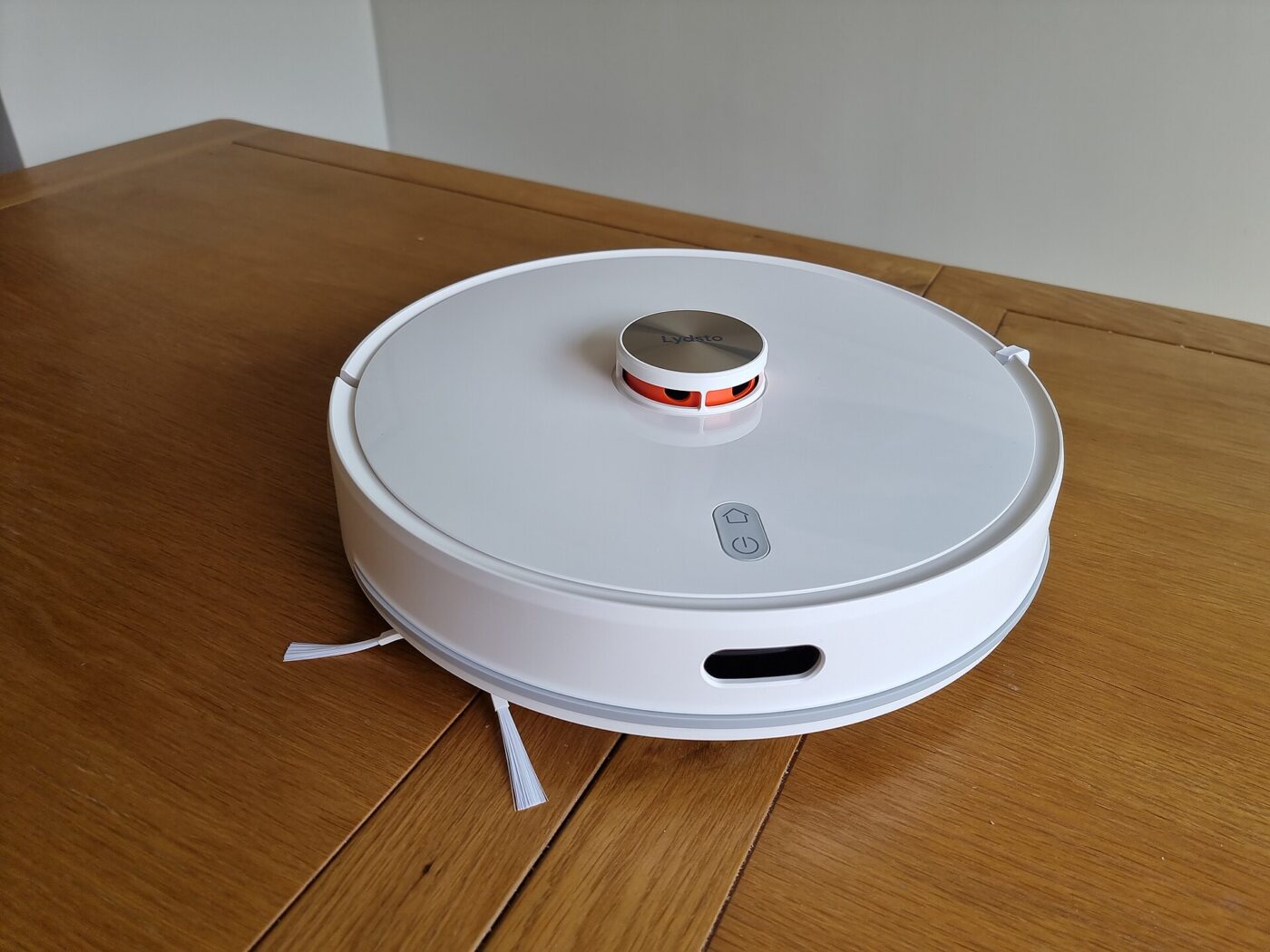
Two things changed for American robot vacuum shoppers in about six months. In January 2026 the company behind the Roomba became a subsidiary of its Chinese contract manufacturer. In late July the Federal Communications Commission put foreign-produced robots, a category broad enough to include a typical vacuum and its dock, on the same list that already covers foreign-made drones and consumer routers.
Neither change strands the robot you own. Together they narrow what can launch next in the US and put a date on how long makers may keep patching the models already here.
Trend Signal
55/100 Steady momentum
- Emerging
- Rising
- Mainstream
- Peaking
- Cooling
Global demand kept growing in 2025, but new US models now need a federal sign-off
IDC counted 17.42 million smart-vacuum shipments worldwide in the first three quarters of 2025, up 18.7%, yet on July 28, 2026 the FCC added foreign-produced advanced robotic devices, a definition Consumer Reports reads as covering robot vacuums, to its Covered List.
Our editorial reading of the cited data, not a forecast. How it is scored
By the numbers
- 4.4 lbRobot-plus-dock weight above which the FCC’s July 2026 robot definition appliesFCC
- 17.42MSmart-vacuum shipments worldwide, first three quarters of 2025, up 18.7% year over yearIDC
- 21.7%Roborock share of global smart-vacuum shipments, first three quarters of 2025South China Morning Post, IDC data
- $681.8MiRobot full-year revenue in 2024, down from nearly $1.6 billion in 2021Manufacturing Dive
What the FCC changed on July 28, 2026

The FCC’s Public Safety and Homeland Security Bureau released Public Notice DA 26-786 on July 28, 2026, adding “foreign-produced advanced robotic devices, except advanced robotic devices which have been granted a Conditional Approval by DoW” to the Covered List after a White House–convened interagency body sent a national security determination. Equipment on the list cannot receive new FCC equipment authorizations.
The definition is what pulls in household robots. It covers a mobile device that can move, avoid obstacles or find its way on the ground; works at a distance from a person based on commands or sensor data; weighs more than 4.4 pounds together with any docking station; and carries a sensor, a network link of at least 200 kbps and software that runs its autonomous navigation, data collection or remote control. Consumer Reports reads that as including robot vacuums, vacuum-mop combos and robotic lawn mowers. “Foreign-produced” means not qualifying as a “domestic end product,” which Consumer Reports explains as US manufacture with domestic components above 65% of component cost.
The notice is not a recall. Previously authorized robots can still be produced, marketed and imported, according to a JD Supra summary, and Consumer Reports says retailers may keep selling authorized units. The exception route is a Conditional Approval, which for robots only the Department of War can grant; applicants must disclose corporate structure, supply chain and bills of materials and submit a US manufacturing plan, Consumer Reports reported.
The rule freezes the pipeline, not the robot in your hallway: models authorized before July 28, 2026 can still be sold.
How iRobot ended up owned by its supplier
iRobot filed for Chapter 11 on December 14, 2025, under a plan in which Shenzhen Picea Robotics, its secured lender and primary contract manufacturer, took 100% of the equity. The deal closed on January 23, 2026, iRobot’s shares left Nasdaq, and iRobot said common stockholders would receive nothing. Picea says it has made and sold more than 20 million robot vacuums.
The decline was long. Manufacturing Dive reported that iRobot’s revenue peaked near $1.6 billion in 2021 and fell to $681.8 million in 2024. Amazon’s $1.7 billion takeover, agreed in August 2022, collapsed in January 2024 under EU regulatory scrutiny, and iRobot then cut 31% of its workforce, TechCrunch reported. The South China Morning Post added that iRobot expected new US tariffs to raise its costs by more than $23 million in fiscal 2025, driven by a 46% tariff on imports from Vietnam, where its US-market robots are made.
iRobot said it expected no disruption to app functionality, customer programs or product support, and the closing created a US subsidiary, iRobot Safe, with an independent US board overseeing consumer data. In July 2026 it opened pre-sales on a new lineup at list prices it set from $599.99 for the Roomba Plus 415 Combo with an AutoWash dock to $999.99 for the Roomba Max 775 Combo, plus a $399.99 cordless hard-floor cleaner.
Who makes the robots Americans buy
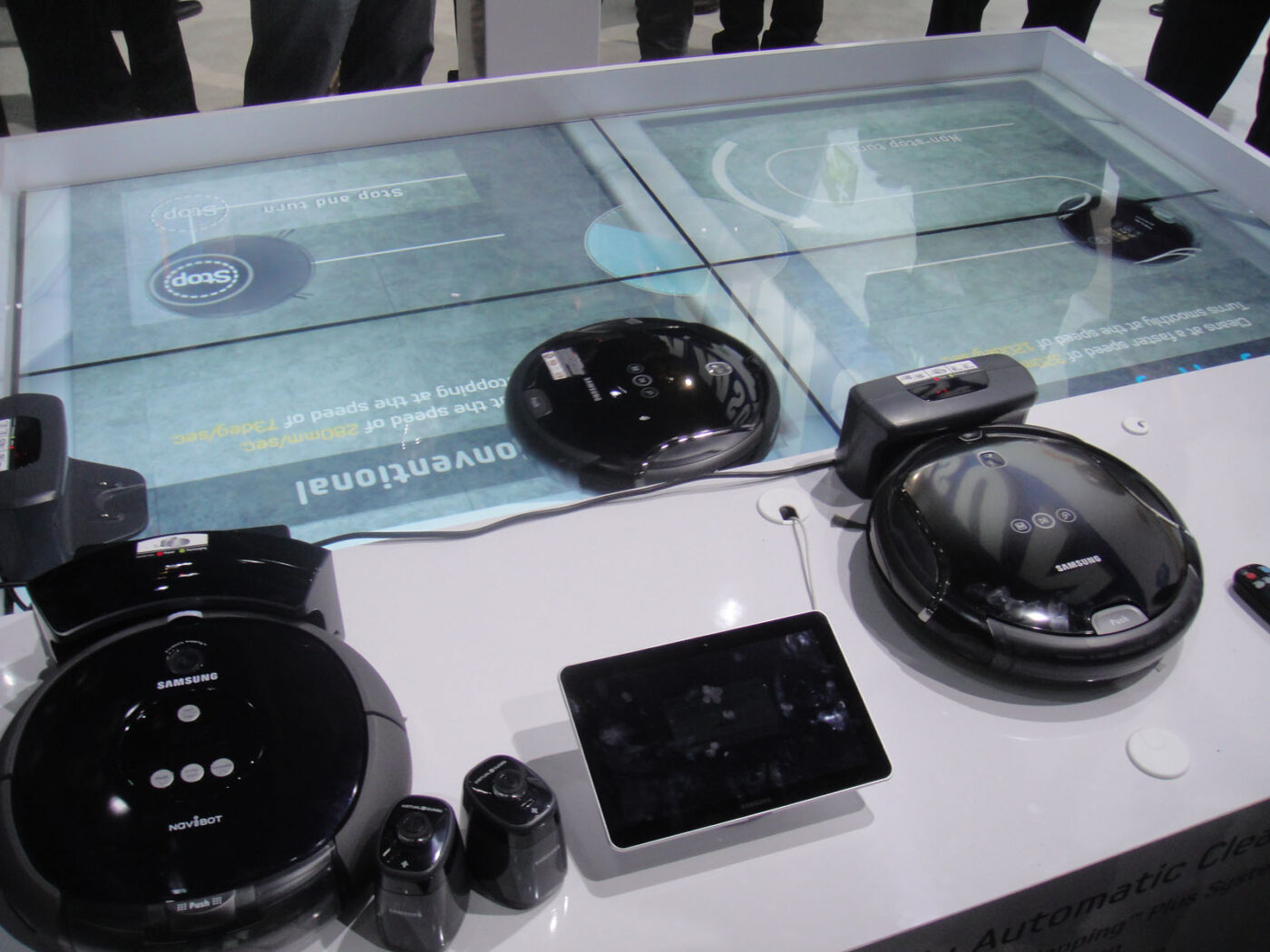
IDC counted 17.42 million smart-vacuum shipments worldwide in the first three quarters of 2025, up 18.7% from a year earlier, and the five largest brands were all Chinese. The South China Morning Post, citing IDC, put Roborock at 21.7% of shipments, or 3.8 million units, followed by Ecovacs, Dreame, Xiaomi and Narwal.
Roborock said in March 2026 that IDC ranked it first in the US and that it shipped 5.8 million home cleaning robots in 2025, a count that also includes lawn mowers and other robot types. IDC analyst Jitesh Ubrani wrote that iRobot stuck with camera-based vSLAM mapping while rivals moved to LiDAR, as buyers prioritized AI navigation, obstacle recognition and self-emptying docks and makers pushed slimmer bodies that fit under low furniture.
The FCC notice identifies the new entries by place of production, not by company, so iRobot’s Vietnam-built robots face the same test as models from Chinese brands.
| Brand | Share of global smart-vacuum shipments, Q1–Q3 2025 |
|---|---|
| Roborock | 21.7% |
| Ecovacs | 14.1% |
| Dreame | 12.4% |
| Xiaomi | 10.0% |
| Narwal | 7.5% |
What happens to prices, choice and updates
No agency or tracker we found has published a price forecast tied to the rule. What the documents establish is a narrower pipeline: a model without FCC authorization on July 28, 2026 now needs a Conditional Approval that asks for a US manufacturing plan. We read that as the already-approved lineup carrying more of the US market for a while, with fewer fresh launches.
Updates are the longer-term issue. Consumer Reports says robots already authorized may keep receiving software and firmware updates “that mitigate harm to U.S. consumers” until January 1, 2029, and JD Supra notes that a blanket waiver permits only certain Class I and Class II software and firmware changes, while hardware changes need a separate waiver. A robot bought in late 2026 therefore has a defined patch window unless the FCC changes it.
The app question is separate. TechCrunch noted that if iRobot’s cloud shut down, owners would lose app scheduling, room selection and voice commands but keep the physical buttons; that risk now rests on Picea’s support.
Weigh the update window alongside the sticker price; the rule now puts a date on both.
Who should buy now and who can wait
If your current robot works, nothing in the rule asks you to act. Consumer Reports told readers there is “no need to panic-shop” because existing retail inventory already has FCC authorization.
Buying now makes sense if you want a model already on US shelves and accept the patch window above. LiDAR navigation, obstacle recognition and self-emptying docks are common in authorized models, including iRobot’s July 2026 lineup.
Waiting makes sense only if you want a model not yet in US stores, since it now needs a Conditional Approval. The FCC says it will update the Covered List when devices are cleared, so check that list before planning around a launch. On September 11, 2026, Android Authority reported that the first robotics maker to receive a conditional approval was Husqvarna, for four robot lawn mower models.
What to watch next
- Updates to the FCC Covered List that name any robot vacuum, or class of robots, cleared through a Department of War Conditional Approval
- Whether the FCC moves the January 1, 2029 limit on robot software and firmware updates
- iRobot’s US launches and support commitments under Picea ownership
Where to start
Paid links: we earn a commission if you buy through the buttons below, at no extra cost to you. As an Amazon Associate I earn from qualifying purchases.
Robot vacuum types to consider while the FCC rule settles
| Product type | Good fit for | Where to look |
|---|---|---|
| LiDAR robot vacuum with self-emptying dock | Fits mixed carpet and hard floors | See listings on AmazonOpens Amazon search results, not one listing: check the model on the product page. |
| Robot vacuum and mop with washing dock | Fits mostly hard floors | See listings on AmazonOpens Amazon search results, not one listing: check the model on the product page. |
| Low-profile robot vacuum | Fits homes with low furniture | See listings on AmazonOpens Amazon search results, not one listing: check the model on the product page. |
Product types that fit the trend described above, not tested models. Check the exact listing before you buy. How we pick them.
LiDAR robot vacuum with self-emptying dock
Where to look: Amazon
The setup IDC says buyers prioritized in 2025. Pick a model already sold in the US and read the maker’s update policy.
- LiDAR is less sensitive to room lighting
- Dock cuts down on bin emptying
- Dock needs floor space
- Bags can be a running cost
Robot vacuum and mop with washing dock
Where to look: Amazon
Suits tile, vinyl or sealed wood. Check that the mop lifts or detaches on rugs.
- Vacuums and mops in one run
- Washing dock handles the pads
- Larger dock footprint
- More parts to maintain
Low-profile robot vacuum
Where to look: Amazon
Worth it if dust collects under low furniture. Measure your lowest gap first.
- Reaches under low sofas and beds
- Slimmer bodies were a 2025 design push
- Less room for bins and batteries
- Check the obstacle sensors
More: Smart Home trends and how the Trend Signal is scored.
Sources
- Public Notice DA 26-786, robotic devices added to the Covered List — FCC
- What the FCC ban on foreign-made robot vacuums means for consumers — Consumer Reports
- FCC adds foreign-produced advanced robotic devices to the Covered List — JD Supra
- iRobot announces strategic transaction — iRobot
- iRobot completes transaction with Picea — PR Newswire
- Roomba maker files for Chapter 11 bankruptcy — Manufacturing Dive
- China cements global lead in smart vacuums — South China Morning Post via Yahoo Finance
- Chinese smart vacuum giants and the sale of iRobot — IDC
- Roborock 2025 shipments, per IDC — Roborock via PR Newswire
- How iRobot lost its way home — TechCrunch
- New generation of Roomba robots, July 2026 — iRobot
- Another big name gets the green light to keep selling foreign-made routers in the US — Android Authority
Questions readers ask
Are robot vacuums banned in the US?
No. Since July 28, 2026, new foreign-produced advanced robotic devices cannot get FCC equipment authorization without a Department of War Conditional Approval. Models authorized before then can still be made, imported and sold, and robots in homes are not affected, Consumer Reports and JD Supra report.
Does the rule apply to Roombas?
iRobot’s US-market robots are made in Vietnam, the South China Morning Post reported, and the FCC identifies covered equipment by where it is produced. New iRobot models face the same approval test as other foreign-made robots; existing authorized models stay on sale.
How long will my robot vacuum get software updates?
Consumer Reports says robots already authorized may keep receiving software and firmware updates that mitigate harm to consumers until January 1, 2029 under current rules. Support after that depends on further FCC action and on each company.
What happened to iRobot?
iRobot filed for Chapter 11 on December 14, 2025 and was acquired by Shenzhen Picea Robotics, its contract manufacturer and lender, in a deal that closed on January 23, 2026. It said it expected no disruption to app functionality or product support.