Amazon finishes ski goggles ten ways, and two of them are problems rather than products: ski goggles over glasses and ski goggles anti-fog. We pulled those completions on October 12, 2026. They are the same question twice, because a goggle worn over spectacle arms seals differently and traps more warm air than one worn on skin.
We have tested nothing. What follows is the standards record read on ASTM’s own pages, the text of a federal labeling rule extracted from the government print of the Code of Federal Regulations, the design language makers publish for their over-the-glasses ranges, participation counts from the SIA study PDF we downloaded, and our own CPSC recall database search on October 12, 2026. Nothing here says what level of protection any goggle provides, because the withdrawn specification is no longer there to say it. Method: how we track trends.
Trend Signal
55/100 Steady momentum
- Emerging
- Rising
- Mainstream
- Peaking
- Cooling
The goggle specification is gone while the helmet specification stands
ASTM’s record for F659-10(2018), Standard Specification for Ski and Snowboard Goggles, is marked Standard Withdrawn, No replacement, last updated July 26, 2024. Its snow helmet specification, F2040-18, is still listed as active.
Our editorial reading of the cited data, not a forecast. How it is scored
By the numbers
- 2024Year ASTM withdrew F659, its ski and snowboard goggle specification, with no replacementASTM
- 50 in.Drop height in the federal referee impact test for eyeglass and sunglass lensesCode of Federal Regulations
- 13.29MUS alpine ski participants in the 2023-24 season, per the SIA participation studySnowsports Industries America
- NoneCPSC recall notices naming ski goggles, our database search October 12, 2026CPSC
The standard that used to cover goggles is gone

ASTM F659 was the US specification for this product for decades. The 2010 revision titled it Standard Specification for Ski and Snowboard Goggles and defined its scope as the minimal requirements of ski and snowboard goggles intended for nonmotorized use, to provide a reasonable degree of protection against snow and moisture striking or lodging in the eye or surrounding soft tissue. Its abstract lists what it graded: field of view in the temporal, nasal, superior and inferior fields, luminous transmittance, refractive tolerances, astigmatism, measures to minimize fogging, and basic and higher impact resistance tests.
That record now carries a different label. ASTM’s page for F659-10(2018) reads Standard Specification for Ski and Snowboard Goggles (Withdrawn 2024), with the status Standard Withdrawn, No replacement, last updated July 26, 2024.
The contrast with the helmet half of the same purchase is sharp. ASTM F2040-18, Standard Specification for Helmets Used for Recreational Snow Sports, is listed as active. Its published scope and abstract define performance requirements for helmets used in nonmotorized recreational snow sports such as skiing and snowboarding, say it is a performance standard not intended to restrict design, and describe hot, cold and wet helmets undergoing a dynamic strength retention test, a positional stability roll-off test, and impacts against flat, hemispherical and edge anvils. A buyer can still check a helmet against a current specification. For a goggle there is none.
Helmet: active ASTM specification. Goggle: withdrawn in 2024, no replacement.
What over the glasses changes in the frame
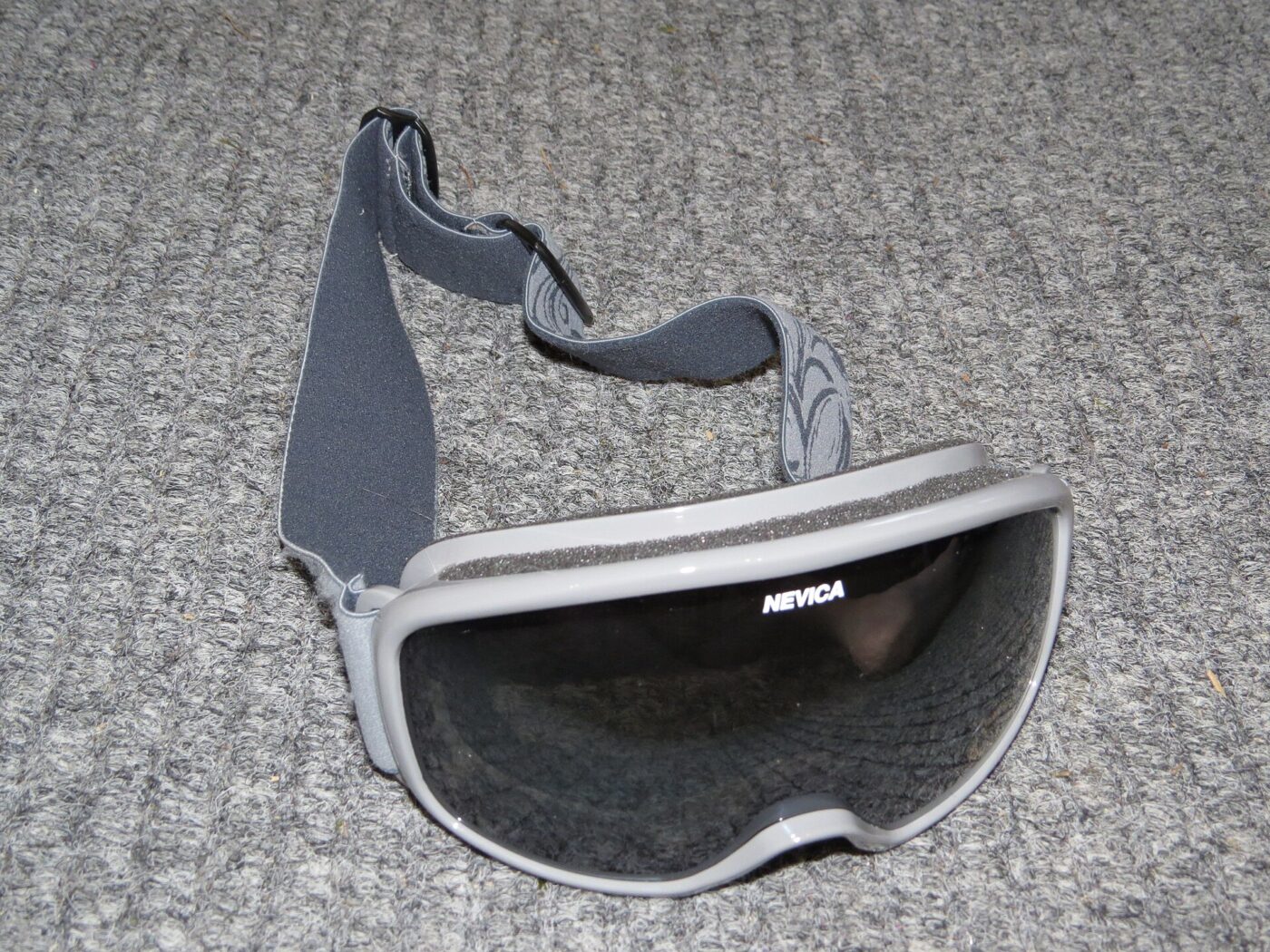
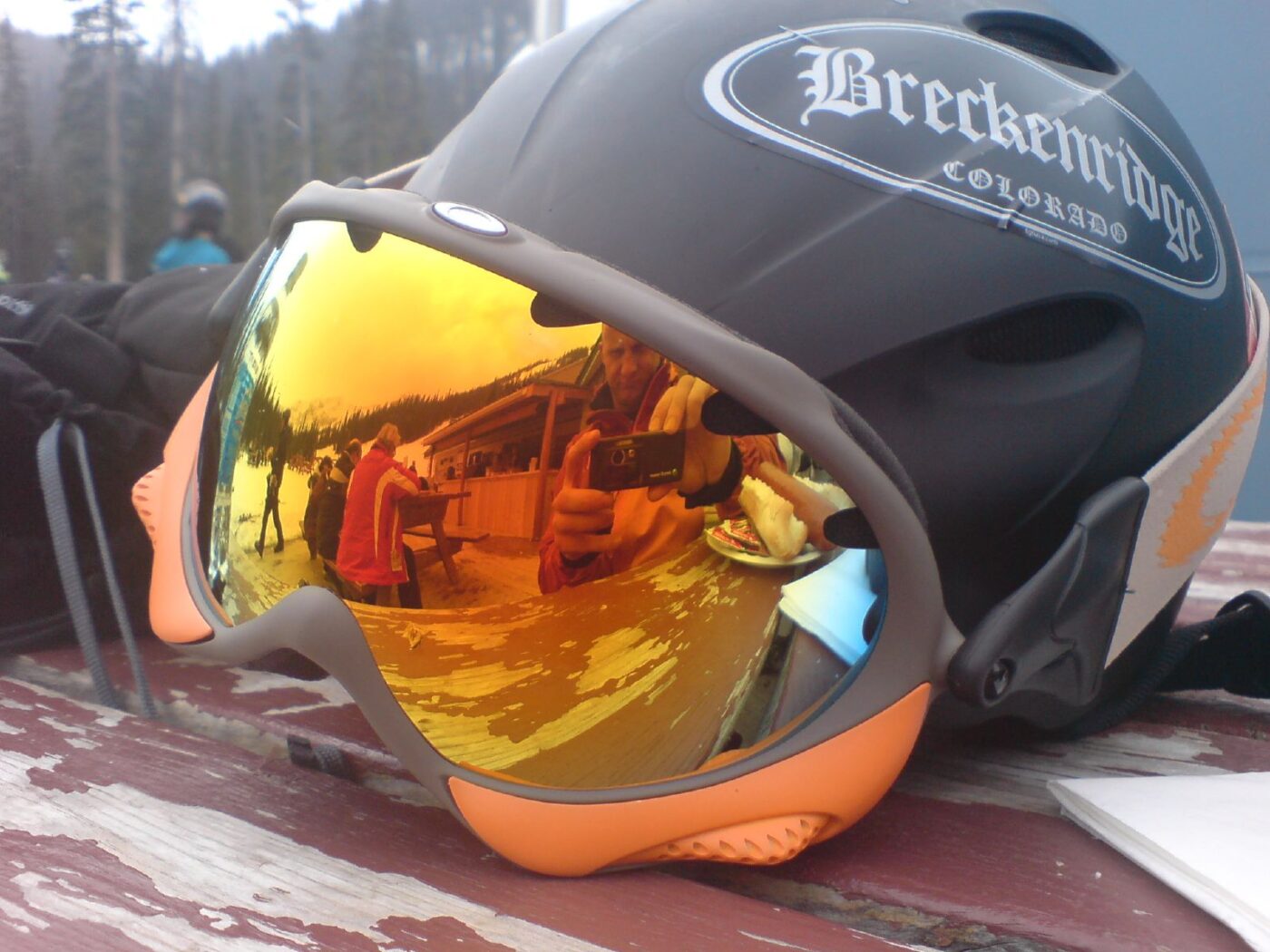
Makers describe over-the-glasses goggles, shortened to OTG, as two structural changes rather than a lens choice. Smith’s over-the-glasses collection page describes temple reliefs that accommodate eyeglass arms and extra interior volume intended to reduce fogging. Those are the two failure points a glasses wearer meets: the arm breaking the foam seal, and a second lens inside the chamber adding a surface for condensation.
The alternative the same maker publishes is an adapter rather than a bigger goggle: a prescription snow goggle adapter carrying corrective lenses inside a standard frame. That moves the question from whether your glasses fit inside to whether your prescription can be made into an insert, which is one for the optician. Neither route is covered by a goggle specification any more, so the words on a listing are the maker’s own: Smith names 5X Anti-Fog and Fog-X among its treatments, and those are brand names for coatings rather than grades against a test.
Your glasses are the regulated part
There is a federal rule in this purchase, and it lands on the spectacles rather than the goggle. Under 21 CFR 801.410, eyeglasses and sunglasses must be fitted with impact-resistant lenses, except where a physician or optometrist finds such lenses will not fulfill the visual requirements of the particular patient, directs the use of other lenses in writing and notifies the patient in writing. The rule states plainly that all lenses must be impact-resistant except in that case, and that it does not apply to contact lenses.
The test behind it is specific. In the referee impact test, a 5/8-inch steel ball weighing approximately 0.56 ounce is dropped from 50 inches onto the horizontal upper surface of the lens, striking within a 5/8-inch circle at the geometric center. To pass, the lens must not fracture, which the rule defines as cracking through its entire thickness and across a complete diameter into two or more pieces. Each finished impact-resistant glass lens for prescription use must be individually tested; other types are tested as a statistically significant sampling from each production batch. The rule also states that the term manufacturer includes an importer for resale.
The withdrawn goggle specification pointed the same way. Its section 1.2.1 excluded contact lenses, sunglasses and corrective dress eyewear from its scope, and warned that spectacles worn under goggle-type eyewear should be impact-resistant prescription spectacles conforming to ANSI Z87.1. The paperwork covering a glasses-wearing skier sits entirely on the glasses.
The lens with a rule behind it is the one already on your face.
Tint is sold in words, so make the listing give you a number
Luminous transmittance was one of the properties the withdrawn specification graded, and it survives in the market as VLT, the share of visible light a lens passes. What has not survived is a common scale. Smith’s snow goggle collection page sorts its lenses into Sun, Everyday and Storm categories and describes Sun as the lower VLT and Storm as the highest, without printing a percentage on the page we read.
That makes the individual listing the only place a number appears, and it is worth insisting on one: two lenses both called everyday can sit far apart on transmittance. A second lens is the practical answer to a variable sky, which is why replacement-lens ranges exist as their own collections. For scale, the SIA participation study for 2023-24, which we downloaded and extracted, counted 13,292,000 alpine ski participants and 9,811,000 snowboarders, the latter up 9.3%, within 30.3 million total winter sport participants — most of them buying one goggle for every kind of light a season produces.
What the recall record holds
We searched the CPSC recall database on October 12, 2026 for ski goggles and for goggles. The first returned no notices. The second returned one, and it is not snow equipment: Exploding Kittens recalled safety goggles sold with dodgeball game sets on September 19, 2019 over a laceration hazard. That is thinner than it looks, because an empty search means no notice has been issued rather than that the category has no failures. With the ASTM specification withdrawn there is neither a current conformance test to cite nor a recall history to read, which puts the weight on what a buyer can verify: that the frame clears your own temple arms, that the listing prints a VLT figure, and that a replacement lens exists for the model.
No notices and no current specification. Verify fit and the published VLT figure yourself.
What to watch next
- Whether ASTM opens a replacement work item for ski and snowboard goggles after withdrawing F659 in 2024
- Whether makers start printing VLT percentages on collection pages rather than only on individual listings
- The CPSC recall database for a first notice naming a ski or snowboard goggle; our October 12, 2026 search found none
Where to start
Paid links: we earn a commission if you buy through the buttons below, at no extra cost to you. As an Amazon Associate I earn from qualifying purchases.
Ski goggle types compared on what a glasses wearer can verify
| Product type | Good fit for | Where to look |
|---|---|---|
| Over-the-glasses ski goggle | Fits over eyeglass arms | See listings on AmazonOpens Amazon search results, not one listing: check the model on the product page. |
| Spare goggle lens | Fits changing light | See listings on AmazonOpens Amazon search results, not one listing: check the model on the product page. |
| Youth-size ski goggle | Fits smaller faces | See listings on AmazonOpens Amazon search results, not one listing: check the model on the product page. |
Product types that fit the trend described above, not tested models. Check the exact listing before you buy. How we pick them.
Over-the-glasses ski goggle
Where to look: Amazon
Makers describe OTG frames as temple reliefs plus extra interior volume intended to reduce fogging, so the fit question is your own frame width rather than the lens.
- Temple reliefs for spectacle arms
- Larger interior volume
- No current ASTM specification to check
- Bulkier under a helmet
Spare goggle lens
Where to look: Amazon
Transmittance was one property the withdrawn specification graded, and the individual lens listing is now the only place a percentage reliably appears.
- Cheaper than a second goggle
- VLT is usually printed per lens
- Model-specific, not interchangeable
- Tint names differ by maker
More: Sports and Recreation trends and how the Trend Signal is scored.
Sources
- F659-10(2018) Standard Specification for Ski and Snowboard Goggles, withdrawn 2024 — ASTM
- F659-10 Standard Specification for Ski and Snowboard Goggles, historical — ASTM
- F2040-18 Standard Specification for Helmets Used for Recreational Snow Sports — ASTM
- 21 CFR 801.410, use of impact-resistant lenses in eyeglasses and sunglasses — govinfo
- Over the glasses snow goggles collection — Smith Optics
- GRX prescription snow goggle adapter — Smith Optics
- Snow goggles collection and lens categories — Smith Optics
- SIA Participation Study 2023-24 — Snowsports Industries America
- Recall database REST web service — CPSC
Questions readers ask
Is there a current ASTM standard for ski goggles?
No. ASTM’s record for F659-10(2018) is marked Standard Withdrawn, No replacement, last updated July 26, 2024. Its snow helmet specification F2040-18 remains listed as active.
Do prescription glasses worn under goggles have to be impact-resistant?
Eyeglasses and sunglasses sold in the United States must be fitted with impact-resistant lenses under 21 CFR 801.410, unless a physician or optometrist directs otherwise in writing. The referee test drops a 5/8-inch steel ball weighing about 0.56 ounce from 50 inches onto the lens, which must not fracture. The rule does not apply to contact lenses.
Have ski goggles been recalled in the United States?
Our CPSC search on October 12, 2026 for ski goggles returned no notices, and a broader search for goggles returned one, for safety goggles sold with dodgeball game sets in 2019. An empty search means no notice has been issued, not that a product will not fail.