We have not tested any of the locks named here. What follows compares what manufacturers publish on their own sites, what the BHMA Certified Products Directory lists, and what the federal recall database holds. We name only locks whose maker publishes a specification, a grade or a compliance statement that we opened on October 1, 2026.
That rule matters here. A renter searching for a lock that needs no drilling is asking three physical questions and one legal one, and documents answer all four: does the motor clear my thumbturn, does the lock work when the internet does not, how long will the maker patch it, and does my lease allow it.
Trend Signal
60/100 Steady momentum
- Emerging
- Rising
- Mainstream
- Peaking
- Cooling
Retrofit locks sell to renters, and the certified part of the door stays the landlord’s
BHMA certifies residential deadbolts to ANSI/BHMA A156.40-2025 and auxiliary locks to A156.36-2020. A motor that turns an existing thumbturn is not the certified component, so the graded hardware on the door is whatever was fitted before you arrived.
Our editorial reading of the cited data, not a forecast. How it is scored
By the numbers
- 0 recallsResidential smart lock recalls in the CPSC database on October 1, 2026CPSC
- Grade ATop residential deadbolt grade under ANSI/BHMA A156.40-2025, across three attributesBHMA
- 6-9 monthsBattery life SwitchBot publishes for the retrofit Lock Pro on four AA cellsSwitchBot
- 12/31/2026Security update period Aqara declares for its Smart Lock U200 in a UK statementAqara
What a retrofit smart lock actually replaces
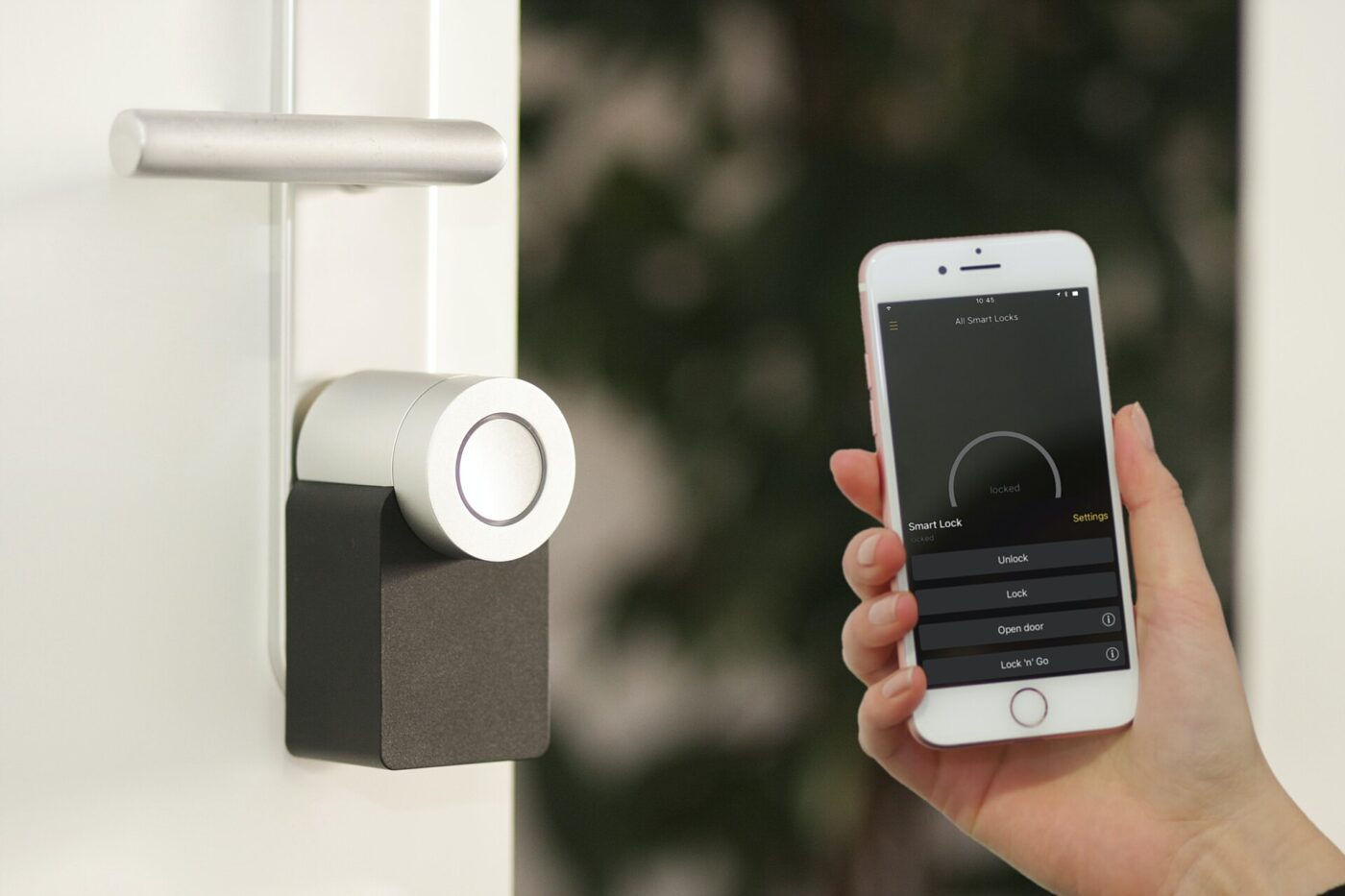
The category splits in two, and the split decides everything else. A full replacement takes out the deadbolt and puts a new one in, which means new boring, a new cylinder and in most leases a conversation with the building. A retrofit mounts on the inside face of the door and turns the existing thumbturn with a motor; it is the same reversible logic behind the no-neutral smart switches renters buy. SwitchBot describes its Lock Pro that way: a retrofit design on four AA cells, with a published life of six to nine months.
Because the retrofit leaves the lock itself alone, it changes nothing a standards body has measured. BHMA grades residential deadbolts under ANSI/BHMA A156.40-2025 and bored auxiliary dead locks under ANSI/BHMA A156.36-2020, and both grade the bolt, cylinder and strike as a unit. A motor clamped to the thumbturn sits outside that boundary. If your landlord fitted an unbranded deadbolt, a retrofit gives you app control of an ungraded lock.
The flip side is that the retrofit keeps your key working. The outside of the door is untouched, a building master key still turns, and removal is a screwdriver job. For a lease that forbids altering the hardware, that is the whole argument.
A retrofit buys access control, not a stronger lock.
The measurements that decide whether it fits

Retrofit mounting is unforgiving in a way listings rarely explain. The device has to seat over the interior escutcheon, grip a thumbturn its adapter supports, and still clear the frame, the trim and anything hanging on the back of the door. Makers publish adapter sets and door thickness ranges for that reason, and those are the specifications to read first.
If you are replacing the whole lock, the numbers change. Door thickness and backset decide whether a standard US deadbolt fits, and the published function number says what the lock does: the A156.40-2025 summary lists codes such as E011A, E011B and E011C for a deadlocking latch bolt operated by key from either side, the trailing letter carrying the grade.
- The thumbturn shape, against the adapters the maker lists as included
- Door thickness, which the maker publishes as a range
- Clearance between the thumbturn and the frame, trim or door stop
- Whether the lock is a single-cylinder deadbolt at all; rim locks and mortise locks take different hardware
What the recall file says about door locks
We searched the Consumer Product Safety Commission recall database by product name on October 1, 2026. Searches on smart lock, deadbolt, electronic lock, keyless entry, padlock and strike plate each returned nothing. Door lock returned seven records, lockset three overlapping ones, and door handle and door knob one each, for nine distinct records.
What those records have in common should change how you shop. Setting aside two elevator door-locking devices, a 1995 porcelain knob recalled for laceration and an 8,000-unit Best Lock electronic lock recalled in 2002 for a fire hazard, every remaining case is a failure to open from the inside. Stanley Security Solutions recalled about 63,100 locksets in March 2011 and about 70,000 in November 2016, both because the latch could fail and the door could not be unlocked from inside, and dormakaba USA recalled about 13,500 Stanley commercial locksets in December 2018 for the same reason.
We read that as information about what regulators act on, not a verdict on any product. Nobody has recalled a residential smart lock. What has been recalled, repeatedly, is hardware that trapped people inside, which is the failure mode to ask about: how the door opens from inside on flat batteries.
The documented hazard in door locks is getting out, not keeping someone out.
Batteries, lockouts and the backup plan
Most locks here run on alkaline AA cells. SwitchBot publishes six to nine months for the Lock Pro on four AA cells, extending to nine to twelve months with a separate battery pack. TP-Link takes the other approach on its Tapo DL110, publishing a rechargeable pack with roughly a year between charges and a USB-C port on the lock body. They fail differently, and the question is which failure you would rather handle. For what cells cost now, see AA battery prices in 2026.
Whatever the chemistry, check the published lockout path. A retrofit always leaves the outside key in place, which is the cleanest answer there is. A replacement keypad deadbolt may offer a key override, a jump-start contact for a power bank, or nothing at all. Several keyless models sold today have no keyway by design, and that is a deliberate trade the maker will state on the product page.
The third thing to confirm is whether the keypad works with the internet down. Codes stored in the lock keep working; codes checked against an account do not. That distinction is the whole subject of what happens when a service is retired, which we cover in smart home gear switched off by its maker.
Who should buy now and who should ask the landlord first
Buy a retrofit now if your lease bars changes to the hardware, your deadbolt has a plain thumbturn, and you want codes for a dog walker or a cleaner. You keep the key, and removal is a screwdriver job. Buy a replacement deadbolt if you own the place or have written permission: that is the only route to a lock with a published BHMA grade, and to the phone-as-key hardware in our report on Aliro locks.
Ask first in two situations. Buildings with a master key system often require the outside cylinder stay keyed to the building, which rules out most full replacements. And some leases treat any device that records entries as a change to the unit.
One thing we cannot verify for you: your lease. Rules on altering locks vary by property and by state, and nothing above is advice on what your agreement permits. Treat fit and power as the part documents settle, and permission as the part only your landlord can.
What to watch next
- Whether retrofit makers certify the assembled lock to ANSI/BHMA A156.36, which would put a grade on a category that has never had one
- New entries under door lock in the CPSC recall database, which is free to search by product name before you order
- Whether makers publish a defined support period on the US product page, not only in overseas compliance statements
Where to start
Paid links: we earn a commission if you buy through the buttons below, at no extra cost to you. As an Amazon Associate I earn from qualifying purchases.
Apartment-door lock types compared on the things that actually differ
| Product type | Good fit for | Where to look |
|---|---|---|
| Retrofit smart lock for an existing deadbolt | Fits a lease with no drilling | See listings on AmazonOpens Amazon search results, not one listing: check the model on the product page. |
| Wireless keypad for a smart lock | Fits guests without an app | See listings on AmazonOpens Amazon search results, not one listing: check the model on the product page. |
| Keypad deadbolt that replaces the whole lock | Fits an owner who can swap hardware | See listings on AmazonOpens Amazon search results, not one listing: check the model on the product page. |
Product types that fit the trend described above, not tested models. Check the exact listing before you buy. How we pick them.
Retrofit smart lock for an existing deadbolt
Where to look: Amazon
The type to buy when the hardware has to go back exactly as it was. Measure the thumbturn and the frame clearance first, because adapter coverage is the usual reason one goes back.
- Keeps the existing key and cylinder
- Removes with a screwdriver
- Adds no graded hardware
- Fouls tight door frames
Wireless keypad for a smart lock
Where to look: Amazon
Worth adding when the people you let in will not install anything. Check whether codes live in the lock or in an account, because only one survives an outage.
- Codes instead of app invitations
- Mounts beside the door
- One more set of batteries
- Tied to one lock family
Keypad deadbolt that replaces the whole lock
Where to look: Amazon
The only route to a lock whose own performance has been tested and listed. TP-Link publishes a BHMA grade on its Tapo lock pages, and the grades we checked match the directory.
- Can carry its own BHMA grade
- One device, not two
- Changes the building hardware
- Needs the right backset
More: Smart Home trends and how the Trend Signal is scored.
Sources
- ANSI/BHMA A156.40-2025 Residential Deadbolts, Hardware Highlights — BHMA
- BHMA Certified Products Directory — Builders Hardware Manufacturers
- Recalls database — U.S. Consumer Product Safety Commission
- Stanley Security Solutions recall of 6K and 7KC door locksets — CPSC
- SwitchBot Lock Pro product page — SwitchBot
- Tapo DL110 smart door lock product page — TP-Link
- Statement of compliance, Aqara Smart Lock U200 — Lumi United Technology
Questions readers ask
Does a no-drill smart lock make an apartment door harder to force?
Nothing we found supports that. A retrofit turns the thumbturn of the deadbolt already fitted and leaves the bolt, cylinder and strike unchanged, so the hardware BHMA grades under ANSI/BHMA A156.40-2025 or A156.36-2020 is the same as before.
Have smart locks been recalled in the United States?
Not as of our search. We queried the CPSC recall database by product name on October 1, 2026 and found no records for smart lock, deadbolt, electronic lock or keyless entry. The nine door hardware recalls we did find are mostly commercial locksets recalled because the door could not be unlocked from inside.
What happens if the batteries die while I am out?
It depends on the design, which the maker publishes. A retrofit always leaves the outside key working. A replacement may offer a key override or external contacts for a power bank, and some keyless models offer neither. SwitchBot publishes six to nine months for its Lock Pro on four AA cells.
Will the lock still open without Wi-Fi?
Only if the credential is stored in the lock. Keypad codes and fingerprints held on the device keep working with the network down; anything verified against an account does not. Check that distinction on the product page rather than in the listing bullets.