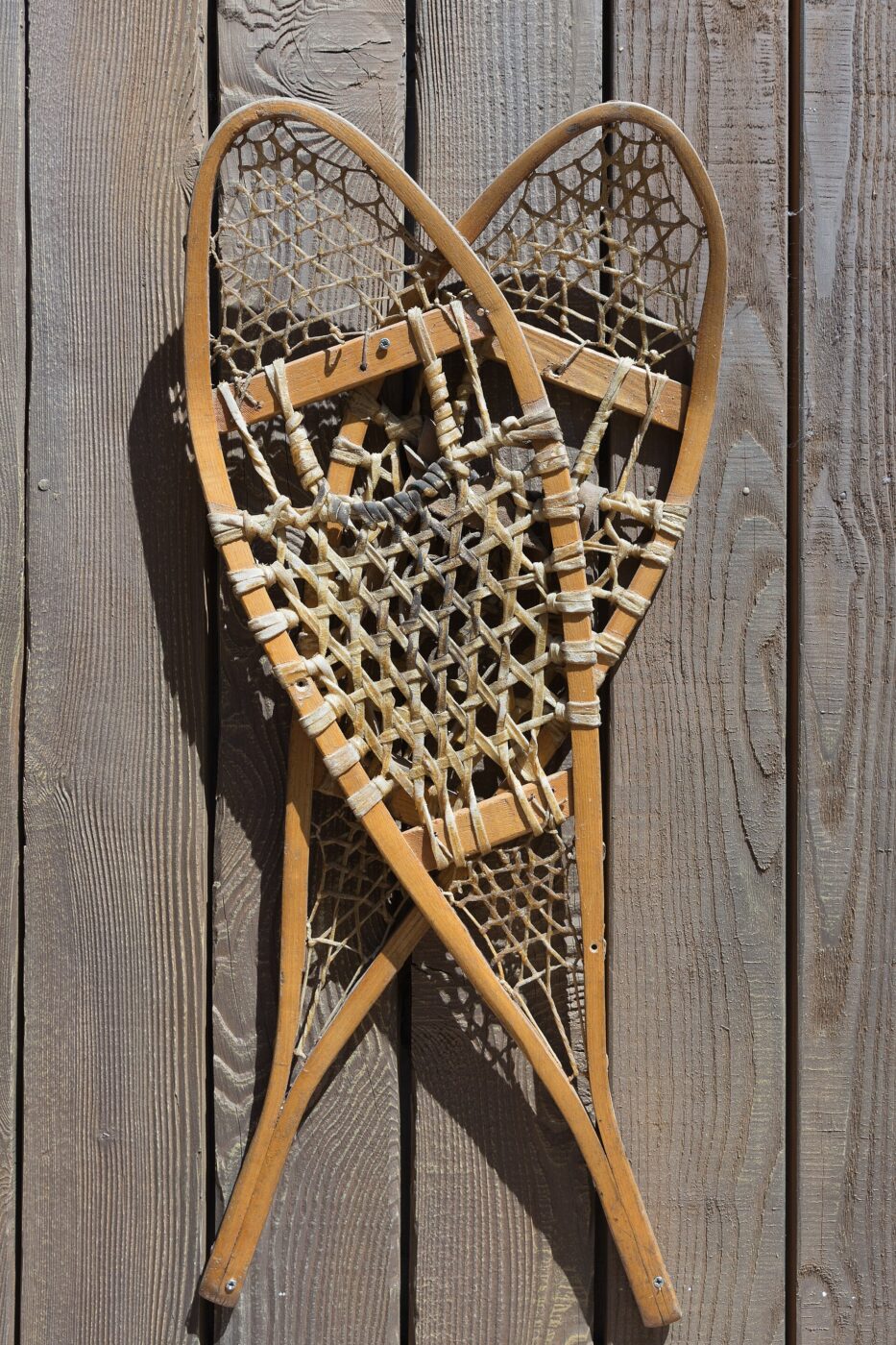
Amazon finishes snowshoes ten ways and five of them name the wearer: men, women, kids, toddler. Two more name hardware: aggressive traction crampons, and poles. We pulled those completions on October 12, 2026. All seven are answered by the same field on a maker’s page, and it is not a shoe size. It is a load range in pounds, and it covers you plus everything you are carrying.
We have tested nothing. This compares the Snowsports Industries America participation study for 2023-24, a PDF we downloaded and extracted as text rather than reading in summary, against load ranges and traction hardware published on two makers’ own pages, and our own CPSC recall database search on October 12, 2026. Selection rule: snowshoe makers whose US-English pages publish a complete load range per size, with a trail model and a backcountry model from each. Method: how we track trends.
Trend Signal
58/100 Steady momentum
- Emerging
- Rising
- Mainstream
- Peaking
- Cooling
Big pandemic-era gains, then growth back down to 2.8% a season
The SIA participation study for 2023-24, which we downloaded and extracted, counts 4,626,000 US snowshoe participants against 3,178,000 in 2020-21. The same table shows growth slowing from 20.7% and 17.2% in the two prior seasons to 2.8% in 2023-24.
Our editorial reading of the cited data, not a forecast. How it is scored
By the numbers
- 4.63MUS snowshoe participants in the 2023-24 season, per the SIA participation studySnowsports Industries America
- +45.6%Change in US snowshoe participants from 2020-21 to 2023-24, our calculationSnowsports Industries America
- 80-160 lbPublished user weight plus load range for the 22-inch Tubbs Flex TRKTubbs Snowshoes
- 3,000Snowshoes recalled by L.L. Bean on March 7, 2017 after four reports of cracking plasticCPSC
What the participation data actually shows
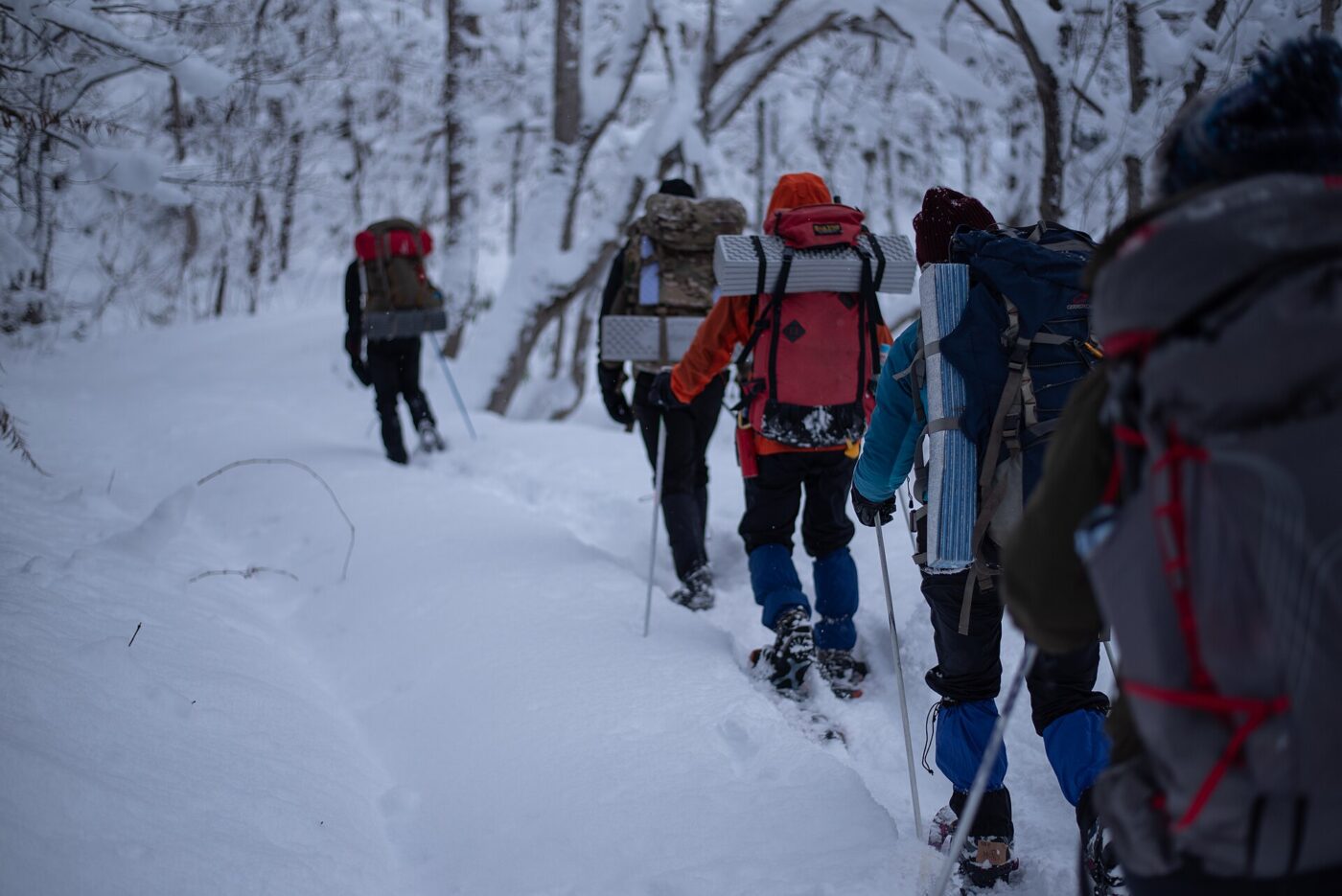
The most recent Snowsports Industries America participation study we could open covers the 2023-24 season and is built on 30.3 million total US winter sport participants. Its participation-over-time table, in thousands, puts snowshoeing at 3,421 in 2018-19 and 3,178 in 2020-21, then 3,837 in 2021-22, 4,498 in 2022-23 and 4,626 in 2023-24, with growth rates of minus 6.1%, then plus 20.7%, plus 17.2% and plus 2.8%.
So the step change happened and then stopped. From 2020-21 to 2023-24 the category added about 1,448,000 participants, a gain of 45.6% on our calculation, and the last season SIA published was a 2.8% move. The study’s takeaway section says snowboarding had the largest growth rate at approximately 9%, while skiing, cross country skiing and snowshoeing all saw more modest growth of 1 to 3%, with most growth among the under-18 and 18-to-24 age groups.
Snowshoeing is also not the largest category that needs no lift ticket. Sledding and snow tubing counted 10,552,000 participants in 2023-24, up 6.6%, the second-highest growth rate in the table, against 13,292,000 for alpine skiing and 9,811,000 for snowboarding.
| Season | Snowshoe participants, thousands | Growth |
|---|---|---|
| 2018-19 | 3,421 | -3.1% |
| 2019-20 | 3,385 | -1.0% |
| 2020-21 | 3,178 | -6.1% |
| 2021-22 | 3,837 | +20.7% |
| 2022-23 | 4,498 | +17.2% |
| 2023-24 | 4,626 | +2.8% |
A 45.6% gain over three seasons, then a 2.8% season. The base is permanently higher.
Size is a load rating, and the makers print it
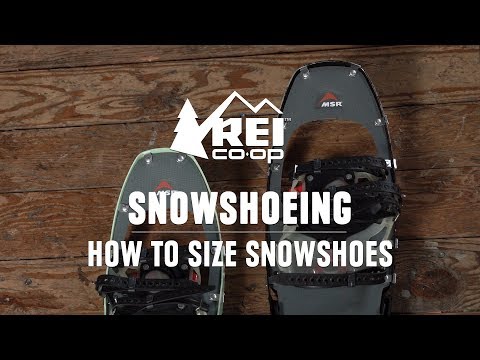
Both makers we read define the sizing field as body weight plus the load you carry, which is the detail that changes a purchase. Tubbs publishes 80 to 160 lb for the 22-inch Flex TRK and 120 to 200 lb for the 24-inch, with a 28-inch option on the men’s size chart. Its Mountaineer model runs 120 to 200 lb at 25 inches, 170 to 250 lb at 30 inches and 220 to 300 lb at 36 inches, all within a stated shoe size range of US 8 to 13. Atlas publishes 80 to 160 lb for the 23-inch Helium-BC, 150 to 220 lb for the 26-inch and 200 to 270 lb and above for the 30-inch, a size its page does not list as available.
The overlaps matter more than the midpoints. A 170 lb person with a 25 lb pack sits at the top of one size and the bottom of the next on the same chart, which makes the day pack a sizing input rather than an afterthought. The men’s and women’s question Amazon asks twice is largely not a load question: Tubbs publishes identical ranges for the men’s and women’s Flex TRK at 22 and 24 inches, and the difference described on the page is frame and binding fit. The men’s chart adds the 28-inch option.
| Model and size | Published user weight plus load |
|---|---|
| Tubbs Flex TRK, 22 in. | 80–160 lb |
| Tubbs Flex TRK, 24 in. | 120–200 lb |
| Tubbs Mountaineer, 25 in. | 120–200 lb |
| Tubbs Mountaineer, 30 in. | 170–250 lb |
| Tubbs Mountaineer, 36 in. | 220–300 lb |
| Atlas Helium-BC, 23 in. | 80–160 lb |
| Atlas Helium-BC, 26 in. | 150–220 lb |
Weigh yourself with the pack on. The ranges overlap by 30 to 40 lb.
Crampons, heel lifts and the hardware queries
Aggressive traction crampons, one of Amazon’s completions, is a real distinction on the spec pages. Tubbs describes the Mountaineer with an Anaconda toe crampon made of carbon steel with eight sharp teeth plus a Python heel crampon centered under the boot for downhill braking, and rates its traction as high. Its Flex TRK, by contrast, gets a toe crampon under the ball of the foot plus traction rails with a curved shape for sidehill grip. Atlas describes the Helium-BC with a tempered steel crampon positioned low in the frame and anodized aluminum traction rails in 6061 alloy running about two-thirds of the shoe’s length.
Heel lift is the other hardware field and it is published as an angle. Tubbs lists an ActiveLift 19° backcountry lift on the Mountaineer and says the 16° version belongs on its day-hiking model; the Flex TRK carries the 16° lift, described for moderate terrain. Atlas lists a 19° lift on the Helium-BC. Weight is published inconsistently: Atlas states the 23-inch Helium-BC is under 3 lb per pair and gives no figure for its larger sizes, and the Tubbs pages we read publish no pair weight at all. Poles, the last completion on Amazon’s list, are a separate three-piece item rather than part of the shoe.
What the recall record holds
We searched the CPSC recall database on October 12, 2026 for snowshoe. It returned two notices in total. On March 7, 2017 L.L. Bean recalled about 3,000 Adventure Adjustable Snowshoes and snowshoe packages in 25 to 30 inch sizes, with aluminum frames, Boa bindings and polyethylene decks, because the plastic material can weaken and break during use, posing a fall hazard; the firm had received four reports of the plastic cracking and no injuries were reported, and the remedy was a full refund. The older notice, from February 5, 2003, covered snowshoe bindings from Trak Inc.
Both notices point at the two parts a buyer can inspect: the deck material and the binding. A recall tells a reader which products were found to fail and reported, not which ones will hold. Prices are the part this category does not expose well: the BLS producer price index for sporting and athletic goods read a preliminary 229.702 in August 2026 against 225.939 in August 2025, up 1.7% on our calculation, but there is no published index for snowshoes, so pricing has to be read off listings rather than a series.
Two notices in the database, both about the deck and the binding.
What to watch next
- SIA’s next participation study, after snowshoe growth slowed to 2.8% in 2023-24 from 17.2% the season before
- Whether makers begin publishing pair weights for every size rather than only the smallest
- The CPSC recall database for a third snowshoe notice; our October 12, 2026 search found two, the newer from 2017
Where to start
Paid links: we earn a commission if you buy through the buttons below, at no extra cost to you. As an Amazon Associate I earn from qualifying purchases.
Snowshoe types compared on load, traction and terrain
| Product type | Good fit for | Where to look |
|---|---|---|
| Trail snowshoes | Fits packed trails and rolling terrain | See listings on AmazonOpens Amazon search results, not one listing: check the model on the product page. |
| Backcountry snowshoes with steel crampons | Fits steep ground and deep snow | See listings on AmazonOpens Amazon search results, not one listing: check the model on the product page. |
| Adjustable snowshoe poles | Fits balance on traverses | See listings on AmazonOpens Amazon search results, not one listing: check the model on the product page. |
Product types that fit the trend described above, not tested models. Check the exact listing before you buy. How we pick them.
Trail snowshoes
Where to look: Amazon
Tubbs publishes 80 to 160 lb for its 22-inch trail shoe and 120 to 200 lb for the 24-inch, with a toe crampon and curved traction rails rather than a heel crampon.
- Load ranges start at 80 lb
- 16-degree heel lifts for moderate ground
- Shorter decks float less in fresh snow
- Toe crampon only on some models
Backcountry snowshoes with steel crampons
Where to look: Amazon
The backcountry models we read publish an eight-tooth carbon steel toe crampon with a heel crampon, or a tempered steel crampon set low in the frame with aluminum traction rails.
- Carbon or tempered steel crampons
- 19-degree heel lifts published
- Longest sizes are heavy to carry
- Load ranges start at 120 lb
Adjustable snowshoe poles
Where to look: Amazon
Poles are Amazon’s tenth completion for snowshoes and a separate purchase on the maker pages we read, listed as three-piece day-hiking poles.
- Sold as three-piece adjustable sets
- Helps on sidehill ground
- Never included with the shoes
- Baskets are often sold separately
More: Sports and Recreation trends and how the Trend Signal is scored.
Sources
- SIA Participation Study 2023-24 — Snowsports Industries America
- Flex TRK snowshoes, sizes and load ranges — Tubbs Snowshoes
- Mountaineer snowshoes, sizes, crampons and heel lift — Tubbs Snowshoes
- Helium-BC snowshoes, load ranges and traction — Atlas Snowshoes
- L.L. Bean recalls snowshoes due to fall hazard — CPSC
- Recall database REST web service — CPSC
- PPI series WPU1512, sporting and athletic goods — Bureau of Labor Statistics
Questions readers ask
How do I pick a snowshoe size?
By the published load range, which both makers we read define as body weight plus the load you carry. Tubbs publishes 80 to 160 lb for a 22-inch shoe, 120 to 200 lb for 24 inches and 220 to 300 lb for its 36-inch Mountaineer; Atlas publishes 80 to 160 lb at 23 inches and 150 to 220 lb at 26 inches, the two sizes its page lists as available.
Are women’s snowshoes rated differently?
Not on the loads. Tubbs publishes identical ranges for the men’s and women’s Flex TRK at 22 and 24 inches, 80 to 160 lb and 120 to 200 lb, and the difference described on the page is frame and binding fit. The men’s size chart adds a 28-inch option.
How many Americans go snowshoeing?
The SIA participation study for 2023-24 counts 4,626,000 US snowshoe participants, up 2.8% on the prior season and up from 3,178,000 in 2020-21. The same table puts sledding and snow tubing at 10,552,000.
Have snowshoes been recalled in the United States?
Our CPSC search on October 12, 2026 returned two notices. L.L. Bean recalled about 3,000 Adventure Adjustable Snowshoes on March 7, 2017 because the plastic can weaken and break during use, after four reports of cracking and no reported injuries. Trak Inc. recalled snowshoe bindings in February 2003.