Through 2025 the toiletry aisle was the least inflationary part of a US grocery run. The Bureau of Labor Statistics measured personal care products up just 1.1% in the 12 months to August 2025, at a time when the all-items index was up 2.9%. Shampoo, deodorant, razors and toothpaste were, in price terms, standing still.
That ended in 2026. The same index rose 2.9% in the 12 months to August 2026, and the cosmetics and nail group swung from 0.3% to 2.8%. What follows traces three CPI readings across the aisle, sets them against what the companies that make these products told investors, and says where the pressure is actually coming from.
Trend Signal
58/100 Steady momentum
- Emerging
- Rising
- Mainstream
- Peaking
- Cooling
Price increases have spread across the shelf while units stall
BLS measured US personal care products up 2.9% in the 12 months to August 2026 against 1.1% a year earlier, while Procter & Gamble reported fiscal 2026 Grooming volume down 1% with pricing up 2%.
Our editorial reading of the cited data, not a forecast. How it is scored
By the numbers
- +2.9%US CPI for personal care products, 12 months to August 2026, against 1.1% a year earlierBureau of Labor Statistics
- +3.1%US CPI for hair, dental, shaving and other personal care products, 12 months to Aug 2026Bureau of Labor Statistics
- $1Across-the-board price increase e.l.f. Beauty applied from August 1, 2025, citing tariffsRetail Dive
- 1.9%Edgewell Wet Shave organic net sales change in the quarter ended June 30, 2026Edgewell Personal Care
Where the grooming shelf stands in August 2026
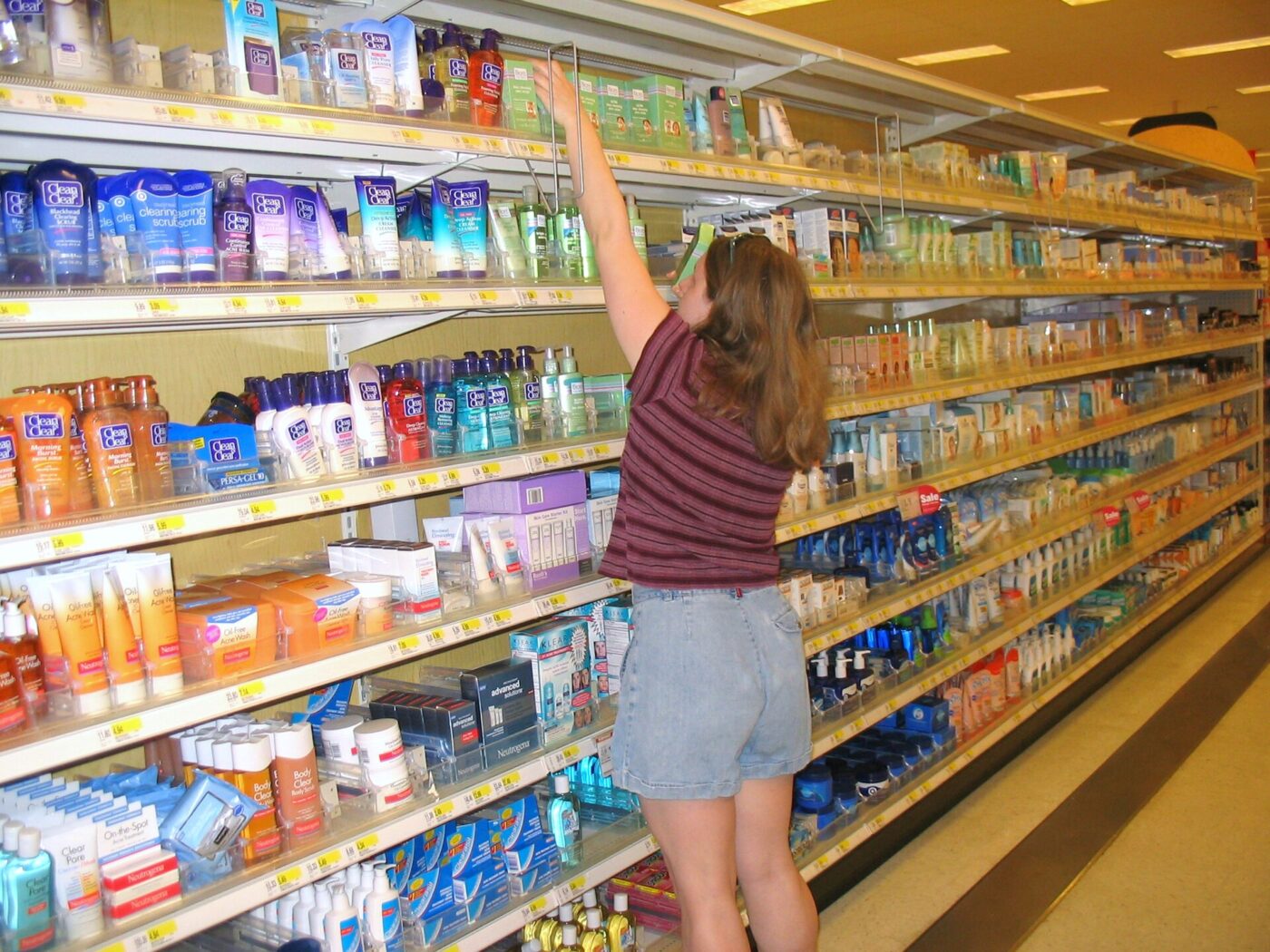
The CPI splits personal care into a handful of small baskets. Personal care products covers the non-durable items in a bathroom cabinet; inside it, one group holds hair, dental and shaving items and another holds cosmetics, perfume, bath and nail preparations. Personal care services is a separate line for haircuts and other salon work. Each carries a small weight, so month-to-month moves are jumpy and the 12-month changes below are the more useful read.
Across three readings the pattern is consistent. Products inflation was well below the all-items rate in August 2025, rose through February 2026 and had nearly caught up by August 2026. Services never slowed to the same degree and stayed above the headline rate throughout.
| CPI category | 12 mo. to Aug 2025 | 12 mo. to Feb 2026 | 12 mo. to Aug 2026 |
|---|---|---|---|
| All items | 2.9% | 2.4% | 3.4% |
| Personal care | 3.4% | 4.5% | 3.8% |
| Personal care products | 1.1% | 1.7% | 2.9% |
| Hair, dental, shaving and misc. | 1.8% | 2.1% | 3.1% |
| Cosmetics, perfume, bath, nail | 0.3% | 1.5% | 2.8% |
| Personal care services | 3.7% | 4.9% | 4.2% |
The toiletry aisle did not escape inflation. It arrived about a year later than in the rest of the cart.
Companies are pricing, and volumes are not following
Procter & Gamble’s results for the fiscal year ended June 30, 2026 separate the two halves of its personal care business. Beauty net sales rose 7%, built on 4% volume growth and 1% pricing, with Personal Care organic sales up mid-single digits on volume gains across all regions and higher pricing, primarily in North America. Grooming, the razor business, rose 4% on 2% pricing while volume fell 1%. In the April to June quarter, Grooming organic sales were flat as what the company called innovation-based pricing was offset by volume declines and unfavorable mix.
Edgewell Personal Care, which makes Schick razors and Banana Boat sun care, showed the same split more sharply. In the quarter ended June 30, 2026 it reported net sales of $570.1 million, up 1.7%, with organic sales up 1.1%. Sun and Skin Care organic sales rose 5.0%, while Wet Shave organic sales fell 1.9% on lower private label sales amid temporary supply constraints, and its organic segment profit fell 24.7% on higher selling and marketing expenses.
BIC, whose Blade Excellence division sells shavers, reported first-half 2026 organic growth of 1.7% for the group on July 29, 2026, with Blade Excellence up 2.9% on good momentum in Europe and Latin America and slight growth in North America. Its Tangle Teezer hair brush business grew 16% in the half. Taken together: the razor shelf is the weak spot, and the growth in personal care is coming from sun care, body care and hair tools.
Tariffs, refunds and where the money went
The most visible consumer-facing price move in this category came from e.l.f. Beauty. Retail Dive reported on May 28, 2025 that the company would raise prices by $1 per product from August 1, 2025, citing inflation and tariffs, while saying 75% of its range would still be priced at $10 or under. The company had also cut its reliance on Chinese sourcing from 99% to 80%.
What happened afterward matters more than the increase. On February 20, 2026 the Supreme Court held in Learning Resources, Inc. v. Trump that the International Emergency Economic Powers Act does not authorize tariffs, and Customs and Border Protection began refunding IEEPA duties from the spring of 2026; Section 232 and Section 301 duties rest on different statutes and are still collected. The IEEPA money landed in earnings rather than on price tickets. Procter & Gamble reported 40 basis points of net tariff benefit from recognized recoveries and higher costs in its April to June 2026 quarter. BIC reported a first-half 2026 adjusted EBIT margin of 16.0% including a positive contribution of 1.5 points from US tariff refunds, and said the figure would have been 14.5% without that effect.
Costs have not gone away either. Edgewell attributed 160 basis points of adjusted gross margin pressure to core inflation and net tariffs in the June quarter, a period covered by the Section 122 and then Section 301 duties rather than by IEEPA, and a further 110 basis points to unfavorable mix and promotional levels net of pricing. That last phrase is the one shoppers can use: promotion is doing more work than list prices, which is why the deal cycle is where the savings are.
- Refunds of the IEEPA duties already paid are flowing to the companies that paid them, not to shelf prices.
- Promotional depth, not list price cuts, is where the personal care discounting is showing up.
- Pricing is still positive across grooming while volumes are flat to negative, which limits how much further it can go.
Services are the bigger squeeze
If your personal care spending is rising faster than 3%, the salon chair is the likelier cause than the shampoo bottle. The index for haircuts and other personal care services rose 3.7%, then 4.9%, then 4.2% across the three readings, staying above the all-items rate each time. Products stayed below it until August 2026.
That gap has a practical consequence. Substituting a product for a service keeps getting more attractive in arithmetic terms, which is why the price to compare is not the bottle against the bottle but the total cost of a routine against what the same routine costs in a chair.
What to buy now and what to wait on
Buy now if you use a product continuously and it stores well: body wash, shampoo, bar soap, toothpaste and razor cartridges all keep for long periods, and the pricing trend across the three readings points up. Buying on promotion, in the largest size your storage allows, is the only lever a shopper controls when list prices keep moving.
Wait on anything priced by a single company’s decision rather than by the index. The e.l.f. increase was a $1 step across a range, not a percentage, so the effect is largest on the cheapest items; if a product you buy sits near the bottom of a brand’s price ladder, a competitor’s equivalent may be better value than it was.
And treat the tariff story with care. The IEEPA refunds are real and disclosed, but no company cited here has tied them to lower list prices. We read the 2026 data as a category where pricing has done most of what it can while volumes are flat, which usually ends in heavier promotion rather than cheaper tickets.
What to watch next
- The next monthly CPI release, for whether personal care products stay near 3% or keep climbing toward the services rate.
- Whether P&G and Edgewell report another quarter of positive pricing with negative volume, which would point to deeper promotion.
- Whether any personal care company ties its IEEPA recoveries to a list-price reduction rather than to margin.
Where to start
Paid links: we earn a commission if you buy through the buttons below, at no extra cost to you. As an Amazon Associate I earn from qualifying purchases.
Everyday grooming buys where the unit price is easy to compare
| Product type | Good fit for | Where to look |
|---|---|---|
| Large-format shampoo and conditioner | Fits a price-per-ounce check | See listings on AmazonOpens Amazon search results, not one listing: check the model on the product page. |
| Razor cartridge refill multipack | Fits a refillable handle | See listings on AmazonOpens Amazon search results, not one listing: check the model on the product page. |
| Deodorant multipack | Fits stocking the cabinet | See listings on AmazonOpens Amazon search results, not one listing: check the model on the product page. |
Product types that fit the trend described above, not tested models. Check the exact listing before you buy. How we pick them.
Large-format shampoo and conditioner
Where to look: Amazon
Hair products sit in the CPI group that rose 3.1% in the year to August 2026. Large formats are the simplest hedge, provided you actually compare the per-ounce price rather than the shelf ticket.
- Lowest cost per ounce
- Fewer reorders
- Heavy to handle in a shower
- Needs storage space
Razor cartridge refill multipack
Where to look: Amazon
Wet shave is the softest part of the grooming market, with Edgewell reporting organic sales down 1.9% in the June 2026 quarter. Soft categories get promoted, so refills are worth buying on a deal.
- Keeps a handle you already own
- Multipacks cut the per-shave cost
- Fit is brand specific
- Packs vary in blade count
Deodorant multipack
Where to look: Amazon
Deodorant stores indefinitely and is one of the few items where multipack math is transparent. Check the ounces printed on the stick, since brands often shrink a size before they raise a price.
- Long shelf life
- Simple per-ounce comparison
- Scent preferences change
- Sizes differ across a range
More: Beauty and Grooming trends and how the Trend Signal is scored.
Sources
- Consumer Price Index, August 2026 — Bureau of Labor Statistics
- Consumer Price Index, August 2025 — Bureau of Labor Statistics
- Consumer Price Index, February 2026 — Bureau of Labor Statistics
- Fourth quarter and fiscal year 2026 results — Procter & Gamble, SEC filing
- Third quarter fiscal 2026 results — Edgewell Personal Care
- First half 2026 results — BIC
- E.l.f. Cosmetics to raise prices by $1 — Retail Dive
Questions readers ask
Are toiletries getting more expensive in 2026?
Yes, but modestly. The BLS index for personal care products rose 2.9% in the 12 months to August 2026, up from 1.1% in the 12 months to August 2025, while the all-items index rose 3.4%. The hair, dental and shaving group rose 3.1%.
Did tariffs make personal care products cost more?
Companies say so. e.l.f. Beauty raised prices by $1 per product from August 1, 2025 citing inflation and tariffs, and Edgewell attributed 160 basis points of adjusted gross margin pressure in the June 2026 quarter to core inflation and net tariffs. The duties charged in 2025 were imposed under IEEPA and were invalidated on February 20, 2026; Section 232 and Section 301 duties are separate and still apply.
Are tariff refunds lowering shelf prices?
Not so far. Procter & Gamble recorded 40 basis points of net tariff benefit from recognized recoveries and higher costs in the April to June 2026 quarter, and BIC credited 1.5 points of its first-half adjusted EBIT margin to US tariff refunds of IEEPA duties. Neither tied the money to lower list prices.
Is it cheaper to do grooming at home than at a salon?
The gap has widened. Personal care services rose 4.2% in the 12 months to August 2026 while personal care products rose 2.9%, and services ran ahead of products at all three readings measured here.