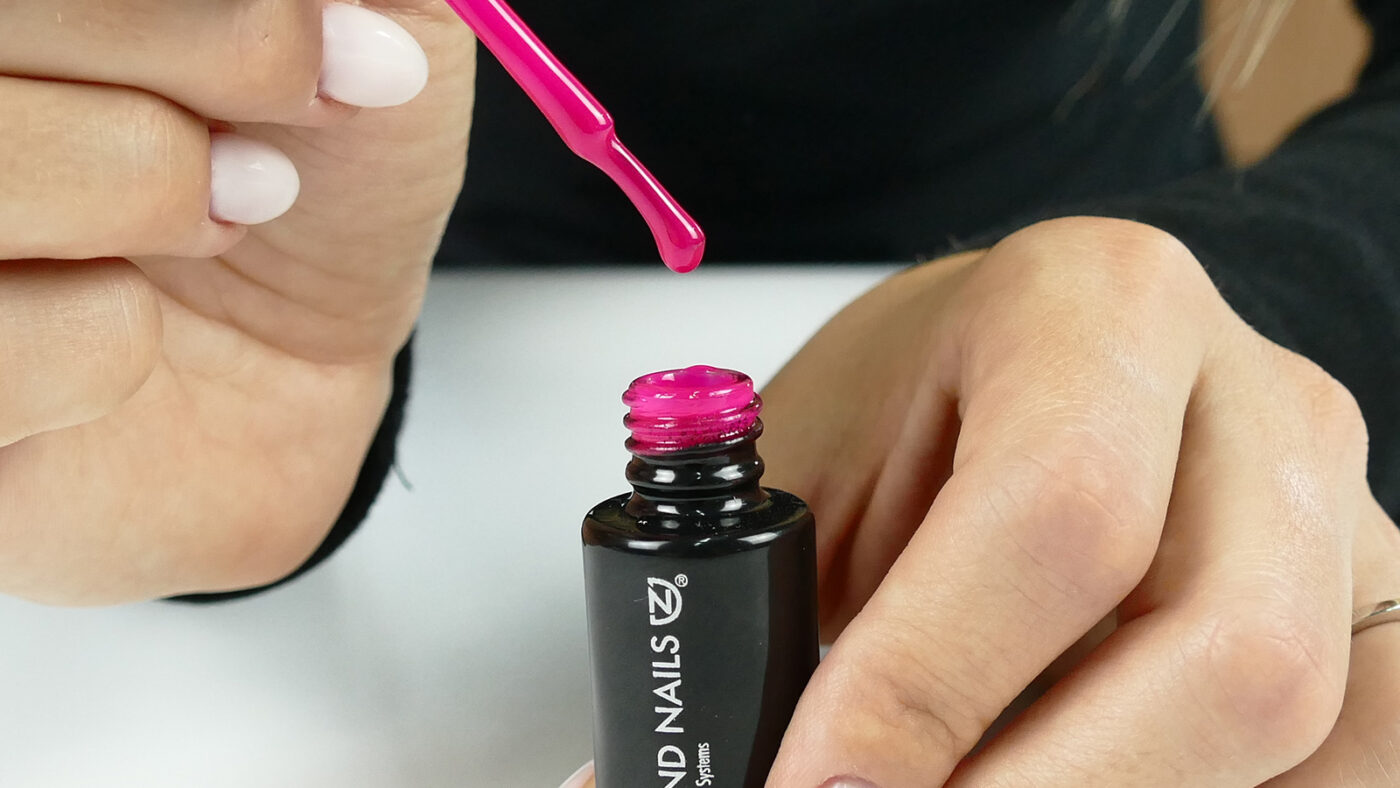
Headlines in September 2025 said Europe had banned gel nail polish. It had not. What the European Union prohibited was trimethylbenzoyl diphenylphosphine oxide, known as TPO, the photoinitiator that makes a gel harden under a UV or LED lamp. Remove it and the product still exists; it just has to set using something else.
For a US shopper, the interesting part is what happened next. No American agency copied the rule, yet TPO-free wording started appearing on bottles sold here. That is a supply-chain effect, not a regulatory one, and it changes what the label on your next bottle is actually telling you.
Trend Signal
58/100 Steady momentum
- Emerging
- Rising
- Mainstream
- Peaking
- Cooling
One EU entry rewrote gel formulas worldwide while US rules stayed put
Commission Regulation (EU) 2025/877 added TPO to the EU cosmetics prohibited list from September 1, 2025 with no sell-through period, while FDA does not approve cosmetic ingredients before sale, so the same chemistry remains legal in US bottles.
Our editorial reading of the cited data, not a forecast. How it is scored
By the numbers
- Sep 1, 2025Date TPO became prohibited in EU cosmetics, with no sell-through periodEuropean Commission
- 1BEU chemicals classification given to TPO, which triggered the automatic cosmetics banEuropean Commission
- +2.8%US CPI for cosmetics, perfume, bath and nail preparations, 12 months to August 2026Bureau of Labor Statistics
- +4.2%US CPI for haircuts and other personal care services, 12 months to August 2026Bureau of Labor Statistics
What the EU actually prohibited
The mechanism is worth understanding because it is automatic. Commission Delegated Regulation (EU) 2024/197 classified TPO as a category 1B reproductive toxicant under EU chemicals law, applying from September 1, 2025. Under Article 15(2) of the EU Cosmetics Regulation, a substance with that classification is prohibited in cosmetics unless a company applies for and wins an exemption. Commission Regulation (EU) 2025/877 duly added TPO to Annex II, the list of substances banned from cosmetic products, with effect from the same date.
The European Commission stated in its newsroom item of October 16, 2025 that no company requested an exemption, so the prohibition took effect without exception. Its questions-and-answers page is blunt about the consequences: from September 1, 2025, both placing and making available on the market of cosmetic products containing TPO are prohibited. There is no transitional sell-through. Stock already in a distributor’s warehouse or a salon’s drawer could not legally be sold, supplied or used on a paying client.
That covers professional and consumer products alike, so salon stock was caught by the same date as retail stock. The Commission added that safer alternatives were already widely available and that many brands had reformulated as TPO-free.
The EU banned one photoinitiator, not gel polish, and gave the trade no grace period to sell through old stock.
Why US bottles changed without a US rule
The United States runs a different system. FDA states that cosmetic products and ingredients, including nail products, do not need FDA approval before they go on the market, with the exception of most color additives. The agency can act against a product after the fact, and it has: it points to the early 1970s, when it removed products containing 100 percent methyl methacrylate monomer from the market through court proceedings, while noting that no regulation specifically prohibits the ingredient.
So TPO remains legal in US nail products. The trade publication BeautyMatter reported on September 16, 2025 that it also remains widely used here, that the United Kingdom’s own restriction was expected by the end of 2026, and that Morocco had followed the EU. What changed on American shelves is commercial: a manufacturer selling into Europe has to make a TPO-free version anyway, and running one formula is cheaper than running two.
The result is a label that means something specific and narrow. TPO-free on a US bottle tells you the brand has reformulated to EU rules. It is not a statement by any US agency, and it says nothing about the rest of the ingredient list.
| Market | Status of TPO in nail products | Source |
|---|---|---|
| European Union | Prohibited from September 1, 2025, no sell-through | European Commission |
| United Kingdom | Restriction expected by the end of 2026 | BeautyMatter |
| United States | Legal; no premarket approval of cosmetic ingredients | FDA |
| Morocco | Banned | BeautyMatter |
What replaced TPO, and what changes at the lamp

A photoinitiator is the part of a gel that absorbs light from the lamp and starts the reaction that hardens the coat. TPO was popular because it worked well. BeautyMatter quoted the toxicologist Mohammed Kanadil describing it as delivering superior performance compared with other photoinitiators, with fast curing, strong conversion and a durable finish, while avoiding the tertiary amines that Kanadil says can cause yellowing and color instability.
Swapping it out therefore changes the cure, at least on paper. The European Commission’s position is that alternatives deliver equivalent results, and reformulated gels have been on sale across Europe since September 2025. For a home user the advice is to stop assuming every gel cures in the same 30 or 60 seconds and use the time the brand prints for its own formula and lamp.
It is also worth separating two claims that sit on the same shelf. TPO-free and HEMA-free refer to different chemicals, so a bottle can carry one, both or neither. The ingredient list settles it; the largest word on the label does not.
The at-home gel market this lands in
The reformulation arrived while the cost gap between a salon and a kitchen table kept widening. Bureau of Labor Statistics data show the index for haircuts and other personal care services up 4.2% in the 12 months to August 2026, above the 3.4% all-items rate. The products index that contains nail preparations rose 2.8% over the same period. Services ran ahead of products in the August 2025, February 2026 and August 2026 readings alike.
That gap is why home gel kits keep selling, and why the TPO question reaches ordinary buyers rather than only technicians. A US shopper choosing a starter kit has to decide whether the formulation matters, with no rule to lean on either way.
It also puts more weight on the label. Kits assembled from mixed stock can carry bottles from different production runs, so the ingredient list on the bottle, not the claim on the box, reflects what is inside.
What to check on a bottle now
Start with the ingredient list. In the United States, cosmetic labels carry ingredient declarations, and TPO appears under its chemical name rather than the abbreviation. If a brand advertises TPO-free, the ingredient list is where that claim is either confirmed or quietly absent.
Then check the pairing between polish and lamp. Reformulated gels rely on different photoinitiators, so a mismatched lamp is a common reason a home manicure stays tacky. Brands that reformulated publish revised cure times, and using them matters more than the wattage on the lamp box. Beyond that, treat a claim as a claim: the only enforceable TPO prohibition sits in the European Union, and a US bottle carrying the wording is telling you about a manufacturer’s decision rather than a rule.
- Read the ingredient declaration on the bottle, not the marketing line on the carton.
- Match the cure time and lamp to the specific formula, since reformulated gels can behave differently.
- Remember that TPO-free and HEMA-free are separate claims about separate ingredients.
What to watch next
- Whether the United Kingdom completes its own TPO restriction, which BeautyMatter reported was expected by the end of 2026.
- Whether US brands keep TPO-free wording on packaging once EU-compliant stock has fully replaced older production runs.
- The CPI for cosmetics, perfume, bath and nail preparations, for whether reformulation costs show up in shelf prices.
Where to start
Paid links: we earn a commission if you buy through the buttons below, at no extra cost to you. As an Amazon Associate I earn from qualifying purchases.
At-home gel manicure gear and what differs between the pieces
| Product type | Good fit for | Where to look |
|---|---|---|
| Gel nail polish starter kit | Fits a first gel kit | See listings on AmazonOpens Amazon search results, not one listing: check the model on the product page. |
| UV LED nail curing lamp | Fits curing a reformulated gel | See listings on AmazonOpens Amazon search results, not one listing: check the model on the product page. |
| Gel polish removal set | Fits removal between sets | See listings on AmazonOpens Amazon search results, not one listing: check the model on the product page. |
Product types that fit the trend described above, not tested models. Check the exact listing before you buy. How we pick them.
Gel nail polish starter kit
Where to look: Amazon
Starter kits bundle a lamp with base, top and colors, which removes the guesswork about cure times. The trade-off is that bottles in a kit can come from different runs, so check each ingredient list.
- Polish and lamp are matched
- One purchase to start
- Mixed production runs
- Colors may not be reordered easily
UV LED nail curing lamp
Where to look: Amazon
Buying the lamp separately makes sense if you already have polishes you like. The number that matters is the cure time the polish brand publishes, not the wattage printed on the lamp box.
- Works with refills you choose
- Usually has timed settings
- Needs matching to the polish
- Wattage alone tells you little
Gel polish removal set
Where to look: Amazon
Removal is where most home gel manicures go wrong. A set with wraps, a buffer and a cuticle stick costs little and makes the difference between soaking off a coat and picking at it.
- Cheapest part of the routine
- Reduces scraping
- Acetone dries skin
- Takes longer than a salon soak
More: Beauty and Grooming trends and how the Trend Signal is scored.
Sources
- TPO in Nail Products: Questions and Answers — European Commission
- New EU ban on an ingredient used in gel nail products — European Commission newsroom
- How the EU TPO ban is reshaping global beauty regulation — BeautyMatter
- Nail Care Products — US Food and Drug Administration
- Consumer Price Index, August 2026 — Bureau of Labor Statistics
Questions readers ask
Did the EU ban gel nail polish?
No. It prohibited one ingredient. Commission Regulation (EU) 2025/877 added TPO, a photoinitiator, to the list of substances banned from cosmetic products in the EU from September 1, 2025. The European Commission states that safer alternatives were already widely available and that many brands had reformulated.
Is TPO still legal in US gel polish?
Yes. There is no US prohibition. FDA states that cosmetic products and ingredients, including nail products, do not need FDA approval before they go on the market, apart from most color additives. BeautyMatter reported in September 2025 that TPO remained legal and widely used in the United States.
Why do US bottles say TPO-free then?
Because manufacturers that sell into the European Union had to reformulate for that market from September 1, 2025, and running a single global formula is simpler than running two. The claim reflects a company decision, not a US rule.
Will a TPO-free gel cure in my existing lamp?
Not necessarily at the same speed. Different photoinitiators respond differently to a lamp’s output, so follow the cure time the polish brand publishes for that formula. TPO-free is also a separate claim from HEMA-free, which refers to a different ingredient.