Batteries are the least interesting thing anyone buys for a toy and one of the few that decide whether it works on the day it is opened. The market is not doing anything dramatic: the largest listed maker reports falling volumes and barely moving prices, so the drawer can be stocked whenever it is convenient rather than on a timed run at a sale.
What has changed is the toy end. Two federal rules govern how batteries are held in a toy, and enforcement has become one of the most visible recall categories of 2026. This brief covers what the price data show, why battery doors need a tool, and what is worth keeping in the house.
Trend Signal
42/100 Steady momentum
- Emerging
- Rising
- Mainstream
- Peaking
- Cooling
Household battery demand is flat while toy battery rules tighten
Energizer reported global volumes down 4.5% in the quarter ended December 31, 2025 and 6.1% in the quarter ended March 31, 2026, while 19 of the 73 CPSC recall headlines naming a toy in 2026 to date cite battery ingestion, on our own count of the agency’s recall database pulled September 24, 2026.
Our editorial reading of the cited data, not a forecast. How it is scored
By the numbers
- 4.5%Energizer global volume change in the quarter ended December 31, 2025Energizer Holdings
- +0.2%Energizer pricing contribution that quarter, which it tied to tariffs and innovationEnergizer Holdings
- 19 of 73Our count of 2026 CPSC toy recall headlines citing battery ingestion, to September 24U.S. CPSC
- $734.1MEnergizer net sales in the quarter ended June 30, 2026, with organic sales up 2.7%Energizer via SEC EDGAR
What the battery market is actually doing
Energizer Holdings is the cleanest public window into the household battery aisle, and its 2026 reports describe a category going sideways. In the quarter ended December 31, 2025 it reported net sales of $778.9 million, organic sales down 4.3% and volumes down 4.5%, which it attributed to softer consumer demand in the US. Its Batteries and Lights segment was down 3.8% organically.
The quarter ended March 31, 2026 was softer still: net sales of $643.3 million, organic sales down 5.5%, Batteries and Lights down 5.9% organically and volumes down 6.1%, which the company tied partly to the timing of battery orders during a plastic-free packaging conversion. By the June 30 quarter it had steadied at $734.1 million, up 2.7% organically.
Prices have barely moved. Energizer reported pricing contributing 0.2% in the December quarter and 0.6% in the March quarter, attributing both to tariffs and innovation in Batteries and Lights, and expected tariff costs to be largely offset through pricing already taken, production credits and productivity. For a household, there is no price spiral to get ahead of.
Flat volumes and sub-1% pricing mean batteries are a buy-when-convenient purchase, not a stock-up-now one.
Why toy battery doors need a screwdriver
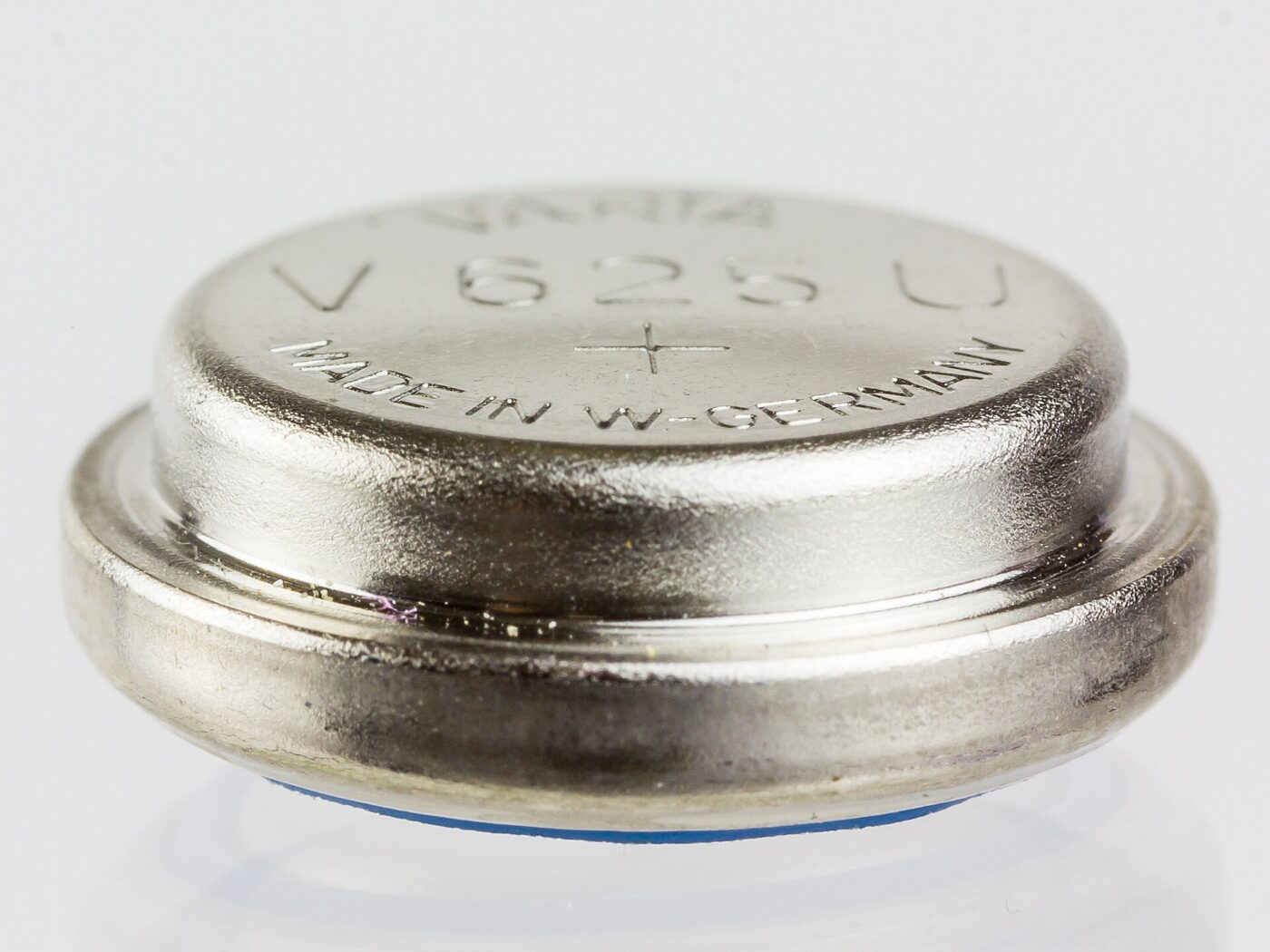
Two rules sit behind the screws. For toys, the mandatory standard is ASTM F963-23, applied by CPSC to toys manufactured after April 20, 2024; section 4.25 requires that batteries are not accessible to a child during play and that cells do not overheat. Separately, Reese’s Law, signed on August 16, 2022, directed CPSC to set performance and warning requirements for any consumer product containing a button or coin cell. CPSC published that rule on September 21, 2023 at 88 FR 65274, effective October 23, 2023, as 16 CFR part 1263; it incorporates ANSI/UL 4200A-2023, whose section 5.6 carries the captive screw requirement. Neither rule clears an individual product: a screw is a design requirement, not a verdict on a toy.
The enforcement record shows what happens when that is skipped. On September 10, 2026 CPSC announced a recall of about 179,739 projecting finger light toys containing button cells a child can easily get at. On May 21, about 84,700 toy headbands and electronic pet toys followed, with the agency noting that swallowed coin cells can cause internal chemical burns and death. Both notices state the products violate the mandatory standard.
It is a pattern rather than a pair of incidents. Of the 73 CPSC recall notices naming a toy published between January 1 and September 24, 2026 on our count, 19 headlines cite battery ingestion. Almost all are low-priced light-up and novelty items, and several name the marketplace seller in the headline.
Alkaline or rechargeable for a toy drawer
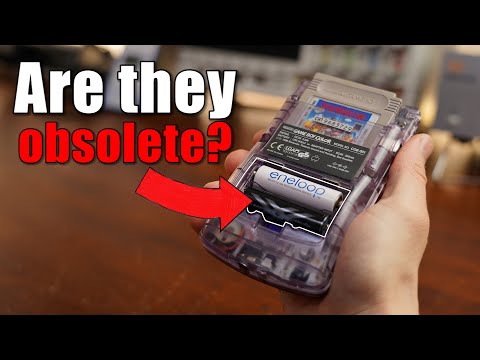
It depends on the toy, and the deciding factor is how often it runs rather than which chemistry is better. A ride-on or a remote control car used most days is where a rechargeable set earns back its price. A toy that comes out twice a month is not.
We do not test batteries, so the useful checks are on the listing and the toy itself. Manufacturers sometimes specify a chemistry in the manual, and some motorized toys call for alkaline cells; that instruction is worth following. On a rechargeable pack, what differs is the capacity rating, how many cells the charger holds and whether they ship ready to use.
Storage applies to every household. Coin cells are the hazard class the recall record keeps returning to, and loose spares in a drawer sit outside any compartment rule. A case that keeps cells separated and out of reach is the cheapest item here.
- Match the cell size and count to the toy before buying a bulk pack; AA and AAA are not interchangeable.
- Check the use-by date printed on an alkaline pack, since bulk packs sit on shelves.
- On rechargeables, compare the capacity rating and whether a charger is included at that price.
- Follow a toy manual that specifies a chemistry rather than substituting.
- Keep coin cells in a closed case away from children, and pick up a loose one immediately.
What to keep in the house
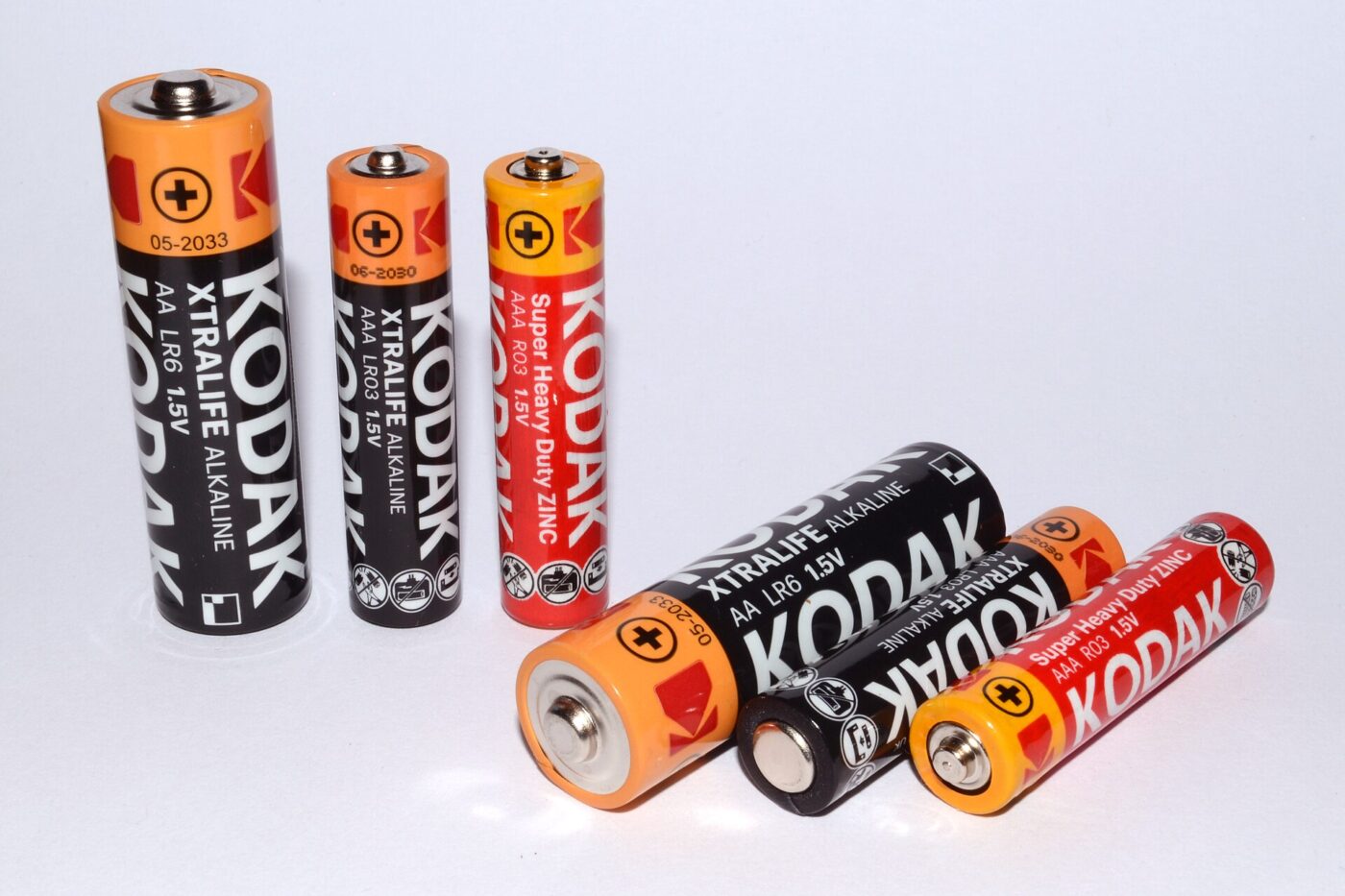
A realistic toy drawer needs less than people buy. Most battery toys run on AA or AAA, a smaller group uses C or D for ride-ons, and coin cells turn up in light-up novelties and small electronic games. Buying to that shape rather than to whatever multipack is on offer stops a drawer filling with sizes nothing uses.
The second item is the screwdriver. Because both rules push manufacturers toward screwed compartments, a small Phillips driver is part of opening a toy on a birthday morning. Seeing a screw is not a compliance test, and a recall list records only what has already been found to fail. A precision set covers the tiny screws a household driver will round off.
The third is somewhere to put the cells. A case with a tester attached is the common format; the containment is the point. Old cells waiting for a recycling drop-off are the ones most likely to end up loose in a drawer.
Where this is heading
Two forces point in opposite directions, on our reading of the recall record. A built-in rechargeable pack and a charging port take the loose-cell question off the table. The cheap novelty end, where the notices concentrate, runs on coin cells because they are the smallest and cheapest way to make something light up.
On price, the signals from Energizer suggest stability: sub-1% pricing it ties to tariffs and innovation, volumes that fell before steadying, and a stated intent to offset tariff costs through pricing already taken and productivity. Its May 5, 2026 release booked a $47.6 million benefit from an anticipated refund of duties collected under the International Emergency Economic Powers Act, which the Supreme Court held on February 20, 2026 does not authorize tariffs. Nothing in that argues for buying ahead.
Enforcement is the part worth watching. If CPSC keeps publishing toy recalls at the 2026 pace, battery ingestion stays one of the largest hazards named in that list.
What to watch next
- Energizer’s next quarterly results, for whether the organic growth that returned in the June 2026 quarter holds and whether pricing stays under 1%.
- The running count of CPSC toy recalls citing battery ingestion, at 19 of our 73 notices for 2026 by late September.
- How many new toys ship with a built-in rechargeable pack and a charging port rather than a cell compartment.
Where to start
Paid links: we earn a commission if you buy through the buttons below, at no extra cost to you. As an Amazon Associate I earn from qualifying purchases.
What to keep in a household toy drawer
| Product type | Good fit for | Where to look |
|---|---|---|
| Rechargeable AA cells with charger | Fits toys used most days | See listings on AmazonOpens Amazon search results, not one listing: check the model on the product page. |
| Bulk pack of AA and AAA alkaline cells | Fits occasional-use toys | See listings on AmazonOpens Amazon search results, not one listing: check the model on the product page. |
| Battery storage case with a tester | Fits storing loose cells safely | See listings on AmazonOpens Amazon search results, not one listing: check the model on the product page. |
Product types that fit the trend described above, not tested models. Check the exact listing before you buy. How we pick them.
Rechargeable AA cells with charger
Where to look: Amazon
Rechargeables make sense where a toy runs most days, such as a remote control car or a motorized ride-on. Check the capacity rating and whether the charger handles both AA and AAA.
- Pays back on high-drain toys
- One set covers several toys
- Charger takes counter space
- Some toys specify alkaline
Bulk pack of AA and AAA alkaline cells
Where to look: Amazon
For toys that come out occasionally, a dated bulk pack is the simpler answer. With Energizer reporting pricing moves under 1%, there is no case for stockpiling beyond what the house will use.
- No charger needed
- Long shelf life
- Disposable cost adds up
- Dates vary between packs
Battery storage case with a tester
Where to look: Amazon
Coin cells are what the 2026 battery ingestion notices keep naming, and a loose spare sits outside any compartment rule. Check that the case has a dedicated section for coin cells rather than one big tray.
- Separates cells by size
- Keeps coin cells contained
- Testers are basic
- Cases vary in capacity
More: Collectibles and Toys trends and how the Trend Signal is scored.
Sources
- Energizer Holdings Announces Fiscal 2026 First Quarter Results — Energizer Holdings
- Energizer Holdings Announces Fiscal 2026 Second Quarter Results — Energizer Holdings
- Energizer Holdings fiscal 2026 third quarter earnings slides, Exhibit 99.2 — SEC EDGAR
- Toy Safety Business Guidance — U.S. Consumer Product Safety Commission
- Safety Standard for Button Cell or Coin Batteries and Consumer Products Containing Such Batteries, 88 FR 65274 — Federal Register
- Recalls and Product Safety Warnings — U.S. Consumer Product Safety Commission
- Cade California Electronic Recalls Finger Light Toys — U.S. CPSC
- ABC Trading Recalls Children’s Toys Over Battery Ingestion — U.S. CPSC
Questions readers ask
Are battery prices going up in 2026?
Barely. Energizer reported pricing contributing 0.2% in the quarter ended December 31, 2025 and 0.6% in the quarter ended March 31, 2026, attributing the increases mainly to tariffs and innovation, and said it expected tariff costs to be largely offset by pricing already taken and productivity work.
Why do toys need a screwdriver to change the batteries?
Two rules. ASTM F963-23, mandatory for toys manufactured after April 20, 2024, requires in section 4.25 that batteries are not accessible to a child during play. CPSC’s Reese’s Law rule, 16 CFR part 1263, effective October 23, 2023, requires secured compartments on any consumer product with a button or coin cell. A screw is how manufacturers meet those requirements, not proof a given toy complies.
Are rechargeable batteries worth it for toys?
It depends on use rather than chemistry. A toy that runs most days, such as a remote control car, is where a rechargeable set pays back; an occasional-use toy is not. Some manufacturers specify alkaline cells in the manual, and that instruction is worth following.
How common are battery-related toy recalls?
Of the 73 CPSC recall notices with a toy in the headline between January 1 and September 24, 2026 on our count, 19 cite battery ingestion, including a September 10, 2026 recall covering about 179,739 finger light toys. That is our classification, not a CPSC statistic.